Functional Protein Market Outlook:
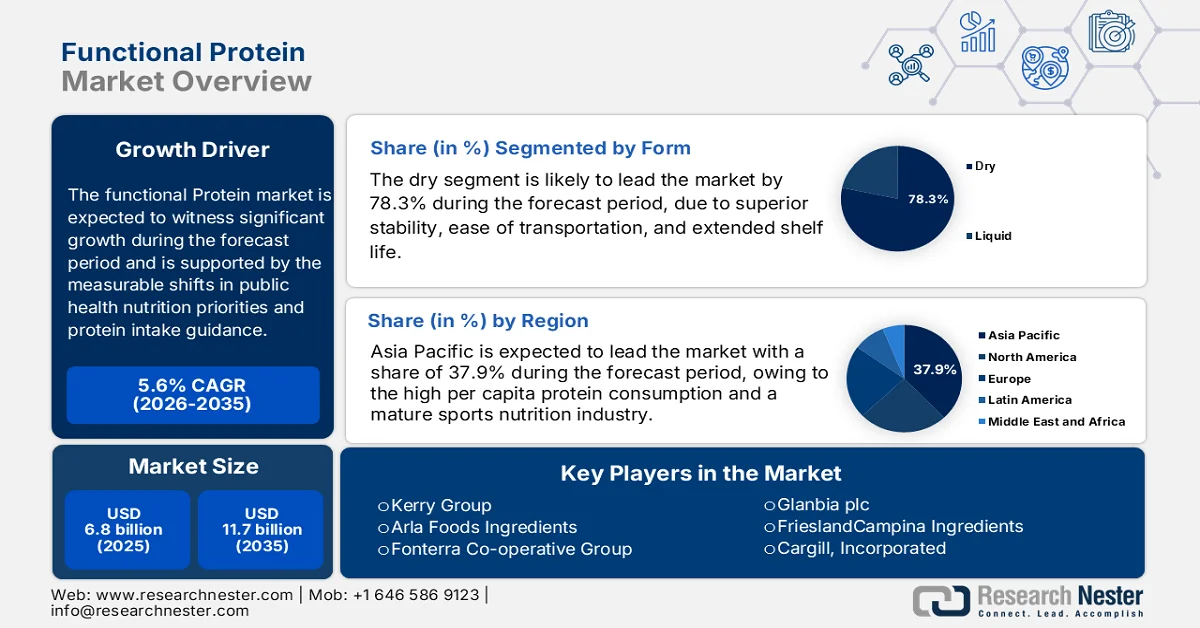
Functional Protein Market size was valued at USD 6.8 billion in 2025 and is projected to reach USD 11.7 billion by the end of 2035, rising at a CAGR of 5.6% during the forecast period, i.e., 2026-2035. In 2026, the industry size of functional protein is assessed at USD 7.1 billion.
The global functional protein market is supported by the measurable shifts in public health nutrition priorities, protein intake guidance, and government-backed food innovation programs. According to the Principles of Nutritional Assessment in August 2024 most countries across Europe, North America, and Oceania, the per capita availability of protein food is greater than 100g per capita per day, reflecting the sustained structural demand across animal and plant sources. At the same time, the NLM July 2025 study shows that nearly 59% of U.S. adults are classified as obese, reinforcing the institutional focus on the high-protein dietary patterns associated with weight management and metabolic health. These policy-backed nutritional frameworks and funding programs provide long-term structural support for ingredient suppliers serving food processing, medical nutrition, and performance nutrition channels.
Besides, the Principles of Nutritional Assessment in August 2024, data indicate that the average protein supply in grams per capita per day, 3-year average, is the core indicator of the nation's diet quality, with the documented rise derived from the animal-based sources in most countries. Moreover, the protein supply from animal and plant sources varied significantly by income level, with the higher-income economies demonstrating substantially greater protein availability per capita. Further, the animal proteins are measured across the meat commodities, eggs diary fish, and seafood, which provide all essential amino acids, reinforcing their importance in institutional nutrition planning. Moreover, Our World in Data in 2022 shows that Brazilian people consume 65.41 g/day of animal proteins in 2022, indicating an increased demand for fortified, blended, and alternative protein solutions within public nutrition programs and commercial food manufacturing channels.
Daily Protein Supply from Animal and Plant Sources by Country
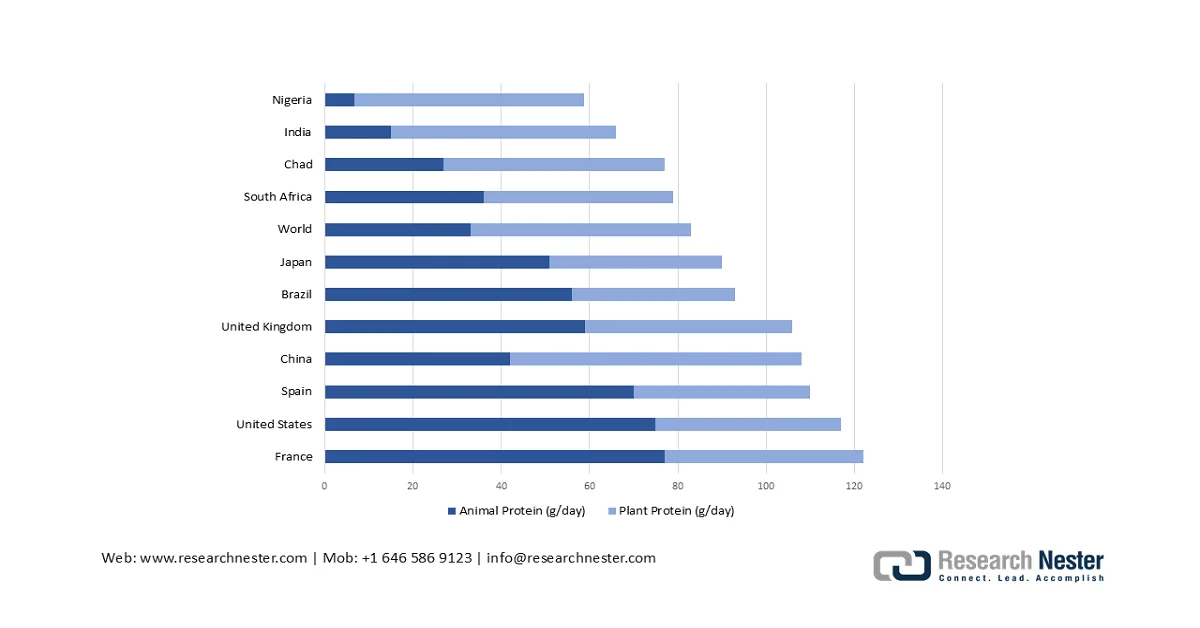
Source: Principles of Nutritional Assessment, August 2024
Key Functional Protein Market Insights Summary:
Regional Insights:
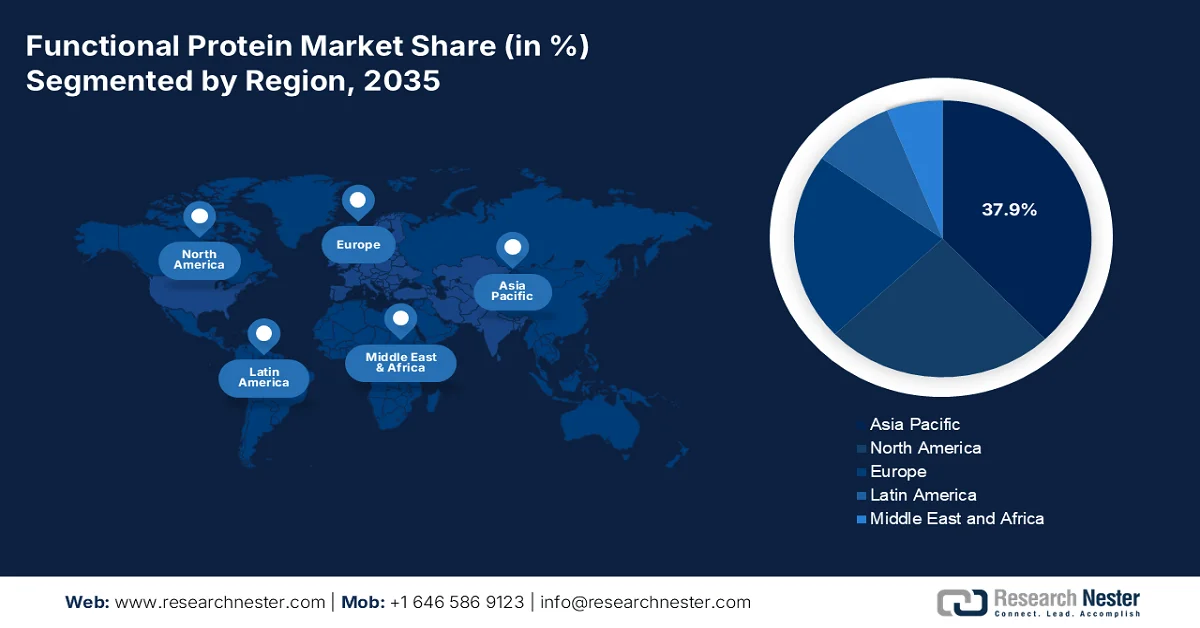
- Asia Pacific is projected to command a 37.9% share of the functional protein market by 2035, stimulated by government-led nutrition initiatives, aging populations, and rising demand for fortified foods.
- North America is anticipated to expand at a CAGR of 7.8% during 2026–2035, supported by strong per capita protein consumption, a mature sports nutrition industry, and institutional procurement programs.
Segment Insights:
- The Dry segment of the functional protein market is projected to secure a 78.3% share by 2035, propelled by its superior stability, ease of transportation, and extended shelf life.
- B2B distribution within the market is expected to maintain a leading position through 2035, attributed to high-volume industrial contracts enabling customization, technical support, and secure supply chains.
Key Growth Trends:
- Rising regional protein supply volumes
- Rising aging population
Major Challenges:
- High processing and extraction costs
- Regulatory complexities and compliance burdens
Key Players: Kerry Group (Ireland), Arla Foods Ingredients (Denmark), Fonterra Co-operative Group (New Zealand), Glanbia plc (Ireland), FrieslandCampina Ingredients (Netherlands), DuPont / International Flavors & Fragrances (IFF) (U.S.), Cargill, Incorporated (U.S.), Archer Daniels Midland (ADM) Company (U.S.), Tate & Lyle PLC (UK), Agropur Ingredients (Canada), Tetra Pak (Sweden), Vivic (Netherlands), REBBL (U.S.), Burcon NutraScience Corporation (Canada), AMCO Proteins (U.S.), Groupe Lactalis (France), Tirlán (Ireland), Parabel USA Inc. (U.S.), GELITA AG (Germany).
Global Functional Protein Market Forecast and Regional Outlook:
Market Size & Growth Projections:
- 2025 Market Size: USD 6.8 billion
- 2026 Market Size: USD 7.1 Billion
- Projected Market Size: USD 11.7 billion by 2035
- Growth Forecasts: 5.6% CAGR (2026-2035)
Key Regional Dynamics:
- Largest Region: Asia Pacific (37.9% Share by 2035)
- Fastest Growing Region: North America
- Dominating Countries: United States, China, Germany, Japan, United Kingdom
- Emerging Countries: India, South Korea, Brazil, Australia, Canada
Last updated on : 5 March, 2026
Functional Protein Market - Growth Drivers and Challenges
Growth Drivers
- Rising regional protein supply volumes: The FAO Food Balance Sheet data in 2026 shows that there is an increase in the total supply across the major regions, indicating an expanding structural demand that directly supports the functional protein market growth. Asia’s total protein supply rose from 154.5 million tonnes in 2020 to 164.8 million tonnes in 2023, an increase of more than 10 million tonnes within 3 years. These multi-million-ton increases reflect the higher aggregate consumption driven by population growth, urbanization, and gradual dietary shifts towards higher protein intake. For functional protein manufacturers, this expansion signals a greater raw material throughput, increased industrial processing volumes, and broader incorporation of protein ingredients into staple foods, fortified products, and clinical nutrition formulations.
Regional Protein Supply Quantity in Tonnes
|
Region |
2020 |
2021 |
2022 |
2023 |
|
Africa |
33,122,357.57 |
33,877,619.36 |
34,781,076.00 |
35,075,186.56 |
|
Northern America |
17,019,728.03 |
16,625,034.21 |
16,976,157.10 |
17,052,897.44 |
|
Asia |
154,506,681.46 |
158,351,303.85 |
161,491,146.40 |
164,783,958.12 |
|
Europe |
30,332,526.56 |
30,415,005.18 |
30,532,075.51 |
30,700,229.62 |
|
Oceania |
1,666,643.75 |
1,623,732.02 |
1,664,594.24 |
1,733,093.54 |
Source: FAO Food Balance Sheet data
- Rising aging population: Population aging is the structural demand driver for the functional protein market. According to the World Health Organization, October 2025 data by 2030, 1 in 6 people will be aged above 60. Governments are incorporating protein adequacy into elderly care frameworks. Moreover, the many countries are integrating protein intake guidance into elderly nutrition programs under national health promotion strategies. Increased longevity correlates with the sarcopenia risk, prompting public meal services and long-term care facilities to prioritize protein-enriched formulations. For manufacturers, this supports demand for easily digestible, high biological value proteins, hydrolysates, and amino acid optimized blends customized to institutional elderly feeding systems.
- Rising public expenditure on agricultural and protein supply chains: The government's agricultural budgets underpin raw material availability. According to the USDA October 2024 report, the government has allocated USD 2.14 billion covering food, agriculture, and rural development programs. Moreover, the investments in dairy, livestock, oilseed, and pulse production stabilize upstream the protein supply chains. Further, it is reported that continued public support for dairy infrastructure is under the national livestock missions. Public spending on agricultural modernization enhances yield efficiency and protein ingredient availability for processors. For market manufacturers, alignment with subsidized production clusters and public agricultural initiatives reduces sourcing volatility and strengthens long term supply agreements.
Challenges
- High processing and extraction costs: The substantial capital investment required for the protein processing technology is a formidable barrier to the functional protein market entry. Manufacturing high-value functional protein, such as the hydrolysates and isolates, demands advanced equipment and the specialized facilities that carry significant price tags. The financial hurdle is mainly steep for the startups aiming to produce precision fermentation-derived proteins, which require the purpose-built bioreactors and downstream processing capabilities.
- Regulatory complexities and compliance burdens: Navigating the intricate web of international food safety regulations and health claim authorizations demands substantial expertise and resources. Regulatory complexities surrounding the health claims, mainly in the functional food and supplement labeling, can significantly hinder the market entry and product positioning across the different jurisdictions. The functional proteins market requires effective collaboration across the value chain to adhere to robust regulatory frameworks, and achieving industry-wide consensus on balanced initiatives remains challenging.
Functional Protein Market Size and Forecast:
| Report Attribute | Details |
|---|---|
|
Base Year |
2025 |
|
Forecast Year |
2026-2035 |
|
CAGR |
5.6% |
|
Base Year Market Size (2025) |
USD 6.8 billion |
|
Forecast Year Market Size (2035) |
USD 11.7 billion |
|
Regional Scope |
|
Functional Protein Market Segmentation:
Form Segment Analysis
The dry sub-segment is leading and is poised to hold the functional protein market share value of 78.3% by 2035. The segment is driven due to its superior stability, ease of transportation, and extended shelf life. This format is the backbone of the sports nutrition and dietary supplement industries, where protein powders are mixed into shakes and smoothies. Further, for the industrial food manufacturers, the dry ingredients are essential for fortifying the products, such as baked goods, snack bars, and pasta, without introducing excess moisture that could lead to spoilage. Moreover, the dry proteins are lighter and do not require the costly refrigerated supply chains necessary for many liquid forms. According to the NLM March 2024 study, the faba bean seeds on a dry matter basis contains 20% to 35% proteins. Further, the standardized composition improves the formulation consistency and cost-efficiency for large-scale food and nutraceutical manufacturers.
Distribution Channel Segment Analysis
The B2B is leading in the functional protein market, particularly direct sales from the manufacturers to the food and beverage companies. This dominance is by the nature of the industry, where the ingredient innovators do not sell directly to the consumers but to the large-scale industrial clients who formulate finished products. Direct sales are preferred for the high-volume contracts as they allow for customization of protein functionality, technical support, and supply chain security. This channel is characterized by long-term partnerships and strict quality assurance protocols. The dairy protein concentrates for industrial manufacturing and processing demonstrate the massive flow of functional protein ingredients transacted directly between global businesses.
Source Segment Analysis
Animal proteins are the leading source segment in the functional protein market, prized for their complete amino acid profile and rapid digestibility. These proteins are the benchmark for efficacy in muscle synthesis, making them indispensable for clinical nutrition, infant formula, and sports performance products where biological value is paramount. The segment benefits from the highly established global supply chain, mainly in the dairy-intensive regions of the U.S., Europe, and New Zealand. According to the NLM study published in April 2024, among the 70,696 participants, it was found that high animal protein intake was positively associated with cardiovascular mortality. Moreover, rising clinical scrutiny and evolving dietary guidelines are prompting manufacturers to reformulate and diversify protein portfolios to address long term health risk considerations.
Our in-depth analysis of the functional protein market includes the following segments:
|
Segment |
Subsegments |
|
Source |
|
|
Type |
|
|
Application |
|
|
Function |
|
|
Form |
|
|
Distribution Channel |
|
|
End user |
|

Vishnu Nair
Head - Global Business DevelopmentCustomize this report to your requirements — connect with our consultant for personalized insights and options.
Functional Protein Market - Regional Analysis
APAC Market Insights
Asia Pacific is the dominant player in the global functional protein market and is expected to hold the regional share value of 37.9% by 2035. The market is driven by the government-led nutrition initiatives, rapidly aging populations, and expanding middle-class demand for fortified foods. The primary regional trend is the institutionalization of school feeding programs. Another vital driver is the region’s focus on healthy aging. Further the Japan has pioneered in policies integrating functional foods into elder care, a model being adopted across South Korea and China. The FAO reports that Asia accounts for a significant and growing share of global dairy and plant protein imports as domestic processing capacity struggles to keep pace with industrial demand. Moreover, the functional protein market in APAC offers opportunities in medical nutrition, sport performance, and mainstream food fortification, all backed by increasing government health budgets.
A momentum via bio-economy expansion, food-processing growth, and government-backed smart protein initiatives is boosting the market in India. As per the article published by PIB in August 2024, India’s bio-economy is projected to reach USD 300 billion by 2030. Institutions such as the National Agri-Food Biotechnology Institute, supported by the Department of Biotechnology, are advancing plant-based meat alternatives, in-vitro cultured meat, and protein fermentation technologies to bridge the gap between laboratory research and commercial-scale production. Moreover, the cultured proteins use less than 1% of land and 5% of water compared to red meat. Positioning alternative proteins within India’s climate-smart agriculture strategy. Additionally, processed food exports reached USD 10.09 billion in 2024 to 2025, with USD 7.21 billion in FDI inflows over the past decade, reinforcing infrastructure and value-added protein processing capacity. These data show India as the high growth market, hence driving significantly.
The functional protein market in China is expanding under the strong regulatory oversight and rapid plant-based beverage growth. As per the NLM study in December 2024, a total of 1,142 health foods containing raw protein materials were approved between 1996 and 2024, indicating sustained regulatory support for the protein-based functional products. Besides, in 2023, the State Administration for Market Regulation included soy isolate protein and whey protein in the Health Food Ingredients Catalog with an approved dosage range of 6 to 25 g per day and an authorized health claim of immunity enhancement. The updated 2023 Nutrient Supplements Catalog also approved ingredients such as selenoprotein and casein phosphopeptide + calcium, while spirulina (3–4 g/day) remains permitted for both health food and general food applications. On the other hand, the plant protein beverage segment has demonstrated a rapid commercial uptake. Tmall reported 800% growth with a 900% increase in buyers, and JD Supermarket recorded 77% YoY sales growth in 2021, based on the NLM study in June 2023. These data show encouragingly higher protein fortification levels, supporting scalable demand for soy whey and specialty protein ingredients across China’s health food and beverage markets.
North America Market Insights
North America functional protein market is projected to be the fastest-growing and is set to grow at a CAGR of 7.8% during the forecast period 2026 to 2035. The market growth is driven by the high per capita protein consumption, a mature sports nutrition industry, and significant government procurement via school lunch and defense programs. The demand is defined by the preference for premium high-purity isolates and clinically documented ingredients. A key trend is the industrial shift towards diversifying protein sources beyond traditional dairy to include plant-based and fermentation-derived proteins, driven by both consumer interest and supply chain resilience strategies. Moreover, the government agencies, including the USDA and Public Services and Procurement Canada, are the drivers via nutritional assistance programs and institutional feeding contracts that mandate specific protein content, creating a stable volume-based demand for ingredient suppliers in the market in North America.
The expanding demand in the protein supplement and sports nutrition segments is driving the functional protein market in U.S. According to the NLM study published in December 2023, the protein powders accounted for 56% of total supplement revenue, reflecting a strong consumer preference for the concentrated, cost-effective formats. On the other hand, the ready-to-drink protein beverages are projected to grow at a compound annual growth rate of 8.5%, representing a rising demand for the convenience-based formulations. Plant-based protein supplements are also expanding at a projected 8.7% CAGR, supported by increased adoption of vegan and plant-forward diets. Further, the established dietary intake recommendations of 0.8 g/kg/day for healthy adults and 1.2 to 2.0 g/kg/day for physically active individuals provide a physiological consumption benchmark that sustains a long-term demand across fitness, clinical, and general wellness channels, therefore boosting the market growth.
A strong export performance and structured public investment in the nutrition initiatives are propelling the Canada functional proteins market. According to the Plant Based Foods of Canada September 2025 data, Canada has exported more than USD 2.4 billion in 2023 in plant and animal protein ingredients, underscoring its position as a key global supplier of pulse proteins, oilseed-derived proteins, and animal-based protein ingredients. Moreover, the Government of Canada in May 2023 announced USD 84.6 million in 2024 to fund four nutrition-focused global projects as part of a broader USD 520 million five-year commitment to nutrition-specific programming and a 10-year global health investment framework. Together, export strength and sustained public nutrition financing position Canada as both a supply hub and strategic growth market for functional protein manufacturers.
Europe Market Insights
Strong demand for clinical nutrition, sports performance, and an aging population seeking preventative health solutions is fueling the functional protein market in Europe. The European Medicines Agency and the European Commission’s health board have established rigorous standards for protein-based medical foods and nutritional supplements, which, while demanding, create a stable regulatory environment that rewards quality and clinical validation. A significant driver is the EU’s strategic focus on reducing healthcare burdens via preventive nutrition. The market is also shaped by the EU's Farm to Fork Strategy, which encourages sustainable protein sourcing, pushing ingredient buyers toward European-sourced plant and dairy proteins.
A strong public research and innovation (R&I) funding focused on plant-based and alternative proteins is boosting the market in Germany. Between January 2020 and April 2024, public and philanthropic funders across the DACH region awarded nearly USD 82.55 million to alternative protein research, reinforcing the region’s position as a European innovation hub, based on GFI Europe July 2025 data. Moreover, the Budget Committee of the German Bundestag approved an additional USD 44.81 million in 2024 specifically to support the sustainable protein transition, signaling direct federal backing for plant-based resource development and applied food science, as per the GFI Europe November 2023 data. These funding flows and intellectual property trends indicate long-term capacity building in the plant protein processing, positioning Germany as a key growth market.
The functional protein market in France is gaining momentum via targeted public investment in plant-based sector development. According to the GFI Europe November 2023 data, the French government has allocated USD 76.65 million towards the research and industrial scale-up of plant-based proteins, boosting the domestic capabilities in the crop processing ingredient functionality and food innovation. This funding supports upstream agricultural diversification, including pulses and oilseed crops, as well as downstream protein extraction and formulation technologies. By prioritizing research and commercialization infrastructure, France is reinforcing its position within Europe’s alternative protein ecosystem while reducing reliance on imported protein ingredients. Further, this structured public backing enhances innovation capacity, accelerates pilot-to-commercial scaling, and creates procurement opportunities across retail, foodservice, and institutional nutrition channels, therefore providing a positive impact on market growth.
Key Functional Protein Market Players:
- Kerry Group (Ireland)
- Arla Foods Ingredients (Denmark)
- Fonterra Co-operative Group (New Zealand)
- Glanbia plc (Ireland)
- FrieslandCampina Ingredients (Netherlands)
- DuPont / International Flavors & Fragrances (IFF) (U.S.)
- Cargill, Incorporated (U.S.)
- Archer Daniels Midland (ADM) Company (U.S.)
- Tate & Lyle PLC (UK)
- Agropur Ingredients (Canada)
- Tetra Pak (Sweden)
- Vivic (Netherlands)
- REBBL (U.S.)
- Burcon NutraScience Corporation (Canada)
- AMCO Proteins (U.S.)
- Groupe Lactalis (France)
- Tirlán (Ireland)
- Parabel USA Inc. (U.S.)
- GELITA AG (Germany)
- Company Overview
- Business Strategy
- Key Product Offerings
- Financial Performance
- Key Performance Indicators
- Risk Analysis
- Recent Development
- Regional Presence
- SWOT Analysis
- Kerry Group is a global taste and nutrition giant that has solidified its position in the functional protein market via a strategy of acquisition and innovation. The company leverages its extensive research capabilities to develop a wide range of protein solutions, including dairy, plant-based, and bioactive proteins, designed for sports nutrition, elderly care, and clinical nutrition.
- Arla Foods Ingredients is a dominant player in the market, specifically specializing in high-value whey protein derivatives. The company has carved a niche by focusing on premium clinically documented ingredients for early life nutrition, medical foods, and sports performance.
- Fonterra Co-operative Group leverages its control over a vast supply of high-quality milk to dominate the functional protein market. The company’s strength lies in its ability to process dairy streams into specialized ingredients such as lactoferrin, colostrum, and bioactive protein hydrolysates via its subsidiary NZMP.
- Glanbia plc is a power player in the functional protein market, mainly renowned for its leadership in whey protein ingredients. Through its Glanbia Performance Nutrition and Nutritional Solutions divisions, the company supplies both the finished branded products and custom ingredient blends.
- FrieslandCampina Ingredients is a key player in the market, utilizing its member dairy farms to produce a diverse portfolio of proteins. The company specializes in high-quality milk and whey proteins and bioactive phospholipids, which are vital for early life and medical nutrition.
Here is a list of key players operating in the global market:
A mix of multinational ingredient players and specialized regional players defines the competitive landscape of the global functional protein market. The key strategic initiatives among these leaders include aggressive mergers and acquisitions to expand the product portfolio and geographic reach, as well as heavy investment in R&D to develop clean-label plant-based and specialized protein fractions that cater to evolving consumer health trends. For example, in November 2021, ADM announced that it had completed the acquisition of Sojaprotein to strengthen its plant-based protein capabilities. The companies are also vertically integrating to secure the raw material supply chains and focusing on sustainability to meet the regulatory and consumer demands for environmentally friendly production. This dynamic environment boosts the intense competition based on product purity, functionality, and application-specific innovation.
Corporate Landscape of the Functional Protein Market:
Recent Developments
- In November 2025, Tetra Pak has announced the launch of sunflower protein, a plant-based ingredient designed to help food and beverage (F&B) producers meet rising consumer demand for plant-based products, while maximizing existing investments.
- In March 2025, Vivici, the Dutch ingredients startup, has launched ViviteinTM BLG in the U.S. market. The flagship ingredient under its ViviteinTM protein platform, ViviteinTM BLG, is now available, enabling B2B customers to launch disruptive, differentiated products to consumers in the US market.
- In July 2024, REBBL has unveiled a monumental upgrade of organic protein drinks. This enhancement is designed to fuel an active lifestyle and the need for better-for-you convenience like never before.
- Report ID: 8415
- Published Date: Mar 05, 2026
- Report Format: PDF, PPT
- Explore a preview of key market trends and insights
- Review sample data tables and segment breakdowns
- Experience the quality of our visual data representations
- Evaluate our report structure and research methodology
- Get a glimpse of competitive landscape analysis
- Understand how regional forecasts are presented
- Assess the depth of company profiling and benchmarking
- Preview how actionable insights can support your strategy
Explore real data and analysis
Frequently Asked Questions (FAQ)
About this Report
Connect with our Expert


Report, 2026-2035



Copyright @ 2026 Research Nester. All Rights Reserved.
