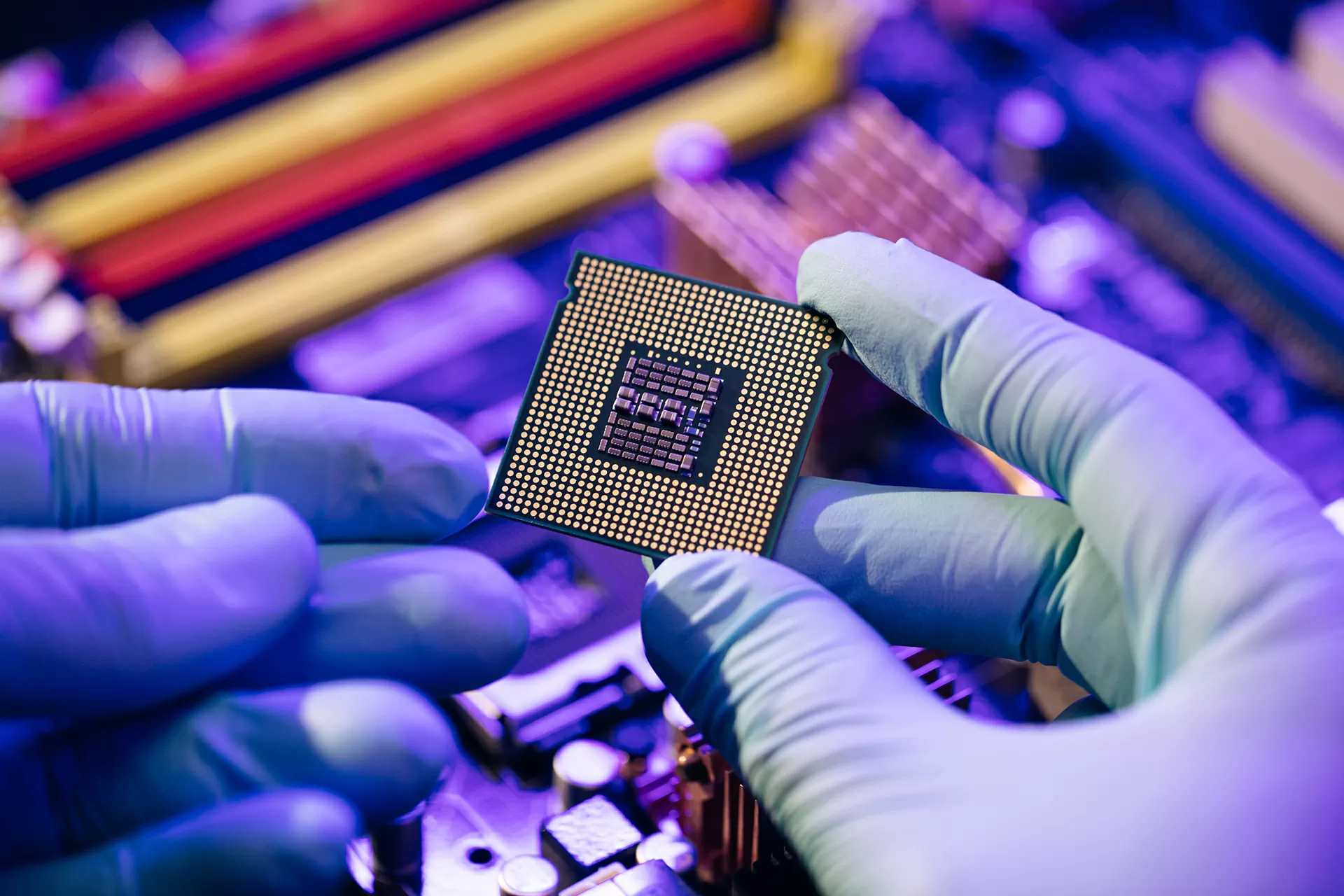
Our market research reports on semiconductor technology are designed to aid businesses explore capital intensive and evolving technology landscape. The report render data driven insights across the whole value chain, covering modern chip design innovation, fabrication technologies, and various other emerging applications such as 5G, IoT, etc. These reports consist of detailed demand forecasts, region-wise analysis, and competitive benchmarking, which enable stakeholders to assess high-growth opportunities. These are backed by expert analysis and credible sources, which serve as a strategic tool for investors and technology leaders for future-ready decisions.
Various companies are dispensing investment into the semiconductor technology market as chips have become pivotal for almost all modern industries. Semiconductors have become the foundational base for various high-growth sectors such as AI, data centers, etc. According to the Semiconductor Industry Association, in 2024, worldwide semiconductor industry sales reached USD 630.5 billion. It further stated that the semiconductor industry in the U.S. has remained a global leader, commanding 50% of the worldwide chip revenue. Other than this, India Semiconductor Mission 2.0 allocated USD 110 million for 2026-27. These policy-backed funding programs and a surge in demand for local chip manufacturing are positioning the market as a prolonged magnet for market players.
Size of the Semiconductor Market in India

Source: PIB
Latest trends in the semiconductor industry
Advancements in consumer electronics are driving investment in semiconductor technology
The widespread sale of consumer electronics devices such as smartphones, smart TVs, etc., is now dependent on the procurement of advanced sensors, AI-enabled processors, all of which need state-of-the-art semiconductors. To aid these capabilities, companies are investing in modern manufacturing nodes, AI accelerators, and other next-generation memory solutions. Moreover, intense competition in consumer electronics is compelling manufacturers to differentiate their products through silicon-level performance and efficiency. According to data published by The Observatory of Economic Complexity in 2024, worldwide trade of semiconductor devices reached USD 134 billion. The sustained demand, amalgamated with the rapid product innovation cycles, continues to foster long-term investment in the market.
Burgeoning development of IT and data centers
The swift development of large-scale data centers and IT infrastructure is prominently attracting investments as advanced digital ecosystems are highly reliant on modern chips for storage and computing. The establishment of data centers is the backbone of digital services as well as cloud computing, all of which need high-performance processors and networking semiconductors. Also, the widespread expansion of edge computing and distributed IT environments is widening the semiconductor market with the installation of micro data centers. According to data published by the World Economic Forum, electricity demand from data centers, AI, and cryptocurrencies reaches as much as 1,000 Terawatt Hours by the year 2026.
Widening automotive and mobility industry
With the rapid development in the automotive and mobility industries, there has been increased investment in semiconductor technology as vehicles evolve into software-defined platforms. Advanced cars are now integrating state-of-the-art driver assistance systems, electric powertrains, and vehicle-to-everything communication. The worldwide push toward electric vehicles is intensifying demand for power management ICs and wide-bandgap semiconductors. The rising trend for connected mobility is pushing suppliers and manufacturers to secure a prolonged semiconductor supply. According to the International Energy Agency in 2024, more than 1 in 5 cars sold worldwide were electric. Consequently, semiconductor technology has become a crucial enabler of advancement in this ecosystem.
Increasing usage of semiconductor chips in aerospace and defense
The increasing reliance on semiconductor chips in the defense and aerospace sectors is drawing prominent investment into the semiconductor industry. The modern defense systems are shifting in the direction of electronically modern and autonomous platforms. Modern semiconductors are crucial for mission-critical avionics and secure command and control networks. The increasing deployment of space exploration programs, navigation, and secure command networks is resulting in significant demand for semiconductors. According to the Global Electronics Association, industry organizations such as the U.S. Partnership for Assured Electronics (USPAE) have funneled more than USD 30 million into high-priority projects endeavored to strengthen significant defense supply chains and dual usage of semiconductor technologies.
Consequently, semiconductor technology has evolved as a foundational strategy for national security, prompting a sustained inflow of capital from defense agencies and private manufacturers. The defense and aerospace industry is becoming highly dependent on the prolonged investment in local chip manufacturing to keep the supply chain resilient.
What We Do
Rising concerns for inflation, fear of recession, contracting revenues, shrinking profit margins, and growing cost pressure on logistics and supply chain has posed a profound stress test for every business organizations globally. We’re helping our clients by delivering integrated solutions based on thorough research, benchmarking, analysis, and strategic discernment to help businesses overcome these challenges and unearth hidden opportunities for sustainable growth and value creation over the coming years.
We have been a pedestal for our clients to embark on a journey towards success.