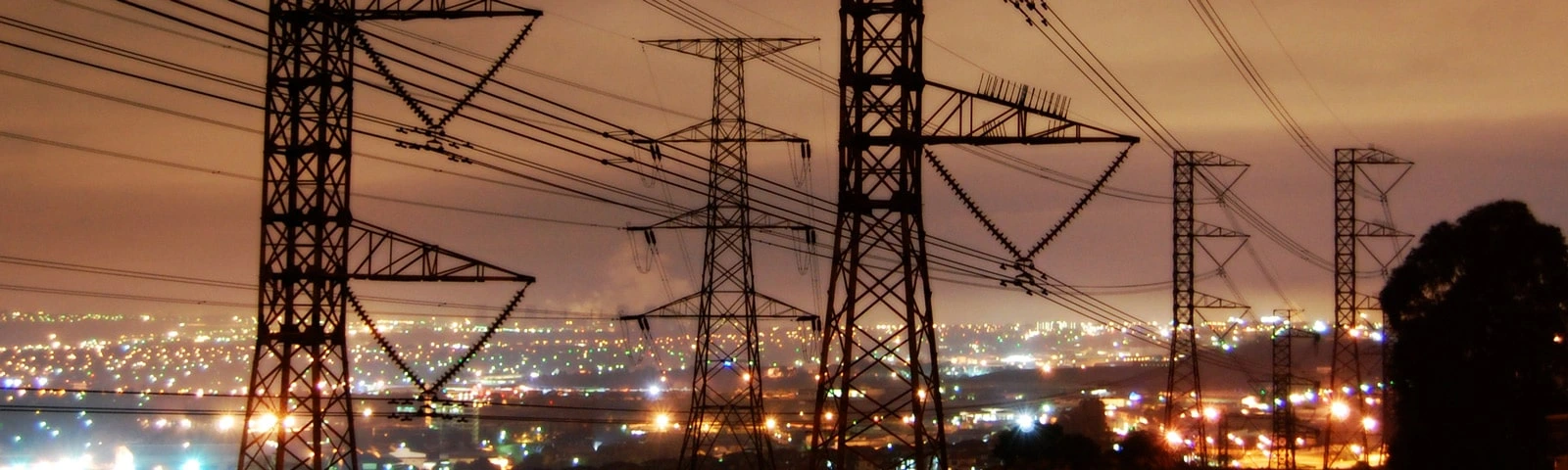
The power industry is attracting prominent investment on the back of its long term cetrainity with speeding structural transformations. There has been an increase in electricity consumption propelled by urbanization, a surge in the expansion of data centers, etc., making power assets highly attractive for financial investors. According to the International Energy Agency, the global electricity consumption is projected to reach 29,000 terawatt hours by 2026, highlighting the visibility of demand. These advancements in digital grid technologies and flexible generation are further enhancing operational efficiencies and asset returns.
Demand Per Capita of Top Electricity Consumers in 2024

Source: EMBER.org
Latest Key Trends Shaping the Power Industry
Inclusion of AI and Digitization in grid operations
The incorporation of AI and digitalization in grid operations is attracting significant investment owing to the ability to render operational resilience. According to the International Energy Agency, the European Commission presented an action plan for the digitalization of the energy system. The report states that USD 633 billion of investment will be made in the European electricity grid by 2030. Out of this, more USD 184 billion will be utilized for smart meters, automated grid management, and digital technologies for metering. Also, in 2022, Japan launched a funding programme of USD 155 billion to promote investment in smart power grids. Furthermore, as penetration of renewable energy and electrification accelerate worldwide, governments and grid operators are giving emphasis to AI-enabled digital grid infrastructure as a capital-efficient alternative to large-scale physical grid expansion. These factors further reinforce sustained investment momentum in this segment.
Power Sector Digitalization by Technology Area, 2023 and 2024

Source: IRENA.org
Surge in the influence of data centers and large power loads
There has been an increased demand for data centers to support intensive workloads associated with AI and machine learning. These factors are reshaping the grid planning and electricity priorities. These data centers demand uninterrupted power, and are propelling the investment in the dispatchable clean energy sources. According to the International Energy Agency, worldwide electricity consumption for data centers is anticipated to reach 945 TWh by the end of 2030. The statistics reflect the emergence of the fastest-growing load segments globally. This level of demand is attracting market players by providing extended revenue visibility.
Cybersecurity as a strategic investment driver in modern power grids
The integration of cybersecurity in the power sector is attracting burgeoning investment as digitalization is expanding the risk of cyber attack on the grid’s surface. Grid operators are depending on digital control systems such as cloud-based analytics, making cybersecurity critical to ensure an uninterrupted electricity supply and system integrity. For investors, installing resilient cyber defenses lowers the probability of high-impact outages, directly enhancing long-term returns. According to data published by the Union of the Electricity Industry in Europe, in 2022 alone, 48 successful attacks hit Europe’s energy infrastructure. Such cyber incidents can trigger widespread service disruptions and position cybersecurity not merely as a compliance necessity, but as a critical value-preserving and risk-mitigating investment pillar within modern power system development.
Smaller modular reactors and modern nuclear options
In recent years, SMRs have obtained significant acceptance as an uninterrupted and clean energy generation solution. These SMRs are mainly well-suited for a myriad of energy-intensive sectors. SMRs utilize factory-built components, which enable faster deployment and lower project execution risk. SMR facilities also contribute to increased placement adaptability, fostering deployment near load centers such as heavy manufacturing hubs. According to the data published by the American Nuclear Society in February 2025, the total SMR capacity in the U.S. is predicted to reach 40 GW. The statistics illustrate robust policy support and rising investor confidence.
Blockchain and the decentralized energy market
Various blockchain technologies are being included within the power industry to automate and digitize across distribution and generation. A notable example stated by Trends Research & Advisory in March 2025 is a blockchain-linked microgrid in Johannesburg, South Africa, which supplies 216-unit condominium building using 500 kW of rooftop solar PV and 672 kWh of battery storage. The inclusion of decentralized platforms allows community energy projects to generate surplus electricity and flexible services.
What We Do
Rising concerns for inflation, fear of recession, contracting revenues, shrinking profit margins, and growing cost pressure on logistics and supply chain has posed a profound stress test for every business organizations globally. We’re helping our clients by delivering integrated solutions based on thorough research, benchmarking, analysis, and strategic discernment to help businesses overcome these challenges and unearth hidden opportunities for sustainable growth and value creation over the coming years.
We have been a pedestal for our clients to embark on a journey towards success.