Macro trends
We endeavor for market players to unlock their maximum potential through the newest trends in their industry. The latest macro trends tend to last long and shape the market. Knowing these trends can make the business stand out from the competition.
The industries garnering the fastest output for growth are not just benefiting from the cyclical demand, but also advancing by prominent macro trends that are shaping the consumption as well as consumption patterns. Automation, rapid digitalization, and demographic shifts are collectively speeding up the output across various high-growth sectors such as renewable energy, manufacturing, AI, etc. Businesses as well as investors are required to assimilate these trends to seek scalable opportunities and position themselves in accelerated expansion. According to the data published by the World Bank in 2024, the global GDP reached USD 110.98 trillion. The statistics reflect the widening scale of economic activity worldwide, with a rising economic base amalgamated with the productivity-enhancing technologies.
In the sections below, we will comprehend the macroeconomic drivers revolutionizing the productivity trajectories across the myriad of powerhouse industries such as technology, healthcare, BFSI, etc. These sectors are witnessing a transformation via various structural catalysts, whether it is digital infrastructure scaling technology or innovation-driven expansion in the healthcare sector. The economic transformations are shaping the expansion patterns of pivotal industries within the worldwide marketplace. Understanding these macro undercurrents provides deeper clarity on how output acceleration is being structurally embedded within each sector’s long-term growth narrative rather than merely reflecting short-term economic cycles.
Overarching Trends in Prominent Industries
Healthcare sector dynamics and macro trends
The healthcare industry is witnessing a fundamental overhaul, propelled by the shifting expectations of patients and evolving worldwide demographics. Various advances in AI, precision intelligence, digital health, etc., are fostering efficient and personalized care, while the surge in chronic diseases is transforming the prolonged preventive health services. The macro trends are reinterpreting how care is delivered to the patients and opening new opportunities for innovation and investment across a myriad of sectors. According to the data published by the World Economic Forum in 2021, worldwide spending on health reached a staggering USD 9.8 trillion. The unprecedented investment highlights the importance of the emerging technologies and patent-centric approaches. Some of the macro trends shaping the industry are:
1. AI integration and digital transformation
The healthcare sector is rapidly moving in the direction of digital-first models and predictive analytics, which are significantly utilized for treatment planning and operational efficiency. According to a survey conducted by the American Medical Association, 66% of the physicians reported utilizing some form of healthcare AI in the year 2024. Various hospitals and clinics are optimizing administrative workflows and lowering operational costs. This macro trend is enhancing care delivery into proactive and predictive way, opening new avenues for investments.
2. Pharmaceutical innovation and biotech expansion
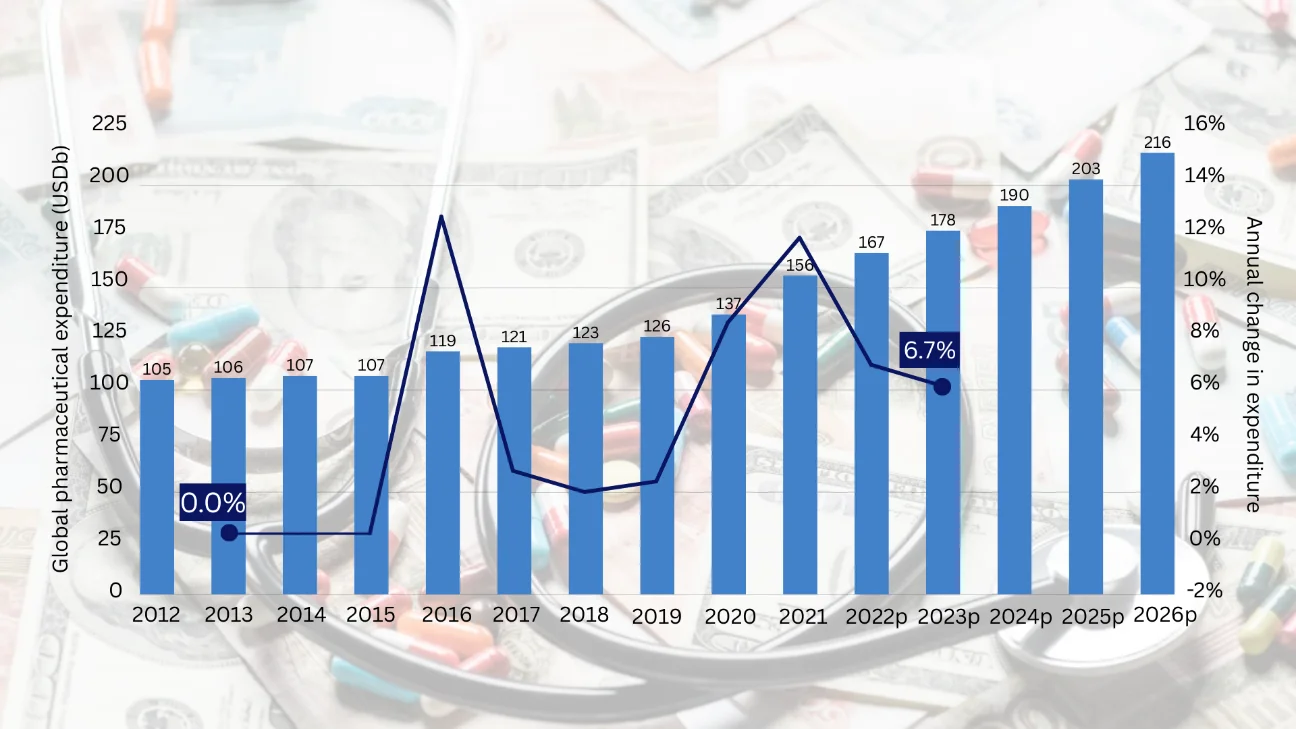
In the healthcare sector, the pharmaceutical and biotech sectors are serving as a bedrock for innovation, fostering the development of novel therapies. According to the data published by the International Federation of Pharmaceutical Manufacturers and Associations, 69 novel active substances were launched worldwide in 2023. Also, the surge in investment is marked by significant investment in research and development, representing an average annual growth of 6.7%. These investments are prominently driven in the direction of biologics and gene therapies, enabling significantly targeted treatments. The widening research and development pipeline, amalgamated with surging approvals of first-in-class therapies. This highlights how pharmaceutical and biotech innovation is driving both increased patient outcomes and significant economic growth within the healthcare sector, while shaping the future of medicine on a global scale.
Estimated R&D Expenditure of Top 50 Pharmaceutical Companies
Macro-level transformations in energy and natural resources
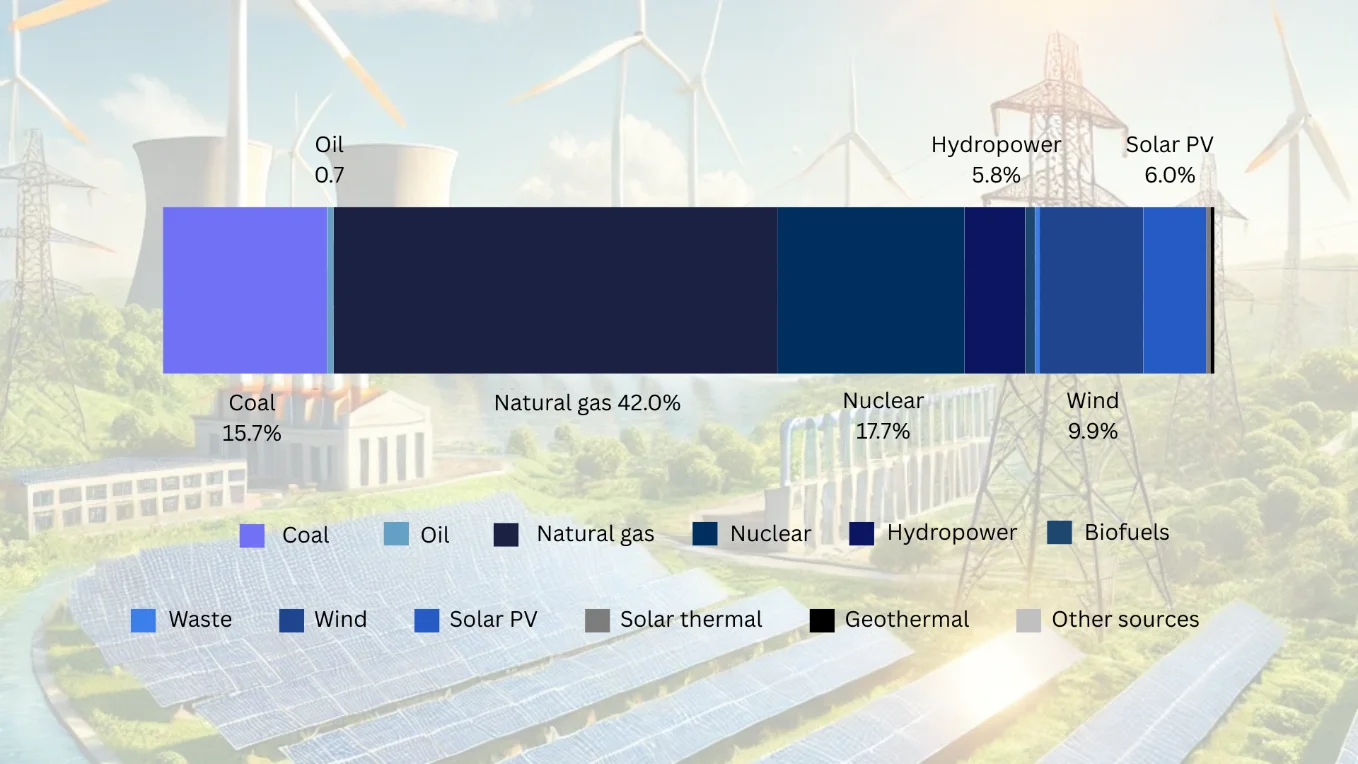
The energy and natural resources sector is at the moment of reckoning, shaped by the alignment of technological innovations and a shifting geopolitical landscape. Conventional models of energy production and resource extraction are transforming due to the worldwide push for decarbonization, digital transformation, etc. According to the International Renewable Energy Agency, global investments in the energy transition surpassed USD 2.4 trillion in 2024. Also, in the U.S., the electricity generation mix is significantly dominated by natural resources and continues to gain traction. These changes influence investment strategies and redefine the operational landscape. Against this backdrop, it is imperative to comprehend the macro trends that are driving ongoing transformation in natural resources.
Electricity Generation Sources, United States, 2024
1. Investment in green hydrogen and alternative fuels
The burgeoning investments in alternative fuels and green hydrogen have become a notable trend in the sector. The rising investment is driven by the worldwide targets for decarbonization, with a myriad of companies and organizations setting net-zero targets. Also, there is exponential demand for low-carbon energy solutions to replace conventional fossil fuels, and by funneling resources into such alternatives, energy companies are reducing carbon emissions. For instance, data published by the Press Information Bureau, India, has set an aim of generating 5 million tons of green hydrogen by the year 2030.
2. Extraction of critical minerals
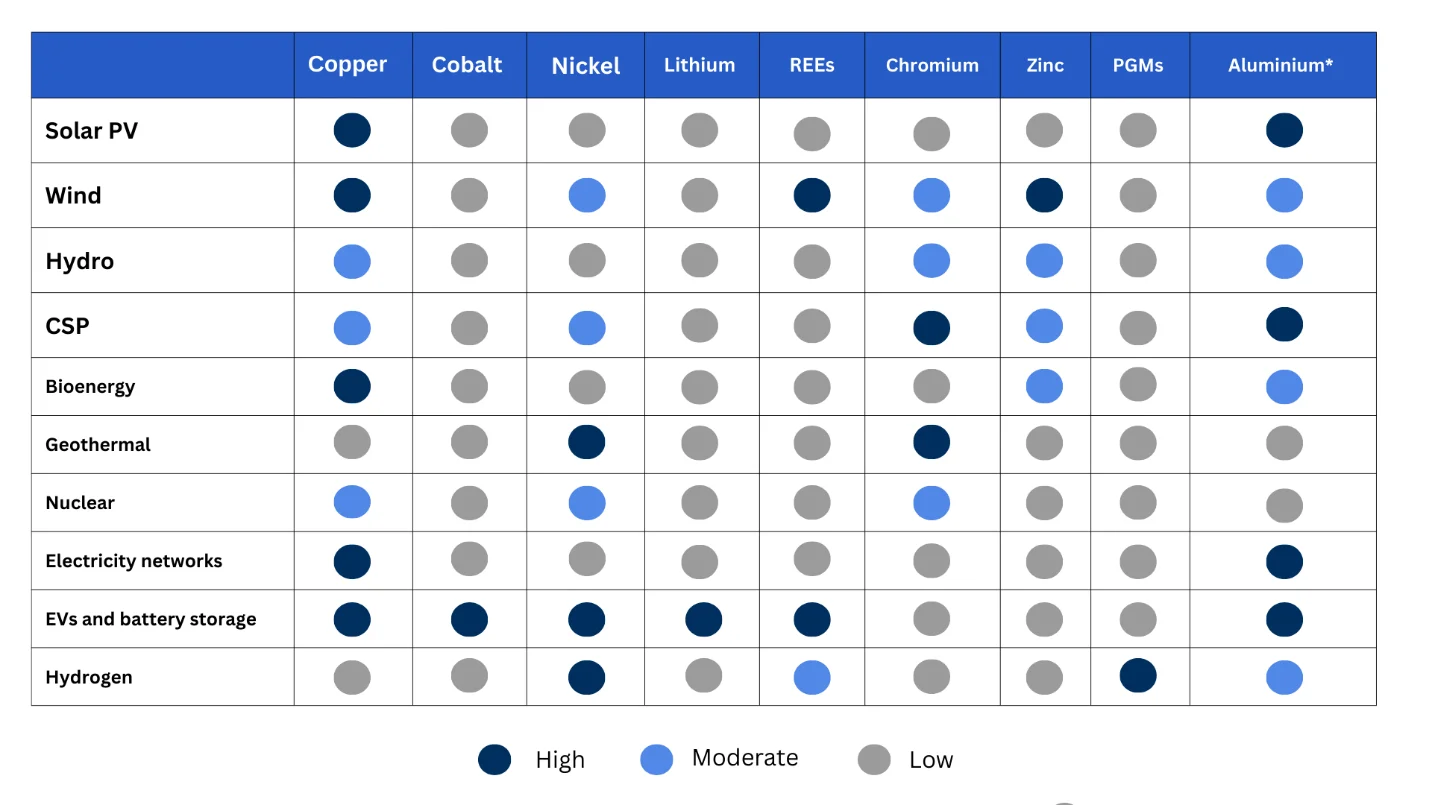
Globally, the extraction of critical minerals has become a macro trend in the industry as these minerals have become pivotal for the energy transition. These critical minerals, such as lithium, nickel, etc., are pivotal for renewable energy and other ongoing electrification technologies. For instance, according to the report published by the International Energy Agency, by 2040, the demand for lithium is projected to grow by 40 times. The extraction of critical minerals is anticipated to garner significant investment as they are directly linked with the future energy transition.
Mineral Needs Vary Widely Across Clean Energy Technologies
Key macro trends shaping the technology sector
The technology domain is transforming at an unprecedented pace, propelled by innovations in the digital arena and the rising interconnection of data and systems. According to the International Data Centre Authority, the digital economy comprises 15% of the global GDP, amounting to USD 16 trillion in 2024. The widespread expansion illustrates how digital technologies are revolutionizing industries and generating a humongous economic value chain. Against this backdrop, there are macro trends that are augmenting the evolution of the technology sector. Some of the prominent micro trends are as follows:
1. Cybersecurity and data privacy
Cybersecurity and data privacy have emerged as prominent macro trends in technology, driven by the rapid adoption of digital transformation across industries. This has widened the worldwide attack surface, making security highly pivotal for companies. According to the data published by the University of San Diego Online, the cost of cybercrime is projected to reach USD 13.82 trillion by 2028. Also, with data emerging as the backbone of analytics and other important digital services, technologies such as end-to-end encryption and 0-trust architecture are shaping IT infrastructure.
2. Wide-spread inclusion of AI and ML
The swift adoption of AI and ML is a prominent macro trend in technology, as these tools are changing the way organizations innovate. The adoption of AI is increasingly pronounced in key industries such as ICT, where 57.3% firms in OECD countries used AI in the year 2025, as stated by the OECD report. The modernization in computing power has augmented this adoption and made AI a bedrock for digital transformation.


Contact Us