Photovoltaic Coating Market Outlook:
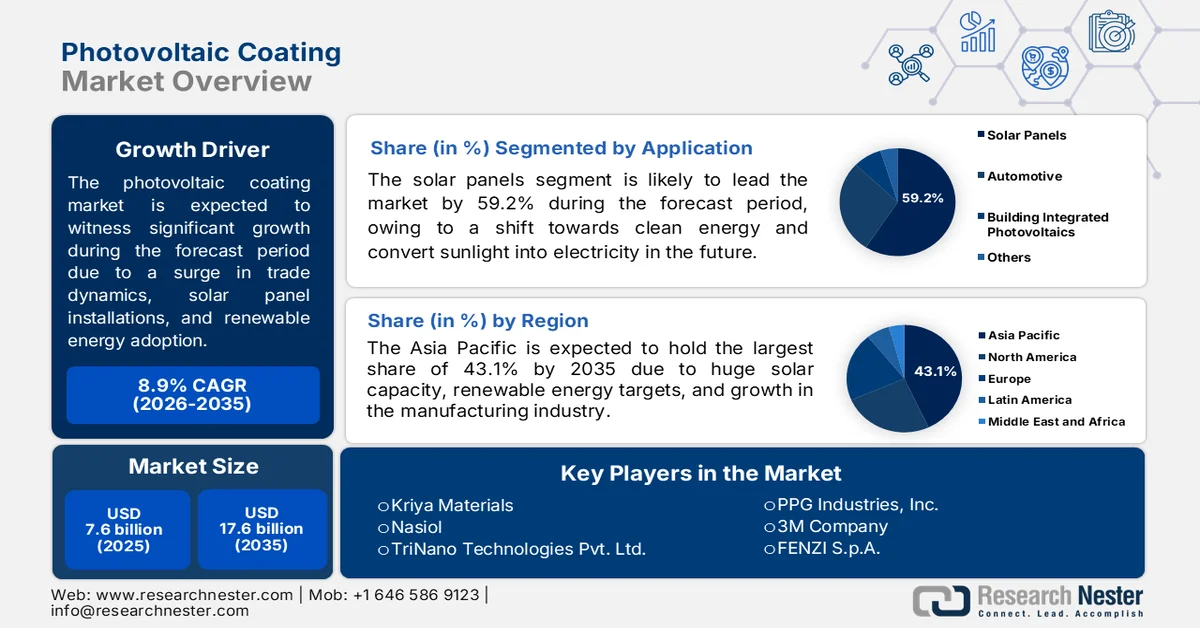
Photovoltaic Coating Market size was valued at USD 7.6 billion in 2025 and is projected to exceed USD 17.6 billion by the end of 2035, expanding at over 8.9% CAGR during the forecast period, i.e., 2026-2035. In 2026, the industry size of photovoltaic coating is assessed at USD 8.2 billion.
The global photovoltaic coating market is being shaped by different factors, including the trade landscape, tariff policies, deployment conditions of solar installations, variability in weather conditions, and competition from alternative renewable energy technologies. According to an article published by the IEA Organization in 2026, there was an increase in solar photovoltaic generation by 320 TWh or 25% as of 2023, and it reached more than 1,600 TWh. This particular growth is equivalent to the level targeted from 2023 to 2030, especially in the Net Zero Emissions by 2050 (NZE) scenario. Besides, the continuous supply chain dynamics of photosensitive devices and assembled photovoltaic modules or panels across different countries and regions are also responsible for positively driving the market’s growth and expansion.
Global Photosensitive Devices and Assembled Photovoltaic Modules or Panels Export and Import Analysis, 2024
|
Countries/Components |
Export (USD Billion) |
Import (USD Billion) |
|
China |
27.8 |
- |
|
Vietnam |
6.3 |
- |
|
Thailand |
2.8 |
- |
|
U.S. |
- |
14.8 |
|
Brazil |
- |
2.8 |
|
India |
- |
2.8 |
|
Global Trade Value |
48.6 |
|
|
Global Trade Share |
0.21% |
|
Source: OEC
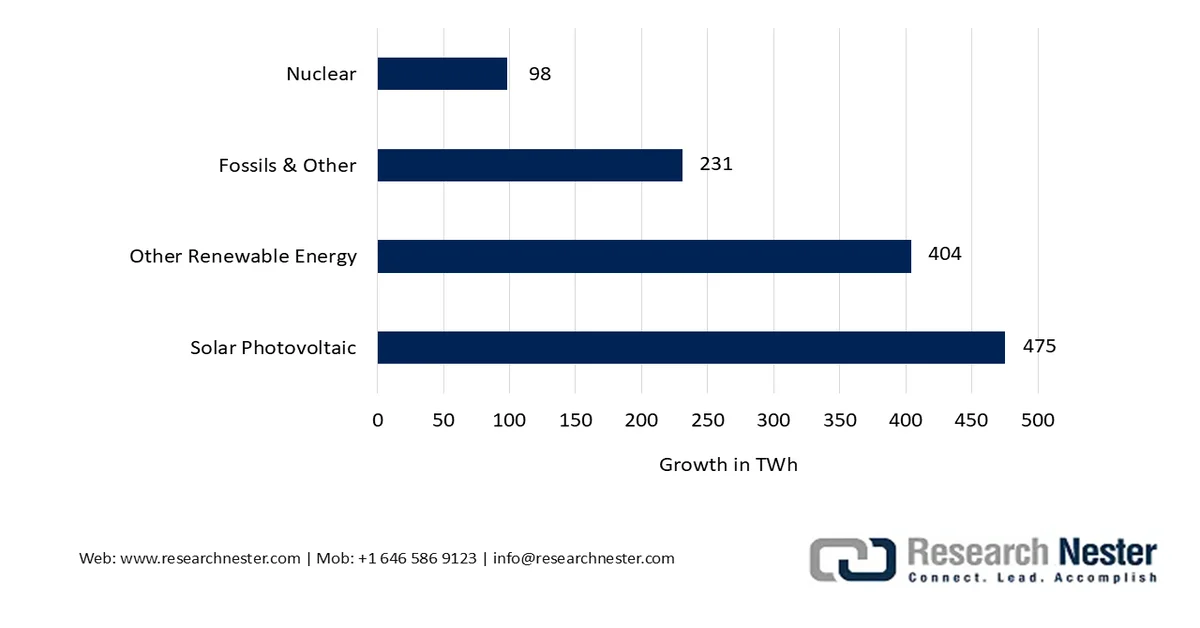
Furthermore, the nanotechnology integration in coatings, transition to smart and multifunctional coatings, eco-friendly formulations, a rise of building-integrated photovoltaics, and the emergence of photovoltaic paints are a few trends that are responsible for driving the photovoltaic coating market globally. As per an article published by the Renewable Energy Institute Organization in May 2025, there was a significant growth in the worldwide total electricity generation, accounting for 1,207 TWh or 4%, due to the accelerated electrification of industry and transportation, along with an increase in air conditioning and expanded data centers. In this regard, the electricity generation from solar photovoltaic surged by 475 TWh or 30%, which is considered the largest increase in overall electricity generating technologies, thus proliferating the market development.
Global Electricity Generation Growth Analysis by Technology, 2023-2024
Source: Renewable Energy Institute
Key Photovoltaic Coating Market Insights Summary:
Regional Highlights:
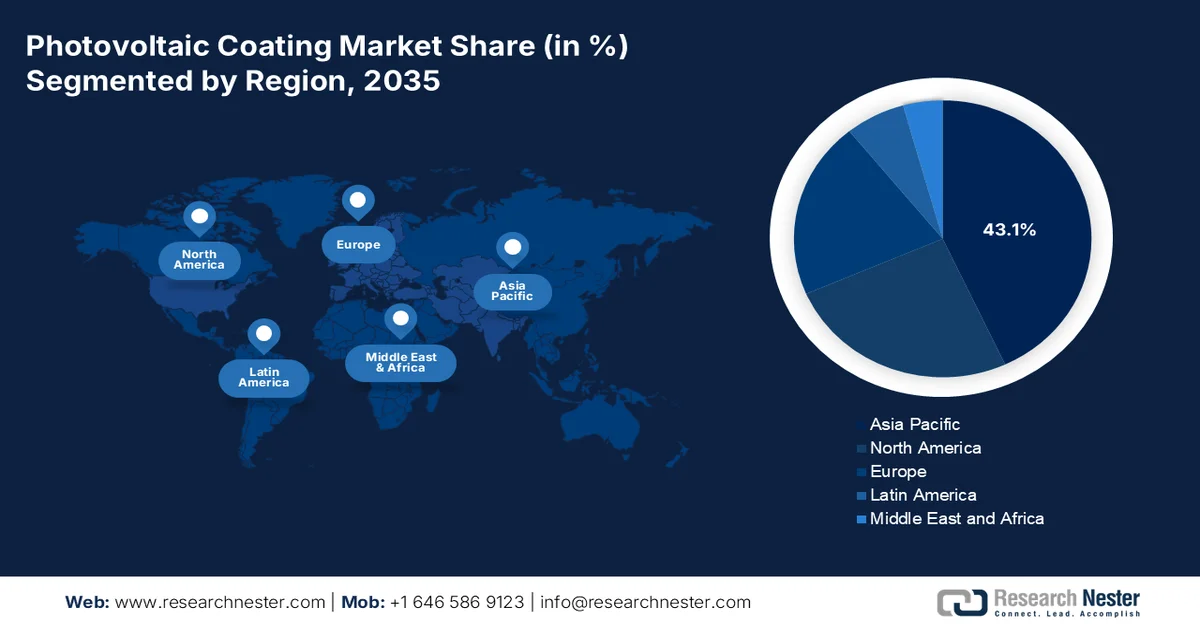
- The Asia Pacific photovoltaic coating market is projected to command a leading 43.1% share by 2035, bolstered by expanding solar capacity, supportive renewable energy targets, strong manufacturing presence, and ambitious installation goals across India and China
- Europe is anticipated to account for a 20.7% share by 2035, fueled by aggressive renewable energy targets, sustainability commitments, and rising adoption of advanced coating technologies for enhanced panel performance
- The photovoltaic coating market in the U.S. accounts for 60.5% of the global share, which is driven by standard regulations in renewable energy and tax credit mandates, along with enhancing the demand for photovoltaic technologies
- The photovoltaic coating market in Japan caters to 15.5% of the regional share, owing to generous investment opportunities in favorable reforms and solar infrastructure, aimed at lowering carbon emissions
Segment Insights:
- In the photovoltaic coating market, the solar panels sub-segment is expected to secure a dominant 59.2% share by 2035, underpinned by the growing importance of solar energy in enabling the transition toward a clean energy future
- The anti-reflective coatings sub-segment is forecast to capture a 42.9% share by 2035, stimulated by its capability to minimize surface light reflection and enhance photovoltaic efficiency
Key Growth Trends:
- Solar technology adoption in the automotive industry
- Decentralized solar installations
Major Challenges:
- Competition from low-cost conventional panels
- Technical integration and performance uncertainty
Key Players: nanopool GmbH, PPG Industries, Inc., 3M Company, FENZI S.p.A., Diamon-Fusion International, Inc., Kriya Materials, Nasiol, TriNano Technologies Pvt. Ltd., Convestro, Chemitek Solar, Ningbo Sun Earth, Contendre Solar.
Global Photovoltaic Coating Market Forecast and Regional Outlook:
Market Size & Growth Projections:
- 2025 Market Size: USD 7.6 billion
- 2026 Market Size: USD 8.2 billion
- Projected Market Size: USD 17.6 billion by 2035
- Growth Forecasts: 8.9% CAGR (2026-2035)
Key Regional Dynamics:
- Largest Region: Asia Pacific (43.1% share by 2035)
- Fastest Growing Region: Europe
- Dominating Countries: United States, China, Germany, Japan, India
- Emerging Countries: South Korea, Spain, Australia, Italy, Brazil
Last updated on : 25 June, 2026
Photovoltaic Coating Market - Growth Drivers and Challenges
Growth Drivers
- Solar technology adoption in the automotive industry: The significant adoption of photovoltaic technology in vehicles, especially on car rooftops and battery power, has created the newest demand for the photovoltaic coating market globally. According to an article published by Renewable and Sustainable Energy Reviews in March 2024, the electric vehicle ownership accounted for 3.4% of light-duty vehicle sales, particularly in the U.S., and almost 6% of domestic homeowners have solar panel installations. Therefore, the increased adoption of electric vehicles is focused on adding the latest load to a household’s electricity bill, leading to loads on bulk power and distribution systems, thereby denoting an optimistic outlook for the market’s expansion.
- Decentralized solar installations: The increased proliferation of rooftop solar systems, especially in urban areas, is considered a prominent driver for the photovoltaic coating market demand. As stated in a data report published by the PIB Government in June 2025, the overall installed power capacity in India successfully reached 476 GW in June 2025. In addition, there was a reduction in power shortages from 4.2% to 0.1% between 2024 and 2025. Besides, more than 28 million households were readily electrified, demonstrating a per capita consumption increase by 45.8%. Moreover, non-fossil fuel sources presently contribute 235.7 GW or 49% of overall capacity, which includes 226.9 GW of renewable, along with 8.8 GW of nuclear, thus denoting a huge growth opportunity for the photovoltaic coating market.
Challenges
- Competition from low-cost conventional panels: The photovoltaic coating market faces intense competitive pressure from standard, uncoated solar panels that benefit from mature manufacturing processes, economies of scale, and well-established supply chains. In many regions, particularly among residential consumers and smaller commercial projects, affordability is the primary purchasing criterion, often outweighing the marginal efficiency gains offered by advanced coatings. This preference for lower-cost alternatives presents a significant obstacle to market penetration. The threat is compounded by ongoing improvements in conventional panel technology, which gradually narrow the performance gap between coated and uncoated solutions.
- Technical integration and performance uncertainty: The aspect of integrating new coating systems into existing solar panel production lines presents significant technical hurdles. Many manufacturers face the prospect of costly equipment upgrades or comprehensive staff retraining to accommodate advanced application techniques. For smaller producers, the capital investment required for integration may be prohibitively high, leading to uneven adoption rates across the industry and limiting the overall market scale. Beyond integration challenges, there are fundamental questions about long-term performance and reliability. Therefore, achieving consistent durability under prolonged UV radiation exposure, temperature cycling, and mechanical wear remains an ongoing technical challenge in the photovoltaic coating market.
Photovoltaic Coating Market Size and Forecast:
| Report Attribute | Details |
|---|---|
|
Base Year |
2025 |
|
Forecast Year |
2026-2035 |
|
CAGR |
8.9% |
|
Base Year Market Size (2025) |
USD 7.6 billion |
|
Forecast Year Market Size (2035) |
USD 17.6 billion |
|
Regional Scope |
|
Photovoltaic Coating Market Segmentation:
Application Segment Analysis
Based on the application segment, the solar panels sub-segment is anticipated to garner the largest share of 59.2% in the photovoltaic coating market by the end of 2035. The sub-segment’s upliftment is primarily attributed to its importance for transitioning to a clean energy future and converting sunlight into electricity, providing a cost-effective and renewable power source. According to an article published by the Global Energy Monitor Organization in 2026, a total of 103,940 solar farm phases are tracked globally. In addition, the alternating current of operating capacity accounts for 2,093 GW, while the prospective capacity caters to 2,247 GW, with 31 countries featuring distributed solar installations. Therefore, with such an increase in solar attributes, there is a huge growth and expansion opportunity for the sub-segment across different regions.
Type Segment Analysis
The anti-reflective coatings sub-segment, which is part of the type segment, is projected to account for the second-largest share of 42.9% in the photovoltaic coating market during the forecast period. The sub-segment’s growth is effectively driven by its role as a special and thin layer that is readily applied to plastic or glass, combating the light from bouncing off the surface. For instance, and based on the August 2024 NLM article, a gradient-specific optimization package was utilized to develop a 2.24-μm-thick antireflective ZnS/Ge/ZnS/Ge coating, further exhibiting the average reflectance of 2.8% for the wavelength ranging from 8 to 12 12 μm. Likewise, a needle optimization combined with gradual evolution technology was utilized to improve the anti-reflective multi-layer coatings with YF3 and ZnSe materials, resulting in a 3.5-μm-thick coating with an average reflectance of 0.9 %, thus ensuring the sub-segment’s importance.
End use Industry Segment Analysis
During the forecast timeline, the utilities segment under the end use industry is expected to account for the third-largest share of 38.7% in the photovoltaic coating market. The segment’s development is highly propelled by the scale and operational priorities of large-scale solar installations. Besides, utility-scale solar farms, typically spanning hundreds of acres and generating megawatts to gigawatts of power, represent the most demanding application environment for photovoltaic coatings. These installations are often located in remote, arid, or semi-arid regions where solar irradiance is high but environmental challenges, including dust accumulation, sand abrasion, and extreme temperature fluctuations, are equally intense. For utility operators, the economic calculus is straightforward, wherein every percentage point of efficiency gain translates into substantial revenue increases over a project's total lifespan.
Our in-depth analysis of the photovoltaic coating market includes the following segments:
|
Segment |
Subsegments |
|
Application |
|
|
Type |
|
|
End use Industry |
|

Vishnu Nair
Head - Global Business DevelopmentCustomize this report to your requirements — connect with our consultant for personalized insights and options.
Photovoltaic Coating Market - Regional Analysis
APAC Market Insights
The Asia Pacific in the photovoltaic coating market is anticipated to garner the largest share of 43.1% by the end of 2035. The market’s upliftment in the region is primarily attributed to an expansion in massive solar capacity, standard government renewable energy targets, the presence of the manufacturing industry, ambitious installation objectives in India and China, and a surge in the demand for different coatings. For instance, as stated by the 2026 IEA Organization article, Southeast Asia significantly accounts for 9% of the global population, 4% of its gross domestic product (GDP), and almost 20% of worldwide energy growth demand under the 2035 policy setting. Besides, generous investments in efficiency, electrification, and renewables supported growth in fossil fuel import requirements, which saved the region nearly USD 30 billion in import expenses as of 2025, thus positively contributing to the market’s growth.
Total Energy Shipment in the Asia Pacific, 2023
|
Countries |
Production (TJ) |
Supply % |
|
China |
168,386,888 |
57.3 |
|
India |
45,951,457 |
15.6 |
|
Japan |
15,843,843 |
5.4 |
|
Indonesia |
11,565,997 |
3.9 |
|
Korea |
11,554,997 |
3.9 |
|
Thailand |
5,557,589 |
1.9 |
|
Australia |
5,500,230 |
1.9 |
|
Chinese Taipei |
4,627,063 |
1.6 |
|
Malaysia |
4,424,981 |
1.5 |
Source: IEA Organization
The photovoltaic coating market in Japan is growing significantly, owing to energy security, research and development leadership in advanced materials, climate-based durability requirements, and standard policy demand for next-generation photovoltaic technology. As stated in the April 2026 Institute for Energy Economics and Financial Analysis article, the Ministry of Economy, Trade and Industry (METI) noted the temporary suspension of the 50% used rate cap on inefficient coal-fired power facilities as of 2026. Additionally, these inefficient facilities are considered to be operating below 42% thermal efficiency, along with a combined capacity of an estimated 9 GW. Besides, increasing the utilization rates for such facilities tends to lower liquid nitrogen gas (LNG) consumption by roughly 500,000 tons every year, thus positively contributing to the market’s upliftment.
The aspects of the presence of the largest solar panel installer and manufacturer, infrastructure investments, the existence of manufacturing organizations, continuous policy support by the government, and the demand for coating technologies are a few factors that are bolstering the photovoltaic coating market in China. Based on the March 2026 CSIS Organization article, the country effectively produced 93.2% of the global polysilicon, which is followed by 96.6% of wafers, 92.3% of photovoltaic cells, and 86.4% of photovoltaic modules as of 2024. Besides, solar module payers’ pricing dropped by half as of 2023, and further by 25% in 2024, while polysilicon prices amounted to USD 9,572.2 (RMB 65,000) per ton. However, the nation’s solar sector is gradually reshaping its export strategy, thereby making it suitable for boosting the market’s growth and demand.
Europe Market Insights
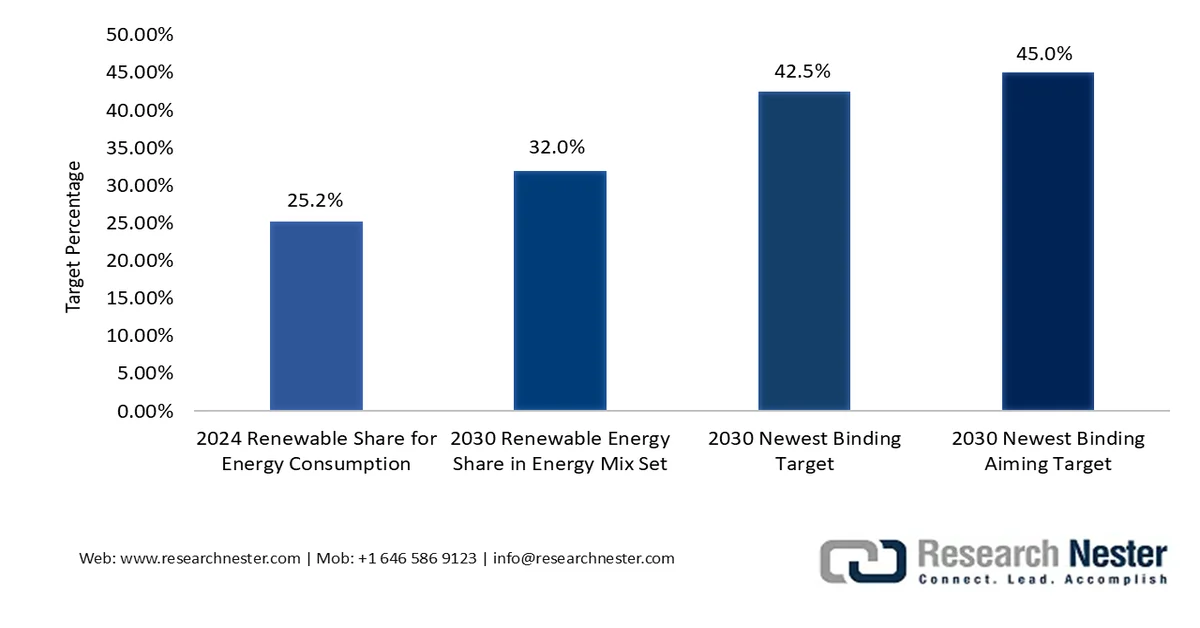
Europe in the photovoltaic market is expected to emerge as the fastest-growing region, with a global share of 20.7% during the forecast period. The market’s development in the region is highly propelled by the existence of aggressive renewable energy targets, commitment to sustainability, an upsurge in the need for innovative coatings for enhancing panel durability and efficiency, along with the incorporation of next-generation solar technologies. According to the 2025 European Commission article, the overall energy industry is responsible for over 75% of regional greenhouse gas emissions. Additionally, this readily increased the renewable energy share and successfully reached the objective of diminishing net greenhouse gas emissions by almost 55% by the end of 2030. Besides, the robust support for renewable energy rollout among regional citizens indicated an 88% increase in renewable energy, thus driving the market expansion.
Europe Renewable Energy Key Facts, 2024-2030
Source: European Commission
The photovoltaic coating market in Germany is gaining increased traction, owing to the expanded solar facility, innovative technological advancements, the presence of strong policy frameworks, generous budget allocations and expenditures, along with the huge need for durable coatings. As stated in an article published by the Clean Energy Wire Organization in June 2025, the country’s finance minister proclaimed a generous investment of USD 566.3 billion (500 billion euros) by the end of 2029 for ensuring neutrality in climate and infrastructure. This particular investment is considered the newest draft budget that focuses on increasing spending in defense and energy expenses, as well as for the national Climate and Transformation Fund (CTF). Regarding this, the domestic defense budget is also expected to double by the same year, from almost USD 70.2 billion (62 billion Euros) to over USD 172.1 billion (152 billion Euros).
The strong focus on technological sustainability and innovation, along with a reduction in the environmental footprint of solar manufacturing, suitable governmental support, commitment towards decarbonization, and the development of innovative coatings and materials, are a few factors that are responsible for fueling the photovoltaic coating market in France. As per an article published by the Foreign Policy Association in 2026, the country readily doubled its solar production capacity target to 1 GW, which is nearly equivalent to 1 nuclear reactor. This particular initiative offered support to the lost 15,000 employment opportunities, leading to the employment of 18,000 people. Besides, the nation caters to almost 75% of the total electric power, which is about 63 GW, readily produced from nuclear energy, operated by Électricité de France S.A. (EDF) through 58 nuclear reactors, thus denoting an optimistic outlook for the market’s development.
North America Market Insights
North America in the photovoltaic coatings market is predicted to witness a considerable growth of 25.4% globally by the end of the stipulated timeline. The market’s growth in the region is effectively driven by the growing emphasis on operational efficiency, technological advancements, policy support, and an increase in the demand for coatings. According to a data report published by the U.S. Department of Energy (DOE) in October 2024, the U.S. successfully installed an estimated 14.1 GW-hours or 4.3 GW alternating current of energy storage into the electricity grid in both the first and second quarters of 2024. Besides, the thin-film photovoltaic indicated almost 3% of worldwide growth as of 2023, it readily catered to over 17% of domestic photovoltaic deployment, which accounts for 24% of utility-based deployments, thereby positively impacting the photovoltaic coating market growth in the region.
Solar Energy Generation in the U.S., 2024
|
Cities |
Concentrated Solar Power |
Residential |
Commercial and Industrial |
Urban Photovoltaics |
|
California |
15.5% |
7.6% |
3.6% |
0.8% |
|
Nevada |
21.0% |
3.2% |
0.4% |
0.4%Massa |
|
Massachusetts |
8.3% |
6.5% |
9.6% |
- |
|
Hawaii |
5.8% |
8.1% |
4.6% |
- |
|
Vermont |
8.3% |
5.9% |
3.7% |
- |
|
Utah |
10.5% |
2.0% |
0.4% |
- |
|
Rhode Island |
4.4% |
1.9% |
4.7% |
- |
|
Arizona |
5.7% |
3.2% |
0.6% |
0.7% |
Source: U.S. Department of Energy
The U.S. in the photovoltaic coating market is gaining increased exposure, owing to an acceleration in the policy-based economy, a surge in the demand for advanced materials and domestic supply chains, along with a focus on efficiency and technological innovations. As stated in an article published by the Solar Energy Industries Association in June 2025, the country installed 10.8 GW of direct current capacity in the first quarter of 2025, demonstrating a decrease by 7% from the 2024 quarter 1 and 43% from quarter 4. In addition, solar overall accounted for 69% of the newest electricity-generating capacity to the national grid. Moreover, the nation also added 8.6 GW of solar module manufacturing capacity, constituting a total of 51 GW. In this regard, Texas installed the majority of solar capacity, accounting for 2.7 GW of direct current, which is 92% more than Florida, thus bolstering the market growth.
The increased need for climate-specific technology, strong provincial and federal incentives, and a robust growth in solar capacity are certain factors that are responsible for fueling the photovoltaic coating market in Canada. As per an article published by Natural Resources Canada in December 2024, there was a significant upliftment in the installation capacity for solar photovoltaic power, reaching 6,452 GW as of 2022. In addition, the country also effectively generated 4,323 GW-hours of energy from solar power in the same year, which offered suitable electricity to power more than 470,000 residential homes. Besides, in terms of solar thermal energy, the country’s utilization has surged recently, reaching almost 920 MW thermal, thereby making it suitable for enhancing the market exposure.
Key Photovoltaic Coating Market Players:
- nanopool GmbH (Germany)
- PPG Industries, Inc. (U.S.)
- 3M Company (U.S.)
- FENZI S.p.A. (Italy)
- Diamon-Fusion International, Inc. (U.S.)
- Kriya Materials (China)
- Nasiol (Turkey)
- TriNano Technologies Pvt. Ltd. (India)
- Convestro (Germany)
- Chemitek Solar (Portugal)
- Ningbo Sun Earth (China)
- Contendre Solar (India)
- Company Overview
- Business Strategy
- Key Product Offerings
- Financial Performance
- Key Performance Indicators
- Risk Analysis
- Recent Development
- Regional Presence
- SWOT Analysis
- nanopool GmbH specializes in liquid glass nanotechnology-based coatings for photovoltaic modules. Their NP® PV coating forms an ultra-thin, transparent protective layer that repels dust, dirt, and algae while simultaneously increasing light transmission.
- PPG Industries, Inc. is a global leader in coatings and specialty materials with a significant presence in the solar energy sector. The company develops advanced anti-reflective and protective coating formulations specifically engineered for photovoltaic glass applications.
- 3M Company is a diversified technology company offering high-performance anti-reflective and hydrophobic coating products for the solar industry. Their photovoltaic coatings are designed to maximize light transmission, reduce soiling, and protect panels from environmental degradation.
- FENZI S.p.A. is a specialized manufacturer of glass coatings and surface treatments, including solutions for solar panel applications. The company offers protective and functional coatings that enhance the optical performance and weather resistance of photovoltaic modules.
- Diamon-Fusion International, Inc. specializes in hydrophobic protective coatings that repel water, dust, and contaminants from solar panel surfaces. Their patented coating technology is designed to improve energy output by keeping panels clean and reducing the frequency of manual cleaning.
Here is a list of key players operating in the global photovoltaic coating market:
The global photovoltaic coating market features a fragmented competitive landscape with a mix of specialized chemical manufacturers and diversified material science companies. Europe-based manufacturers such as nanopool GmbH and FENZI S.p.A. compete alongside North America-specific players, such as PPG Industries and 3M, while Asia-based firms, including Kriya Materials and Nasiol, hold significant regional presence. Differentiation centers on proprietary nanotechnology formulations, with players focusing on super-hydrophobic, anti-reflective, and self-cleaning properties, and application methods for both OEM factory coating and retrofit solutions. Besides, in October 2023, Covestro joined forces with KerTec, and expanded the utilization of ARCA®, which is Covestro’s retrofit anti-reflective coating solution, in solar parks across North America, thus proliferating the photovoltaic coating industry’s growth globally.
Corporate Landscape of the Photovoltaic Coating Market:
Recent Developments
- In February 2026, Chemitek Solar successfully developed the Drone AgroPV Cleaning Agent, which is an advanced cleaning solution, particularly designed for drone-specific cleaning of agrivoltaic systems.
- In July 2025, Ningbo Sun Earth introduced the newest photovoltaic module, indicating a major innovation in solar energy solutions and optimizing the reliability and efficiency of solar energy conversion, and catering to the demands of commercial and residential users.
- In June 2023, Contendre Solar unveiled its advanced solar solutions at the Intersolar Europe exhibition and further featured start-of-the-art technologies that are readily designed for maximizing energy production.
- Report ID: 8632
- Published Date: Jun 25, 2026
- Report Format: PDF, PPT
- Explore a preview of key market trends and insights
- Review sample data tables and segment breakdowns
- Experience the quality of our visual data representations
- Evaluate our report structure and research methodology
- Get a glimpse of competitive landscape analysis
- Understand how regional forecasts are presented
- Assess the depth of company profiling and benchmarking
- Preview how actionable insights can support your strategy
Explore real data and analysis
Frequently Asked Questions (FAQ)
About this Report
Connect with our Expert


Report, 2026-2035



Copyright @ 2026 Research Nester. All Rights Reserved.
