Gastrointestinal Drugs Market Outlook:
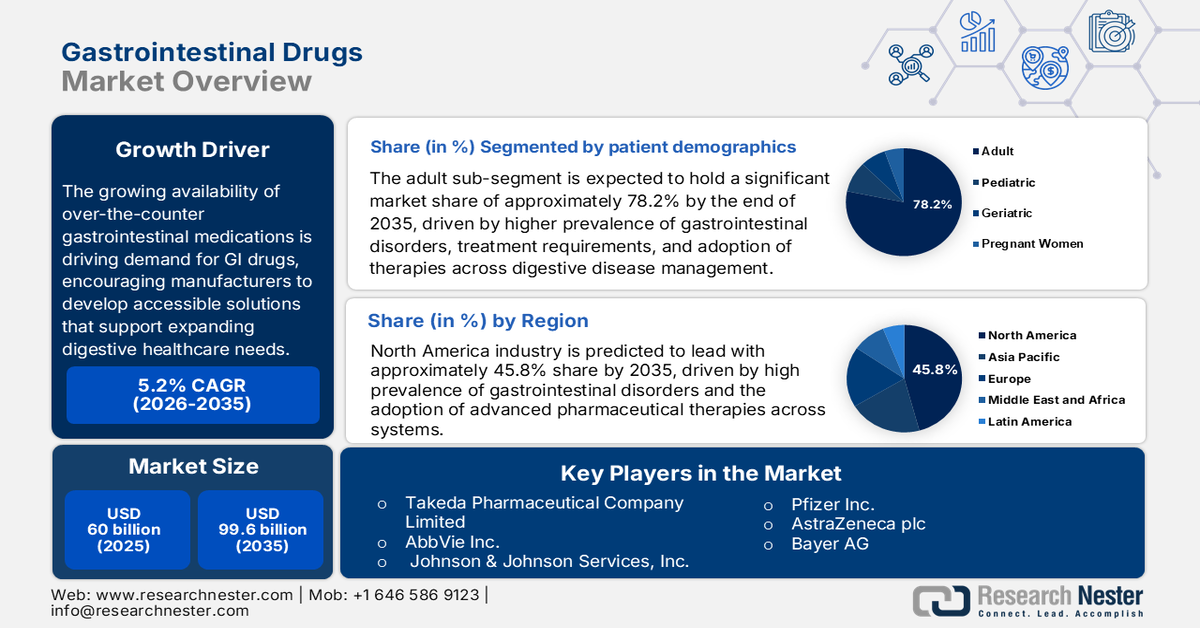
Gastrointestinal Drugs Market size was valued at USD 60 billion in 2025 and is projected to cross USD 99.6 billion by the end of 2035, expanding at more than 5.2% CAGR during the forecast period, i.e., 2026-2035. In 2026, the industry size of gastrointestinal drugs is evaluated at USD 63.1 billion.
The gastrointestinal drugs market is expected to witness steady growth during the forecast period for the increasing prevalence of gastrointestinal disorders globally. Pharmaceutical treatment remains in demand because of the growing number of patients getting affected by conditions such as gastroesophageal reflux disease (GERD), irritable bowel syndrome (IBS), inflammatory bowel disease (IBD), and peptic ulcers. Changes in dietary habits, rising stress levels, inactive lifestyles, and population aging have contributed to the growing incidence of digestive disorders across both developed and developing economies. According to the American Gastroenterological Association (AGA), approximately 60-70 million Americans suffer from gastrointestinal diseases which can disturb their quality of life and require serious medical treatment.
Growing awareness of digestive health has improved earlier diagnosis and treatment among patients for gastrointestinal conditions at an early age. In addition, improved access to healthcare services in many regions has made diagnosis and treatment more affordable. As gastrointestinal disorders often require ongoing treatment and follow-up care, the need for gastrointestinal drugs continues to remain consistent across healthcare markets.
Key Gastrointestinal Drugs Market Insights Summary:
Regional Highlights:
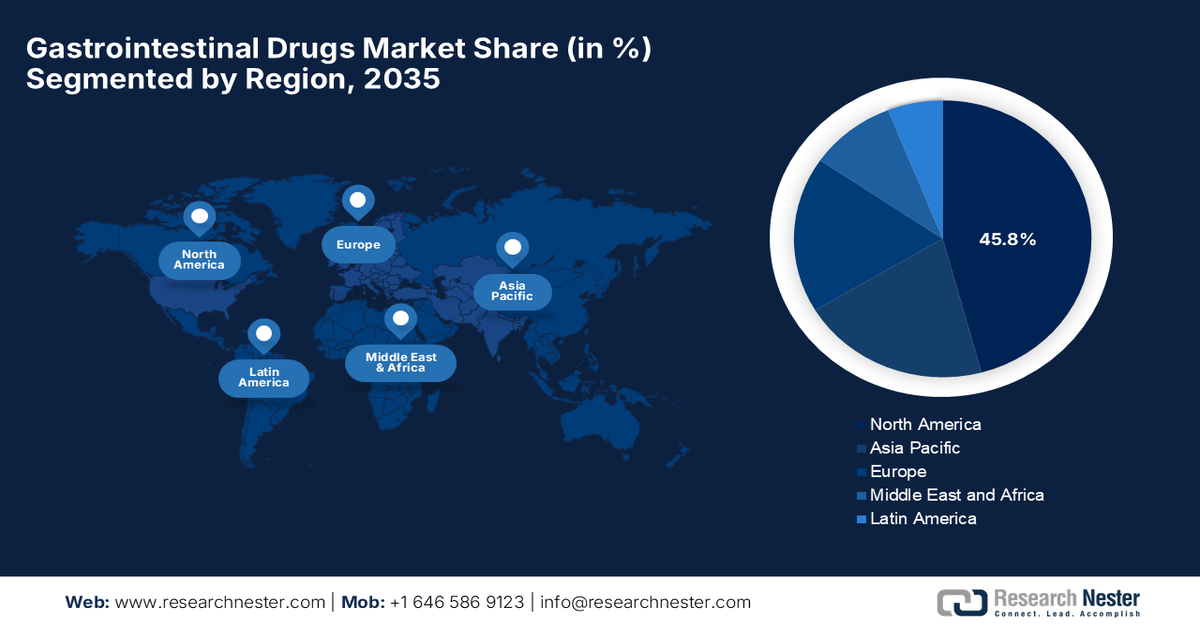
- The North America region is anticipated to command 45.8% of the gastrointestinal drugs market by 2035, bolstered by the high prevalence of gastrointestinal disorders, strong healthcare infrastructure, wider access to pharmaceutical treatments, and increasing awareness regarding digestive health
- Asia Pacific is projected to experience robust growth throughout 2026-2035, propelled by a large population base, rising healthcare expenditure, improving access to healthcare services, and increasing awareness regarding digestive health
Segment Insights:
- The adult sub-segment is projected to capture 78.2% of the gastrointestinal drugs market by 2035, reinforced by the high prevalence of gastrointestinal disorders among the adult population
- The gastroesophageal reflux disease (GERD) sub-segment is expected to secure 39.2% share by 2035, fueled by the increasing occurrence of acid-related digestive disorders and the widespread use of pharmaceutical therapies for symptom management
Key Growth Trends:
- Growing availability of over-the-counter (OTC) gastrointestinal medication
- Expansion of biologics and advanced therapies for gastrointestinal diseases
Major Challenges:
- Side effects associated with long-term use of gastrointestinal drugs
- High cost of advanced gastrointestinal therapies
Key Players: Takeda Pharmaceutical Company Limited, AbbVie Inc., Johnson & Johnson Services, Inc., Pfizer Inc., AstraZeneca plc, Bayer AG, Dr. Falk Pharma GmbH, Eisai Co., Ltd., Alfasigma Group, Bausch Health Companies Inc., Ironwood Pharmaceuticals, Inc., Sebela Pharmaceuticals, Inc., Cosmo Pharmaceuticals N.V., RedHill Biopharma Ltd., Phathom Pharmaceuticals, Inc.
Global Gastrointestinal Drugs Market Forecast and Regional Outlook:
Market Size & Growth Projections:
- 2025 Market Size: USD 60 billion
- 2026 Market Size: USD 63.1 billion
- Projected Market Size: USD 99.6 billion by 2035
- Growth Forecasts: 5.2% CAGR (2026-2035)
Key Regional Dynamics
- Largest Region: North America (45.8% share by 2035)
- Fastest Growing Region: Asia Pacific
- Dominating Countries: United States, Germany, Japan, China, United Kingdom
- Emerging Countries: India, South Korea, Brazil, Indonesia, Vietnam
Last updated on : 23 July, 2026
Gastrointestinal Drugs Market - Growth Drivers and Challenges
Growth Drivers
- Growing availability of over-the-counter (OTC) gastrointestinal medication-The wider availability of over- the- counter gastrointestinal medications across various healthcare markets has made treatment more accessible and easier for people experiencing common digestive issues such as heartburn, acid reflux, indigestion, and constipation. Many of these products are now widely available through retail pharmacies, drug stores, and online channels, which support consumers in managing mild symptoms without the need to visit a healthcare facility for every issue. This is the cause of consistent demand for gastrointestinal drugs across both developed and emerging markets. In addition, growing awareness of digestive health and self-management practices has increased the use of non-prescription treatment options. The expansion of retail healthcare channels continues to strengthen the availability of gastrointestinal medications across a broader consumer base.
- Expansion of biologics and advanced therapies for gastrointestinal diseases: The treatment for gastrointestinal disorders is changing with the high use of biologics and other advanced therapies, especially for conditions such as Crohn’s disease and ulcerative colitis. According to the Centers for Disease Control and Prevention (CDC), approximately 3.1 million adults in the U.S. have been diagnosed with inflammatory bowel disease (IBD), which includes Crohn's disease and ulcerative colitis. Healthcare providers are increasingly adopting specific treatment approaches for patients who do not respond sufficiently to conventional therapies.
Pharmaceutical companies continue to expand their gastrointestinal drug portfolio to meet the rising demand for effective treatments. The new treatments entering the market have widened the options available for managing serious digestive conditions and supported the adoption of more specialized treatment approaches. The developers are also focusing on innovative therapies for gastrointestinal disorders, especially in those areas where current treatment options remain limited. - Growing elderly population requiring gastrointestinal care: The demand for gastrointestinal drugs is driven by the growth in the elderly population. Older adults are more likely to experience digestive disorders, including acid reflux, constipation, peptic ulcers, and other gastrointestinal conditions. According to the WHO, one in six people globally will be aged 60 years or older by 2030. The rising number of elderly populations is expected to increase the number of individuals requiring ongoing management of gastrointestinal conditions, supporting demand for gastrointestinal drugs across healthcare markets.
As life expectancy increases in several countries, healthcare providers are managing a larger number of patients requiring long-term gastrointestinal care. This has supported the use of gastrointestinal drugs across hospitals, clinics, and other healthcare settings. Among aging patients, the need for continued treatment and symptom management remains an important factor in supporting the demand for gastrointestinal therapies.
Challanges
- Side effects associated with long-term use of gastrointestinal drugs: Many gastrointestinal disorders require long-term treatment, that result in prolonged use of gastrointestinal medications among patients. However, some medications’ extended use can be associated with side effects that require additional monitoring or treatment adjustments. For example, long-term use of proton pump inhibitors (PPIs) has raised concerns regarding nutrient deficiencies and bone health. As a result, healthcare providers often consider the benefits and potential risks of long-term therapy when developing treatment plans. Healthcare providers often consider these factors into account when managing patient who require ongoing gastrointestinal treatment.
- High cost of advanced gastrointestinal therapies- The cost of advanced gastrointestinal therapies remains a concern across several healthcare markets. Some biologics and specialized treatment used for conditions such as Crohn’s disease and ulcerative colitis are generally more expensive than the conventional drug therapies. In some regions, limited reimbursement coverage and high treatment costs can affect patient access to these medications. Healthcare providers and payers also continue to evaluate treatment costs alongside clinical outcomes when selecting appropriate therapies. Across healthcare system, as the use of advanced gastrointestinal treatments increases, affordability remains an important consideration.
Gastrointestinal Drugs Market Size and Forecast:
| Report Attribute | Details |
|---|---|
|
Base Year |
2025 |
|
Forecast Year |
2026-2035 |
|
CAGR |
5.2% |
|
Base Year Market Size (2025) |
USD 60 billion |
|
Forecast Year Market Size (2035) |
USD 99.6 billion |
|
Regional Scope |
|
Gastrointestinal Drugs Market Segmentation:
Patient Demographics Segment Analysis
The adult sub-segment under the patient demographics segment is anticipated to account for the largest share of approximately 78.2% by the end of 2035. Among adult population, the segment's growth is primarily attributed to the high prevalence of gastrointestinal disorders. Conditions such as GERD, IBS, peptic ulcers, and IBD are commonly diagnosed in adults, resulting in consistent demand for pharmaceutical treatment. Lifestyle factors, changing dietary habits, work-related stress, and sedentary routines have further contributed to the growing burden of digestive disorders within this population group. In addition, adults are more likely to seek medical consultation and receive ongoing treatment for chronic gastrointestinal conditions, supporting the use of gastrointestinal drugs across healthcare settings. The increasing focus on digestive health and disease management is expected to maintain demand for gastrointestinal therapies among the adult population throughout the forecast period.
Application Segment Analysis
Under the application segment, gastroesophageal reflux disease (GERD) sub-segment is anticipated to hold the largest share of approximately 39.2% in the gastrointestinal drugs market by the end of 2035. The segment's growth is mainly driven by the increasing occurrence of acid-related digestive disorders and the widespread use of pharmaceutical therapies for symptom management. Across both developed and developing countries there are higher number of GERD cases and reason include increase consumption of processed foods, changing dietary patterns, in-active lifestyles, and rising obesity levels. As healthcare providers pay more attention on early diagnosis and long-term management of digestive disorders, demand for GERD-related therapies is expected to remain strong throughout the forecast period.
Drug Type Segment Analysis
Under the drug type segment, proton pump inhibitors (PPIs) sub-segment is expected to hold the largest revenue share by 40% in the gastrointestinal drugs market by the end of 2035. The segment's growth is ascribed to the extensive use of PPIs across a broad range of gastrointestinal disorders, including gastroesophageal reflux disease (GERD), peptic ulcers, and other acid-related conditions. Due to their ability to provide long-lasting acid suppression, in preferred treatment option in both acute and chronic disease management, PPIs are widely prescribed. Across healthcare markets, their availability in prescription as well as over-the-counter formulations has further expanded patient access. Moreover, the continued inclusion of PPIs in treatment guidelines and routine clinical practice has supported their global use across hospitals, clinics, and retail healthcare channels. These factors are expected to help the segment maintain its leading position during the forecast period.
Route of Administration Segment Analysis
The oral sub-segment under the route of administration segment is expected to account for 71% of the gastrointestinal drugs market by the end of 2035. The global availability of gastrointestinal medications in tablets, capsules, and liquid formulations has contributed to the strong presence of the segment across healthcare markets. For both short-term and long-term therapy, oral administration remains broadly used in the treatment of digestive disorders as it provides a practical option. There are several commonly prescribed gastrointestinal drugs, that includes proton pump inhibitors (PPIs), antacids, laxatives, and antidiarrheal medications, are available in oral forms, supporting to their regular use across hospitals, clinics, and homecare settings. Moreover, the availability of both prescription and over-the-counter products has improved access to gastrointestinal treatments. The regular use of oral therapies across a broad patient population is expected to help the segment maintain its leading position during the forecast period.
Our in-depth analysis of the gastrointestinal drugs market includes the following segments:
|
Segment |
Subsegments |
|
Application |
|
|
Drug Type |
|
|
Route of Administration |
|
|
Patient Demographics |
|

Vishnu Nair
Head - Global Business DevelopmentCustomize this report to your requirements — connect with our consultant for personalized insights and options.
Gastrointestinal Drugs Market - Regional Analysis
North America Market Insights
North America gastrointestinal drugs market is expected to register the largest share, approximately 45.8%, by the end of 2035. The region continues to be supported by the high prevalence of gastrointestinal disorders, strong healthcare facilities, wider access to pharmaceutical treatments, and increasing awareness regarding digestive health. There is a huge demand for gastrointestinal drugs across the region because of the presence of established healthcare infrastructure and continued pharmaceutical innovation. According to the CDC, colorectal cancer screening programs continue to promote early detection and preventive gastrointestinal care across the U.S. Moreover, global screening initiatives and the increasing emphasis on preventive gastrointestinal care have improved diagnosis rates and enhanced treatment across the region, which supports the continuous demand for gastrointestinal therapies.
The gastrointestinal drugs market in the U.S. is supported by strong pharmaceutical research activities, wider availability of treatment options, and increasing investment in GI care. The use of therapies in the market is in demand for the management of colorectal disorders, IBD, GERD, and other digestive conditions. According to the American Cancer Society, approximately 154,270 new cases of colorectal cancer are expected to be diagnosed in the U.S. in 2025. The requirement for ongoing treatment and disease management among these patient groups continues to support the use of gastrointestinal therapies across healthcare settings.
The gastrointestinal drugs market in Canada is supported by the growing awareness of digestive health, broad access to healthcare services, and the increasing number of patients requiring treatment for chronic gastrointestinal conditions. The country is expected to experience a surge in demand for therapies used in the management of IBD, GERD, and other digestive disorders. According to Crohn’s and Colitis Canada, the number of Canadians living with inflammatory bowel disease is expected to reach approximately 470,000 by 2035, representing around 1.1% of the population. The increasing need for long-term treatment, disease monitoring, and symptom management continues to contribute to the use of gastrointestinal drugs across healthcare settings in the country.
APAC Market Insights
Asia Pacific is expected to witness prominent growth in the gastrointestinal drugs market during the forecast period. The regional market is benefiting from a large population base, rising healthcare expenditure, improving access to healthcare services, and increasing awareness regarding digestive health. According to the United Nations Economic and Social Commission for Asia and the Pacific (UNESCAP), the number of people aged 65 years and above is anticipated to reach approximately 1.6 billion by 2050. Across the region, the huge number of patients getting diagnosed with gastrointestinal disorders are because of their changing dietary pattern, urbanization, and population aging are the prominent reasons. However, improvements in healthcare infrastructure and increasing access to pharmaceutical therapies continue to support the adoption of gastrointestinal drugs throughout Asia Pacific.
The gastrointestinal drugs market in Japan is supported by the increasing use of therapies for acid-related and chronic digestive disorders, along with the country's well-established healthcare system. Drugs that are used in the treatment of GERD, IBD, peptic ulcers, and other gastrointestinal conditions are largely prescribed across hospitals, clinics, and other healthcare settings. According to a 2024 study published in the American Journal of Gastroenterology, a web-based survey of approximately 10,000 Japanese adults found that 1.5% had belching disorders, with gastroesophageal reflux disease (GERD) identified as a significant associated condition. The need for ongoing treatment and symptom control among affected patients continues to contribute to the use of gastrointestinal drugs across Japan.
In China, the gastrointestinal drugs market is increasing because of healthcare infrastructure, improving access to healthcare services, and the rising use of pharmaceutical therapies for digestive disorders. According to a 2025 real-world study published in the Journal of Gastroenterology and Hepatology Open, Helicobacter pylori infection remains a prominent healthcare concern in China, which requires regular demand for diagnosis, eradication therapy, and follow-up management across healthcare settings. The huge number of patients requiring treatment and follow-up care continues to contribute to the utilization of gastrointestinal drugs across the country.
Europe Market Insights
During the forecast period, Europe gastrointestinal drugs market is expected to witness significant growth during the forecast period. The regional gastrointestinal drugs market is supported by established healthcare systems, global access to pharmaceutical therapies, and growing awareness regarding digestive health. The rising number of patients with GI disorders, coupled with an aging population and expanding screening initiatives for digestive diseases, continues to contribute to the utilization of gastrointestinal drugs across the region. Favorable healthcare policies and ongoing advancements in treatment options have supported access to gastrointestinal therapies in several European countries.
The gastrointestinal drugs market in Germany is supported by their strong healthcare infrastructure, broad access to pharmaceutical therapies, and the increasing number of patients that need treatment for digestive disorders. According to recent studies, more than 500,000 people in Germany are living with inflammatory bowel diseases, including Crohn’s disease and ulcerative colitis. The regular diagnosis, treatment, and long-term disease management among affected patients continues to be the reason for the use of GI drugs across the country.
Key Gastrointestinal Drugs Market Players:
- Takeda Pharmaceutical Company Limited (Japan)
- AbbVie Inc. (U.S.)
- Johnson & Johnson Services, Inc. (U.S.)
- Pfizer Inc. (U.S.)
- AstraZeneca plc (UK)
- Bayer AG (Germany)
- Dr. Falk Pharma GmbH (Germany)
- Eisai Co., Ltd. (Japan)
- Alfasigma Group (Italy)
- Bausch Health Companies Inc. (Canada)
- Ironwood Pharmaceuticals, Inc. (U.S.)
- Sebela Pharmaceuticals, Inc. (U.S.)
- Cosmo Pharmaceuticals N.V. (Ireland)
- RedHill Biopharma Ltd. (Israel)
- Phathom Pharmaceuticals, Inc. (U.S.)
- Company Overview
- Business Strategy
- Key Product Offerings
- Financial Performance
- Key Performance Indicators
- Risk Analysis
- Recent Development
- Takeda Pharmaceutical Company Limited has a strong place in the gastrointestinal drugs market owing to its wide portfolio that includes therapies for inflammatory bowel disease (IBD), acid-related disorders, and other gastrointestinal conditions. Gastrointestinal conditions treatment remains one of the company's key therapeutic areas.
- AbbVie Inc. has built a strong gastrointestinal drugs market value through its biologic therapies for inflammatory bowel disease, specifically ulcerative colitis and Crohn's disease. The company continues to increase its immunology portfolio to address the increasing demand for advanced GI treatments.
- AstraZeneca plc offers a range of therapies for GI disorders that includes gastroesophageal reflux disease and acid-related conditions. The company continues to strengthen its presence in the gastrointestinal drugs market by expanding its treatment portfolio for acid-related disorders.
Here is a list of key players operating in the global gastrointestinal drugs market:
The gastrointestinal drugs market is supported by major companies such as Takeda Pharmaceutical Company Limited, AbbVie Inc., Johnson & Johnson Services, Inc., Pfizer Inc., AstraZeneca plc, and Bayer AG. To address the increasing demand for effective treatment options, these companies are developing therapies for conditions such as inflammatory bowel disease, gastroesophageal reflux disease, peptic ulcers, and irritable bowel syndrome. They are doing partnership, licensing agreements, and product approvals to support their product offering and increase their presence in key regional markets.
Corporate Landscape of the Gastrointestinal Drugs Market:
Recent Developments
- In April 2026, Phathom Pharmaceuticals reported that its gastrointestinal therapy VOQUEZNA® continued strong commercial growth, with approximately 1.35 million prescriptions filled to date and first-quarter net revenues increasing by 104% year-over-year. The development highlights the growing adoption of innovative therapies for acid-related gastrointestinal disorders.
- In March 2025, Johnson & Johnson announced that the U.S. FDA approved TREMFYA® (guselkumab) for adults with moderately to severely active Crohn's disease, the first and only IL-23 inhibitor offering both subcutaneous and intravenous induction options.
- In July 2024, AbbVie announced that the European Commission approved SKYRIZI® (risankizumab) for the treatment of adults with moderately to severely active ulcerative colitis. The approval expanded AbbVie’s inflammatory bowel disease portfolio and introduced an additional treatment option for ulcerative colitis patients across Europe.
- Report ID: 8689
- Published Date: Jul 23, 2026
- Report Format: PDF, PPT
- Explore a preview of key market trends and insights
- Review sample data tables and segment breakdowns
- Experience the quality of our visual data representations
- Evaluate our report structure and research methodology
- Get a glimpse of competitive landscape analysis
- Understand how regional forecasts are presented
- Assess the depth of company profiling and benchmarking
- Preview how actionable insights can support your strategy
Explore real data and analysis
Frequently Asked Questions (FAQ)
About this Report
Connect with our Expert


Report, 2026-2035



Copyright @ 2026 Research Nester. All Rights Reserved.
