Atherosclerosis Drugs Market Outlook:
Atherosclerosis Drugs Market size was valued at USD 34.6 billion in 2025 and is projected to cross USD 47.8 billion by the end of 2035, expanding at more than 3.3% CAGR during the forecast period, i.e., 2026-2035. In 2026, the industry size of atherosclerosis drugs is estimated at USD 35.7 billion.
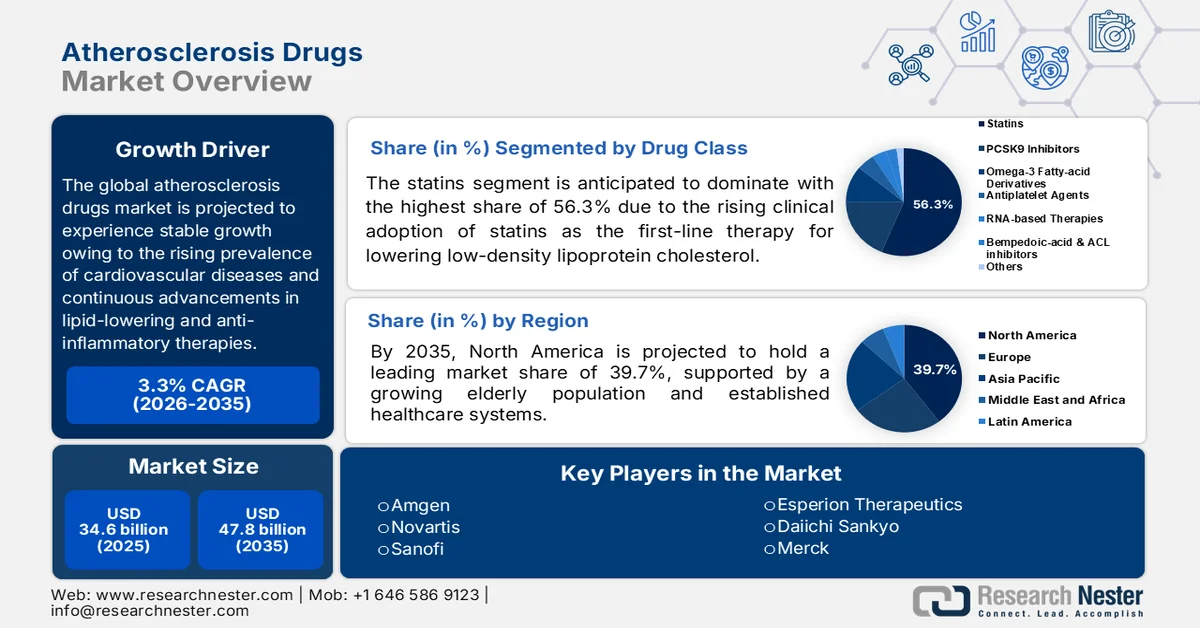
The atherosclerosis drugs market is registering stable expansion, which is facilitated by the rising prevalence of cardiovascular diseases, growing awareness about early diagnosis, and continuous advancements in lipid-lowering and anti-inflammatory therapies. In addition, the shift toward precision medicine, advanced biotechnology, and proactive therapeutic management is also positioning the market for solid growth in the upcoming years. In this context, the article published by the National Institutes of Health (NIH) in August 2023 stated that atherosclerosis is the leading cause of cardiovascular diseases, mainly ischemic heart disease and ischemic stroke, which rank among the top causes of global mortality. Besides, the article also mentions that in the U.S., around 610,000 people die from heart disease annually, wherein coronary heart disease causes more than 370,000 deaths each year, and around 735,000 heart attacks occur annually, thus denoting a positive opportunity for the market to grow.
Global Economic Burden of Atherosclerotic Cardiovascular Disease (ASCVD): Healthcare Costs and Country-Wise Impact
|
Region/Country |
Estimated ASCVD Cost |
|
Global (Direct healthcare costs) |
USD 680 billion/year |
|
Global (Including indirect costs: productivity loss, informal caregiving, lost time) |
Up to USD 1.4 trillion/year (0.7% of global GDP) |
|
Netherlands |
USD 7.5 billion/year |
|
LDL-C–attributable ASCVD burden globally |
USD 230 billion/year in direct healthcare costs |
|
Potential costs avoidable through LDL-C management and prevention |
Up to USD 480 billion (direct + indirect costs) |
Source: OHE
Furthermore, the rising healthcare investments in emerging economies are expanding access to modern diagnostic tools, allowing for earlier detection and timely intervention, prompting a favorable business environment for the atherosclerosis drugs market. As clinical research focuses on reversing arterial plaque buildup, the industry is transitioning from basic management to advanced, targeted cardiovascular care. In May 2025, Repair Biotechnologies announced that it received the U.S. FDA Orphan Drug Designation for REP-0003, which is an mRNA-based therapy developed for homozygous familial hypercholesterolemia that is a rare condition causing accelerated atherosclerosis. This therapy targets toxic intracellular cholesterol and has shown regression of atherosclerotic plaque, improved liver function, and enhanced exercise capacity in preclinical HoFH models.
Key Atherosclerosis Drugs Market Insights Summary:
Regional Highlights:
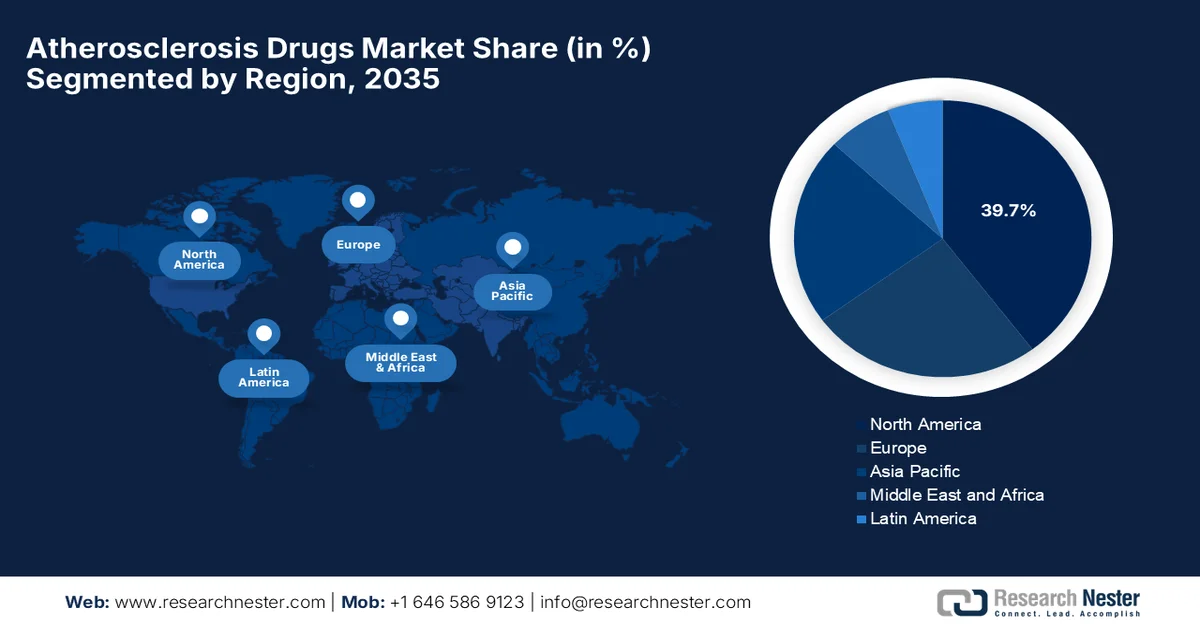
- North America is anticipated to account for 39.7% share by 2035 in the atherosclerosis drugs market, underpinned by an aging population, a high prevalence of metabolic disorders, established healthcare infrastructure, and rapid clinical adoption of next-generation biologics and targeted anti-inflammatory medications
- Asia Pacific is projected to witness the fastest growth during 2026-2035, fueled by a massive population base, accelerating urbanization, rising lifestyle-related metabolic risk factors, and government-led healthcare modernization with expanding insurance coverage
Segment Insights:
- Statins are projected to capture 56.3% share by 2035 in the atherosclerosis drugs market, bolstered by rising clinical adoption as first-line LDL cholesterol-lowering therapy, extensive cardiovascular outcome evidence, cost-effectiveness, widespread generic availability, and strong clinical guideline recommendations
- Hospital Pharmacies are expected to secure a considerable share by 2035, supported by increasing cardiovascular disease-related hospital admissions, growing demand for specialized lipid-lowering and antithrombotic therapies, expanding inpatient cardiovascular care pathways, and broader adoption of hospital-based specialty pharmacy services
Key Growth Trends:
- Pioneering innovations in biotechnology
- Increasing research and development investments
Major Challenges:
- Generic drug dominance and pricing pressure
- Low diagnosis rates and poor long-term treatment adherence
Key Players: Amgen (U.S.) ,Novartis (Switzerland) ,Sanofi (France) ,Esperion Therapeutics (U.S.) ,Daiichi Sankyo (Japan),Merck (Germany),Editas Medicine (U.S.).
Global Atherosclerosis Drugs Market Forecast and Regional Outlook:
Market Size & Growth Projections:
- 2025 Market Size: USD 34.6 billion
- 2026 Market Size: USD 35.7 billion
- Projected Market Size: USD 47.8 billion by 2035
- Growth Forecasts: 3.3% CAGR (2026-2035)
Key Regional Dynamics:
- Largest Region: North America (39.7% Share by 2035)
- Fastest Growing Region: Asia Pacific
- Dominating Countries: United States, Germany, Japan, China, United Kingdom
- Emerging Countries: India, South Korea, Singapore, Brazil, Saudi Arabia
Last updated on : 22 July, 2026
Atherosclerosis Drugs Market - Growth Drivers and Challenges
Growth Drivers
- Pioneering innovations in biotechnology: The evolution of next-generation drug platforms transforms chronic disease management, i.e., improvements in terms of RNA-targeted therapies, gene editing, and anti-inflammatory biologics allow for highly precise treatment. These innovations offer superior efficacy and less frequent dosing, thereby driving the atherosclerosis drugs market expansion by replacing older therapies. In April 2024, Novartis announced that the V-INITIATE trial demonstrated that early addition of twice-yearly Leqvio® (inclisiran) to maximally tolerated statin therapy significantly reduced LDL-C levels in ASCVD patients when compared with usual care (60% vs. 7%). This study showed that 81.8% of Leqvio-treated patients achieved guideline-recommended LDL-C targets when compared with 22.2% receiving usual care, thus elevating the growth potential of the market.
- Increasing research and development investments: Pharmaceutical companies are making heavy investments in research and development to introduce innovative atherosclerosis therapies. Clinical trials are highly focused on novel drug mechanisms, and combination treatments and biologic therapies are expanding treatment options. On the other hand, strategic collaborations and regulatory support are encouraging innovation, creating new growth opportunities for the atherosclerosis drugs market. For instance, in October 2025, Amgen announced that the Phase 3 VESALIUS-CV trial showcased that Repatha® (evolocumab) significantly lessened major adverse cardiovascular events in over 12,000 patients at high-risk without any prior heart attack or stroke when added to standard LDL-C–lowering therapy. This particular trial met both primary endpoints, showing significant cardiovascular risk reduction when compared with standard therapy alone, with no new safety concerns observed.
Recent Advances in Atherosclerosis Drugs: Key Clinical Developments and Market Opportunities 2023-2026
|
Year |
Company |
Drug |
Focus |
Key Clinical Update |
Atherosclerosis Drugs Market Opportunity |
|
2026 |
Arrowhead Pharmaceuticals |
REDEMPLO® (plozasiran) |
Familial Chylomicronemia Syndrome (FCS), Severe Hypertriglyceridemia (sHTG) |
Positive PK/PD data in renal/hepatic impairment; pregnancy case report; approved for FCS in multiple countries |
Small FCS market today with significant upside if approved for severe hypertriglyceridemia and broader cardiometabolic indications |
|
2025 |
NewAmsterdam Pharma |
Obicetrapib |
ASCVD, HeFH, hypercholesterolemia |
Phase 3 BROADWAY/TANDEM: 35% to 50% LDL-C reduction, 45% Lp(a) reduction, favorable safety |
Oral add-on to statins targeting millions of patients inadequately controlled on standard lipid therapy |
|
2023 |
Novartis |
Leqvio® (inclisiran) |
ASCVD, HeFH, LDL-C reduction |
ORION-8: 50% sustained LDL-C reduction, safety demonstrated beyond 6 years |
Established LDL-lowering therapy with a broad global ASCVD population and long-term adoption potential |
Source: Company Official Press Releases
Challenges
- Generic drug dominance and pricing pressure: The continued availability of low-cost generics adds substantial pricing pressure for manufacturers of innovative atherosclerosis drugs. Statins are considered to be the first-line treatment for lowering cholesterol due to their proven efficacy and affordability, which is making it difficult for premium therapies to gain physician preference. In this context, healthcare providers and payers and providers prioritize generic medications as they significantly reduce treatment costs while delivering established clinical outcomes for the majority of patients. Hence, manufacturers of new treatments need to make heavy investments in large-scale cardiovascular outcome trials and health economic analyses to justify premium pricing. Further, this ultimately slows the commercial uptake of innovative drugs, negatively impacting the growth of the atherosclerosis drugs market.
- Low diagnosis rates and poor long-term treatment adherence: There is a high global prevalence of atherosclerosis and cardiovascular disease, but still a considerable proportion of at-risk individuals are undiagnosed. On the other hand, limited routine cholesterol screening and lack of awareness regarding cardiovascular risk factors also contribute to delayed diagnosis, particularly in developing regions. On the other hand, among diagnosed patients, maintaining long-term adherence to lipid-lowering therapy is a major obstacle, as atherosclerosis is largely asymptomatic during its early stages. Patients frequently discontinue treatment due to perceived lack of immediate benefits, medication-related side effects, or complex therapeutic regimens, thus reducing exposure of the atherosclerosis drugs market.
Atherosclerosis Drugs Market Size and Forecast:
| Report Attribute | Details |
|---|---|
|
Base Year |
2025 |
|
Forecast Year |
2026-2035 |
|
CAGR |
3.3% |
|
Base Year Market Size (2025) |
USD 34.6 billion |
|
Forecast Year Market Size (2035) |
USD 47.8 billion |
|
Regional Scope |
|
Atherosclerosis Drugs Market Segmentation:
Drug Class Segment Analysis
The statins segment is anticipated to dominate with the highest share of 56.3% in the drug class segment of the atherosclerosis drugs market during the forecast period. The segment’s dominant position is effectively propelled by the rising clinical adoption as the first-line therapy for lowering low-density lipoprotein cholesterol, extensive evidence demonstrating its ability to reduce cardiovascular events, and cost-effectiveness. In addition, the availability of multiple generic statin formulations and recommendations from major clinical guidelines support their sustained market dominance. In April 2024, the American College of Cardiology reported that the TACTiC trial demonstrated that a web-based approach has the potential to safely identify individuals eligible for statin therapy without a prescription, wherein the results closely matched clinician assessments. It also mentions that participants using 5 mg rosuvastatin, which is a statin medication, achieved an average 35.5% reduction in LDL cholesterol after six months, with high agreement between self-assessment and clinical evaluation, i.e., 90.7% to 98.1%.
Distribution Channel Segment Analysis
By the end of 2035, hospital pharmacies under the distribution channel are expected to grow with a considerable share in the atherosclerosis drugs market. The segment’s growth is largely attributable to the increasing number of cardiovascular disease-related hospital admissions and rising demand for specialized lipid-lowering and antithrombotic therapies. In addition, greater adoption of inpatient cardiovascular care pathways and the expanding role of hospital pharmacies in managing complex patients requiring close monitoring and medication optimization position the segment for stable growth over the forecasted years. Meanwhile, the growing availability of hospital-based specialty pharmacy services and integrated healthcare systems is expected to support efficient drug procurement, storage, and distribution of advanced atherosclerosis therapies, thus strengthening the segment’s market position.
Route of Administration Segment Analysis
On the basis of the route of administration, the oral segment is forecasted to attain a notable share in the atherosclerosis drugs market during the discussed timeframe. The widespread use of orally administered lipid-lowering therapies, particularly statins, as the preferred first-line treatment for managing elevated LDL-C levels and reducing the risk of atherosclerotic cardiovascular disease is fueling the segment’s leadership. The segment’s growth is also supported by the convenience of self-administration, improved patient compliance, long-term suitability for chronic disease management, and the availability of multiple generic oral formulations that enhance affordability and accessibility. Meanwhile, the ongoing clinical adoption of oral combination therapies targeting cholesterol reduction and cardiovascular risk management is expected to sustain demand for oral atherosclerosis medications throughout the forecast period.
Our in-depth analysis of the atherosclerosis drugs market includes the following segments:
|
Segment |
Subsegments |
|
Drug Class |
|
|
Distribution Channel |
|
|
Route of Administration |
|

Vishnu Nair
Head - Global Business DevelopmentCustomize this report to your requirements — connect with our consultant for personalized insights and options.
Atherosclerosis Drugs Market - Regional Analysis
North America Market Insights
North America atherosclerosis drugs market is anticipated to garner the highest share of 39.7% during the discussed timeframe. The region’s dominance is largely attributable to an aging population, a high prevalence of metabolic disorders, and an established healthcare infrastructure that supports early disease detection. North America also benefits from the rapid clinical adoption of next-generation biologics and targeted anti-inflammatory medications. In this context, researchers at the University of Michigan in April 2025 reported that DT-109, a glycine-based tripeptide drug candidate, reduced atherosclerotic plaque formation and vascular calcification in nonhuman primates. Besides, the compound also showed potential as a dual therapy by previously demonstrating benefits in metabolic dysfunction-associated steatotic liver disease, thus making it suitable for standard market growth.
High rates of obesity, diabetes, and cardiovascular conditions, along with extensive commercial insurance networks and robust public healthcare programs, are certain factors responsible for driving the U.S. atherosclerosis drugs market. In addition, the presence of major pharmaceutical corporations and academic research hubs within the country fosters a highly active clinical trial landscape. For instance, the Office of Health Economics in March 2026 stated that in the U.S., atherosclerotic cardiovascular disease represents the largest economic burden among the nine countries analyzed, with total costs being USD 434 billion on a yearly basis. This burden extends beyond direct healthcare spending, as productivity losses, absenteeism, and informal caregiving contribute substantially to the overall impact, thus underscoring the urgent need for cost-effective and reliable solutions.
In Canada, the atherosclerosis market is gaining enhanced traction, which is largely driven by its publicly funded medical system, focused on preventive care, provincial health coverage, and standardized clinical guidelines to manage cardiovascular health. This structured ecosystem supports the integration of biologics and long-acting RNA therapies into public formularies for high-risk patients. Novartis Pharmaceuticals Canada Inc. in March 2024 announced long-term data from the ORION-8 trial showing that twice-yearly Leqvio® (inclisiran), added to statin therapy, provided sustained LDL-C reduction beyond six years in patients with ASCVD, increased ASCVD risk, or heterozygous familial hypercholesterolemia. It also mentions that 78.4% of participants gained their LDL-C targets, with an average LDL-C reduction of 49.4%, thereby maintaining a consistent safety profile.
APAC Market Insights
The Asia Pacific atherosclerosis drugs market is expected to grow at the fastest rate from 2026 to 2035. The region’s upliftment in this field is mainly propelled by a massive population base, accelerating urbanization, and a sharp rise in lifestyle-related metabolic risk factors. Asia Pacific market also benefits from government-led initiatives to modernize healthcare infrastructure and expand national insurance coverage, which are significantly broadening patient access to essential cardiovascular treatments. In this context, NIH in April 2024 disclosed that the atherosclerotic cardiovascular disease burden in Singapore is significant, wherein cardiovascular disease accounts for over one-third of deaths and an economic burden of USD 8.1 billion. The article also mentions that effective management of LDL-C and population-based prevention strategies are essential to reduce cardiovascular morbidity, mortality, and healthcare costs in Singapore, thus elevating the growth potential of the regional market.
The state-led healthcare reforms broaden patient access to advanced therapies, driving the growth of the atherosclerosis drugs market in China. In addition, the country's thriving domestic biopharmaceutical sector, supported by favorable government initiatives for localized medical innovation, is accelerating the clinical development and commercialization of next-generation targeted therapies. In August 2023, Innovent Biologics received approval from the National Medical Products Administration (NMPA) for Tafolecimab Injection (SINTBILO®), which is a PCSK9 inhibitor for adults with primary hypercholesterolemia and mixed dyslipidemia who do not achieve LDL-C targets with statin therapy. This particular approval provides a new lipid-lowering treatment option in China for patients requiring additional LDL-C reduction beyond statins, thus suitable for bolstering the country’s market growth.
In India, the atherosclerosis drugs market is positioned for sustained strategic growth, which is driven by the domestic pharmaceutical sector, ensuring the availability and affordability of highly effective generic statins and antiplatelet medications. In addition, government initiatives that are aimed at expanding public healthcare infrastructure and rural health insurance coverage are increasing patient reach and improving the diagnosis of chronic arterial conditions. In August 2024, the Press Information Bureau (PIB) reported that 1,73,881 Ayushman Arogya Mandirs had been operationalized across the country by July 2024, which exceeded the initial target of 1,50,000 centers. These centers have delivered primary healthcare services, recording 317.34 crore footfalls, including 842.8 million hypertension screenings and 741.8 million diabetes screenings, along with cancer screenings and teleconsultations, thus positively contributing to the market’s expansion.
Europe Market Insights
The Europe atherosclerosis drugs market is expected to witness considerable growth during the discussed timeframe. The region’s industry is largely propelled by strict clinical guidelines emphasizing proactive cardiovascular risk management. Europe also benefits from unified regulatory pathways, which ensure efficient, standardized evaluation of innovative therapeutics across member states. In September 2023, NIH disclosed the economic and clinical impact of ASCVD among more than 450,000 Swedish individuals. Compared with matched controls, people with ASCVD had over 2.5 times higher annual costs, which is USD 7,477 vs. USD 2,915 per person, with 5-year cumulative costs being around USD 34,572 when compared with USD 13,966. Indirect costs from work absence were major contributors, whereas ASCVD patients had higher risks of cardiovascular events, including stroke (HR 1.83), myocardial infarction (HR 2.27), and early retirement (HR 3.02), highlighting the urgent need for suitable solutions.
In Germany, the atherosclerosis drugs market is growing at a steady pace owing to a highly mature healthcare infrastructure and rigid clinical guidelines that mandate proactive cardiovascular risk management. In addition, the country benefits from highly structured statutory health insurance funds that facilitate early access to cutting-edge medical innovations. The domestic landscape has been witnessing a rapid clinical adoption of next-generation therapies, which include premium biologics and long-acting RNA-based treatments, driven by a strong physician network and high public awareness of preventative care. Apart from this, Germany's well-established network of academic research centers and clinical trial infrastructure fosters close collaboration between international biotechnology corporations and local healthcare providers, thus solidifying the nation's position as a primary hub for advanced cardiovascular precision medicine.
A high national prevalence of metabolic risk factors and clear clinical pathways, which are structured by national health guidelines, are responsibly driving exponential growth of the UK atherosclerosis drugs market. The country's prominent life sciences ecosystem and strong clinical trial infrastructure foster deep collaboration between global pharmaceutical innovators and national health research boards, positioning the UK as a predominant hub for innovation in this field. In March 2025, NHS England stated that cardiovascular disease prevention is a priority, emphasizing lipid management through high-intensity statins as the first-line treatment, in line with NICE guidance. Besides, to improve access to additional lipid-lowering therapies, NHS England extended its agreement with Novartis for continued availability of inclisiran (Leqvio) at the same price for NHS patients in England until December 2027, thus denoting a positive market outlook.
Key Atherosclerosis Drugs Market Players:
- Amgen (U.S.)
- Novartis (Switzerland)
- Sanofi (France)
- Esperion Therapeutics (U.S.)
- Daiichi Sankyo (Japan)
- Merck (Germany)
- Editas Medicine (U.S.)
- Company Overview
- Business Strategy
- Key Product Offerings
- Financial Performance
- Key Performance Indicators
- Risk Analysis
- Recent Development
- Regional Presence
- SWOT Analysis
- Amgen is one of the leading manufacturers in the atherosclerosis drugs market that leverages Repatha® (evolocumab), which is a PCSK9 inhibitor indicated for lowering LDL cholesterol. The company's strong market position is deliberately supported by extensive clinical evidence from the FOURIER trial and broad regulatory approvals across major markets.
- Novartis is a major player in the market with Leqvio® (inclisiran), which is the first siRNA-based cholesterol-lowering therapy for ASCVD patients requiring additional LDL-C reduction. Besides, the firm strengthens its cardiovascular portfolio through lifecycle expansion, strategic investments in RNA-based therapeutics, and acquisitions to broaden its cardiovascular pipeline.
- Sanofi is a foundational player in this sector, and it leverages its extensive global commercial infrastructure and cardiovascular expertise to expand Praluent's availability across developed and emerging markets while supporting ongoing real-world evidence generation.
- Esperion Therapeutics specializes in terms of innovative oral lipid-lowering therapies for patients with hypercholesterolemia and ASCVD. In addition, the company has strengthened its position in this sector through positive cardiovascular outcomes data and strategic partnerships that extend its international market reach.
- Daiichi Sankyo plays a pivotal role in the atherosclerosis drugs market, with an extensive product portfolio. The company leverages its strong cardiovascular franchise and extensive regional distribution network to expand access to advanced LDL cholesterol-lowering therapies.
Here is a list of key players operating in the global atherosclerosis drugs market:
The global atherosclerosis drugs market is considered to be a moderately consolidated and competitive landscape, which is being led by multinational pharmaceutical manufacturers providing branded lipid-lowering therapies and cardiovascular risk reduction drugs. Market leadership is mainly driven by companies that have established PCSK9 inhibitors, siRNA-based therapies, and ATP citrate lyase inhibitors, supported by extensive clinical evidence and broad regulatory approvals. Apart from this, the industry’s differentiation is highly based on cardiovascular outcomes data, dosing convenience, and innovation in lipid-lowering mechanisms. In September 2025, Novartis agreed to acquire Tourmaline Bio for approximately USD 1.4 billion, with a primary goal to strengthen its cardiovascular portfolio with pacibekitug, which is an investigational therapy for atherosclerotic cardiovascular disease. This acquisition supports Novartis' strategy to expand innovative treatments targeting inflammation-driven cardiovascular risk.
Corporate Landscape of the Atherosclerosis Drugs Market:
Recent Developments
- In July 2026, Merck announced the U.S. FDA approval of LIPFENDRA® (enlicitide), which is the first oral PCSK9 inhibitor approved to lower LDL-C in adults with hypercholesterolemia, including heterozygous familial hypercholesterolemia (HeFH).
- In May 2026, Editas Medicine presented preclinical data for EDIT-401, which demonstrated robust reductions of approximately 90% or greater in LDL-C, Lp(a), and ApoB levels in non-human primates following a single dose.
- In March 2026, Amgen reported that Repatha® (evolocumab) reduced the risk of first major cardiovascular events by 31% in high-risk primary prevention patients without significant atherosclerosis in the VESALIUS-CV trial.
- Report ID: 8682
- Published Date: Jul 22, 2026
- Report Format: PDF, PPT
- Explore a preview of key market trends and insights
- Review sample data tables and segment breakdowns
- Experience the quality of our visual data representations
- Evaluate our report structure and research methodology
- Get a glimpse of competitive landscape analysis
- Understand how regional forecasts are presented
- Assess the depth of company profiling and benchmarking
- Preview how actionable insights can support your strategy
Explore real data and analysis
Frequently Asked Questions (FAQ)
About this Report
Connect with our Expert




Copyright @ 2026 Research Nester. All Rights Reserved.
