Laboratory Equipment Market Outlook:
Laboratory Equipment Market size was valued at over USD 61.6 billion in 2025 and is projected to reach USD 124.1 billion by the end of 2035, growing at a CAGR of 8.1% during the forecast period, i.e., 2026-2035. In 2026, the industry size of laboratory equipment is evaluated at USD 66.5 billion.
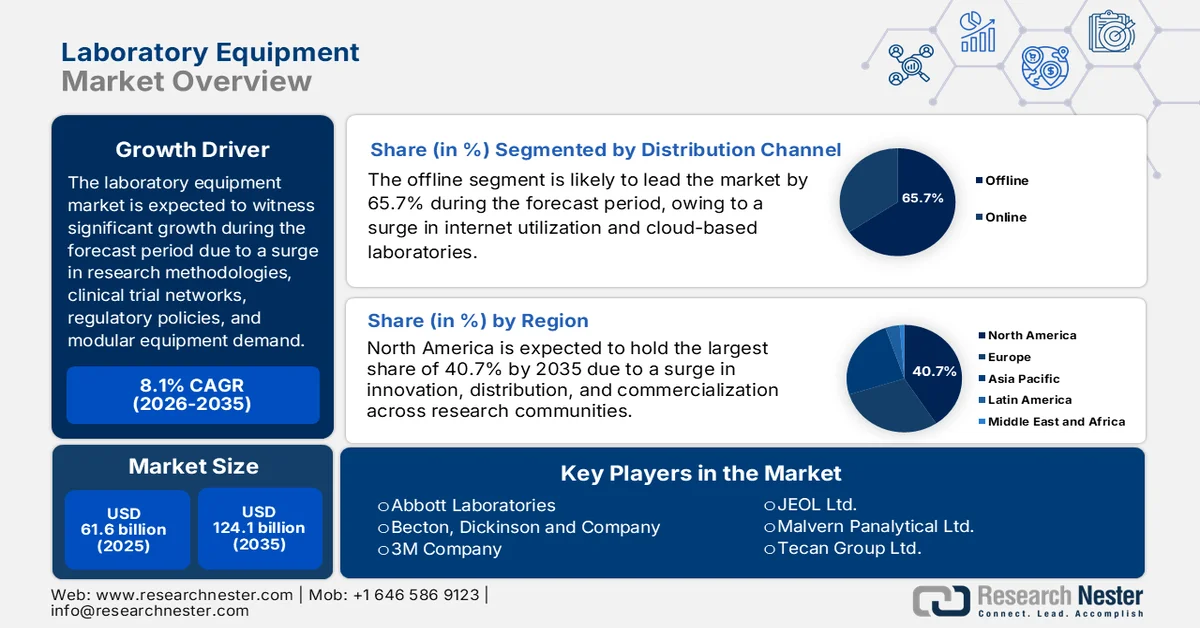
The worldwide laboratory equipment market is shaped by different foundational factors that have created the operating environment for all participants. These factors include an increase in the complexity of scientific research methodologies, the globalization of clinical trial networks, multiple regulatory jurisdictions, the rising cost of laboratory real estate, and the demand for compact and modular equipment. According to official statistics published by NLM in April 2025, based on interventional-type clinical trials, randomized controlled trials account for 66% of overall trials, while non-randomized trials cater to 10.4%. Additionally, parallel model-driven trials cater to 59.9% of trials, which is followed by 27.4% of single group model, and 8.2% of crossover model. Besides, 33.2% of overall clinical trials involve collaborations between different organizations and institutions, thus bolstering the laboratory equipment market growth.
Interventional Clinical Trial Conducted by Institutions and Organizations, 2025
|
Institutions/Organizations |
Number of Clinical Trials |
|
Cairo University |
3,030 |
|
GlaxoSmithKline |
2,801 |
|
Pfizer |
2,276 |
|
Mayo Clinic |
2,130 |
|
National Cancer Institute (NCI) |
2,067 |
|
M.D. Anderson Cancer Center |
2,061 |
|
AstraZeneca |
2,031 |
|
Novartis Pharmaceuticals |
2,016 |
|
Assistance Publique |
1,936 |
|
Massachusetts General Hospital |
1,853 |
Source: NLM
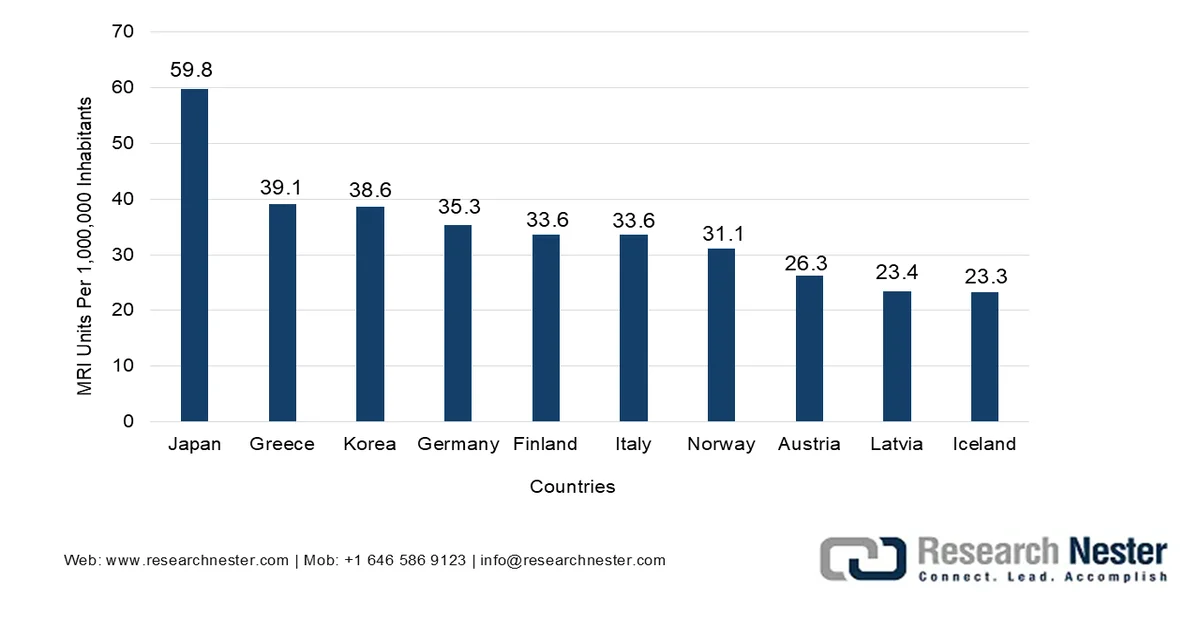
Furthermore, the rise of high-content and multiplexed analysis systems, the emergence of benchtop and low-field nuclear magnetic resonance, and the integration of operando and in situ characterization capabilities are a few trends that are responsible for boosting the laboratory equipment market globally. As stated in a data report published by the National Academic Press in August 2024, the U.S. is focused on implementing the successful installation of various commercially developed magnetic resonance imaging (MRI) instruments with a suitable magnetic field within the 1.0 to 1.2 GHz range in the upcoming 2 to 3 years. This is further projected to cover total applications from physics and materials through biophysics and pharma. Besides, the presence of MRI units across different countries is also responsible for boosting the laboratory equipment market exposure worldwide.
Country-Wise MRI Unit Analysis, 2023
Source: OECD
Key Laboratory Equipment Market Insights Summary:
Regional Highlights:
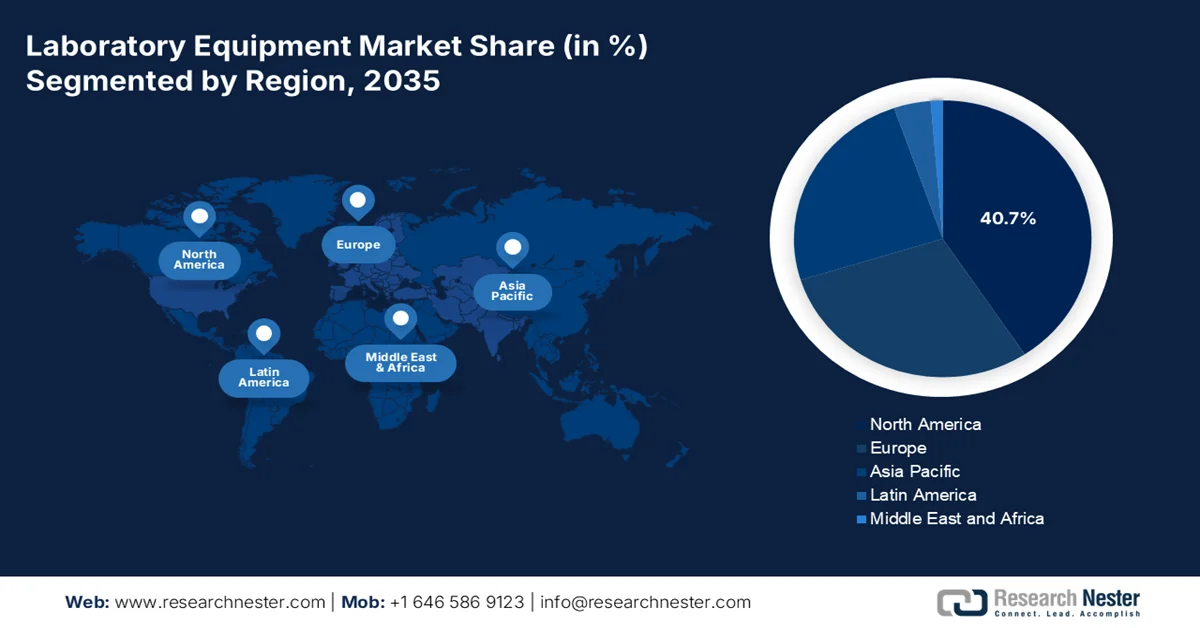
- North America in the laboratory equipment market is projected to hold a 40.7% share by 2035, driven by strong research infrastructure, widespread digital lab adoption, and sustained R&D investments
- Asia Pacific is expected to be the fastest-growing region over 2026-2035, fueled by expanding healthcare infrastructure, rising pharmaceutical R&D, and increasing government-led modernization initiatives
Segment Insights:
- The offline sub-segment of the laboratory equipment market is projected to account for a 65.7% share by 2035, propelled by its ability to support secure, uninterrupted operations without reliance on internet connectivity
- The pharmaceutical and biotechnology companies sub-segment is expected to hold the second-largest share over 2026-2035, impelled by the growing need for rigorous analytical validation and testing of complex biologic drugs
Key Growth Trends:
- Expansion of law enforcement and forensic laboratory
- Growth in research facilities
Major Challenges:
- Supply chain fragmentation for specialized components
- Regulatory divergence and compliance fatigue
Key Players: Thermo Fisher Scientific, Danaher Corporation, Agilent Technologies, Roche Holding AG, Siemens Healthineers, Sartorius AG, Eppendorf AG, Bruker Corporation, PerkinElmer, Waters Corporation, Shimadzu Corporation, Hitachi High-Tech Corporation, Abbott Laboratories, Becton Dickinson and Company, 3M Company, bioMérieux SA, JEOL Ltd., Malvern Panalytical Ltd., Tecan Group Ltd., GEA Group Aktiengesellschaft, Asahi Kasei.
Global Laboratory Equipment Market Forecast and Regional Outlook:
Market Size & Growth Projections:
- 2025 Market Size: USD 61.6 billion
- 2026 Market Size: USD 66.5 billion
- Projected Market Size: USD 124.1 billion by 2035
- Growth Forecasts: 8.1% CAGR (2026-2035)
Key Regional Dynamics:
- Largest Region: North America (40.7% Share by 2035)
- Fastest Growing Region: Asia Pacific
- Dominating Countries: United States, Germany, Japan, China, United Kingdom
- Emerging Countries: India, South Korea, Brazil, Singapore, Australia
Last updated on : 28 April, 2026
Laboratory Equipment Market - Growth Drivers and Challenges
Growth Drivers
- Expansion of law enforcement and forensic laboratory: Governments across different regions are significantly expanding forensic laboratory capacity in response to the fact that untested evidence is gradually fueling the laboratory equipment market globally. Based on government estimates published by the PIB in March 2025, there exist 7 Central Forensic Science Laboratories (CFSLs) in India, which are located in Hyderabad, Pune, Bhopal, Kolkara, Kamrup, Delhi, and Chandigarh. In addition, a generous approval was allocated for setting the 8th CFSL in Jammu with an overall financial outlay of USD 10.6 billion. Besides, the country’s government has accepted the National Forensic Infrastructure Enhancement Scheme for setting up 7 more CFSLs with a total outlay of USD 91.3 billion, thus positively contributing to the laboratory equipment market growth.
- Growth in research facilities: Research institutions and universities are rapidly centralizing investments in the laboratory equipment market, wherein costly instruments are readily shared across different academic collaborators, research groups, and departments. As stated in an article published by OECD in March 2026, suitable growth in inflation-driven spending on research and experimental development remained 2.6% as of 2024. In addition, this particular spending increased in the U.S. by 3.4%, while the growth is high in Europe by 0.4%. Besides, growth rates for research and development in government-based institutions have also surged by more than 3%. Therefore, based on this continuous growth in research, there is a huge demand for industrial-grade instruments, which is positively impacting the market upliftment.
- Proliferation of point-of-need testing: Beyond conventional clinical diagnostics, laboratory equipment is being deployed to point-of-need locations, including mining exploration camps, military forward operating bases, disaster response shelters, and agricultural inspection stations. These environments lack the stable electricity, climate control, purified water, and trained personnel assumed by standard laboratory instrument design. The growth driver is the recognition that sample deterioration during transport to centralized laboratories undermines test accuracy, making on-site analysis medically and economically preferable despite the logistical challenges. Equipment manufacturers are engineering ruggedized, battery-operated, low-maintenance instrument variants specifically for these harsh environments, thus boosting the laboratory equipment market.
Challenges
- Supply chain fragmentation for specialized components: Behind every precision laboratory instrument lies a deeply fragmented and globally dispersed supply chain for critical components such as optical sensors, high-purity valves, specialized detectors, and proprietary electronic boards. Unlike consumer electronics, these components often have only one or two certified suppliers worldwide, creating dangerous single points of failure. When a geopolitical event, a factory fire, or a raw material export restriction disrupts a single node, entire production lines for chromatography systems or spectrometers halt for months. The post-pandemic era has not resolved this fragility; rather, just-in-time manufacturing has been replaced by just-in-case hoarding, which strains the laboratory equipment market growth.
- Regulatory divergence and compliance fatigue: Manufacturers in the laboratory equipment market need to navigate a rapidly widening gap between regulatory regimes across major markets. Besides, Europe’s evolving standards for chemical safety, environmental disposal of electronic waste, and energy efficiency increasingly diverge from the more permissive frameworks in parts of Asia and the recent deregulatory trends observed in certain North America-driven jurisdictions. This divergence forces manufacturers to maintain multiple production variants of the same instrument, one for Europe-based compliance, another for the U.S. market, and yet another for emerging economies, which dramatically increases research and development, quality assurance, and warehousing costs.
Laboratory Equipment Market Size and Forecast:
| Report Attribute | Details |
|---|---|
|
Base Year |
2025 |
|
Forecast Year |
2026-2035 |
|
CAGR |
8.1% |
|
Base Year Market Size (2025) |
USD 61.6 billion |
|
Forecast Year Market Size (2035) |
USD 124.1 billion |
|
Regional Scope |
|
Laboratory Equipment Market Segmentation:
Distribution Channel Segment Analysis
The offline sub-segment, part of the distribution channel segment, is anticipated to garner the highest share of 65.7% in the laboratory equipment market by the end of 2035. The sub-segment’s upliftment is highly fueled by its independent operations of an ongoing internet connection and cloud-based laboratory information system (LIS), which is crucial for enabling hands-on scientific research, high data security, and uninterrupted operations. According to official statistics published by NLM in July 2023, it has been depicted that almost 70% of data in the electronic health record (EHR) usually originates from clinical laboratories. Besides, supervised learning algorithms are extremely suitable for clinical situations, wherein the training data, along with their corresponding label can be gathered in an offline mode, thereby positively impacting the sub-segment’s growth.
End use Industry Segment Analysis
During the forecast period, the pharmaceutical and biotechnology companies sub-segment, which is part of the end use industry segment, is projected to withstand the second-highest share in the laboratory equipment market. The sub-segment’s growth is primarily driven by the aspect of portraying laboratory instruments not as optional productivity tools, but as mandatory quality gates. Every molecule intended for human use must pass through rigorous analytical validation, stability testing, and contamination screening before regulatory authorities grant market access. Consequently, equipment purchasing in this sector is non-discretionary and remarkably resilient to economic downturns. The dominant driver is the shift toward complex biologic drugs, including monoclonal antibodies, cell therapies, and gene therapies.
Technology Segment Analysis
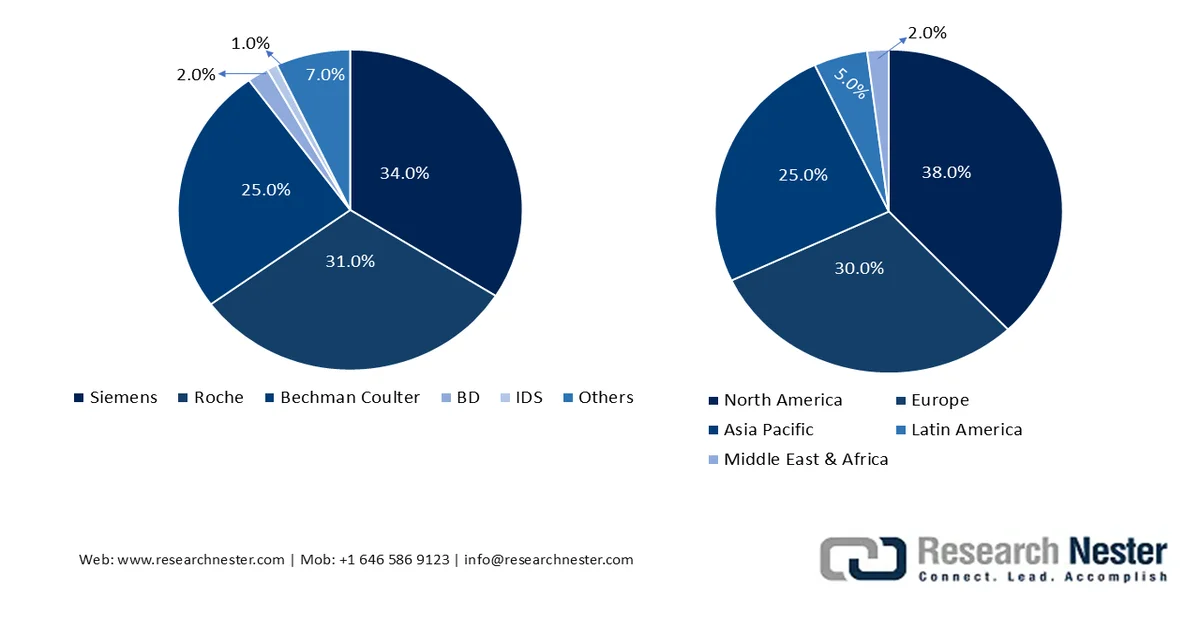
Based on the technology, the automated laboratory equipment segment is expected to grab the third-highest share in the laboratory equipment market by the end of the stipulated timeline. The segment’s development is effectively fueled by its importance in enhancing throughput, optimizing accuracy, and enabling 24/7 operational efficiency. As stated in an article published by NLM in April 2025, organizations, such as Thermo Fisher Scientific, Siemens Healthineers, Roche, Beckman Coulter, and Abbott Laboratories, jointly accounted for an estimated 93% of the worldwide laboratory automation industry. Besides, the present global industry size of total laboratory automation was valued between USD 5.5 billion and USD 6.1 billion as of 2023, with North America catering to 38% of the largest industrial share, thereby making it suitable for bolstering the segment globally.
Key Players and Regional Analysis of Total Laboratory Automation Industry, 2022-2023
Source: NLM
Our in-depth analysis of the laboratory equipment market includes the following segments:
|
Segment |
Subsegments |
|
Distribution Channel |
|
|
End use Industry |
|
|
Technology |
|
|
Equipment Type |
|
|
Application |
|
|
Product |
|

Vishnu Nair
Head - Global Business DevelopmentCustomize this report to your requirements — connect with our consultant for personalized insights and options.
Laboratory Equipment Market - Regional Analysis
North America Market Insights
North America in the laboratory equipment market is anticipated to garner the largest share of 40.7% by the end of 2035. The market’s upliftment in the region is primarily driven by the presence of strategic facilities for commercialization, distribution, and innovation, along with innovative research communities, the comprehensive adoption of digitalized laboratory technologies, and a robust emphasis on operational efficiency. According to official statistics published by the George W. Bush Presidential Center Organization in March 2024, the U.S. comprises 177 notable universities and other research-based institutions for advancement impact. In this regard, federal investments in research and development account for 1% of the gross domestic product (GDP) for sustaining the region’s leadership in basic innovation and science, thus driving the market growth.
The laboratory equipment market in the U.S. is growing significantly, owing to artificial intelligence and automation integration, diagnostic systems and robotic sample preparation platforms, the transition towards personalized medicines, and the existence of strict regulatory compliance standards. As stated in an article published by NLM in May 2025, there has been the development of DxEx programs across hospital facilities in the country, which are suitable for combating 250 unnecessary CT scans, 37 significant incidental misdiagnoses, and optimized emergency room patient flow. In addition, these programs have the capability to overcome 15 delayed CT scans, of which 5 tend to delay patient care and diagnosis. Beyond these activities, the program provided guidance on different diagnostic evaluations and improving communication with patients, caregivers, and families, thus contributing to the laboratory equipment market growth in the country.
The focus on quality standards for laboratory instrumentation, an expansion in publicly funded healthcare facilities, suitable provincial health systems for investing in diagnostic laboratory capacity, prioritizing laboratory modernization, and ensuring collaborative research networks are certain factors for fueling the laboratory equipment market in Canada. As per an article published by the Government of Canada in July 2024, the government generously invested USD 200 billion for more than 10 years in improving health care services and solutions for the population. Of this, USD 25 billion was allocated through tailored bilateral agreements for addressing the demand for the health system for each of the territories and provinces that comprise accessibility to family health services, thereby making it suitable for driving the market exposure.
APAC Market Insights
The Asia Pacific in the laboratory equipment market is expected to emerge as the fastest-growing region during the forecast period. The market’s development in the region is highly propelled by rapid healthcare infrastructure expansion, an increase in pharmaceutical research and development activities, government-based research modernization strategies, investments in clinical diagnostic and biotechnology facilities, and advanced automation integration. According to official statistics published by NLM in November 2025, there has been an increase in health service coverage by 53.5%, which is further projected to surge to 81.5% by the end of 2030. Besides, in terms of catastrophic health spending (CHE), there has also been an upsurge from 7.2% to 18.6% by the end of the same year, thus proliferating the market development in the overall region.
The laboratory equipment market in China is gaining increased traction, owing to the massive healthcare reform agenda, established diagnostic laboratory network, the demand for instruments, an escalation in product launches, an expansion in the biotechnology industry, and yearly laboratory spending. As stated in an article published by the Merics Organization in April 2025, the public funding for research in biotechnology has been generous and consistent, totaling an amount of USD 2.9 billion as of 2023. Besides, the country is effectively made up of almost 4.8% of the worldwide biotech sector in 2024. Regarding this, there has been an increase in Patent Cooperation Treaty (PCT) patents from 119 to 1,918 in 2023. Therefore, with such an increase in volume, the market in the overall country is gradually expanding.
Biopharma and Biotech Industry Analysis in China, 2023
|
Industry Type |
Industry Scale in USD Billion |
Description |
China-Based Firms |
|
Biopharma |
161.1 |
Pharmaceutical originated from biological sources, such as monoclonal antibodies, vaccines, cell-based treatments, and gene therapies |
BeiGene, Jiangsu Hengrui, Legend Biotech, Innovent, Bloomage |
|
Bioagriculture and Food |
21.9 |
The application of biotechnology in farming and food processing industries, including biofertilizers, biopesticides, animal feed, plant-based proteins, and genetically modified crops. |
Sinochem, Da Bei Nong, Longping, Si-Gene, Cabio Biotech |
|
Platforms and Services |
19.0 |
Support through contract research, development and manufacturing services, along with bioinformatics for genetic analysis and other biological data. |
WuXi Biologics. WuXi AppTec, BGI Genomics, Novo-gene, Berry Genomics |
|
Biochemicals and Materials |
10.2 |
Chemicals and materials, such as plastics, are produced utilizing biological processes, including fermentation or enzymatic reactions, instead of petrochemical synthesis. |
Meihua Group, Fufeng Group, Vland Biotech, Bluepha Layn Natural Ingredients |
|
Biofuels and Eco-biotech |
7.3 |
Ethanol, biodiesel, sustainable aviation fuel and other fuels derived from renewable biological sources, such as plants, algae, and waste biomass, along with biotech for soil remediation. |
Sinopec, Cofco, SDIC Biotech |
Source: Merics Organization
The aspects of expanding healthcare accessibility, government strategies supporting diagnostic infrastructure, administrative health programs, an increase in diagnostic centers, the patient population readily accessing laboratory services, and chronic disease management are a few trends that are boosting the laboratory equipment market in India. As per a data report published by the Department of Pharmaceuticals in 2023, there has been a growth in the medical devices industry, amounting to USD 6,328 per capita, along with a 12.5% of the GDP, with government expenditure effectively covering 62% of health spending. Besides, in terms of the universal healthcare system, there has been an upsurge in the overall GDP from 1.1% between 2013 and 2014 to 1.2% between 2018 and 2019, and it further increased by 2.5% as of 2025, thus denoting an optimistic outlook for the laboratory equipment market development.
Europe Market Insights
Europe in the laboratory equipment market is projected to witness considerable growth by the end of the stipulated timeline. The market’s growth in the region is effectively fueled by robust regulatory frameworks, innovative health and medical facilities, sustained government investment in research capabilities and diagnostics, along with the existence of a strong pharmaceutical manufacturing industry and centralized healthcare system. According to official statistics published by Frontiers Organization in March 2026, the average share of healthcare expenditure in the regional GDP surged significantly by 1 percentage point to 9.2% across different countries. Besides, there has been a continuous growth in health expenditure across the region, with spending of USD 6,936.7 per person, with Switzerland rising as the largest spender as of 2023. This was followed by USD 6,636.9 in Norway and USD 6,339.7 in Germany, which is readily driving the market expansion.
Healthcare Expenditure Analysis in Germany, 2023
|
Countries |
USD PPP (Million) |
USD PPP (Per Capita) |
% GDP |
|
Austria |
48,331 |
5,293 |
11.2 |
|
Belgium |
58,139 |
4,936 |
10.8 |
|
Bulgaria |
14,513 |
2,252 |
7.9 |
|
Croatia |
8,464 |
2,195 |
7.1 |
|
Cyprus |
2,891 |
3,019 |
8.1 |
|
Czechia |
34,322 |
3,159 |
8.4 |
|
Denmark |
26,804 |
4,507 |
9.5 |
|
Estonia |
3,174 |
2,317 |
7.5 |
|
Finland |
24,095 |
4,315 |
10.5 |
|
France |
321,942 |
4,709 |
11.5 |
Source: Frontiers Organization
The laboratory equipment market in Germany is gaining increased exposure, owing to the pharmaceutical manufacturing industry, the hospital system operation under a diagnosis-based group reimbursement model, an increase in outpatient laboratory testing volumes, as well as small and medium-sized enterprises specializing in precision instrumentation. As stated in a data report published by the Federal Government in November 2023, the pharmaceutical industry is considered the most research-driven sector in the country, amounting to more than USD 9.3 billion, with generous investments at an estimated 15% of the industry’s turnover, particularly in research and development. Moreover, as of 2022, the country ranked itself in first position, with USD 66 billion, along with a worldwide share of almost 4%, which is responsible for fueling the market.
The centralized healthcare governance, targeted investment in diagnostic facilities, modernization in national laboratories, the rapid deployment of standardized instruments across hospital networks, and preventive maintenance contracts are driving the laboratory equipment market in France. As per an article published by Campus France in June 2023, the Health Innovation 2030 plan was introduced in the country, with a generous budget of USD 8.7 billion and also comprising over USD 1.1 billion for biomedical research. Besides, as per the Ministry of Research, 12 new university hospital institutions and 4 latest bioclusters are expected to be created across the overall nation. These facilities are projected to ensure excellence in healthcare research, prevention, technology, care, and training transfer, thus positively fueling the market expansion.
Key Laboratory Equipment Market Players:
- Thermo Fisher Scientific (U.S.)
- Danaher Corporation (U.S.)
- Agilent Technologies (U.S.)
- Roche Holding AG (Switzerland)
- Siemens Healthineers (Germany)
- Sartorius AG (Germany)
- Eppendorf AG (Germany)
- Bruker Corporation (U.S.)
- PerkinElmer (U.S.)
- Waters Corporation (U.S.)
- Shimadzu Corporation (Japan)
- Hitachi High-Tech Corporation (Japan)
- Abbott Laboratories (U.S.)
- Becton, Dickinson and Company (U.S.)
- 3M Company (U.S.)
- bioMérieux SA (France)
- JEOL Ltd. (Japan)
- Malvern Panalytical Ltd. (UK)
- Tecan Group Ltd. (Switzerland)
- GEA Group Aktiengesellschaft (Germany)
- Asahi Kasei (Japan)
- Company Overview
- Business Strategy
- Key Product Offerings
- Financial Performance
- Key Performance Indicators
- Risk Analysis
- Recent Development
- Thermo Fisher Scientific operates as the undisputed market architect, offering an unmatched breadth of laboratory equipment spanning analytical instruments, consumables, and specialized bioproduction tools. The company's strategic advantage lies in its bundled solutions approach, where hardware, software, and service contracts are sold as integrated laboratory ecosystems rather than discrete products.
- Danaher Corporation dominates through its decentralized operating model, housing best-in-class brands such as Beckman Coulter, Leica Biosystems, and Pall Corporation under a single corporate umbrella. The company's renowned continuous improvement culture enables rapid commercialization of acquired technologies while maintaining premium pricing power across its laboratory equipment portfolio.
- Agilent Technologies holds a position of authority in chromatography and mass spectrometry, serving as the preferred supplier for pharmaceutical quality control laboratories worldwide. The company differentiates itself through its deep application-specific expertise, providing not just instruments but validated methodologies for complex regulatory environments.
- Roche Holding AG leverages its dual identity as both a diagnostics leader and a pharmaceutical giant to design laboratory equipment optimized for real-world clinical workflows. The company's instruments are tightly integrated with its extensive menu of companion diagnostic assays, creating a switching cost barrier that competitors struggle to overcome.
- Siemens Healthineers brings precision engineering and digital interoperability to the diagnostic laboratory, with its equipment portfolio designed for seamless connectivity across hospital networks. The company's strategic emphasis on artificial intelligence-driven analytics transforms raw laboratory data into actionable clinical insights, positioning its instruments as critical nodes in integrated healthcare systems.
Here is a list of key players operating in the global laboratory equipment market:
The competitive landscape of the global laboratory equipment market is characterized by the dominance of U.S.-headquartered multinational corporations, which collectively hold a substantial portion of the market share. Moreover, Europe and Japan-based firms also maintain significant positions, particularly in specialized instrumentation and life science tools. Strategic initiatives among key players focus heavily on product innovation, strategic mergers and acquisitions, and expansion into high-growth markets such as Asia-Pacific. For instance, in October 2025, Asahi Kasei launched two latest specialty grades in its Sonanos™ portfolio, with the availability of paid samples and products that are readily manufactured in compliance with Good Manufacturing Practice (GMP), thereby denoting a positive outlook for the laboratory equipment industry worldwide.
Corporate Landscape of the Laboratory Equipment Market:
Recent Developments
- In January 2026, Thermo Fisher Scientific Inc. strategically collaborated with NVIDIA to significantly power AI-driven solutions and laboratory automation at scale by leveraging both the AI platform and its solutions to ensure accuracy, automation, and speed of laboratories.
- In July 2025, Agilient Technologies inaugurated the latest Biopharma Experience Center in Hyderabad, marking a suitable investment in India’s overall life sciences ecosystem and also reflecting its long-lasting commitment towards advancing biopharmaceutical innovation both globally and locally.
- In January 2025, BD and Biosera developed a framework-based collaborative agreement to facilitate and enable robotic arm integration with BD’s flow cytometry instruments for escalating drug discovery and development.
- Report ID: 8536
- Published Date: Apr 28, 2026
- Report Format: PDF, PPT
- Explore a preview of key market trends and insights
- Review sample data tables and segment breakdowns
- Experience the quality of our visual data representations
- Evaluate our report structure and research methodology
- Get a glimpse of competitive landscape analysis
- Understand how regional forecasts are presented
- Assess the depth of company profiling and benchmarking
- Preview how actionable insights can support your strategy
Explore real data and analysis
Frequently Asked Questions (FAQ)
About this Report
Connect with our Expert


Report, 2026-2035



Copyright @ 2026 Research Nester. All Rights Reserved.
