Insulation Materials Market Outlook:
Insulation Materials Market size was valued at USD 77.9 billion in 2025 and is projected to reach USD 134.2 billion by the end of 2035, registering around 5.6% CAGR during the forecast period, i.e., 2026-2035. In 2026, the industry size of insulation materials is estimated at USD 82.2 billion.
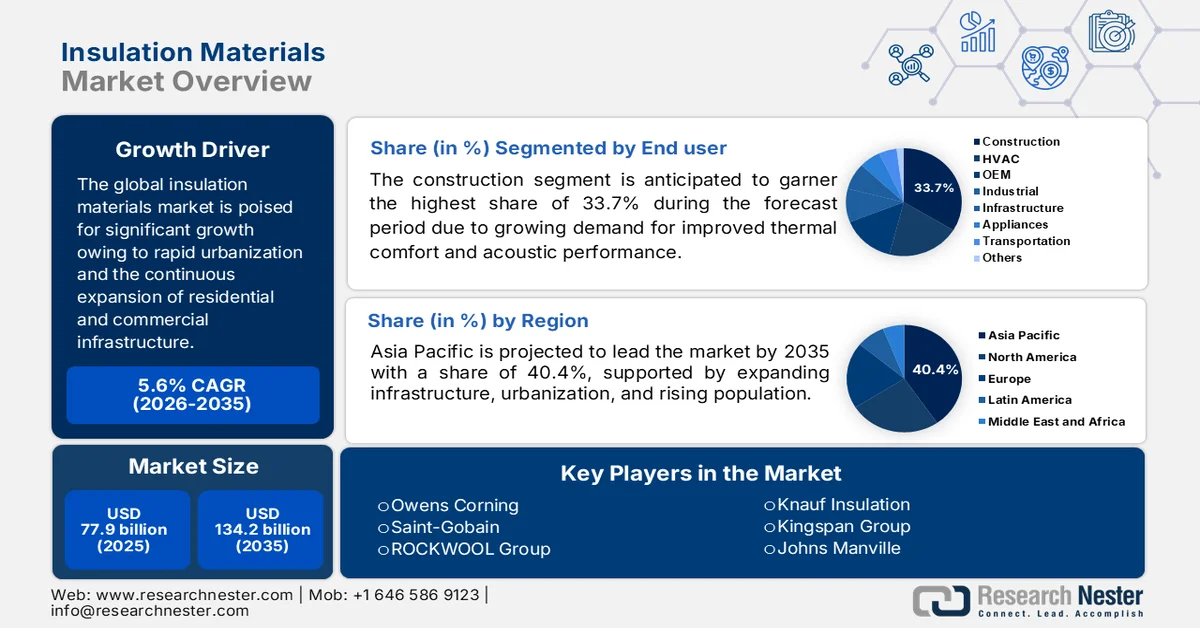
The global insulation materials market is projected to exhibit strong growth momentum in the upcoming years, which is driven by rapid urbanization and the continuous expansion of residential and commercial infrastructure. The trade dynamics influence the market trends by affecting raw material availability, whereas the expansion of global manufacturing capacity and diversified supply networks supports market growth by improving product availability. According to the article published by World Integrated Trade Solution (WITS), polyvinyl chloride not mixed with other substances showcased strong international trade activity in 2024, in which the U.S., China, and the European Union were the leading exporters. Global supply was concentrated among major petrochemical producers with established chlor-alkali and PVC manufacturing capacity, thus elevating the growth potential of the market.
Global Polyvinyl Chloride (PVC) Export Market by Country in 2024: Leading Exporters, Trade Value, and Shipment Volume
|
Exporter |
Export Value (USD Thousand) |
Export Quantity (Kg) |
|
U.S. |
2,543,033.75 |
3,111,790,000 |
|
China |
1,978,332.22 |
2,725,170,000 |
|
European Union |
1,220,898.82 |
- |
|
Other Asia, nes |
981,902.11 |
1,291,520,000 |
|
Germany |
820,115.41 |
727,662,000 |
|
France |
721,372.73 |
- |
|
Belgium |
490,297.79 |
- |
|
South Korea |
480,169.16 |
632,083,000 |
|
Japan |
473,990.89 |
- |
|
Netherlands |
447,734.63 |
499,369,000 |
|
Indonesia |
338,242.73 |
460,179,000 |
Source: WITS
Furthermore, increasing global focus on energy-efficient building designs and stringent sustainability codes encourages developers toward advanced thermal barrier solutions, thereby driving extensive demand in the market. Industrial sectors are also expanding their adoption of high-performance insulation with the main goal of optimizing operational efficiency minimize heat loss. As per an article published by Science and Technology for Energy Transition (STET) in February 2025, an innovative green building design that integrates renewable energy sources, sustainable construction materials, rainwater harvesting, and waste management strategies has been proposed to achieve low-carbon development. This study states that the adoption of renewable energy-based green technologies can reduce energy consumption, operational costs, and CO₂ emissions, thereby improving indoor environmental quality and occupant well-being.
Key Insulation Materials Market Insights Summary:
Regional Insights:
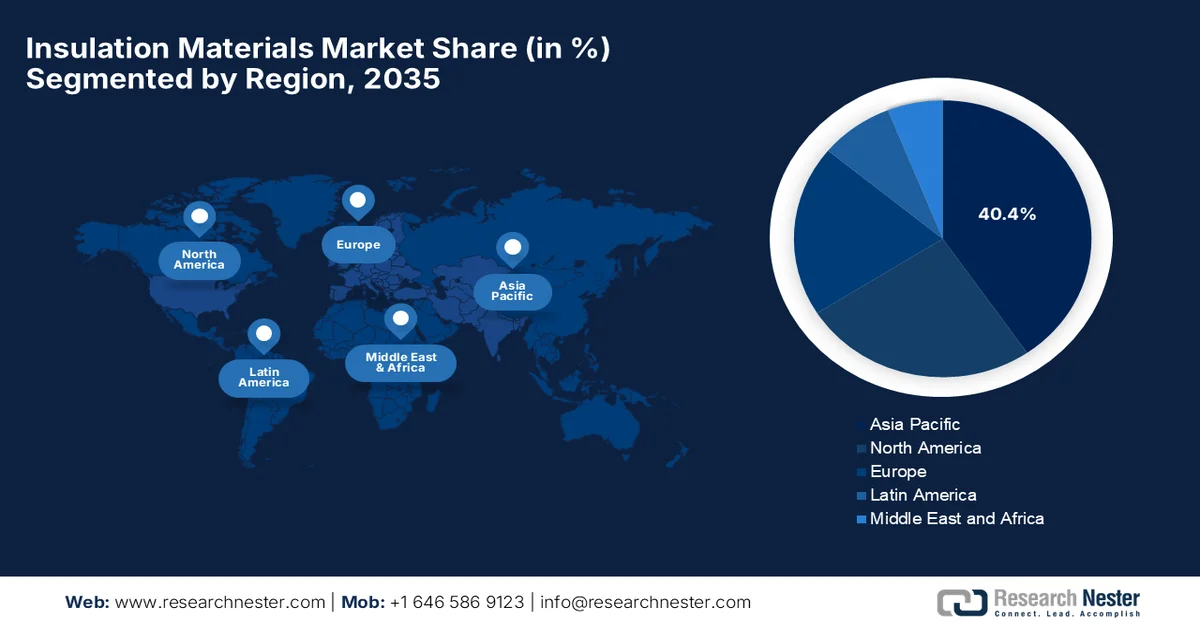
- The insulation materials market in Asia Pacific is projected to capture 40.4% share by 2035, bolstered by unprecedented urbanization, massive population growth, and escalating construction activities
- North America is anticipated to witness notable growth throughout 2026-2035, fueled by decarbonization targets and stringent regional energy codes
Segment Insights:
- The construction segment in the insulation materials market is expected to account for 33.7% share by 2035, underpinned by increasing infrastructure development and growing demand for improved thermal comfort and acoustic performance in residential and commercial structures
- The EPS segment is projected to secure a notable share by 2035, supported by its superior thermal insulation properties, lightweight structure, cost-effectiveness, moisture resistance, and ease of installation
Key Growth Trends:
- Expansion of construction activities
- Rising energy costs
Major Challenges:
- Volatile raw material costs
- Technical performance trade-offs
Key Players: Owens Corning (U.S.),Saint-Gobain (France),ROCKWOOL Group (Denmark),Knauf Insulation (Germany),Kingspan Group (Ireland),Johns Manville (U.S.),Armacell (Luxembourg),Nichias Corporation (Japan),GAF (U.S.),BASF (Germany),Recticel Insulation (Belgium).
Global Insulation Materials Market Forecast and Regional Outlook:
Market Size & Growth Projections:
- 2025 Market Size: USD 77.9 billion
- 2026 Market Size: USD 82.2 billion
- Projected Market Size: USD 134.2 billion by 2035
- Growth Forecasts: 5.6% CAGR (2026-2035)
Key Regional Dynamics:
- Largest Region: Asia Pacific (40.4% share by 2035)
- Fastest Growing Region: North America
- Dominating Countries: China, United States, Germany, Japan, India
- Emerging Countries: India, Vietnam, Indonesia, Brazil, Saudi Arabia
Last updated on : 23 July, 2026
Insulation Materials Market - Growth Drivers and Challenges
Growth Drivers
- Expansion of construction activities: Urban sprawl, population growth, and continued infrastructure development are fueling construction activities worldwide. The increasing number of residential buildings, commercial spaces, and industrial facilities is creating strong demand in the insulation materials market. In this context, Global ABC states that the global buildings and construction sector accounts for nearly 50% of global material extraction and represents 11% to 13% of global GDP. It also mentioned that in 2024, global building floor area expanded by 1.7% to reach 273 billion square meters, with construction adding nearly 12.7 million square meters of floor space daily. Green building certifications have nearly tripled over the past decade, whereas investment in building energy efficiency reached USD 275 billion in 2024, thus denoting a lucrative opportunity for the market to grow in the next decade.
- Rising energy costs: The rising electricity and heating prices are encouraging consumers to opt for long-term savings solutions where thermal insulation emerges as a reliable solution, as it reduces reliance on HVAC systems by lowering utility bills. Hence, this direct financial benefit drives massive adoption in both new builds and renovation projects, prompting a profitable business environment for the market. In February 2024, the U.S. Department of Energy (DOE) reported that more than 90% of assessed U.S. households could reduce energy costs by adopting efficient heat pumps, with some homes saving up to USD 1,500 annually. DOE also mentioned that insulation and air-sealing upgrades can reduce heat pump installation costs by up to USD 3,700 by improving building efficiency. Also, with the Inflation Reduction Act’s USD 8.8 billion home energy rebate programs, insulation adoption is being accelerated to help households achieve long-term energy savings.
Challenges
- Volatile raw material costs: The aspect of unpredictable price swings of the necessary raw materials severely destabilizes profit margins for producers in the market. Synthetic insulation is mostly dependent on crude oil derivatives such as benzene, ethylene, and MDI. Therefore, ongoing geopolitical tensions and global energy crises cause sudden, drastic spikes in manufacturing expenses. Even natural insulation variants, such as wool or cellulose, suffer from supply chain bottlenecks as well as agricultural instability. In this context, manufacturers find it challenging to operate through these escalating costs onto cost-conscious construction consumers. Hence, this unpredictability causes hindrance to long-term corporate planning and reduces overall market profitability.
- Technical performance trade-offs: Engineers in the market face severe struggles with inherent technical compromises when designing advanced insulation systems for modern buildings. Materials that offer exceptional thermal resistance often represent poor fire safety profiles or emit toxic smoke during combustion. Conversely, highly fire-resistant options such as stone wool usually require greater thickness, consuming valuable interior square footage. Apart from this, moisture management presents another critical vulnerability, as trapped dampness degrades thermal performance and promotes toxic mold growth. Therefore, striking the perfect balance between thermal efficiency, acoustic dampening, structural integrity, and fire retardancy has become incredibly complex, thus limiting universal product applications.
Insulation Materials Market Size and Forecast:
| Report Attribute | Details |
|---|---|
|
Base Year |
2025 |
|
Forecast Year |
2026-2035 |
|
CAGR |
5.6% |
|
Base Year Market Size (2025) |
USD 77.9 billion |
|
Forecast Year Market Size (2035) |
USD 134.2 billion |
|
Regional Scope |
|
Insulation Materials Market Segmentation:
End user Segment Analysis
The construction segment is anticipated to garner the highest share of 33.7% in the end user category in the insulation materials market during the forecast period. The segment’s dominance is mainly propelled by increasing infrastructure development and growing demand for improved thermal comfort and acoustic performance in residential and commercial structures. In addition, the renovation activities are encouraging the integration of advanced insulation solutions in modern construction practices. In April 2025, the Press Information Bureau (PIB) stated that the Government of India launched certain initiatives in industries, buildings, transport, and other sectors to achieve energy savings of 89 million tons of oil equivalent by 2030 through improved energy efficiency measures. It also stated that sustainable cooling is being promoted through building codes such as ECSBC and Eco Niwas Samhita, mandatory energy efficiency standards for appliances, and the India Cooling Action Plan.
Product Segment Analysis
EPS, which is a part of the product segment, is projected to account for a notable share in the market by the end of 2035. Its superior thermal insulation properties, lightweight structure, cost-effectiveness, moisture resistance, and ease of installation are the main factors driving the sub-segment’s leadership. In addition, its recyclability and compatibility with modern building systems also support its growing preference among construction stakeholders. For instance, BASF, ABG Frankfurt Holding, and Stoin, in March 2025, accomplished a pilot project using EPS insulation boards containing 10% recycled material, thus improving the sustainability profile of building insulation solutions. The recycled-content insulation boards were installed in a Frankfurt residential building modernization project and demonstrated the same quality and performance as conventional EPS products.
Distribution Channel Segment Analysis
The offline distribution channel is expected to attain a considerable share in the market over the forecasted years. The segment’s growth is largely propelled by the technical nature and project-based demand for insulation products. Construction companies, contractors, and developers generally prefer offline suppliers since they provide product guidance, bulk purchasing options, customized solutions, and reliable logistics support. Apart from this, insulation materials such as EPS, mineral wool, and polyurethane require evaluation based on factors such as thermal performance, thickness, density, and application requirements, which encourages buyers to rely on authorized distributors and manufacturer networks. In addition, large-scale construction projects require timely delivery of high-volume materials, thus making offline channels more practical.
Top Polyurethane Exporting Countries in 2024 by Trade Value and Export Volume
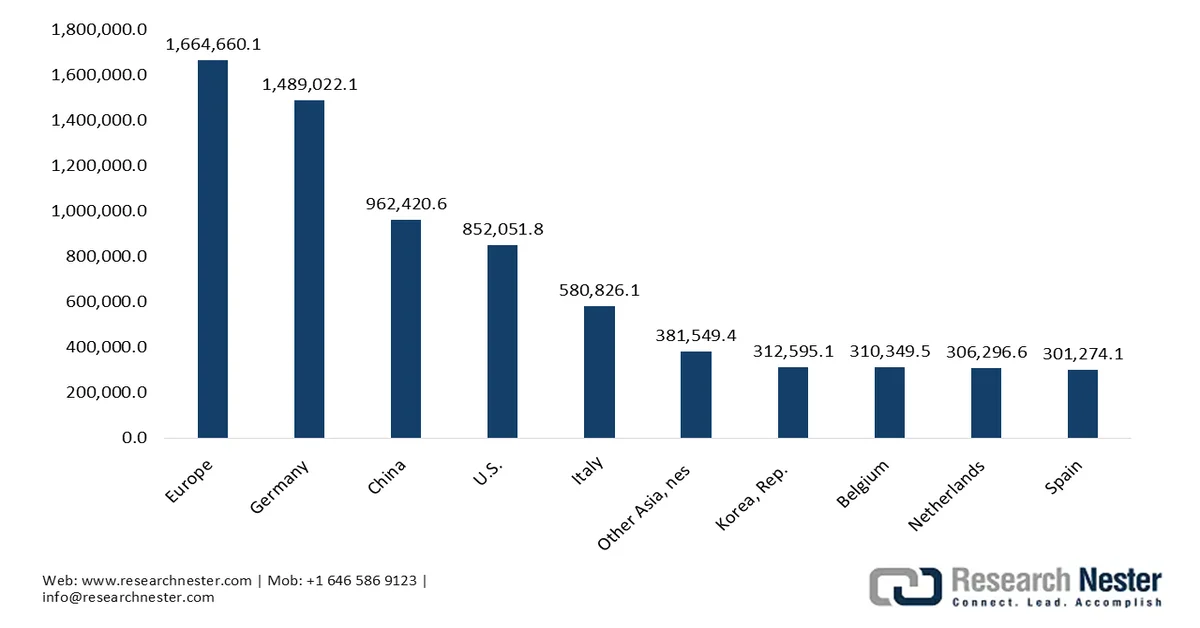
Source: WITS
Our in-depth analysis of the insulation materials includes the following segments:
|
Segment |
Subsegments |
|
End user |
|
|
Product |
|
|
Distribution Channel |
|

Vishnu Nair
Head - Global Business DevelopmentCustomize this report to your requirements — connect with our consultant for personalized insights and options.
Insulation Materials Market - Regional Analysis
APAC Market Insights
Asia Pacific insulation materials market is forecasted to attain the highest share of 40.4% during the discussed timeframe. The region’s dominant position is propelled majorly by unprecedented urbanization, massive population growth, and escalating construction activities. The regional market also benefits from low manufacturing and labor costs, which attracts key market players to set up localized production plants for versatile foamed plastics, mineral wool, and fiberglass. As per an article published by the World Economic Forum in April 2026, Japan is accelerating innovation in green building materials as the construction sector focuses on reducing lifecycle carbon emissions, which account for a significant share of the country’s greenhouse gas emissions. It also mentions that government policies, energy-efficiency standards, subsidies, and initiatives such as the Green Innovation Fund are supporting the development and adoption of sustainable materials, thus making it suitable for standard market growth.
The massive urban development and industrial expansion are driving the growth of the insulation materials market in China. In addition, a national wave of retrofitting older, uninsulated urban residential blocks to enhance energy conservation is also a lucrative, long-term market driver for the country. Based on the government data published in September 2025, China introduced a two-year plan, i.e., 2025 - 2026, to promote steady growth and modernization of its building materials sector, with a target for the green building materials industry to surpass USD 42.2 billion in revenue by the end of 2026. The plan is highly focused on improving profitability, strengthening technological innovation, and expanding advanced inorganic non-metallic materials and sustainable building solutions.
In India, the insulation materials market is influenced by various factors, including smart city initiatives and a booming commercial real estate sector. This market demand is also accelerated by the rapid growth of organized cold chain logistics, pharmaceutical storage networks, and food processing facilities across the country. On the other hand, local manufacturing capabilities are scaling up fast, with producers increasingly adopting advanced fiberglass, rockwool, and polyurethane foam technologies. In June 2025, Armacell announced the inauguration of a new aerogel insulation manufacturing facility in Pune to produce its advanced ArmaGel® XG product line for global markets. This facility manufactures ArmaGel® XGH and ArmaGel® XGC aerogel blankets, which are especially designed for high-temperature, cryogenic, and dual-temperature applications, with operating ranges from -196°C to +650°C.
North America Market Insights
The North America market is growing at a notable pace, which is driven by certain decarbonization targets and strict regional energy codes. In addition, the region's expanding commercial infrastructure, sprawling industrial complexes, and rapidly growing cold chain logistics networks generate steady demand for high-performance rigid foam boards and mineral wool. In this context, DOE in April 2024 released its first federal blueprint to decarbonize the buildings sector, with a collective goal to reduce greenhouse gas emissions by 65% by 2035 and 90% by 2050. Besides, this strategy is highly focused on improving energy efficiency, accelerating clean energy adoption, modernizing building-grid interactions, and reducing emissions from building materials.
The substantial tax credits and rebates for sustainable building practices are boosting growth in the U.S. insulation materials market. In addition, the updating regional codes to require higher R-value performance pushes the market toward advanced, high-thickness, and airtight thermal barriers. For instance, in June 2026, the Polyisocyanurate Insulation Manufacturers Association announced Polyglass U.S.A., Inc. as its newest Regular manufacturer member, thereby strengthening its network of polyiso insulation manufacturers. Polyglass is a leading provider of high-performance roofing and waterproofing solutions and will contribute its expertise in polyiso roof insulation panels to the association, thus positively benefiting the market’s expansion.
The Canada insulation materials market is undergoing profound transformations, which are propelled by extreme seasonal temperature fluctuations and a deeply entrenched regulatory focus on structural energy efficiency. The country’s market also benefits from the widespread architectural preference for wood-frame residential housing, which sustains a reliable market in attics, basements, and exterior walls. Based on the government data published in December 2024, Canada’s Greener Homes Initiative generously invested more than USD 11 billion to help homeowners improve energy efficiency through programs such as the Greener Homes Grant, Greener Homes Loan, and Oil to Heat Pump Affordability Program. This initiative has provided around USD 520 million in grants and helped more than 165,000 households adopt energy upgrades, which include heat pumps, insulation, windows, and solar installations.
Europe Market Insights
The Europe market is poised for sustained expansion during the forecast period. The region’s upliftment is mainly propelled by the European Green Deal and the strict Energy Performance of Buildings Directive. The region represents an exceptionally high market preference for stone wool and glass wool due to stringent structural fire safety regulations and acoustic dampening demands. In June 2025, the European Investment Bank reported that energy efficiency in buildings is becoming a key solution for tackling climate change while reducing energy costs, with AI and digital technologies helping accelerate energy-saving renovations. It also mentions that buildings account for around 40% of Europe’s energy consumption and 35% of greenhouse gas emissions, thus driving investments in insulation, smart energy systems, heat pumps, and efficient building designs.
The renovation of aging infrastructure and government initiatives that support energy savings are driving strong growth of the insulation materials market in Germany. The country’s market is supported by applications in residential, commercial, and industrial buildings, with materials such as mineral wool, EPS, and polyurethane foam gaining traction propelled by their thermal performance and durability. In this context, Clean Energy Wire in September 2024 disclosed that Germany needs an investment of around USD 133 billion to modernize public buildings and achieve climate neutrality by 2045 through measures such as heating system upgrades and insulation. In addition, it also mentioned that the investment could generate around USD 50 billion in savings by 2045, but requires significant upfront funding and stronger government support.
The UK insulation materials market is highly dynamic and policy-driven, which is reshaped by the national net-zero targets. The country’s government is highly focused on upgrading energy-inefficient housing stocks, heavily accelerating a massive, long-term retrofitting sector, supported by nationwide funding schemes such as the Great British Insulation Scheme and the energy company obligation. Based on government data published in May 2026, 54% of dwellings had cavity or solid wall insulation in 2024, whereas loft insulation was dominated by mineral wool/fibreglass, used in nearly 18 million homes, which is 94%, with smaller adoption of rigid foam boards, spray foam, and other materials. These findings support the importance of expanding insulation upgrades, including advanced materials and retrofit measures, to reduce energy consumption and improve housing quality.
Key Insulation Materials Market Players:
- Owens Corning (U.S.)
- Saint-Gobain (France)
- ROCKWOOL Group (Denmark)
- Knauf Insulation (Germany)
- Kingspan Group (Ireland)
- Johns Manville (U.S.)
- Armacell (Luxembourg)
- Nichias Corporation (Japan)
- GAF (U.S.)
- BASF (Germany)
- Recticel Insulation (Belgium)
- Company Overview
- Business Strategy
- Key Product Offerings
- Financial Performance
- Key Performance Indicators
- Risk Analysis
- Recent Development
- Regional Presence
- SWOT Analysis
- Owens Corning is one of the world's leading manufacturers of insulation materials which is offering an extensive portfolio of products for residential, commercial, industrial, and OEM applications. The company is highly focused on developing sustainable building materials and strategic acquisitions, which further strengthen its competitive position in the market.
- Saint-Gobain is yet another global leader in high-performance insulation materials through its ISOVER brand. Besides, the firm makes continuous investments in sustainable manufacturing, circular economy initiatives, and innovative low-carbon insulation technologies, allowing it to maintain a central position in this sector.
- ROCKWOOL Group specializes in stone wool insulation and is recognized as a global leader in non-combustible, high-performance insulation solutions. In addition, the company manufactures products for building envelopes, industrial processes, technical insulation, marine, and offshore applications, with a strong emphasis on fire resilience, acoustic insulation, and energy efficiency.
- Knauf Insulation is among the world's largest manufacturers of insulation products which is offering glass mineral wool, rock mineral wool, wood wool, and blowing insulation solutions. The company is maintaining such a dominating position through proprietary ECOSE® technology, which enhances product sustainability by reducing the use of petrochemical-based binders.
- Kingspan Group is a central player in this sector which is serving commercial, industrial, residential, and cold storage applications. The company's product portfolio consists of premium rigid insulation technologies such as PIR, phenolic, and vacuum insulation panels that deliver superior thermal performance, thereby minimizing building energy consumption.
Here is a list of key players operating in the global market:
The global insulation materials market is witnessing intense competition, and it hosts multinational manufacturers that account for a significant share of global revenue, whereas numerous regional producers serve local construction and industrial markets. Competition is primarily driven by vast product portfolios, extensive manufacturing capabilities, and continued product innovation. Apart from this, differentiation is driven mainly by thermal performance, fire resistance, and sustainability. In June 2026, for instance, Holcim announced the acquisition of Xella to energize its position in Europe’s walling and insulation market, thereby expanding its sustainable building solutions portfolio. This acquisition adds leading brands including Ytong, Hebel, Silka, and Multipor mineral insulation, thus enhancing Holcim's offerings for new construction and energy-efficient renovation projects.
Corporate Landscape of the Market:
Recent Developments
- In June 2026, Saint-Gobain completed the divestment of HKO and its French subsidiary Deltec, manufacturers of high-temperature industrial insulation textile components, to a fund managed by DUBAG Group. This transaction will optimize its business portfolio and strengthen its focus on sustainable construction solutions.
- In November 2025, BASF introduced Cavipor®, which is an innovative mineral-based clay foam insulation material, expanding its approved applications to include floor slabs and roofs in addition to double-wall masonry. It is designed to improve energy-efficient building renovations.
- Report ID: 8687
- Published Date: Jul 23, 2026
- Report Format: PDF, PPT
- Explore a preview of key market trends and insights
- Review sample data tables and segment breakdowns
- Experience the quality of our visual data representations
- Evaluate our report structure and research methodology
- Get a glimpse of competitive landscape analysis
- Understand how regional forecasts are presented
- Assess the depth of company profiling and benchmarking
- Preview how actionable insights can support your strategy
Explore real data and analysis
Frequently Asked Questions (FAQ)
About this Report
Connect with our Expert


Report, 2026-2035



Copyright @ 2026 Research Nester. All Rights Reserved.
