Hydronic Underfloor Heating Market Outlook:
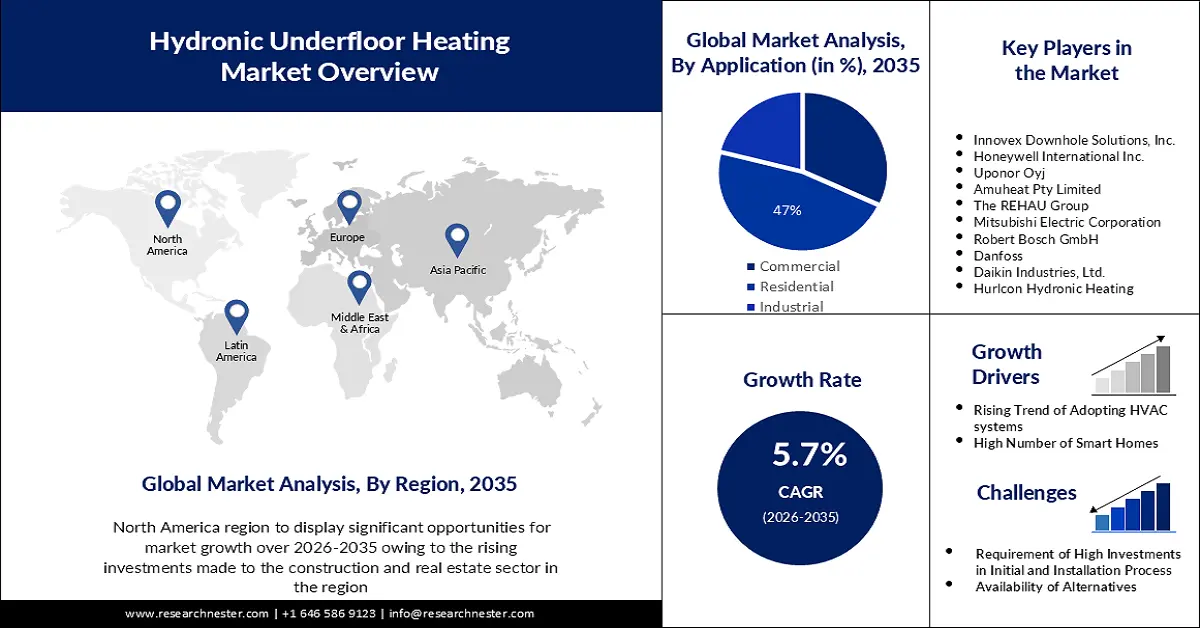
Hydronic Underfloor Heating Market size was valued at USD 4.71 billion in 2025 and is likely to cross USD 8.2 billion by 2035, expanding at more than 5.7% CAGR during the forecast period i.e., between 2026-2035. In the year 2026, the industry size of hydronic underfloor heating is assessed at USD 4.95 billion.
The demand for hydronic underfloor heating is attributed to the rising trend of building automation across the globe. By the end of 2023, in the United States region, almost 15% of the building will have building automation systems (BAS) installed.
Hydronic underfloor heating is an advanced system that is considered to be an efficient way of heating the individual’s dwelling place. Generally, hydronic underfloor heating uses radiant heat technology that allows gentle heating of the surroundings, from the ground up while facilitating a much more energy-efficient method. Several advantages of hydronic underfloor heating include increased energy efficiency, low maintenance, freedom of design, and adaptability of floor heaters. All these factors are projected to favor the global industry expansion in the upcoming years.
Key Hydronic Underfloor Heating Market Insights Summary:
Regional Highlights:
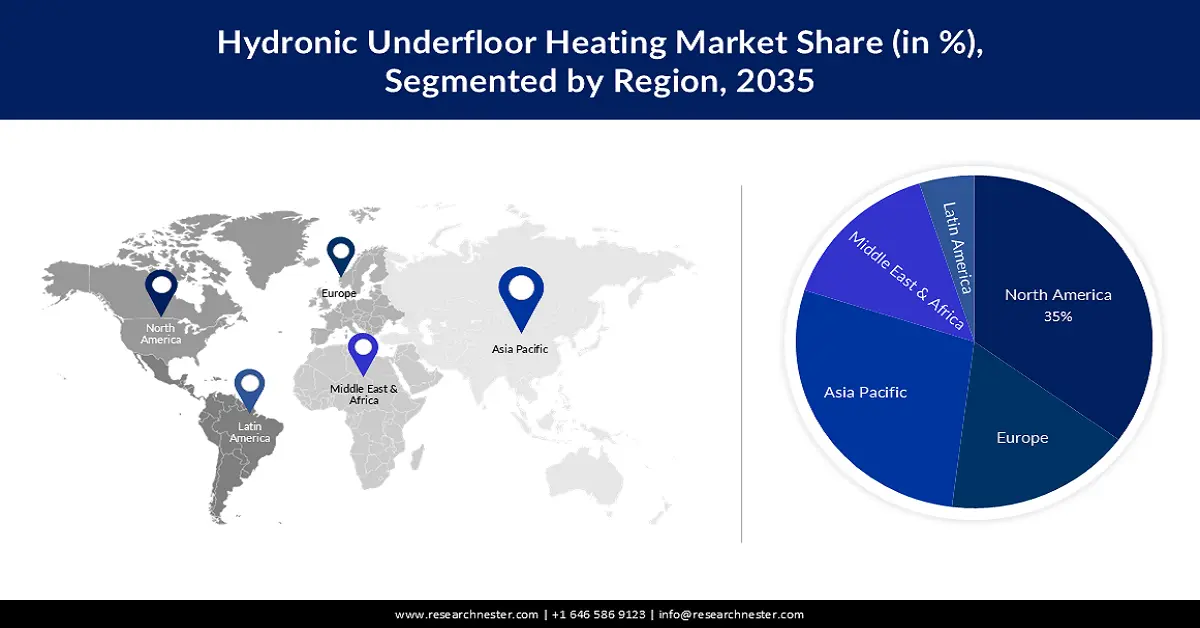
- By 2035, North America is projected to command a 35% share of the hydronic underfloor heating market, stemming from escalating investments in multi-family construction and commercial infrastructure.
- Asia Pacific is anticipated to secure a 24% share by 2035 as it benefits from a surging population and increasing demand for energy-efficient residential and infrastructure development driven by supportive government regulations.
Segment Insights:
- The new buildings segment is projected to capture a 51% share of the hydronic underfloor heating market by 2035, propelled by lower installation costs during construction.
- The residential segment is expected to attain a 47% share through 2035, supported by rising awareness of automatic heating systems and expanding renovation activities.
Key Growth Trends:
- Rising Adoption of HVAC Systems
- Significant Growth in the Number of Smart Homes and Buildings
Major Challenges:
- High Initial Cost During Installation Process
- Rising Concern Regarding the Complication Structure of the System
Key Players: Innovex Downhole Solutions, Inc., Honeywell International Inc., Uponor Oyj, Amuheat Pty Limited, The REHAU Group, Mitsubishi Electric Corporation, Robert Bosch GmbH, Danfoss, Daikin Industries, Ltd., Hurlcon Hydronic Heating.
Global Hydronic Underfloor Heating Market Forecast and Regional Outlook:
Market Size & Growth Projections:
- 2025 Market Size: USD 4.71 billion
- 2026 Market Size: USD 4.95 billion
- Projected Market Size: USD 8.2 billion by 2035
- Growth Forecasts: 5.7%
Key Regional Dynamics:
- Largest Region: North America (35% Share by 2035)
- Fastest Growing Region: Asia Pacific
- Dominating Countries: United States, China, Germany, United Kingdom, Japan
- Emerging Countries: India, Brazil, South Korea, Australia, Canada
Last updated on : 25 November, 2025
Hydronic Underfloor Heating Market - Growth Drivers and Challenges
Growth Drivers
- Rising Adoption of HVAC Systems – People nowadays are inclined towards adopting advanced technologies such as HVAC (Heating, Ventilation, and Air-Conditioning) systems to upgrade their living standards. The adoption of HVAC control systems is anticipated to increase the demand for hydronic underfloor heating too. The HVAC industry generated a revenue of USD 17 Billion in 2022 and is poised to grow and reach USD 30 Billion by 2028.
- Significant Growth in the Number of Smart Homes and Buildings – Rapid urbanization has led to the development of smart homes and buildings across the globe. These advanced infrastructures require automatic and efficient heating systems such as hydronic underfloor heating for setting the room temperature. It has been found that in 2022, the count of smart homes worldwide was around 308 million and is projected to increase to reach 670 million smart homes throughout the world by 2025.
- Emergence of Advanced IoT-enabled Heating Systems – The rising integration of the Internet of Things (IoT) and Wi-Fi has enabled hydronic underfloor heating for observing, monitoring, and studying user settings and preferences. This trend is anticipated to favor the growth of the global hydronic underfloor heating market size during the assessment period.
Challenges
- High Initial Cost During Installation Process – Hydronic underfloor is built beneath the floor which requires high investments in the installation process. Furthermore, the usage of several pipes to carry the hot water along with the integration of wires and other things increases the overall cost. It is therefore estimated to hamper the growth of the market in the forecast period.
- Rising Concern Regarding the Complication Structure of the System
- Easy Availability of Cost-Effective Alternatives
Hydronic Underfloor Heating Market Size and Forecast:
| Report Attribute | Details |
|---|---|
|
Base Year |
2025 |
|
Forecast Year |
2026-2035 |
|
CAGR |
5.7% |
|
Base Year Market Size (2025) |
USD 4.71 billion |
|
Forecast Year Market Size (2035) |
USD 8.2 billion |
|
Regional Scope |
|
Hydronic Underfloor Heating Market Segmentation:
Facility Segment Analysis
The new buildings segment is anticipated to account for 51% share of the hydronic underfloor heating market in the 2035. The major factor that is anticipated to help segment growth is the lower installation cost in construction as compared to retrofit. Usually, developers use laborers that are present on the site to install the basic elements of hydronic underfloor heating systems beforehand and connect electric systems to avoid hassles after the development of the property.
Application Segment Analysis
The residential segment in the hydronic underfloor heating market is set to garner the highest revenue share of 47% through the forecasted timeframe. The growing awareness level about different automatic heating systems such as hydronic underfloor heating that is used in residential properties among the global population is anticipated to drive segment growth. In addition to the other aforementioned, rising renovation activities of residents along with the growing popularity of modern design have inspired consumers to adopt hydronic underfloor heating. Moreover, the presence of favorable government regulations and tax credit facilities for the installation of energy-efficient systems is also estimated to drive market growth.
Our in-depth analysis of the global market includes the following segments:
|
Facility |
|
|
Application |
|

Vishnu Nair
Head - Global Business DevelopmentCustomize this report to your requirements — connect with our consultant for personalized insights and options.
Hydronic Underfloor Heating Market - Regional Analysis
North American Market Insights
North America industry is likely to dominate majority revenue share of 35% by 2035, owing to the investments of hefty amounts in the construction of multi-family buildings and commercial units especially in the United States and Canada region. Also, the significant rise in the real estate sector along with the escalation in the construction of new infrastructure is estimated to bring lucrative growth opportunities for market growth during the forecast period.
APAC Market Insights
The Asia Pacific hydronic underfloor heating sector is set to hold 24% of the market share by the end of the projected timeframe. Asia Pacific is expected to observe a growth outlook in the coming years owing to the burgeoning population in the countries, especially, India and China, and their rising demand for fully efficient homes, and other infrastructure. In addition, the initiatives started by the government policies and regulations to reduce the carbon emission from heating equipment and bring a sustainable way of regulating the temperature of space are projected to create a positive outlook for market growth in the next coming years.
Hydronic Underfloor Heating Market Players:
- Innovex Downhole Solutions, Inc.
- Company Overview
- Business Strategy
- Key Product Offerings
- Financial Performance
- Key Performance Indicators
- Risk Analysis
- Recent Development
- Regional Presence
- SWOT Analysis
- Honeywell International Inc.
- Uponor Oyj
- Amuheat Pty Limited
- The REHAU Group
- Mitsubishi Electric Corporation
- Robert Bosch GmbH
- Danfoss
- Daikin Industries, Ltd.
- Hurlcon Hydronic Heating
Recent Developments
- nVent Electric plc has announced the introduction of new features which include advanced work packaging and heat mapping capabilities. for nVent RAYCHEM TracerLynx electric heat tracing (EHT) design software. It is also estimated to reduce total installed and power distribution costs.
- Honeywell International Inc. along with DunAn Environment Co., Ltd. has agreed to facilitate the adoption of the non-flammable, low-GWP refrigerant Solstice N41 for the HVAC industry. Solstice N14 is an effective substitution for R-410A in static air conditioning systems, with global warming mitigation at almost 65%.
- Report ID: 5046
- Published Date: Nov 25, 2025
- Report Format: PDF, PPT
- Explore a preview of key market trends and insights
- Review sample data tables and segment breakdowns
- Experience the quality of our visual data representations
- Evaluate our report structure and research methodology
- Get a glimpse of competitive landscape analysis
- Understand how regional forecasts are presented
- Assess the depth of company profiling and benchmarking
- Preview how actionable insights can support your strategy
Explore real data and analysis
Frequently Asked Questions (FAQ)
About this Report
Connect with our Expert


Report, 2026-2035



Copyright @ 2026 Research Nester. All Rights Reserved.
