Global Genotoxicity Testing Market
- An Outline of the Global Genotoxicity Testing Market
- Market Definition & Segmentation
- Assumptions and Abbreviations
- Research Methodology & Approach
- Primary Research
- Secondary Research
- Data Triangulation
- SPSS Methodology
- Executive Summary
- Market Overview
- Market Dynamics
- Growth Drivers
- Major Roadblocks
- Opportunities
- Prevalent Trends
- Government Regulation
8. Technological Advancements
8.1 Market Definition & Segmentation
9. Growth Outlook
10. Risk Overview
11. Regional Demand
12. Recent Development News
13. Environmental Impact and Sustainability
14. Industry-wise Case Study Analysis
15. Detailed Assay Type Analysis
16. Comparative Analysis of Chromosomal Aberration, Micronucleus and Comet assays for Global Genotoxicity Testing
17. Application Analysis
18. Test Type Analysis
19. Root Cause Analysis (RCA) for Discovering Problems in the Industry
20. Porter Five Forces
21. PESTLE
22. Competitor SWOT Analysis
23. Strategic Developments by Competitors in the Industry
24. Comparative Positioning
25. Top Market Players Analysis in Japan
26. Competitive Landscape: Key Players
27. Competitive Model
27.1 Market Share of Company, 2024
- Company Profile
- Agilent Technologies, Inc.
- Anthem Bio Sciences
- biotoxicity.com
- Cell Biolabs, Inc
- Creative Bioarray
- Creative Diagnostics
- Enzo Biochem Inc.
- Frontage Labs
- Inotiv
- IPHASE Biosciences Inc.
- Litron Laboratories
- Merck KGaA
- Pharmaron
- Thermo Fisher Scientific Inc.
- Toxys
- WuXi AppTec
- XENOMETRIX AG
28. Global Genotoxicity Testing Market Outlook
- Market Overview
- Market Revenue by Value (USD Thousand) and Compound Annual Growth Rate (CAGR)
- Genotoxicity Testing Market Segmentation Analysis (2025-2038)
28.3.1 By Test Type
- In Vitro Tests, Market Value (USD Thousand) and CAGR & Y-o-Y Growth Trend, 2025-2038F
- In Vivo Tests, Market Value (USD Thousand) and CAGR & Y-o-Y Growth Trend, 2025-2038F
28.3.2 By Assay Type
- Ames Test, Market Value (USD Thousand), CAGR & Y-o-Y Growth Trend, 2025-2038F
- Chromosomal Aberration Assays, Market Value (USD Thousand), CAGR & Y-o-Y Growth Trend, 2025-2038F
- Micronucleus Assays, Market Value (USD Thousand), CAGR & Y-o-Y Growth Trend, 2025-2038F
- Comet Assays, Market Value (USD Thousand), CAGR & Y-o-Y Growth Trend, 2025-2038F
- Others, Market Value (USD Thousand), CAGR & Y-o-Y Growth Trend, 2025-2038F
- By End use Industry
- Pharmaceutical & Biotechnology, Market Value (USD Thousand), CAGR & Y-o-Y Growth Trend, 2025-2038F
- Food Industry, Market Value (USD Thousand), CAGR & Y-o-Y Growth Trend, 2025-2038F
- Cosmetics Industry, Market Value (USD Thousand), CAGR & Y-o-Y Growth Trend, 2025-2038F
- Chemical Industry, Market Value (USD Thousand), CAGR & Y-o-Y Growth Trend, 2025-2038F
- Others, Market Value (USD Thousand), CAGR & Y-o-Y Growth Trend, 2025-2038F
28.3.4 By Region
- North America, Market Value (USD Thousand) and CAGR & Y-o-Y Growth Trend, 2025-2038F
- Europe, Market Value (USD Thousand) and CAGR & Y-o-Y Growth Trend, 2025-2038F
- Asia Pacific Excluding Japan, Market Value (USD Thousand) and CAGR & Y-o-Y Growth Trend, 2025-2038F
- Japan, Market Value (USD Thousand) and CAGR & Y-o-Y Growth Trend, 2025-2038F
- Latin America, Market Value (USD Thousand) and CAGR & Y-o-Y Growth Trend, 2025-2038F
- Middle East and Africa, Market Value (USD Thousand) and CAGR & Y-o-Y Growth Trend, 2025-2038F
29. North America Genotoxicity Testing Market Outlook
- Market Overview
- Market Revenue by Value (USD Thousand) and Compound Annual Growth Rate (CAGR)
- Genotoxicity Testing Market Segmentation Analysis (2025-2038)
29.3.1 By Test Type
- In Vitro Tests, Market Value (USD Thousand) and CAGR & Y-o-Y Growth Trend, 2025-2038F
- In Vivo Tests, Market Value (USD Thousand) and CAGR & Y-o-Y Growth Trend, 2025-2038F
29.3.2 By Assay Type
- Ames Test, Market Value (USD Thousand), CAGR & Y-o-Y Growth Trend, 2025-2038F
- Chromosomal Aberration Assays, Market Value (USD Thousand), CAGR & Y-o-Y Growth Trend, 2025-2038F
- Micronucleus Assays, Market Value (USD Thousand), CAGR & Y-o-Y Growth Trend, 2025-2038F
- Comet Assays, Market Value (USD Thousand), CAGR & Y-o-Y Growth Trend, 2025-2038F
- Others, Market Value (USD Thousand), CAGR & Y-o-Y Growth Trend, 2025-2038F
29.3.3By End use Industry
- Pharmaceutical & Biotechnology, Market Value (USD Thousand), CAGR & Y-o-Y Growth Trend, 2025-2038F
- Food Industry, Market Value (USD Thousand), CAGR & Y-o-Y Growth Trend, 2025-2038F
- Cosmetics Industry, Market Value (USD Thousand), CAGR & Y-o-Y Growth Trend, 2025-2038F
- Chemical Industry, Market Value (USD Thousand), CAGR & Y-o-Y Growth Trend, 2025-2038F
- Others, Market Value (USD Thousand), CAGR & Y-o-Y Growth Trend, 2025-2038F
- By Country
- US, Market Value (USD Thousand) and CAGR, 2025-2038F
- Canada, Market Value (USD Thousand) and CAGR, 2025-2038F
30. Europe Genotoxicity Testing Market Outlook
- Market Overview
- Market Revenue by Value (USD Thousand) and Compound Annual Growth Rate (CAGR)
- Genotoxicity Testing Market Segmentation Analysis (2025-2038)
30.3.1 By Test Type
- In Vitro Tests, Market Value (USD Thousand) and CAGR & Y-o-Y Growth Trend, 2025-2038F
- In Vivo Tests, Market Value (USD Thousand) and CAGR & Y-o-Y Growth Trend, 2025-2038F
30.3.2 By Assay Type
- Ames Test, Market Value (USD Thousand), CAGR & Y-o-Y Growth Trend, 2025-2038F
- Chromosomal Aberration Assays, Market Value (USD Thousand), CAGR & Y-o-Y Growth Trend, 2025-2038F
- Micronucleus Assays, Market Value (USD Thousand), CAGR & Y-o-Y Growth Trend, 2025-2038F
- Comet Assays, Market Value (USD Thousand), CAGR & Y-o-Y Growth Trend, 2025-2038F
- Others, Market Value (USD Thousand), CAGR & Y-o-Y Growth Trend, 2025-2038F
30.3.3 By End user Industry
- Pharmaceutical & Biotechnology, Market Value (USD Thousand), CAGR & Y-o-Y Growth Trend, 2025-2038F
- Food Industry, Market Value (USD Thousand), CAGR & Y-o-Y Growth Trend, 2025-2038F
- Cosmetics Industry, Market Value (USD Thousand), CAGR & Y-o-Y Growth Trend, 2025-2038F
- Chemical Industry, Market Value (USD Thousand), CAGR & Y-o-Y Growth Trend, 2025-2038F
- Others, Market Value (USD Thousand), CAGR & Y-o-Y Growth Trend, 2025-2038F
30.3.4 By Country
- UK, Market Value (USD Thousand) and CAGR, 2025-2038F
- Germany, Market Value (USD Thousand) and CAGR, 2025-2038F
- France, Market Value (USD Thousand) and CAGR, 2025-2038F
- Italy, Market Value (USD Thousand) and CAGR, 2025-2038F
- Spain, Market Value (USD Thousand) and CAGR, 2025-2038F
- BENELUX, Market Value (USD Thousand) and CAGR, 2025-2038F
- Poland, Market Value (USD Thousand) and CAGR, 2025-2038F
- Russia, Market Value (USD Thousand) and CAGR, 2025-2038F
- Rest of Europe, Market Value (USD Thousand) and CAGR, 2025-2038F
31. Asia Pacific Excluding Japan Genotoxicity Testing Market Outlook
- Market Overview
- Market Revenue by Value (USD Thousand) and Compound Annual Growth Rate (CAGR)
31.3 Genotoxicity Testing Market Segmentation Analysis (2025-2038)
31.3.1 By Test Type
- In Vitro Tests, Market Value (USD Thousand) and CAGR & Y-o-Y Growth Trend, 2025-2038F
- In Vivo Tests, Market Value (USD Thousand) and CAGR & Y-o-Y Growth Trend, 2025-2038F
31.3.2 By Assay Type
- Ames Test, Market Value (USD Thousand), CAGR & Y-o-Y Growth Trend, 2025-2038F
- Chromosomal Aberration Assays, Market Value (USD Thousand), CAGR & Y-o-Y Growth Trend, 2025-2038F
- Micronucleus Assays, Market Value (USD Thousand), CAGR & Y-o-Y Growth Trend, 2025-2038F
- Comet Assays, Market Value (USD Thousand), CAGR & Y-o-Y Growth Trend, 2025-2038F
- Others, Market Value (USD Thousand), CAGR & Y-o-Y Growth Trend, 2025-2038F
- By End user Industry
- Pharmaceutical & Biotechnology, Market Value (USD Thousand), CAGR & Y-o-Y Growth Trend, 2025-2038F
- Food Industry, Market Value (USD Thousand), CAGR & Y-o-Y Growth Trend, 2025-2038F
- Cosmetics Industry, Market Value (USD Thousand), CAGR & Y-o-Y Growth Trend, 2025-2038F
- Chemical Industry, Market Value (USD Thousand), CAGR & Y-o-Y Growth Trend, 2025-2038F
- Others, Market Value (USD Thousand), CAGR & Y-o-Y Growth Trend, 2025-2038F
31.3.4 By Country
- China, Market Value (USD Thousand) and CAGR, 2025-2038F
- India, Market Value (USD Thousand) and CAGR, 2025-2038F
- Indonesia, Market Value (USD Thousand) and CAGR, 2025-2038F
- South Korea, Market Value (USD Thousand) and CAGR, 2025-2038F
- Malaysia, Market Value (USD Thousand) and CAGR, 2025-2038F
- Australia, Market Value (USD Thousand) and CAGR, 2025-2038F
- Singapore, Market Value (USD Thousand) and CAGR, 2025-2038F
- Vietnam, Market Value (USD Thousand) and CAGR, 2025-2038F
- Thailand, Market Value (USD Thousand) and CAGR, 2025-2038F
- New Zealand, Market Value (USD Thousand) and CAGR, 2025-2038F
- Rest of Asia Pacific Excluding Japan, Market Value (USD Thousand) and CAGR, 2025-2038F
32. Japan Genotoxicity Testing Market Outlook
- Market Overview
- Market Revenue by Value (USD Thousand) and Compound Annual Growth Rate (CAGR)
- Genotoxicity Testing Market Segmentation Analysis (2025-2038)
32.3.1 By Test Type
- In Vitro Tests, Market Value (USD Thousand) and CAGR & Y-o-Y Growth Trend, 2025-2038F
- In Vivo Tests, Market Value (USD Thousand) and CAGR & Y-o-Y Growth Trend, 2025-2038F
32.3.2 By Assay Type
- Ames Test, Market Value (USD Thousand), CAGR & Y-o-Y Growth Trend, 2025-2038F
- Chromosomal Aberration Assays, Market Value (USD Thousand), CAGR & Y-o-Y Growth Trend, 2025-2038F
- Micronucleus Assays, Market Value (USD Thousand), CAGR & Y-o-Y Growth Trend, 2025-2038F
- Comet Assays, Market Value (USD Thousand), CAGR & Y-o-Y Growth Trend, 2025-2038F
- Others, Market Value (USD Thousand), CAGR & Y-o-Y Growth Trend, 2025-2038F
32.3.3 By End use Industry
- Pharmaceutical & Biotechnology, Market Value (USD Thousand), CAGR & Y-o-Y Growth Trend, 2025-2038F
- Food Industry, Market Value (USD Thousand), CAGR & Y-o-Y Growth Trend, 2025-2038F
- Cosmetics Industry, Market Value (USD Thousand), CAGR & Y-o-Y Growth Trend, 2025-2038F
- Chemical Industry, Market Value (USD Thousand), CAGR & Y-o-Y Growth Trend, 2025-2038F
- Others, Market Value (USD Thousand), CAGR & Y-o-Y Growth Trend, 2025-2038F
33. Latin America Genotoxicity Testing Market Outlook
- Market Overview
- Market Revenue by Value (USD Thousand) and Compound Annual Growth Rate (CAGR)
- Genotoxicity Testing Market Segmentation Analysis (2025-2038)
33.3.1 By Test Type
- In Vitro Tests, Market Value (USD Thousand) and CAGR & Y-o-Y Growth Trend, 2025-2038F
- In Vivo Tests, Market Value (USD Thousand) and CAGR & Y-o-Y Growth Trend, 2025-2038F
33.3.2 By Assay Type
- Ames Test, Market Value (USD Thousand), CAGR & Y-o-Y Growth Trend, 2025-2038F
- Chromosomal Aberration Assays, Market Value (USD Thousand), CAGR & Y-o-Y Growth Trend, 2025-2038F
- Micronucleus Assays, Market Value (USD Thousand), CAGR & Y-o-Y Growth Trend, 2025-2038F
- Comet Assays, Market Value (USD Thousand), CAGR & Y-o-Y Growth Trend, 2025-2038F
- Others, Market Value (USD Thousand), CAGR & Y-o-Y Growth Trend, 2025-2038F
33.3.3 By End use Industry
- Pharmaceutical & Biotechnology, Market Value (USD Thousand), CAGR & Y-o-Y Growth Trend, 2025-2038F
- Food Industry, Market Value (USD Thousand), CAGR & Y-o-Y Growth Trend, 2025-2038F
- Cosmetics Industry, Market Value (USD Thousand), CAGR & Y-o-Y Growth Trend, 2025-2038F
- Chemical Industry, Market Value (USD Thousand), CAGR & Y-o-Y Growth Trend, 2025-2038F
- Others, Market Value (USD Thousand), CAGR & Y-o-Y Growth Trend, 2025-2038F
33.3.4 By Country
- Brazil, Market Value (USD Thousand) and CAGR, 2025-2038F
- Argentina, Market Value (USD Thousand) and CAGR, 2025-2038F
- Mexico, Market Value (USD Thousand) and CAGR, 2025-2038F
- Rest of Latin America, Market Value (USD Thousand) and CAGR, 2025-2038F
34. Middle East & Africa Genotoxicity Testing Market Outlook
- Market Overview
- Market Revenue by Value (USD Thousand) and Compound Annual Growth Rate (CAGR)
- Genotoxicity Testing Market Segmentation Analysis (2025-2038)
34.3.1 By Test Type
- In Vitro Tests, Market Value (USD Thousand) and CAGR & Y-o-Y Growth Trend, 2025-2038F
- In Vivo Tests, Market Value (USD Thousand) and CAGR & Y-o-Y Growth Trend, 2025-2038F
34.3.2 By Assay Type
- Ames Test, Market Value (USD Thousand), CAGR & Y-o-Y Growth Trend, 2025-2038F
- Chromosomal Aberration Assays, Market Value (USD Thousand), CAGR & Y-o-Y Growth Trend, 2025-2038F
- Micronucleus Assays, Market Value (USD Thousand), CAGR & Y-o-Y Growth Trend, 2025-2038F
- Comet Assays, Market Value (USD Thousand), CAGR & Y-o-Y Growth Trend, 2025-2038F
- Others, Market Value (USD Thousand), CAGR & Y-o-Y Growth Trend, 2025-2038F
- By End use Industry
- Pharmaceutical & Biotechnology, Market Value (USD Thousand), CAGR & Y-o-Y Growth Trend, 2025-2038F
- Food Industry, Market Value (USD Thousand), CAGR & Y-o-Y Growth Trend, 2025-2038F
- Cosmetics Industry, Market Value (USD Thousand), CAGR & Y-o-Y Growth Trend, 2025-2038F
- Chemical Industry, Market Value (USD Thousand), CAGR & Y-o-Y Growth Trend, 2025-2038F
- Others, Market Value (USD Thousand), CAGR & Y-o-Y Growth Trend, 2025-2038F
34.3.4 By Country
- GCC, Market Value (USD Thousand) and CAGR, 2025-2038F
- Israel, Market Value (USD Thousand) and CAGR, 2025-2038F
- South Africa, Market Value (USD Thousand) and CAGR, 2025-2038F
- Rest of Middle East & Africa, Market Value (USD Thousand) and CAGR, 2025-2038F
Genotoxicity Testing Market Outlook:
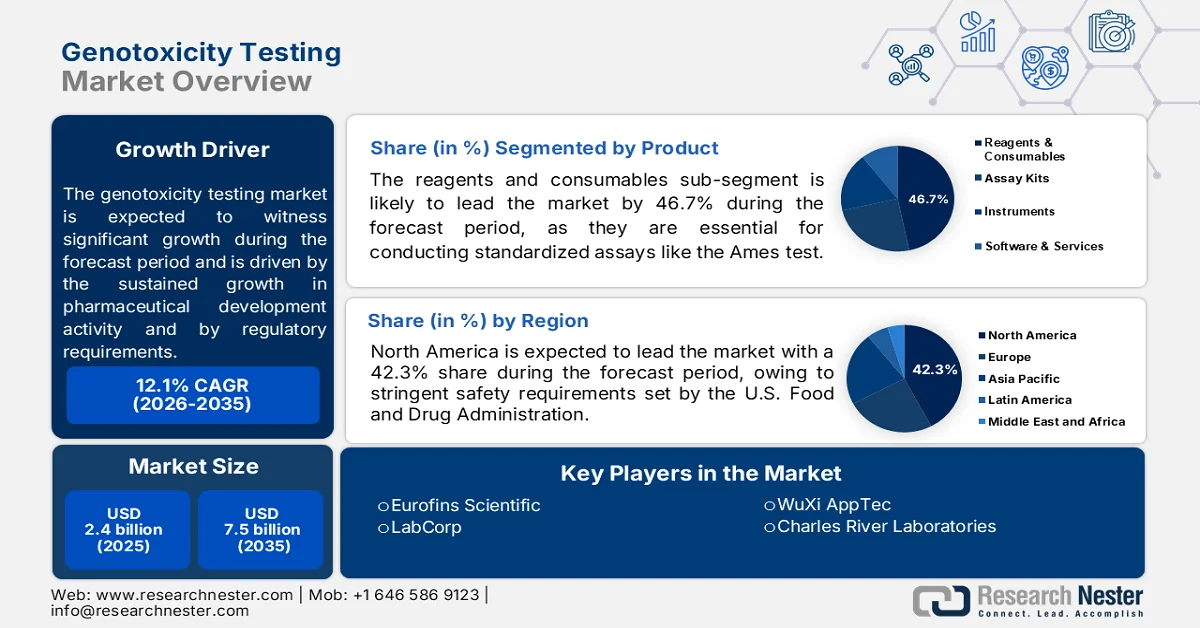
Genotoxicity Testing Market size was valued at USD 2.4 billion in 2025 and is projected to cross USD 7.5 billion by the end of 2035, expanding at more than 12.1% CAGR during the forecast period, i.e., 2026-2035. In 2026, the industry size of genotoxicity testing is evaluated at USD 2.6 billion.
The genotoxicity testing market is being supported by sustained growth in pharmaceutical development activity and by regulatory requirements that require genetic toxicology data before human exposure and marketing authorization. According to the U.S. Food and Drug Administration (FDA) January 2025 data, the Center for Drug Evaluation and Research (CDER) approved 50 novel drugs in 2024, reflecting a continued flow of new molecular entities that require nonclinical safety evaluation, including genotoxicity assessments during development. In parallel, the U.S. National Institutes of Health (NIH) ClinicalTrials.gov database contains hundreds of thousands of registered studies globally, illustrating the scale of ongoing clinical and translational research that depends on robust preclinical safety packages.
Public health agencies also continue to emphasize cancer prevention and exposure monitoring. The NIH May 2025 data estimated approximately 20 million new cancer cases and 9.7 million cancer deaths worldwide, increasing attention on carcinogenic mechanisms and DNA damage pathways that are directly linked to genetic toxicology research. At the same time, regulatory agencies are encouraging scientifically validated approaches that improve testing efficiency while maintaining safety standards. This combination of expanding drug development pipelines, chemical safety oversight, international regulatory harmonization, and growing public-health focus on carcinogenic risk continues to support stable demand for genotoxicity testing services, instruments, reagents, and specialized laboratory capabilities across global life-science industries.
Key Genotoxicity Testing Market Insights Summary:
Regional Insights:
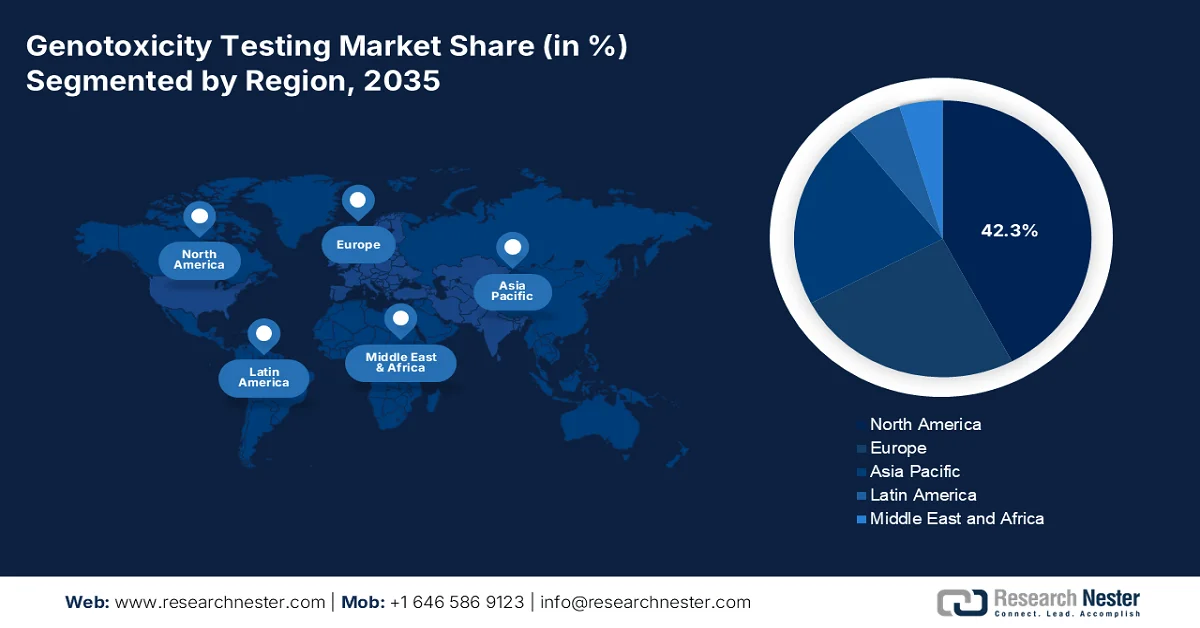
- North America is anticipated to secure 42.3% of the genotoxicity testing market share by 2035, underpinned by stringent safety requirements from the U.S. Food and Drug Administration and the Environmental Protection Agency
- Asia Pacific is set to witness the fastest expansion in the forecast period 2026–2035, fueled by growing pharmaceutical outsourcing, chemical manufacturing, and tightening regulatory oversight
Segment Insights:
- The reagents and consumables segment is projected to account for 46.7% of the genotoxicity testing market share by 2035, reinforced by recurring demand for high-quality GLP-compliant materials across pharmaceutical companies, CROs, and academic laboratories worldwide
- Drug discovery and development is expected to remain the leading application segment throughout 2026–2035, benefiting from the increasing integration of AI-driven genotoxicity predictions in early-stage drug development pipelines
Key Growth Trends:
- Increasing oncology research supported by public health spending
- Rising government funding for biomedical
Major Challenges:
- High regulatory compliance costs
- Shortage of skilled toxicologists
Key Players: Eurofins Scientific (Luxembourg),LabCorp (Covance) (U.S.),WuXi AppTec,Charles River Laboratories.
Global Genotoxicity Testing Market Forecast and Regional Outlook:
Market Size & Growth Projections:
- 2025 Market Size: USD 2.4 billion
- 2026 Market Size: USD 2.6 billion
- Projected Market Size: USD 7.5 billion by 2035
- Growth Forecasts: 12.1% CAGR (2026-2035)
Key Regional Dynamics:
- Largest Region: North America (42.3% Share by 2035)
- Fastest Growing Region: Asia Pacific
- Dominating Countries: United States, Germany, Japan, China, United Kingdom
- Emerging Countries: China, India, South Korea, Singapore, Australia
Last updated on : 22 June, 2026
Genotoxicity Testing Market - Growth Drivers and Challenges
Growth Drivers
- Increasing oncology research supported by public health spending: Cancer-related research investments are significantly increasing the need for genetic toxicology studies. According to the NBER April 2026 data federal funding for cancer research exceeded USD 7 billion annually, supporting development of targeted therapies, immunotherapies, and combination treatments. Since oncology products frequently involve complex molecular mechanisms, regulators require extensive genotoxicity evaluations to identify DNA-damage risks and long-term safety concerns. Government-sponsored cancer programs across North America, Europe, Japan, and China continue to support preclinical and translational research. As cancer incidence rises and governments allocate larger healthcare budgets toward oncology innovation, the volume of preclinical safety studies is expected to increase, creating sustained demand for specialized genotoxicity testing capabilities.
- Rising government funding for biomedical: Government investments in biomedical research continue to expand the volume of drug candidates entering preclinical safety evaluation, directly increasing demand for genotoxicity testing services. Similarly, the European Union’s July 2025 data depicts that Horizon Europe program has allocated EUR 93.5 billion for research and innovation activities, including life sciences and pharmaceutical development. These investments are expanding preclinical research pipelines and increasing outsourcing to specialized testing laboratories. As government-backed translational research programs accelerate commercialization efforts, demand for regulatory-compliant genotoxicity studies is expected to rise. The trend is particularly strong in oncology, rare diseases, and gene-based therapies, where regulators require extensive safety characterization before first-in-human trials.
Challenges
- High regulatory compliance costs: Entering the genotoxicity testing market requires adherence to stringent GLP and OECD guidelines, demanding significant investment in validated protocols, quality systems, and regulatory audits. Small manufacturers struggle to build compliant infrastructure without substantial capital. Establishing documentation, standard operating procedures, and undergoing regulatory inspections can take years, delaying market entry and increasing operational costs for new suppliers.
- Shortage of skilled toxicologists: Interpreting genotoxicity data requires specialized expertise in genetic toxicology, molecular biology, and regulatory standards. Many emerging markets lack trained professionals who can accurately conduct and validate Ames, micronucleus, and comet assays. New entrants face difficulty recruiting qualified staff, leading to operational delays, increased training costs, and potential data quality issues that can jeopardize regulatory acceptance.
Genotoxicity Testing Market Size and Forecast:
| Report Attribute | Details |
|---|---|
|
Base Year |
2025 |
|
Forecast Year |
2026-2035 |
|
CAGR |
12.1% |
|
Base Year Market Size (2025) |
USD 2.4 billion |
|
Forecast Year Market Size (2035) |
USD 7.5 billion |
|
Regional Scope |
|
Genotoxicity Testing Market Segmentation:
Product Segment Analysis
Under the product segment, the reagents and consumables are dominating and is poised to hold the share value of 46.7% by the end of 2035. These products are essential for conducting standardized assays like the Ames test and micronucleus assay across pharmaceutical and chemical safety laboratories. This category includes bacterial strains such as Salmonella typhimurium, metabolic activation systems like rat liver S9 fraction, buffers, staining dyes, antibodies for detecting DNA damage markers, and specialized cell culture media. Reagents and consumables are essential for conducting in vitro assays including the Ames test, micronucleus assay, comet assay, and chromosomal aberration test. Their recurring consumption in every test cycle, combined with the need for high-quality, GLP-compliant materials, ensures consistent demand from pharmaceutical companies, CROs, and academic laboratories worldwide. This repeat purchase pattern solidifies their dominant revenue share across the market.
Application Segment Analysis
Drug discovery and development represents the largest application segment in the genotoxicity testing market, as regulatory agencies mandate mutagenicity screening for all new chemical entities before clinical trials. According to the Government of UK June 2025 data, the OpenBind consortium, aiming to establish the UK as a leader in AI-driven drug discovery. By leveraging artificial intelligence to predict compound safety and efficacy, OpenBind could slash drug discovery costs by up to £100 billion, accelerating early-stage genotoxicity screening. AI models can rapidly identify mutagenic potential through in silico methods, reducing reliance on time-consuming in vitro assays during lead optimization. This advancement aligns with regulatory pushes from agencies like the FDA and EPA for computational toxicology. Consequently, pharmaceutical companies will integrate AI-driven genotoxicity predictions earlier in discovery pipelines, further solidifying drug development as the dominant application segment.
End user Segment Analysis
The pharmaceutical and biopharmaceutical sector, the leading end user in the genotoxicity testing market, demonstrates substantial economic weight—contributing 1.32% of the Gross Value Added (GVA) to the Indian economy, as per Invest India November 2023. This significant economic footprint, reported by India's Ministry of Statistics and Programme Implementation (MoSPI, 2023), enables sustained investment in drug safety infrastructure, including genotoxicity testing for new chemical entities. As India's pharma industry expands its global role as the "pharmacy of the world," companies increasingly adopt standardized Ames and micronucleus assays to meet stringent US FDA and EMA regulatory requirements. Consequently, this economic strength directly fuels demand for genotoxicity testing services, reinforcing pharmaceutical companies as the dominant end-user segment globally.
Our in-depth analysis of the genotoxicity testing market includes the following segments:
|
Segment |
Subsegments |
|
Test Type |
|
|
End user |
|
|
Product |
|
|
Application |
|
|
Technology |
|
|
Method Type |
|

Vishnu Nair
Head - Global Business DevelopmentCustomize this report to your requirements — connect with our consultant for personalized insights and options.
Genotoxicity Testing Market - Regional Analysis
North America Market Insights
North America is dominating the genotoxicity testing market and is expected to hold the regional share value of 42.3% by the end of 2035. The region is driven by stringent safety requirements from the U.S. Food and Drug Administration and the Environmental Protection Agency. Pharmaceutical companies, contract research organizations, and chemical manufacturers routinely conduct bacterial reverse mutation, micronucleus, and comet assays to comply with preclinical and chemical registration mandates. The region benefits from a well-established infrastructure of accredited laboratories and continued federal investment in alternative testing methods that reduce animal use. Regulatory alignment between the U.S. and Canada under OECD guidelines facilitates cross-border product registration. With sustained enforcement of drug safety and chemical notification programs, North America maintains its position as a leading regional market.
The strong federal support for biomedical innovation and expanding research activity is driving the genotoxicity testing market in the U.S. According to the NLM April 2025, the U.S. government resource, reported that ClinicalTrials.gov contained more than 500,000 registered studies globally by 2024, highlighting the sustained growth of development programs requiring regulatory safety data packages. Moreover, the research and experiment is reflecting a significant increase in scientific and product-development activities that require preclinical safety assessments, including genetic toxicology studies. Growing investments in pharmaceuticals, biotechnology, and advanced therapeutics, combined with stringent FDA safety requirements, continue to support demand for GLP-compliant genotoxicity testing services across the United States.
The genotoxicity testing market in Canada is supported by increasing regulatory scrutiny of food additives, chemicals, and nanoparticle-based materials. In April 2023, Health Canada completed a comprehensive scientific review of food-grade titanium dioxide (TiO₂) following concerns raised internationally regarding potential genotoxic effects of nanoscale particles. While Health Canada concluded that there is no conclusive scientific evidence that food-grade TiO₂ poses a human health risk, the review involved extensive evaluation of DNA-damage studies, long-term animal toxicity data, and nanoparticle safety evidence. The assessment found no evidence of cancer or DNA changes in animal studies exposed to food-grade TiO₂, underscoring the importance of genotoxicity testing in regulatory decision-making. Such evaluations continue to drive demand for advanced genetic toxicology studies across Canada's food, chemical, and life sciences sectors.
APAC Market Insights
The Asia Pacific is projected to emerge rapidly during the assessed period, 2026 to 2035 in the genotoxicity testing market. Asia Pacific is an rapidly expanding region for genotoxicity testing, driven by growing pharmaceutical outsourcing, chemical manufacturing, and tightening regulatory oversight. Countries including Japan, China, India, South Korea, and Malaysia have adopted OECD genotoxicity test guidelines for drug and chemical safety submissions. Contract research organizations across the region offer cost-effective Ames, micronucleus, and comet assays to both local and multinational clients. Government initiatives in China and India have strengthened preclinical safety infrastructure, while Japan maintains stringent genetic toxicology requirements for new chemical entities. Australia and South Korea continue to align their frameworks with international standards. With increasing regulatory convergence and expanding biopharma activity, APAC is becoming a strategic hub for outsourced genotoxicity testing services.
The genotoxicity testing market in India is benefiting from rising government investment in scientific research and the continued expansion of the pharmaceutical sector. According to the DST 2021 data, the Department of Science & Technology (DST) contributed ₹1,190.41 crore, representing 59.44% of national extramural R&D funding, while the Department of Biotechnology (DBT) provided ₹277.52 crore (13.86%), demonstrating strong public support for life sciences and drug-development research. In parallel, the PIB June 2026 data depicted that India’s pharmaceutical exports increased from approximately USD 14 billion in FY 2014–15 to about USD 31 billion in FY 2025–26, reflecting a growing pipeline of products requiring regulatory safety evaluation. As pharmaceutical manufacturers increasingly target regulated global markets, demand for GLP-compliant genotoxicity testing and toxicological risk assessments is expected to strengthen.
The increasing national investment in scientific innovation and a rapidly expanding biopharmaceutical sector is shaping the genotoxicity testing market in China. According to the People’s Republic of China March 2026 data, the country's research and development (R&D) expenditure reached approximately CNY 3.61 trillion in 2024, representing continued growth in research activities that require preclinical safety and genetic toxicology assessments. In addition, the National Medical Products Administration (NMPA) March 2025 data reported the approval of 48 Class 1 innovative drugs in 2024, a record level reflecting strong momentum in domestic drug innovation. These developments are increasing demand for regulatory-compliant genotoxicity studies, particularly for novel therapeutics, biologics, and advanced medicines seeking approval in both domestic and international markets.
Europe Market Insights
Europe is a well-established and highly regulated market for genotoxicity testing, governed by the European Chemicals Agency under REACH regulations and the European Medicines Agency for pharmaceutical safety. Member states require standardized in vitro and in vivo genotoxicity assays for industrial chemicals, agrochemicals, cosmetics ingredients, and drug candidates before market authorization. The region leads in adopting alternative testing methods aligned with the 3R principles of animal use reduction, with many contract research organizations offering validated animal-free genotoxicity panels. Germany, the United Kingdom, France, and Italy serve as key hubs for testing services. Regulatory harmonization through OECD guidelines ensures consistent data acceptance across national borders, reinforcing Europe’s significant position in the global market.
The strong investments in pharmaceutical research and a highly active clinical development environment is driving the genotoxicity testing market in Germany. According to the DWIH June 2025 data, domestic expenditure on research and development reached approximately EUR 129.7 billion in 2023, highlighting the country’s commitment to scientific innovation and life-science advancement. In addition, Clinical Trials Register in Germany is reflecting sustained drug-development and medical research activity. These factors are increasing the need for preclinical safety assessments, including genotoxicity testing, to meet regulatory requirements before clinical and commercial progression. Germany’s strong regulatory framework and research infrastructure continue to support demand for specialized genetic toxicology services.
The growing clinical research activity and continued investment in pharmaceutical innovation is shaping the genotoxicity testing market in UK. According to ABPI December 2024 data, 411 industry-sponsored clinical trials were initiated in 2022/23, with 42,088 participants recruited into industry clinical studies, highlighting a substantial pipeline of drug candidates progressing through development. The UK also maintained a strong position in global clinical research, ranking 4th for Phase I, 6th for Phase II, and 10th for Phase III trials worldwide in 2021. This active clinical development environment increases demand for regulatory-compliant preclinical safety assessments, including genotoxicity studies required before human testing. As the UK seeks to strengthen its attractiveness for life sciences investment, demand for genetic toxicology services is expected to remain robust.
Key Genotoxicity Testing Market Players:
- Eurofins Scientific (Luxembourg)
- LabCorp (Covance) (U.S.)
- WuXi AppTec
- Charles River Laboratories
- Company Overview
- Business Strategy
- Key Product Offerings
- Financial Performance
- Key Performance Indicators
- Risk Analysis
- Recent Development
- Regional Presence
- SWOT Analysis
- Eurofins Scientific is a dominant player in the genotoxicity testing market, leveraging its extensive network of global laboratories to offer a comprehensive suite of in vitro and in vivo genotoxicity assays, including Ames, micronucleus, and comet assays.
- LabCorp, through its Covance drug development division, is a key force in the genotoxicity testing market, offering Good Laboratory Practice (GLP)-compliant testing services for early-stage drug candidate safety profiling. In 2025, the company has made a cash of USD 532.3 million.
- Merck KGaA is a leading supplier of reagents, kits, and consumables for the genotoxicity testing market, notably its S9 fraction for metabolic activation and antibody-based γ-H2AX detection kits for DNA double-strand break analysis.
- Agilent Technologies has carved a niche in the genotoxicity testing market by providing high-resolution capillary electrophoresis and mass spectrometry-based platforms for quantifying DNA adducts and oxidative damage biomarkers. In 2025, the company revenue has grown by 6.7%
Here is a list of key players operating in the global genotoxicity testing market:
The genotoxicity testing market is moderately consolidated, led by established North American and European players, with strong regional contributors from Asia-Pacific. Key players focus on strategic initiatives such as mergers and acquisitions to expand service portfolios, investment in high-throughput and in silico testing methods to reduce animal use, and geographic expansion into emerging markets. Companies are also enhancing their cell-based and molecular assay offerings, including comet assays and micronucleus tests. Collaborations with pharmaceutical and CROs are common to streamline drug development safety profiling, while automation and AI-driven data analysis are emerging as critical differentiators for competitive advantage.
Corporate Landscape of the Genotoxicity Testing Market:
Recent Developments
- In October 2025, Lhasa Limited has announced the release of Derek Nexus (version 6.5.0) and Sarah Nexus (version 5.1.0), featuring a significant enhancement to in silico genotoxicity assessment. The launch introduces a unified, single-click genotoxicity prediction, combining mutagenicity and chromosome damage outputs from Derek Nexus and Sarah Nexus into a single, transparent workflow.
- In September 2025, Toxys announced that its flagship product, ToxTracker®, has been accepted into the Organization for Economic Co-operation and Development (OECD) Test Guidelines Programme. This milestone marks a significant step toward global regulatory recognition and commercial expansion of ToxTracker.
- In September 2024, Mutagentech and Toxys announced that they had collaborated on creating MutaTracker®, a mammalian cell-based mutagenicity and genotoxicity assay that combines the reliable readout from ToxTracker with error-corrected single-molecule mutation sequencing.
- Report ID: 8018
- Published Date: Jun 22, 2026
- Report Format: PDF, PPT
- Explore a preview of key market trends and insights
- Review sample data tables and segment breakdowns
- Experience the quality of our visual data representations
- Evaluate our report structure and research methodology
- Get a glimpse of competitive landscape analysis
- Understand how regional forecasts are presented
- Assess the depth of company profiling and benchmarking
- Preview how actionable insights can support your strategy
Explore real data and analysis
Frequently Asked Questions (FAQ)
About this Report
Connect with our Expert


Report, 2026-2035



Copyright @ 2026 Research Nester. All Rights Reserved.
