Exosome Therapeutics Market Outlook:
Exosome Therapeutics Market size was over USD 1.6 billion in 2025 and is anticipated to cross USD 4.2 billion by the end of 2035, witnessing more than 10.7% CAGR during the forecast period i.e., between 2026-2035. In 2026, the industry size of exosome therapeutics is assessed at USD 1.7 billion.
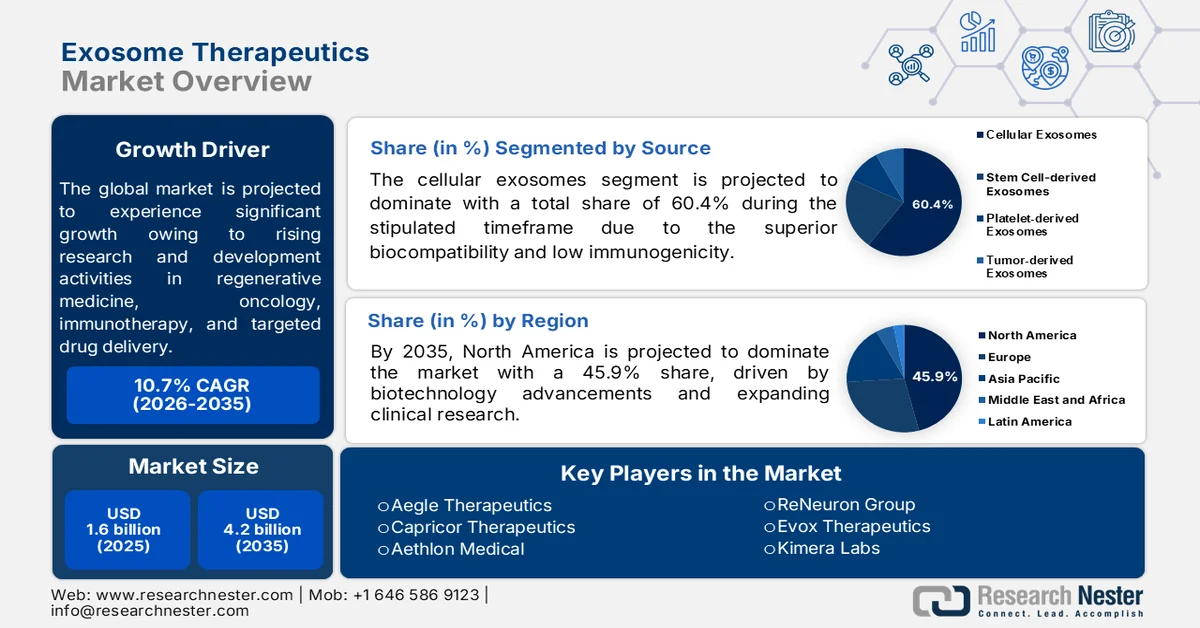
The exosome therapeutics market is entering a profound phase of growth, positively impacted by rising research and development activities in regenerative medicine, oncology, immunotherapy, and targeted drug delivery. In addition, advancements in terms of exosome isolation, engineering technologies, and manufacturing processes are supporting the development of innovative therapeutic solutions. In February 2026, the National Institutes of Health (NIH) disclosed that exosomes are emerging as promising cell-free therapeutics in dermatology and regenerative medicine due to their ability to deliver bioactive molecules that regulate inflammation, tissue repair, angiogenesis, pigmentation, and hair growth. Recent studies suggest potential benefits in wound healing, scar reduction, skin rejuvenation, alopecia, inflammatory skin disorders, and musculoskeletal repair, with early clinical studies showing favorable safety profiles, thus elevating the growth potential of the market.
Furthermore, the growing interest in terms of cell-free therapies, rising investments in biotechnology research, and expanding clinical investigations are driving exosome therapeutics market expansion. Collaborations between academic institutions, biotechnology companies, and pharmaceutical organizations are accelerating the translation of exosome-based therapies from research to clinical applications. Direct Biologics announced that it received U.S. Food & Drug Administration (FDA) clearance in April 2023 to begin a Phase 1b/2a clinical trial evaluating ExoFlo™, which is a bone marrow MSC-derived extracellular vesicle therapy, for patients with medically refractory perianal fistulizing Crohn’s disease. This randomized, placebo-controlled study aims to assess the safety, tolerability, and preliminary efficacy of different ExoFlo doses in 36 patients using clinical and MRI-based evaluations, thus denoting a positive opportunity for the market to grow.
Key Exosome Therapeutics Market Insights Summary:
Regional Highlights:
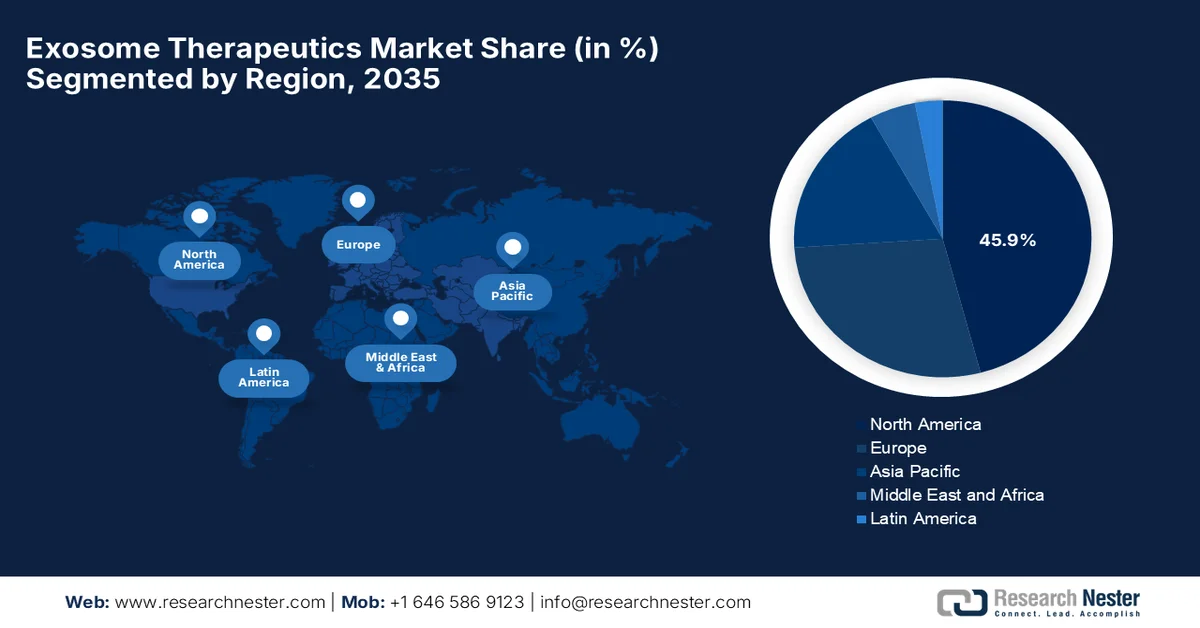
- North America is projected to account for a 45.9% share of the exosome therapeutics market by 2035, supported by rapid biotechnology advancements, expanding clinical research, increasing investments in targeted drug delivery systems, and the rising prevalence of chronic diseases
- Asia Pacific is anticipated to witness significant growth during 2026-2035, propelled by expanding healthcare infrastructure, rising biomedical investments, and a strong regional focus on regenerative medicine
- The exosome therapeutics market in the U.S. accounts for 78.7% of the share in North America, which is driven by the country’s strong biotechnology ecosystem and significant government funding
Segment Insights:
- The cellular exosomes segment is projected to capture a 60.4% share by 2035 in the exosome therapeutics market, bolstered by superior biocompatibility, low immunogenicity, inherent cell-targeting capabilities, and increasing investments in exosome-based drug development
- The cancer treatment segment is expected to secure a notable share by 2035, fueled by the rising global cancer burden, expanding adoption of exosome-based targeted therapies, and continuous advancements in exosome engineering and precision medicine
Key Growth Trends:
- Advancing targeted drug delivery platforms
- Rising prevalence of chronic diseases
Major Challenges:
- Scaling isolation and purification workflows
- Standardizing quality control and heterogeneity
Key Players: Aegle Therapeutics, Capricor Therapeutics, Aethlon Medical, ReNeuron Group, Evox Therapeutics, Kimera Labs, ArunA Bio, BioRestorative Therapies, AMSBIO.
Global Exosome Therapeutics Market Forecast and Regional Outlook:
Market Size & Growth Projections:
- 2025 Market Size: USD 1.6 billion
- 2026 Market Size: USD 1.7 billion
- Projected Market Size: USD 4.2 billion by 2035
- Growth Forecasts: 10.7% CAGR (2026-2035)
Key Regional Dynamics:
- Largest Region: North America (45.9% share by 2035)
- Fastest Growing Region: Asia Pacific
- Dominating Countries: United States, China, Japan, Germany, United Kingdom
- Emerging Countries: Australia, South Korea, India, Singapore, Canada
Last updated on : 28 July, 2026
Exosome Therapeutics Market - Growth Drivers and Challenges
Growth Drivers
- Advancing targeted drug delivery platforms: Exosomes possess certain inherent biocompatibility and natural homing abilities, which allow them to cross complex biological barriers such as the blood-brain barrier. This factor drives market expansion, as biopharmaceutical companies utilize engineered extracellular vesicles in order to deliver specialized genetic and small-molecule payloads directly to diseased tissues. In this context, in May 2025, NIH revealed that MSC-derived exosomes have been researched as effective drug delivery vehicles for glioblastoma treatment by encapsulating rapamycin (Exo-Rapa), enabling enhanced drug transport across the blood–brain barrier. Besides, it also mentions that Exo-Rapa improved drug efficiency at lower doses, accumulated at tumor sites, and represented enhanced release within the acidic glioblastoma microenvironment, thus driving extensive market growth.
- Rising prevalence of chronic diseases: The global surge in terms of oncological, neurological, and cardiovascular disorders acts as a massive growth catalyst for the exosome therapeutics market to grow in the upcoming years. In addition, traditional therapeutics often fail to treat these complex conditions effectively due to systemic toxicity, whereas exosomes offer high-precision targeting and regenerative capabilities. In this context, NIH in January 2024 stated that around 27% of U.S. adults had multiple chronic conditions in a year, whereas diabetes affected more than 37 million people in the U.S. and about 422 million people worldwide. The economic burden of chronic diseases is substantial, with global costs projected to reach nearly USD 47 trillion by 2030.
Challenges
- Scaling isolation and purification workflows: The exosome therapeutics market faces an intensive bottleneck in scaling up production from laboratory research to commercial-grade manufacturing. Currently employed extraction techniques, such as differential ultracentrifugation, are considered to be labor-intensive and yield very small quantities of exosomal protein per milliliter of culture medium. Apart from this, other alternative approaches such as size-exclusion chromatography and microfluidic microarrays exist, they are limited by low specificity and slow processing speeds. Therefore, this absence of efficient, automated, and high-throughput workflows makes it exceptionally difficult for biotechnology firms to produce uniform, high-purity nanovesicles in large quantities.
- Standardizing quality control and heterogeneity: Establishing universal parameters for quality control is a major roadblock for the exosome therapeutics market due to the inherent biological heterogeneity of extracellular vesicles. Exosome populations naturally vary in their particle size distribution, surface marker expression, and internal biological cargo depending on the source cells and sample-handling procedures. This absence of standardized metrics leads to batch-to-batch variability, which exacerbates the production cycles. Hence, the existence of this structural inconsistency undermines stakeholders' confidence and complicates the design of reliable delivery platforms.
Exosome Therapeutics Market Size and Forecast:
| Report Attribute | Details |
|---|---|
|
Base Year |
2025 |
|
Forecast Year |
2026-2035 |
|
CAGR |
10.7% |
|
Base Year Market Size (2025) |
USD 1.6 billion |
|
Forecast Year Market Size (2035) |
USD 4.2 billion |
|
Regional Scope |
|
Exosome Therapeutics Market Segmentation:
Source Segment Analysis
In terms of source, the cellular exosomes segment is projected to dominate with a total share of 60.4% in the exosome therapeutics market during the stipulated timeframe. The superior biocompatibility, low immunogenicity, and inherent cell-targeting capabilities are positioning the segment in a dominant position. In addition, their ability to efficiently transport therapeutic payloads, along with increasing investments in exosome-based drug development, are expected to drive the growth of this segment throughout the forecast timeframe. In June 2024, INOVIQ announced proof-of-concept results for its engineered exosome therapy, which showcased the ability to target and destroy breast cancer cells in laboratory testing. The company achieved high exosome recovery and purity using its proprietary EXO-ACE™ technology, in which the engineered exosomes eliminated more than 75% of targeted cancer cells within 72 hours.
Application Segment Analysis
The cancer treatment segment is anticipated to account for a notable share in the exosome therapeutics market throughout the forecast period. The growth of the segment is largely attributable to the rising global burden of cancer, increasing adoption of exosome-based targeted therapies, and expanding clinical research on exosome-mediated drug delivery. In addition, growing investments in oncology-focused exosome therapeutics, coupled with advancements in exosome engineering and precision medicine, are supporting the segment’s growth. For instance, in October 2023, researchers at MD Anderson developed a machine learning platform that identifies cancer-specific exosome biomarkers from liquid biopsy samples, thereby achieving more than 91% accuracy across multiple cancer types. This study also found that engineered exosomes can effectively deliver therapeutic microRNAs to glioblastoma cells, thus enhancing tumor cell destruction and improving survival in preclinical models.
Product Type Segment Analysis
By the end of 2035, the diagnostic product type segment is expected to grow with a considerable revenue share in the exosome therapeutics market. The increasing integration of exosome-based biomarkers into precision medicine workflows, rising demand for minimally invasive disease monitoring, and advancements in liquid biopsy technologies are certain factors driving the sub-segment’s leadership. Moreover, the ability of exosome-derived molecular signatures to enable early disease detection, assessment of treatment response, and monitoring of recurrence is accelerating their adoption in clinical and translational research. In this context, NIH in May 2024 disclosed that researchers developed a liquid biopsy that analyzes pancreas-derived exosomal microRNAs along with circulating microRNAs to detect pancreatic cancer at an early stage with high accuracy. It also mentions that when combined with the CA19-9 blood marker, the test identified up to 97% of early-stage pancreatic cancer cases in a large international study.
Our in-depth analysis of the exosome therapeutics market includes the following segments:
|
Segment |
Subsegments |
|
Source |
|
|
Application |
|
|
Product Type |
|
|
End user |
|

Vishnu Nair
Head - Global Business DevelopmentCustomize this report to your requirements — connect with our consultant for personalized insights and options.
Exosome Therapeutics Market - Regional Analysis
North America Market Insights
The North America exosome therapeutics market is forecasted to garner the highest share of 45.9% from 2026 to 2035. The region is witnessing such unprecedented growth owing to rapid advancements in biotechnology, expanding clinical research, and increasing investments in targeted drug delivery systems. Industry expansion is also fueled by the rising prevalence of chronic diseases such as cancer, cardiovascular disorders, and neurodegenerative conditions for which exosomes offer high biocompatibility and low immunogenicity as therapeutic carriers. In April 2024, an exosome-based liquid biopsy developed by researchers at City of Hope demonstrated strong potential for early pancreatic cancer detection by analyzing exosomal microRNAs and cell-free DNA markers. AACR Organization states that when combined with the CA19-9 biomarker, the test accurately detected 97% of stage 1–2 pancreatic cancers, outperforming CA19-9 alone, thus making it suitable for standard market growth.
Accelerating biopharmaceutical R&D and a higher concentration of pioneering biotechnology companies are certain factors responsible for the growth of the U.S. exosome therapeutics market. The country’s market is also being propelled by substantial venture capital funding, academic-industry collaborations, and administrative bodies' engagement through expedited regulatory pathways. In this context, in November 2024, Capricor Therapeutics presented new preclinical findings on its StealthX™ exosome platform, which represented the complete potential of engineered exosomes to deliver phosphorodiamidate morpholino oligomers for Duchenne muscular dystrophy treatment. In addition, the study showed improved cellular uptake and enhanced exon-skipping efficiency, thereby supporting exosomes as a reliable delivery system for genetic therapies, hence denoting a positive market outlook.
In Canada, the exosome therapeutics market is gaining enhanced traction owing to continuously advancing biomedical research and a strong network of domestic universities and biotech firms. Market expansion is propelled by substantial federal research grants, public-private funding partnerships, and a supportive clinical trial ecosystem. Based on government data from August 2025, Health Canada published guidance on regulating topical products containing human-derived exosomes, extracellular vesicles, and cell-conditioned media in Canada. Besides, it states that these products may be classified as cosmetics or drugs depending on their claims, biological effects, absorption level, and composition. Hence, this notice underscores the need for safety evaluation and proper authorization due to risks which are associated with human-derived materials and unproven therapeutic claims.
APAC Market Insights
The Asia Pacific exosome therapeutics market is forecasted to progress at a significant rate from 2026 to 2035. The region’s upliftment is mainly propelled by expanding healthcare infrastructure, rising biomedical investments, and a strong regional focus on regenerative medicine. Market growth is heavily propelled by an aging population and breakthroughs in stem cell research. For instance, in September 2024, the government of Australia generously allocated USD 34.5 million to support stem cell therapy research aimed at developing new treatments for conditions such as osteoarthritis, spinal cord injuries, and motor neuron disease. This funding will support clinical trials, including donor stem cell therapies for knee osteoarthritis and innovative stem cell-based drug testing methods, thus denoting a positive opportunity for the market’s growth.
The government backing under national strategic initiatives and rapid advancements in domestic biotechnology are driving the growth of the exosome therapeutics market in China. Market expansion is propelled by massive venture capital inflows and an accelerating volume of localized clinical trials. In March 2026, Xcell Therapeutics signed an exosome media supply agreement with China-based Shinya Biomedicine to expand its presence in the growing exosome sector. The company will supply its chemically defined CellCor™ EXO CD media worth USD 350,000 to support exosome production and regenerative medicine research. Hence, such instances denote the heightened demand for exosome-based therapeutics, encouraging both domestic and foreign players to invest in the country’s market.
India exosome therapeutics market presents lucrative growth opportunities for global players largely fueled by a booming biopharmaceutical industry and a strong national focus on affordable healthcare innovations. Market expansion is propelled by the intensifying demand for cost-effective targeted drug delivery systems and regenerative medicine. In addition, India’s established strengths in biologics manufacturing and scalable bioprocessing are accelerating the development of localized exosome-based therapies. In August 2024, the Press Information Bureau (PIB) stated that the country’s government approved the BioE3 (Biotechnology for Economy, Environment and Employment) policy in order to promote high-performance biomanufacturing and strengthen the country’s biotechnology sector. The policy focuses on innovation, R&D support, entrepreneurship, and the development of Biomanufacturing & Bio-AI hubs to accelerate technology commercialization.
Europe Market Insights
The Europe exosome therapeutics market is expanding at a significant rate, which is due to a sophisticated healthcare infrastructure and highly integrated academic-industrial networks. The region also benefits from advanced bioprocessing capabilities and a strong presence of specialized contract manufacturing organizations across Western Europe, which are significantly accelerating the translation of exosome technologies from bench to clinical scale. In June 2025, Preprints Organization reported that the European Union regulates exosome-based therapies primarily as biological medicinal products, and often classifies them as advanced therapy medicinal products when they have therapeutic effects on physiological functions. These products need to go through careful assessments to confirm their quality, safety, and effectiveness, while also meeting strict GMP manufacturing standards.
The country’s strong biomedical research ecosystem and well-established life sciences infrastructure are fueling the growth of the exosome therapeutics market in Germany. The country’s prominence in terms of molecular biology, regenerative medicine, and advanced bioprocessing is also solidifying its role in the regional exosome therapeutics landscape, especially across oncology, neurological research, and cell-based therapeutic applications. In this context, in February 2025, Friedrich-Alexander University announced the launch of the Erlangen Vesicle Initiative in Germany, which brings together researchers, clinicians, and technical experts in order to advance extracellular vesicle research through interdisciplinary collaboration. In addition, this initiative is highly focused on EV isolation, characterization, diagnostics, and therapeutic applications across diseases such as cancer, inflammation, infections, and degenerative disorders.
The UK exosome therapeutics market is growing exponentially, which is driven by a leading life sciences sector and a strong national focus on genomic and cellular medicines. In addition, pioneering breakthroughs in terms of nanotechnology and extracellular vesicle isolation techniques, coupled with a fertile venture capital landscape, are accelerating the commercial scale-up of exosome therapies across the region. In February 2026, Evox Therapeutics in the UK announced a collaboration with the Rett Syndrome Research Trust in order to explore the use of its ExoEdit® exosome-based delivery platform for gene editing therapy in Rett syndrome. The partnership aims to overcome challenges in terms of delivering gene-editing tools to the brain and develop potential treatments targeting MECP2 gene mutations.
Key Exosome Therapeutics Market Players:
- Aegle Therapeutics (U.S.)
- Capricor Therapeutics (U.S.)
- Aethlon Medical (U.S.)
- ReNeuron Group (UK)
- Evox Therapeutics (UK)
- Kimera Labs (U.S.)
- ArunA Bio (U.S.)
- BioRestorative Therapies (U.S.)
- Amsbio (UK)
- Company Overview
- Business Strategy
- Key Product Offerings
- Financial Performance
- Key Performance Indicators
- Risk Analysis
- Recent Development
- Regional Presence
- SWOT Analysis
- Aegle Therapeutics is highly focused on developing regenerative medicine solutions based on stem cell-derived exosomes and extracellular vesicles. In addition, the company leverages prominence in advancing exosome-based therapies designed to support tissue repair and regeneration, with a focus on rare diseases and conditions involving impaired healing.
- Capricor Therapeutics is a predominant leader in this sector, which is developing cell and exosome-based therapies for rare diseases. The firm differentiates itself through advanced exosome engineering capabilities, clinical-stage programs, and potential applications across different rare diseases and vaccine development.
- Aethlon Medical is developing therapeutic platforms targeting circulating biological materials, including exosomes and extracellular vesicles associated with disease progression. The firm’s role in the exosome therapeutics landscape is highly centered on exosome modulation and removal technologies, supporting extensive applications in oncology and infectious disease management.
- ReNeuron Group has been specializing in regenerative medicine and cell-based therapeutic technologies, which include extracellular vesicle and exosome research platforms. The company has explored the potential of exosome-mediated mechanisms for developing next-generation regenerative treatments.
- Evox Therapeutics is largely focused on developing exosome-based therapeutics by using its proprietary ExoEdit® platform. The company is a specialist in leveraging exosomes as natural delivery vehicles for transporting therapeutic molecules, i.e., proteins, nucleic acids, and gene-editing payloads.
Here is a list of key players operating in the global market:
The global exosome therapeutics market is depicted by a developing competitive landscape with participation from biotechnology companies that are focused on the research, development, and commercialization of exosome-based therapeutic products. The market is considered to be relatively consolidated, which consists of leading players leveraging proprietary exosome engineering platforms, advanced drug delivery technologies, and clinical development capabilities as key differentiators. For instance, Evox Therapeutics in July 2026 reported that it completed a technology transfer programme with eXmoor Pharma to establish manufacturing processes for its exosome-enabled gene editing technology targeting Huntington’s disease. The collaboration focused on transferring Evox’s proprietary exosome manufacturing process and analytical methods to support future GMP and clinical production.
Corporate Landscape of the Market:
Recent Developments
- In May 2026, BioRestorative Therapies presented new preclinical data demonstrating the functional differences of MSC-derived extracellular vesicles, including exosomes, for targeted regenerative and aesthetic applications.
- In April 2026, Capricor Therapeutics announced Phase 3 HOPE-3 trial results for Deramiocel, highlighting the potential of its exosome-associated therapeutic approach in Duchenne muscular dystrophy. The company reported that Deramiocel, which works through extracellular vesicles including exosomes, demonstrated preservation of muscle function and slowed disease progression.
- Report ID: 8704
- Published Date: Jul 28, 2026
- Report Format: PDF, PPT
- Explore a preview of key market trends and insights
- Review sample data tables and segment breakdowns
- Experience the quality of our visual data representations
- Evaluate our report structure and research methodology
- Get a glimpse of competitive landscape analysis
- Understand how regional forecasts are presented
- Assess the depth of company profiling and benchmarking
- Preview how actionable insights can support your strategy
Explore real data and analysis
Frequently Asked Questions (FAQ)
About this Report
Connect with our Expert


Report, 2026-2035



Copyright @ 2026 Research Nester. All Rights Reserved.
