Psoriasis Therapeutics Market Outlook:
Psoriasis Therapeutics Market size was valued at USD 33.3 billion in 2025 and is expected to reach USD 83.3 billion by the end of 2035, registering around 9.6% CAGR during the forecast period i.e., between 2026-2035. In 2026, the industry size of psoriasis therapeutics is evaluated at USD 36.5 billion.
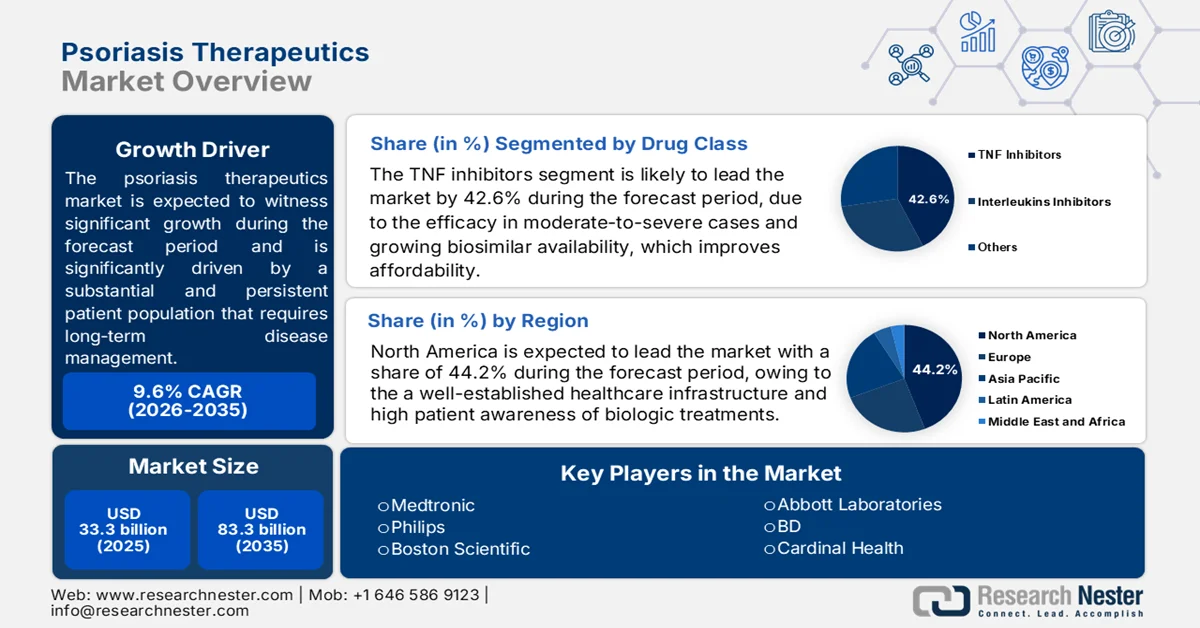
The psoriasis therapeutics market is supported by a substantial and persistent patient population that requires long-term disease management. According to the NLM October 2025 study, psoriasis affects more than 125 million people globally, representing a significant burden on healthcare systems and specialty dermatology services. Demand for advanced therapies is being reinforced by growing diagnosis rates, broader access to specialist care, and increased recognition of the systemic nature of psoriasis, which is associated with cardiovascular disease, metabolic disorders, and mental health complications. The market is also benefiting from the increasing use of biologic and targeted therapies for moderate-to-severe disease, particularly among patients who do not achieve adequate disease control through conventional systemic treatments. These factors continue to strengthen demand for therapies that demonstrate sustained efficacy, improved safety profiles, and measurable quality-of-life improvements.
Moreover, the Clinical Trial January 2026 study states that the Phase 3b TOGETHER-PsO evaluates whether combining ixekizumab (an IL-17 inhibitor) with tirzepatide can improve both psoriasis outcomes and weight reduction in adults with moderate-to-severe plaque psoriasis and obesity or overweight-related comorbidities. The study’s primary endpoint assesses the proportion of participants simultaneously achieving PASI 100 (complete skin clearance) and at least 10% weight reduction by Week 36. This reflects a growing market focus on addressing psoriasis alongside associated metabolic conditions such as obesity, hypertension, dyslipidemia, cardiovascular disease, and type 2 diabetes. Positive outcomes could expand treatment strategies for patients with complex comorbidity profiles, supporting demand for integrated therapeutic approaches that target both disease control and overall health outcomes.
Key Psoriasis Therapeutics Market Insights Summary:
Regional Insights:
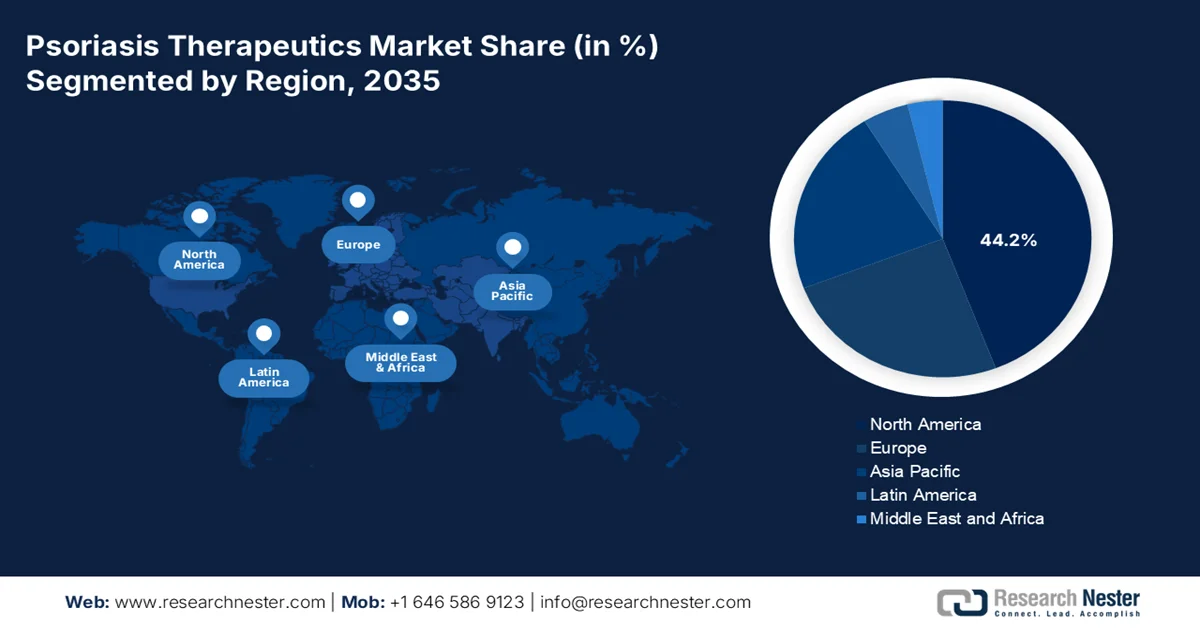
- The psoriasis therapeutics market in North America is projected to secure 44.2% of regional revenue share by 2035, reinforced by well-established healthcare infrastructure, strong biologic uptake, and favorable reimbursement frameworks
- Asia Pacific is anticipated to register the most rapid growth during 2026–2035, stimulated by improving healthcare access, rising patient awareness, and expanding reimbursement coverage for biologic therapies
Segment Insights:
- In the psoriasis therapeutics market, the TNF Inhibitors segment is expected to account for 42.6% share by 2035, attributed to their efficacy in moderate-to-severe cases and growing biosimilar availability, which improves affordability
- The Injectable route of administration is set to maintain its dominant position through 2035, supported by its ability to deliver biologic and targeted therapies with predictable bioavailability and improved patient adherence through extended dosing intervals
Key Growth Trends:
- Expanding government funding for immune-mediated disease research
- Increasing burden of obesity and metabolic comorbidities
Major Challenges:
- High R&D costs & clinical trial failure rates
- Biosimilar & generic competition
Key Players: AbbVie Inc. (U.S.), Johnson & Johnson (U.S.), Amgen Inc. (U.S.), Pfizer Inc. (U.S.), Eli Lilly and Company (U.S.), Novartis International AG (Switzerland), UCB S.A. (Belgium), Biogen Inc. (U.S.), Bristol-Myers Squibb (U.S.), Boehringer Ingelheim (Germany), Takeda Pharmaceutical Company (Japan), Kyowa Kirin Co., Ltd. (Japan), Maruho Co., Ltd. (Japan), CSL Limited (Australia).
Global Psoriasis Therapeutics Market Forecast and Regional Outlook:
Market Size & Growth Projections:
- 2025 Market Size: USD 33.3 billion
- 2026 Market Size: USD 36.5 billion
- Projected Market Size: USD 83.3 billion by 2035
- Growth Forecasts: 9.6% CAGR (2026-2035)
Key Regional Dynamics:
- Largest Region: North America (44.2% Share by 2035)
- Fastest Growing Region: Asia-Pacific
- Dominating Countries: United States, Germany, Japan, France, United Kingdom
- Emerging Countries: China, India, South Korea, Australia, Indonesia
Last updated on : 11 June, 2026
Psoriasis Therapeutics Market - Growth Drivers and Challenges
Growth Drivers
- Expanding government funding for immune-mediated disease research: A major demand driver for the psoriasis therapeutics market is the sustained increase in public-sector funding for immune-mediated and inflammatory disease research. Psoriasis is increasingly recognized as a systemic inflammatory disorder linked to cardiovascular disease, metabolic syndrome, and arthritis, prompting governments to allocate more resources toward immunology and precision medicine programs. According to the Congress.gov May 2026 data, the U.S. National Institutes of Health (NIH) reported total funding exceeding USD 47.035 billion, with significant investments directed toward autoimmune disease, inflammation, and translational medicine research that support novel psoriasis drug development. These investments accelerate biomarker discovery, clinical trials, and next-generation biologics.
- Increasing burden of obesity and metabolic comorbidities: The growing prevalence of obesity and metabolic disorders is strengthening demand for psoriasis therapeutics because these conditions are closely associated with disease severity and treatment complexity. The World Health Organization March 2024 data reported that more than 1 billion people globally were living with obesity in 2022, including approximately 43% of adults. Governments are investing heavily in obesity prevention and metabolic disease programs due to their economic burden. Recent clinical research, including Phase 3 studies evaluating psoriasis therapies alongside weight-management treatments, reflects increasing recognition of the relationship between inflammation and metabolic health. This creates opportunities for therapeutic approaches that address both skin clearance and systemic disease burden, expanding the eligible treatment population for advanced therapies.
Challenges
- High R&D costs & clinical trial failure rates: Developing novel biologics or small molecules requires investments exceeding billion. Late-stage trial failures due to safety or efficacy issues pose major entry barriers. For example, Bristol-Myers Squibb discontinued its IL-17 inhibitor candidate after Phase 2 data showed insufficient PASI improvement. Though the global psoriasis therapeutics market is expected to grow despite government pricing constraints, but R&D productivity remains low for Phase III success.
- Biosimilar & generic competition: Patent expiries of blockbuster biologics flood the market with lower-cost biosimilars, compressing margins for new entrants. Top companies have captured certain percentage of the TNF inhibitor market of launch. New entrants must offer superior efficacy or convenience to compete against established biosimilar portfolios from Samsung Bioepis and Celltrion.
Psoriasis Therapeutics Market Size and Forecast:
| Report Attribute | Details |
|---|---|
|
Base Year |
2025 |
|
Forecast Year |
2026-2035 |
|
CAGR |
9.6% |
|
Base Year Market Size (2025) |
USD 33.3 billion |
|
Forecast Year Market Size (2035) |
USD 83.3 billion |
|
Regional Scope |
|
Psoriasis Therapeutics Market Segmentation:
Drug Class Segment Analysis
Within the drug class segment, TNF inhibitors is leading and is poised to hold the share value of 42.6% by the end of 2035. The segment is driven due to their efficacy in moderate-to-severe cases and growing biosimilar availability, which improves affordability. As per the NLM November 2025 study severe psoriasis patients over approximately one decade found that TNF inhibitor treatment significantly reduced PsA risk compared to narrow-band UVB phototherapy. The PsA incidence rate per 100 patients was 1.18 in the TNFi group versus 2.48 in the nbUVB group, yielding an incidence rate ratio of 2.1 (P = 0.0002). Time-dependent Cox modeling confirmed a 68% lower risk of PsA with TNFi use (HR = 0.32, P < 0.0001). These real-world longitudinal data support TNF inhibitors' disease-modifying role beyond skin clearance, potentially altering the natural history of psoriatic disease progression.
Route of Administration Segment Analysis
The injectable route of administration dominates the psoriasis therapeutics market due to its ability to deliver biologic and targeted therapies directly into systemic circulation, ensuring predictable bioavailability and rapid onset of action. Subcutaneous injections, often administered via pre-filled pens or auto-injectors, enable convenient home-based self-administration following initial healthcare provider training. This route supports extended dosing intervals, ranging from every four to twelve weeks, which significantly improves patient adherence compared to daily oral medications. Injectable formulations are particularly suited for moderate-to-severe psoriasis cases requiring potent systemic intervention. Ongoing innovations focus on reducing injection volume and pain, while maintaining stability at room temperature. Consequently, injectables remain the preferred choice for dermatologists and patients seeking efficient, long-term disease management.
End user Segment Analysis
Hospitals and ambulatory surgical centers (ASCs) serve as primary end users for biologic initiation and monitoring in plaque psoriasis, including specialized forms like palmoplantar involvement. According to the Clinical Trials June 2024 data a Phase 3 trial evaluating risankizumab for moderate-to-severe plaque psoriasis with palmoplantar disease enrolled participants across approximately 55 global sites, with regular visits at hospitals or clinics for subcutaneous injections, medical assessments, blood tests, and adverse event monitoring. The 52-week study design included a 16-week placebo-controlled period followed by 36 weeks of active treatment, with dosing every 12 weeks. Such trial logistics require clinical infrastructure for drug storage, administration, and laboratory support, reinforcing why hospitals and ASCs capture the largest revenue share (43.6% by 2035) in the psoriasis therapeutics market.
Our in-depth analysis of the psoriasis therapeutics market includes the following segments:
|
Segment |
Subsegments |
|
Drug Class |
|
|
Route of Administration |
|
|
Therapy Type |
|
|
Distribution Channel |
|
|
Disease Severity |
|
|
End user |
|

Vishnu Nair
Head - Global Business DevelopmentCustomize this report to your requirements — connect with our consultant for personalized insights and options.
Psoriasis Therapeutics Market - Regional Analysis
North America Market Insights
North America is dominating the psoriasis therapeutics market and is expected to hold the regional revenue share of 44.2% by the end of 2035. The region is driven by a well-established healthcare infrastructure and high patient awareness of biologic treatments. The region benefits from rapid adoption of novel therapies, including IL-17 and IL-23 inhibitors, supported by favorable reimbursement policies through public programs and private insurers. A strong focus on specialty pharmacies and home-based injectable administration enhances treatment adherence. Increasing biosimilar availability is improving patient access while moderating healthcare costs. Additionally, tele-dermatology expansion and integrated care models linking dermatologists and rheumatologists address complex cases with psoriatic arthritis, ensuring comprehensive disease management across the United States and Canada.
The large and growing patient population requiring long-term disease management is shaping the psoriasis therapeutics market in the U.S. According to the psoriasis 2026 data, psoriasis affects approximately 3.0% of adults aged 20 years and older, representing more than 7.5 million adults nationwide, while an estimated 600,000 adults remain undiagnosed, indicating a significant opportunity for earlier diagnosis and treatment expansion. Demand for advanced therapies is further reinforced by the strong association between psoriasis and obesity, a condition linked to greater disease severity and treatment complexity. The high prevalence of obesity across socioeconomically diverse populations is increasing the need for integrated therapeutic approaches that address both inflammatory skin disease and related metabolic health challenges.
The persistent need for long-term disease management is shaping the psoriasis therapeutics market in Canada. According to the Government of Canada June 2024 data, psoriasis affects approximately 1% of the general population and often begins between the ages of 15 and 25 years, with earlier onset frequently associated with more severe disease. The condition is characterized by chronicity, seasonal flare-ups, and the potential for extensive skin involvement, creating sustained demand for topical treatments, systemic therapies, biologics, and phototherapy. Since there is currently no curative treatment for psoriasis, patients often require continuous therapeutic intervention to control symptoms and prevent disease progression. This long-term treatment dependency supports consistent utilization of dermatology services and advanced therapeutic options across Canada's healthcare system.
APAC Market Insights
The Asia Pacific is projected to emerge rapidly during the assessed period, 2026 to 2035 in the psoriasis therapeutics market. The region is driven by improving healthcare access, rising patient awareness, and expanding biologic reimbursement in countries such as Japan, China, South Korea, and Australia. Japan leads with advanced dermatology infrastructure and high biologic adoption, while China and India are witnessing increased availability of affordable biosimilars and oral small molecules. Governments in Malaysia and Indonesia are initiating public health programs to address undertreated psoriasis populations. The region also benefits from a growing number of clinical trial sites and local manufacturing hubs. Cultural preferences for topical and oral therapies persist, but injectable biologics are gaining traction among specialist-treated patients.
The substantial patient population and disease prevelance is shaping the psoriasis therapeutics market in China. According to the Clinical Study July 2023, psoriasis affects approximately 2% to 3% of the general population, creating significant demand for long-term disease management. While retinoids, corticosteroids, vitamin D analogs, and biologics remain key treatment options, concerns regarding adverse effects and the high cost of biologic therapies continue to limit access for many patients. This has encouraged interest in traditional Chinese medicine-based therapies, including the Inflammatory Skin Disease Formula (ISDF), which is being evaluated in a randomized, placebo-controlled clinical study for psoriasis. Growing research into herbal formulations and affordable treatment alternatives is expanding the therapeutic landscape and supporting innovation within China's psoriasis treatment market.
The growing adoption of advanced systemic therapies for a chronic disease is shaping the psoriasis therapeutics market in Japan. According to the NLM June 2023 study the chronic disease affects approximately 0.3% of the Japan population. The multicenter registry involving 1,003 psoriasis patients, including 268 patients with psoriatic arthritis, demonstrated increasing use of biologic therapies such as interleukin-17 inhibitors, which showed comparatively strong treatment persistence. As newer biologics become more widely available, long-term treatment continuation has become a critical consideration for healthcare providers. The study also found that obesity, prior biologic exposure, and psoriatic arthritis were associated with lower drug survival rates, highlighting the need for personalized treatment strategies and supporting continued demand for innovative psoriasis therapies in Japan.
Europe Market Insights
Europe represents a mature and highly regulated psoriasis therapeutics market, characterized by strong biosimilar adoption and centralized pricing negotiations through government healthcare systems. Countries such as Germany, France, Italy, and Spain benefit from robust dermatology networks and national registries that track biologic safety and effectiveness over long-term follow-up. The European Medicines Agency (EMA) has approved numerous IL-17 and IL-23 inhibitors, while cost-containment policies in the UK (NICE) and France (HAS) encourage biosimilar-first prescribing. The Nordic countries lead in real-world evidence generation through population-based registries. Despite varying reimbursement timelines across Eastern Europe, the region maintains high treatment penetration for moderate-to-severe psoriasis, supported by cross-border procurement initiatives.
The Germany psoriasis therapeutics market is supported by a substantial patient population, with the administrative prevalence of psoriasis, including psoriatic arthritis, ranging from 1.90% to 2.51% of the population. The disease burden increases with age, with prevalence rising steadily until approximately 70 years of age for psoriasis and 65 years for psoriatic arthritis, highlighting a significant demand for long-term treatment among older adults. The NLM January 2024 study also found notable gender differences, with males more frequently affected at older ages. As psoriasis is recognized as a common chronic skin disease in Germany, the large and aging patient base continues to drive demand for topical therapies, systemic treatments, biologics, and integrated management approaches across the country's healthcare system.
The significant patient population and the rising disease burdern is driving the psoriasis therapeutics market in the UK. According to the Psoriasis Association Septeber 2023 data, psoriasis is estimated to affect 2% to 3% of the population, equivalent to approximately 1 in every 50 people across the UK and Ireland. The condition can develop at any stage of life, affecting children, adolescents, adults, and older individuals, with major onset peaks occurring during late adolescence to early adulthood and again between 50 and 60 years of age. The broad age distribution and chronic nature of psoriasis create sustained demand for topical therapies, systemic treatments, biologics, and long-term disease management services. Growing awareness of genetic predisposition and earlier diagnosis further support treatment uptake and market expansion in the UK.
Key Psoriasis Therapeutics Market Players:
- AbbVie Inc. (U.S.)
- Johnson & Johnson (U.S.)
- Amgen Inc. (U.S.)
- Pfizer Inc. (U.S.)
- Eli Lilly and Company (U.S.)
- Novartis International AG (Switzerland)
- UCB S.A. (Belgium)
- Biogen Inc. (U.S.)
- Bristol-Myers Squibb (U.S.)
- Boehringer Ingelheim (Germany)
- Takeda Pharmaceutical Company (Japan)
- Kyowa Kirin Co., Ltd. (Japan)
- Maruho Co., Ltd. (Japan)
- CSL Limited (Australia)
- Samsung Bioepis (South Korea)
- Celltrion Healthcare (South Korea)
- Biocon Limited (India)
- Dr. Reddy’s Laboratories (India)
- Sun Pharmaceutical Industries Ltd (India)
- Knight Therapeutics Inc. (Canada)
- Company Overview
- Business Strategy
- Key Product Offerings
- Financial Performance
- Key Performance Indicators
- Risk Analysis
- Recent Development
- Regional Presence
- SWOT Analysis
- AbbVie Inc. is a dominant player in the psoriasis therapeutics market, primarily driven by its blockbuster biologic Humira (adalimumab) and successor Skyrizi (risankizumab). The company has strategically navigated biosimilar competition by shifting patient populations to newer IL-23 inhibitors.
- Johnson & Johnson maintains a strong presence in the psoriasis therapeutics market through its Janssen division, featuring Stelara (ustekinumab) and Tremfya (guselkumab). By leveraging real-world evidence and expanding indications to include psoriatic arthritis, the company reinforces patient adherence.
- Amgen Inc. competes vigorously in the psoriasis therapeutics market with its IL-17 inhibitor, Otezla (apremilast), and biosimilar versions of adalimumab (Amjevita). The company focuses on oral therapies to bridge the gap for patients avoiding injections. In 2024, the company has made total revenue of USD 33.4 billion.
- Pfizer Inc. is the leading player in the psoriasis therapeutics market leverages its oral small-molecule Xeljanz (tofacitinib) and upcoming TYK2 inhibitors to compete with biologics. Despite safety warnings, Pfizer targets patients with inadequate response to topicals.
- Eli Lilly and Company has strengthened its position in the psoriasis therapeutics market through the IL-17A blocker Taltz (ixekizumab). The company focuses on rapid skin clearance and head-to-head superiority trials versus Humira and Stelara. In 2025, the company has made a revenue of USD 65,179.
Here is a list of key players operating in the global psoriasis therapeutics market:
The psoriasis therapeutics market is highly competitive, dominated by biologics targeting IL-17, IL-23, and TNF-alpha. Key players are aggressively pursuing biosimilars and next-generation oral drugs to counter the patent cliffs of blockbuster injectables. Strategic initiatives include heavy R&D investments in dual-targeted therapies, geographic expansion into emerging Asia markets, and mergers to enhance immunology pipelines. Companies from the U.S. and Europe lead in novel biologics, while India and South Korea firms focus on affordable biosimilars. Japanese and Australia players contribute through topical innovations and niche immunomodulators. Malaysia is emerging as a manufacturing hub for generic topical treatments.
Corporate Landscape of the Market:
Recent Developments
- In March 2026, Johnson & Johnson announced that the U.S. FDA has approved ICOTYDE™ (icotrokinra), an interleukin-23 (IL-23) receptor antagonist for the treatment of moderate-to-severe plaque psoriasis in adults and pediatric patients 12 years of age and older who weigh at least 40 kg who are candidates for systemic therapy or phototherapy.1 ICOTYDE is the first and only targeted oral peptide that precisely blocks the IL-23 receptor.
- In December 2025, Sun Pharmaceutical Industries Ltd. announced the launch of its global innovative drug, ILUMYA (Tildrakizumab) in India for moderate-to-severe plaque psoriasis.
- In December 2025, Knight Therapeutics Inc., a pan-American specialty pharmaceutical company, announced today that Health Canada has approved WYNZORA®, a white uniform cream containing 0.05 mg/g of calcipotriol (CAL) and 0.5 mg/g of betamethasone dipropionate (BDP), indicated for the topical treatment of psoriasis vulgaris in adults and adolescents aged 12-17 years for up to 8 weeks.1
- Report ID: 8068
- Published Date: Jun 11, 2026
- Report Format: PDF, PPT
- Explore a preview of key market trends and insights
- Review sample data tables and segment breakdowns
- Experience the quality of our visual data representations
- Evaluate our report structure and research methodology
- Get a glimpse of competitive landscape analysis
- Understand how regional forecasts are presented
- Assess the depth of company profiling and benchmarking
- Preview how actionable insights can support your strategy
Explore real data and analysis
Frequently Asked Questions (FAQ)
About this Report
Connect with our Expert


Report, 2026-2035



Copyright @ 2026 Research Nester. All Rights Reserved.
