Autoimmune Disease Therapeutics Market Outlook:
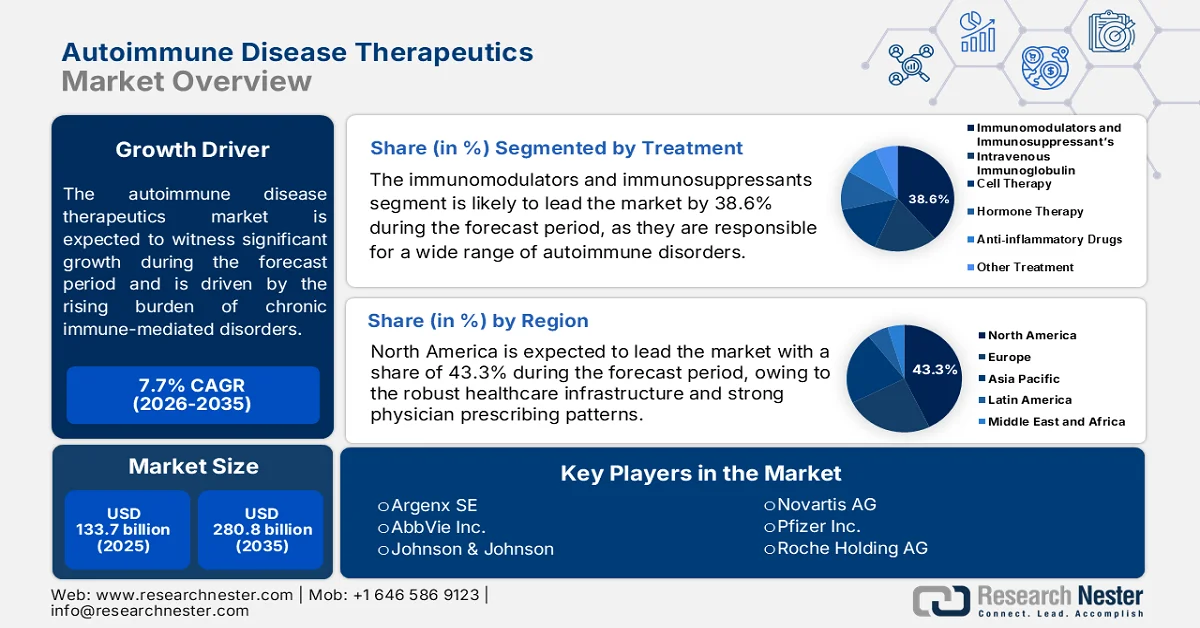
Autoimmune Disease Therapeutics Market size was valued at USD 133.7 billion in 2025 and is projected to cross USD 280.8 billion by the end of 2035, expanding at more than 7.7% CAGR during the forecast period, i.e., between 2026-2035. In 2026, the industry size of autoimmune disease therapeutics is estimated at USD 144.1 billion.
The autoimmune disease therapeutics market is experiencing sustained growth as healthcare systems face a rising burden of chronic immune-mediated disorders requiring long-term treatment and monitoring. Demand is supported by increasing diagnosis rates, broader access to specialty care, and continued investment in biologics, immunomodulators, cell-based therapies, and precision medicine programs. According to the U.S. Centers for Disease Control and Prevention (CDC) January 2026 data, approximately 40.1 million people in the United States were living with diabetes, with Type-1 diabetes representing a significant autoimmune disease category requiring lifelong therapeutic management. Healthcare providers are placing greater emphasis on early intervention to reduce disease progression and improve patient outcomes, resulting in higher utilization of advanced therapeutics across dermatology, rheumatology, gastroenterology, and neurology.
The growing prevalence of autoimmune-related conditions continues to expand the addressable patient population. In addition, the CDC June 2024 data reported that about 3.1 million U.S. adults had been diagnosed with inflammatory bowel disease (Crohn’s disease or ulcerative colitis), highlighting a substantial patient base requiring continuous treatment. These trends are encouraging healthcare providers, payers, and pharmaceutical manufacturers to expand treatment access while supporting development of therapies that improve efficacy, safety, and long-term disease control. Market expansion is further supported by increasing research activity and public-sector investment in immunology, autoimmune disease biology, and advanced therapeutic platforms.
Key Autoimmune Disease Therapeutics Market Insights Summary:
Regional Insights:
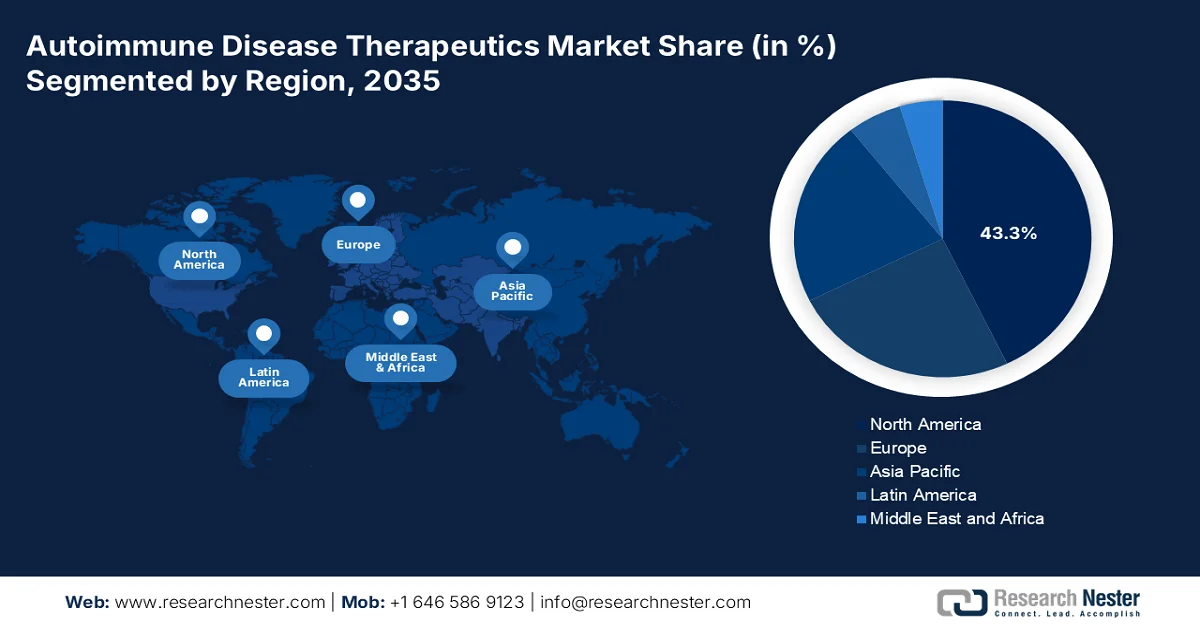
- North America is projected to command 43.3% of the autoimmune disease therapeutics market revenue by 2035, reinforced by robust healthcare infrastructure, high disease awareness, and strong physician prescribing patterns
- Asia Pacific is anticipated to witness the fastest expansion in the market during 2026-2035, fueled by improving healthcare access, rising diagnosis rates, and expanding middle-class populations
Segment Insights:
- Immunomodulators and immunosuppressants are expected to secure 38.6% of the autoimmune disease therapeutics market by 2035, propelled by growing adoption of biologics, targeted therapies, and advanced immune-modulating drugs
- Rheumatoid arthritis is set to maintain a notable share of the indication segment through 2035, supported by the growing availability of biologics, biosimilars, and targeted immunotherapies
Key Growth Trends:
- Expanding public healthcare expenditure
- Growing burden of type-1 diabetes
Major Challenges:
- High R&D costs & failure rates
- Stringent regulatory hurdles
Key Players: Argenx SE (Netherlands), AbbVie Inc. (U.S.), Johnson & Johnson (U.S.), Novartis AG (Switzerland), Pfizer Inc. (U.S.), Roche Holding AG (Switzerland).
Global Autoimmune Disease Therapeutics Market Forecast and Regional Outlook:
Market Size & Growth Projections:
- 2025 Market Size: USD 133.7 billion
- 2026 Market Size: USD 144.1 billion
- Projected Market Size: USD 280.8 billion by 2035
- Growth Forecasts: 7.7% CAGR (2026-2035)
Key Regional Dynamics:
- Largest Region: North America (43.3% Share by 2035)
- Fastest Growing Region: Asia Pacific
- Dominating Countries: United States, Germany, Japan, France, United Kingdom
- Emerging Countries: China, India, South Korea, Brazil, Saudi Arabia
Last updated on : 16 September, 2025
Autoimmune Disease Therapeutics Market - Growth Drivers and Challenges
Growth Drivers
- Expanding public healthcare expenditure: Growing public healthcare spending is increasing patient access to specialty medicines used in autoimmune disease management. Higher healthcare budgets improve reimbursement coverage, expand specialist services, and support the adoption of biologics and advanced immunotherapies. According to the Health Affairs December 2024 data, U.S. national health expenditures reached approximately USD 4.9 trillion, representing continued expansion in healthcare spending. A significant share of this expenditure supports prescription medicines, hospital treatments, and specialty care services commonly utilized by autoimmune disease patients. Expanded reimbursement frameworks reduce financial barriers for patients requiring long-term treatment.
- Growing burden of type-1 diabetes: The increasing burden of Type-1 diabetes continues to strengthen demand for autoimmune disease therapeutics. Government and public health organizations are investing in disease monitoring, early diagnosis initiatives, and research programs aimed at improving disease management. According to the NLM March 2023 study, approximately 8.4 million people worldwide were living with Type-1 diabetes. The chronic nature of the disease requires lifelong management and supports demand for immune-targeted therapies, disease-modifying treatments, and emerging cell-based approaches. Governments are also funding research focused on delaying disease progression and reducing complications.
Challenges
- High R&D costs & failure rates: Developing autoimmune therapies requires massive investment with high late-stage failure rates. Many candidates fail due to safety or efficacy issues, making financial risk management essential for new entrants without deep-pocket backing.
- Stringent regulatory hurdles: Navigating complex FDA and EMA approval pathways demands extensive clinical trials. Manufacturers face lengthy review processes and evolving guidelines, delaying market entry and increasing development costs significantly.
Autoimmune Disease Therapeutics Market Size and Forecast:
| Report Attribute | Details |
|---|---|
|
Base Year |
2025 |
|
Forecast Year |
2026-2035 |
|
CAGR |
7.7% |
|
Base Year Market Size (2025) |
USD 133.7 billion |
|
Forecast Year Market Size (2035) |
USD 280.8 billion |
|
Regional Scope |
|
Autoimmune Disease Therapeutics Market Segmentation:
Treatment Segment Analysis
Immunomodulators and immunosuppressants represent the leading treatment segment in the autoimmune disease therapeutics market and is poised to hold the share value of 38.6% by the end of 2035. The segment is driven because they target the underlying immune dysfunction responsible for a wide range of autoimmune disorders, including rheumatoid arthritis, psoriasis, and inflammatory bowel disease. Growing adoption of biologics, targeted therapies, and advanced immune-modulating drugs continues to strengthen demand for this category. The segment also benefits from expanding research activities and regulatory approvals for novel therapies. According to the NLM September 2025 data, autoimmune diseases affect an estimated 23.5 million Americans, supporting the sustained need for immune-modulating treatments and long-term disease management solutions across healthcare systems.
Indication Segment Analysis
Rheumatoid arthritis accounts for a significant share of the indication segment due to its high prevalence, chronic nature, and requirement for continuous therapeutic intervention. The growing availability of biologics, biosimilars, and targeted immunotherapies has improved disease management and expanded treatment adoption. Increasing awareness, earlier diagnosis, and better access to specialty care are further supporting market growth within this indication. According to the NLM October 2023 data, approximately 53.2 million U.S. adults were living with doctor-diagnosed arthritis, highlighting the substantial patient population driving demand for autoimmune disease therapeutics, particularly rheumatoid arthritis treatments.
Sales Channel Segment Analysis
Hospitals remain the leading sales channel in the Autoimmune Disease Therapeutics Market because many advanced autoimmune treatments, including intravenous immunoglobulin therapies, biologics, and cell-based therapies, require specialized administration, monitoring, and multidisciplinary care. Hospitals also serve as primary centers for diagnosis and management of complex autoimmune disorders, supporting higher prescription volumes and treatment uptake. Strong reimbursement frameworks and access to specialist physicians further reinforce their market position. According to the U.S. Centers for Medicare & Medicaid Services (CMS), national hospital expenditures is reflecting the critical role of hospital-based healthcare infrastructure in delivering advanced autoimmune therapies.
Our in-depth analysis of the autoimmune disease therapeutics market includes the following segments:
|
Segment |
Subsegments |
|
Treatment |
|
|
Indication |
|
|
Sales Channel |
|

Vishnu Nair
Head - Global Business DevelopmentCustomize this report to your requirements — connect with our consultant for personalized insights and options.
Autoimmune Disease Therapeutics Market - Regional Analysis
North America Market Insights
North America is dominating the autoimmune disease therapeutics market and is poised to hold the regional revenue share of 43.3% by the end of 2035. The region is driven by the robust healthcare infrastructure, high disease awareness, and strong physician prescribing patterns. The region benefits from a concentrated presence of major biopharmaceutical manufacturers actively investing in immunology pipelines. Treatment paradigms are shifting toward targeted biologics, oral small molecules, and personalized medicine approaches. Favorable regulatory frameworks and expedited approval pathways accelerate therapy launches. However, manufacturers face increasing pricing scrutiny, biosimilar competition, and payer-driven cost-containment measures.
The increasing adoption of biologics, biosimilars, and targeted immune therapies, supported by a strong regulatory environment and extensive clinical development activity, is shaping the autoimmune disease therapeutics market in the U.S. Rising healthcare utilization for chronic immune-mediated disorders and growing investment in precision medicine are further driving demand. The country also benefits from a robust pharmaceutical manufacturing and research ecosystem that accelerates the introduction of innovative treatments. According to the U.S. Food and Drug Administration (FDA) in 2024, the agency’s Center for Drug Evaluation and Research (CDER) approved 50 novel drugs, reflecting the strength of the U.S. drug development landscape and supporting future growth opportunities in autoimmune therapeutics.
The universal healthcare coverage, increasing adoption of biologic therapies, and continued investment in medical research and specialty care services is shaping the market in Canada. Demand is rising across indications such as rheumatoid arthritis, inflammatory bowel disease, multiple sclerosis, and psoriasis as healthcare providers focus on earlier diagnosis and long-term disease management. Canada also benefits from a strong clinical research environment that supports the development and evaluation of innovative therapies. According to the Insurance Portal December 2024 data, total health spending is projected to reach CAD 372 billion in 2024, equivalent to CAD 9,054 per person, supporting access to advanced autoimmune treatments nationwide.
APAC Market Insights
The Asia Pacific is expected to grow rapidly during the preferred period, 2026 to 2035 in the autoimmune disease therapeutics market. The region is driven by the improving healthcare access, rising diagnosis rates, and expanding middle-class populations. Japan leads with advanced biologic adoption and a mature regulatory framework, while China and India drive volume growth through domestic manufacturing and biosimilar penetration. Growing physician awareness and specialist availability enhance early detection of autoimmune conditions. However, manufacturers face pricing pressures, fragmented reimbursement systems, and varying regulatory standards across countries. The region shows diverse adoption patterns, with developed markets prioritizing novel agents and emerging economies emphasizing affordable treatment alternatives.
The healthcare access improves, awareness of immune-mediated disorders increases, and specialty treatment availability grows across major urban centers is shaping the autoimmune disease therapeutics market in India. Demand for biologics, immunosuppressants, and targeted therapies is rising due to better diagnostic capabilities and the increasing burden of chronic diseases requiring long-term management. Government initiatives aimed at strengthening healthcare infrastructure and expanding medical services are also supporting market development. According to the PIB August 2025 data, over 1.76 lakh Ayushman Arogya Mandirs were operational across the country, enhancing primary healthcare access and facilitating earlier detection and management of chronic conditions, including autoimmune disorders.
The improving access to specialty healthcare services, growing adoption of biologics and targeted therapies, and increasing investment in pharmaceutical innovation is driving the autoimmune disease therapeutics market in China. Rising diagnosis rates for immune-mediated disorders and ongoing healthcare reforms are supporting greater treatment uptake across hospitals and specialty clinics. Domestic drug developers are also increasing research activity in immunology and autoimmune disease indications, strengthening the therapeutic pipeline. According to the China.org December 2025 data, the country had approximately 1.09 million healthcare institutions in 2024, reflecting the extensive healthcare infrastructure that supports diagnosis, treatment, and long-term management of autoimmune diseases.
Europe Market Insights
Europe holds a substantial position in the autoimmune therapeutics market, supported by universal healthcare coverage, established treatment guidelines, and strong clinical research infrastructure. The region demonstrates high biosimilar adoption driven by stringent health technology assessments and payer cost-containment policies. Manufacturers navigate complex reimbursement negotiations across diverse national health systems, with pricing pressures intensifying through joint procurement initiatives. Regulatory harmonization via the EMA facilitates multi-country approvals. Emerging trends favor JAK inhibitors and next-generation biologics, while biosimilar switching programs increasingly influence prescribing patterns.
The increasing government investment in autoimmune and post-infectious disease research is driving the autoimmune disease therapeutics market in Germany. In November 2025, ME Research UK reported that German Ministry of Research, Technology and Space launched the National Decade Against Post-Infectious Diseases, committing approximately €500 million over ten years to advance research into conditions such as ME/CFS and post-viral autoimmune diseases. The initiative includes funding for immunology research, biomarker development, clinical trials, genome sequencing, AI-enabled healthcare applications, and new patient databases. These efforts are expected to strengthen Germany’s therapeutic development pipeline, accelerate innovation, and improve long-term treatment options for autoimmune disease patients.
The strong public healthcare system, expanding biologics adoption, and continued investment in life sciences research is driving the autoimmune disease therapeutics market in the UK. Demand is increasing as healthcare providers focus on earlier diagnosis and long-term management of chronic immune-mediated conditions, including rheumatoid arthritis, multiple sclerosis, and inflammatory bowel disease. The country also benefits from a robust clinical trial environment and government-backed initiatives to accelerate medical innovation. According to the UK Government’s Office for Life Sciences 2024 data, the UK life sciences sector generated £108.1 billion in turnover, highlighting the scale of the country's healthcare and pharmaceutical ecosystem that supports the development and commercialization of advanced autoimmune disease therapies.
Key Autoimmune Disease Therapeutics Market Players:
- Argenx SE (Netherlands)
- AbbVie Inc. (U.S.)
- Johnson & Johnson (U.S.)
- Novartis AG (Switzerland)
- Pfizer Inc. (U.S.)
- Roche Holding AG (Switzerland)
- Company Overview
- Business Strategy
- Key Product Offerings
- Financial Performance
- Key Performance Indicators
- Risk Analysis
- Recent Development
- Regional Presence
- SWOT Analysis
- argenx SE is a key innovator in the autoimmune disease therapeutics market, pioneering transformative treatments for rare neuromuscular and autoimmune disorders. Their focus on precision medicine through FcRn antagonists positions them as a specialized competitor driving targeted therapeutic advancements for patients with severe autoimmune conditions.
- AbbVie Inc. maintains a dominant leadership position in the autoimmune disease therapeutics market through its robust immunology portfolio. Leveraging blockbuster biologics and next-generation assets, the company consistently drives market growth while expanding its pipeline to address multiple chronic inflammatory and autoimmune indications worldwide.
- Johnson & Johnson is a powerhouse in the autoimmune disease therapeutics market, offering a diversified portfolio of biologic therapies. Their strategic focus on innovation and broad therapeutic coverage across dermatology and gastroenterology reinforces their competitive strength and global market penetration in autoimmune care.
- Novartis AG remains a formidable force in the autoimmune disease therapeutics market, combining small molecules and biologics to address diverse autoimmune conditions. Their commitment to cutting-edge research and patient-centric solutions ensures sustained competitiveness across both developed and emerging healthcare markets globally.
- Pfizer Inc. is a major contributor to the autoimmune disease therapeutics market, leveraging its extensive R&D capabilities to develop innovative therapies for inflammatory and autoimmune diseases. Their broad product portfolio and global commercial infrastructure enable strong market presence and continued therapeutic expansion.
Here is a list of key players operating in the global autoimmune disease therapeutics market:
The global market for autoimmune disease therapeutics is highly consolidated, dominated by a few multinational pharmaceutical giants who leverage expansive biologics and small-molecule portfolios. Competition is fiercely driven by biosimilar erosion, next-generation product launches, and a strategic shift toward precision medicine for conditions like psoriasis, rheumatoid arthritis, and inflammatory bowel disease. Regional powerhouses in Europe and Japan also hold significant share, specializing in niche orphan indications. The landscape is defined by aggressive M&A activity aimed at acquiring novel assets to offset patent cliffs, with key differentiators being efficacy, safety profiles, and convenient dosing schedules.
Corporate Landscape of the Market:
Recent Developments
- In May 2026, argenx SE announced the U.S. Food and Drug Administration (FDA) approved a label expansion for VYVGART® (efgartigimod alfa-fcab) and VYVGART Hytrulo® (efgartigimod alfa and hyaluronidase-qvfc) for the treatment of adult patients with generalized myasthenia gravis (gMG).
- In January 2026, Novartis announced that the US Food and Drug Administration (FDA) has granted Breakthrough Therapy designation to ianalumab for Sjögren’s disease, the second most prevalent rheumatic autoimmune disease.
- Report ID: 8108
- Published Date: Sep 16, 2025
- Report Format: PDF, PPT
- Explore a preview of key market trends and insights
- Review sample data tables and segment breakdowns
- Experience the quality of our visual data representations
- Evaluate our report structure and research methodology
- Get a glimpse of competitive landscape analysis
- Understand how regional forecasts are presented
- Assess the depth of company profiling and benchmarking
- Preview how actionable insights can support your strategy
Explore real data and analysis
Frequently Asked Questions (FAQ)
About this Report
Connect with our Expert


Report, 2026-2035



Copyright @ 2026 Research Nester. All Rights Reserved.
