Autoimmune Disease Diagnosis Market Outlook:
Autoimmune Disease Diagnosis Market size was valued at USD 3.9 billion in 2025 and is projected to cross USD 6.7 billion by the end of 2035, expanding at more than 5.7% CAGR during the forecast period, i.e., 2026-2035. In 2026, the industry size of autoimmune disease diagnosis is estimated at USD 4.1 billion.
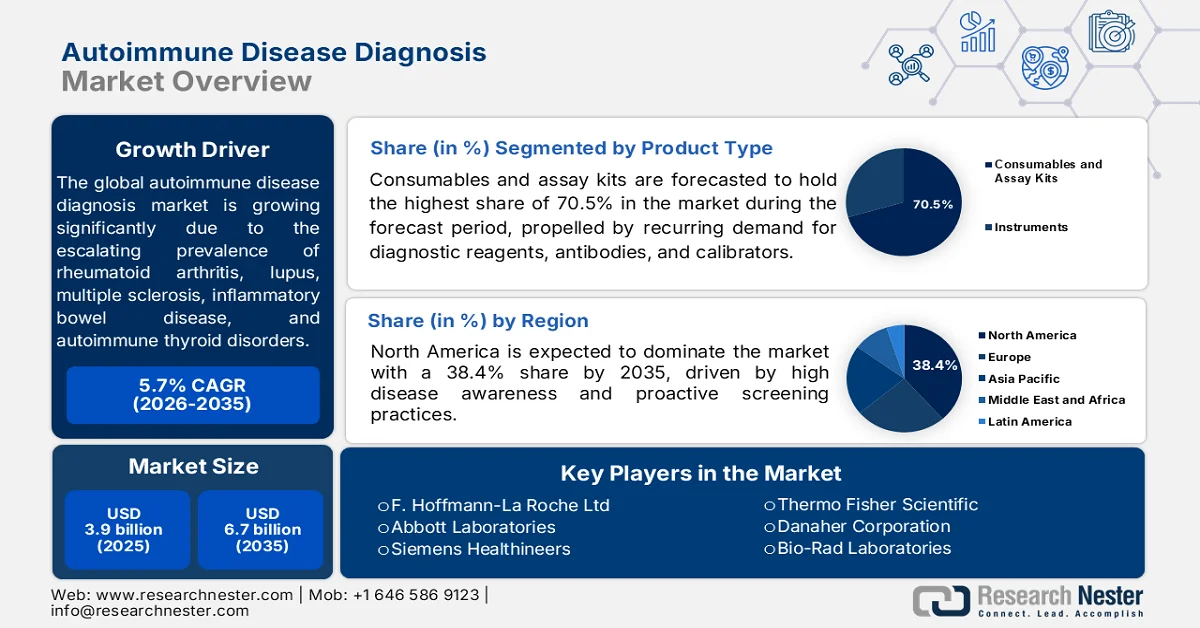
The autoimmune disease diagnosis market is expected to showcase steady growth majorly due to escalating prevalence of conditions such as rheumatoid arthritis, lupus, multiple sclerosis, inflammatory bowel disease, and autoimmune thyroid disorders. The presence of a large undiagnosed population requiring earlier detection also propels the market’s expansion. According to the article published by Sjögren’s Foundation, Inc. in March 2025, autoimmune diseases affect more than 50 million citizens in America, which is around 8% of the U.S. population, wherein global incidence is rising by approximately 19.1% annually, and rheumatological autoimmune diseases are increasing by 7.1% per year. The article also mentions that women account for nearly 80% of autoimmune disease cases, and around 25% of patients diagnosed with one autoimmune disease may develop another due to overlapping immune pathways, thus elevating the growth potential of the market.
Payers are focused on diagnostic solutions that demonstrate clinical utility, reduce diagnostic delays, improve treatment selection, and lower long-term healthcare costs, thus rising adoption in the market. Meanwhile, traditional tests face pricing pressure, but advanced diagnostics such as multiplex immune profiling, molecular testing, AI-enabled interpretation, and companion diagnostics have stronger pricing potential. In September 2024, PhRMA Organization disclosed that the Inflation Reduction Act’s drug price-setting provisions may impact innovation and access to critical autoimmune disease treatments, while increasing concerns about future healthcare costs. Autoimmune medicines have improved lives for millions of patients, whereas the costs of just seven autoimmune diseases were USD 51.8 to USD 70.6 billion annually, excluding indirect costs, thus highlighting the need for cost-effective solutions.
Key Autoimmune Disease Diagnosis Market Insights Summary:
Regional Highlights:
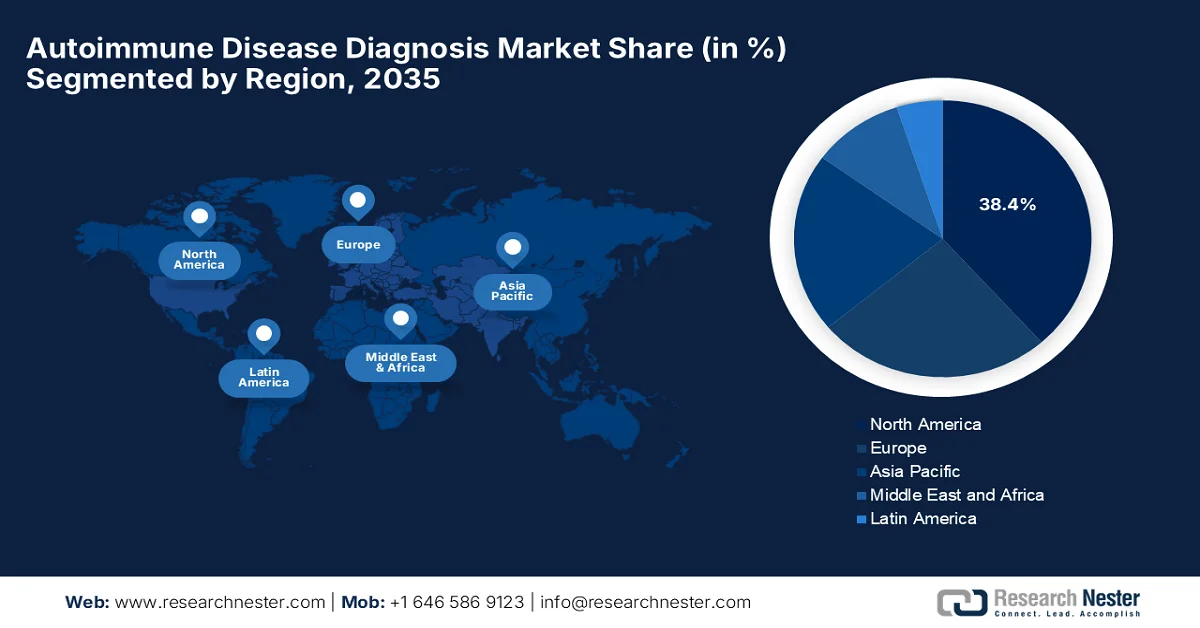
- The North America market is expected to capture 38.4% of the market share by 2035, underpinned by high public awareness, proactive patient screening, and a well-established healthcare infrastructure
- Asia Pacific is poised to witness the fastest growth in the market throughout 2026-2035, bolstered by rapidly modernizing healthcare infrastructures, expanding medical tourism, and rising disposable incomes across emerging economies
- The autoimmune disease diagnosis market in the U.S. accounts for 90.2% of the share in North America, which is driven by the strong presence of leading diagnostic companies and heightening demand for early and accurate disease detection
Segment Insights:
- In the autoimmune disease diagnosis market, consumables and assay kits are projected to account for 70.5% of the market share by 2035, fueled by recurring demand for diagnostic reagents, antibodies, calibrators, and test kits required for routine autoimmune disease screening, monitoring, and confirmation
- By 2035, localized autoimmune disease is anticipated to secure a significant share of the market, supported by the rising prevalence of organ-specific autoimmune disorders, increasing awareness of early diagnosis, and the heightened adoption of disease-specific biomarker tests
Key Growth Trends:
- Advancements in diagnostic technologies
- Increasing research and development activities
Major Challenges:
- Overlapping clinical manifestations
- Shortage of highly specific biomarkers
Key Players: F. Hoffmann-La Roche Ltd (Switzerland), Abbott Laboratories (U.S.), Siemens Healthineers (Germany), Thermo Fisher Scientific (U.S.), AstraZeneca (UK), Augurex (Canada), ARUP Laboratories (U.S.), Danaher Corporation (U.S.), Bio-Rad Laboratories (U.S.), Werfen (Spain), DiaSorin (Italy), QIAGEN (Netherlands), EUROIMMUN Medizinische Labordiagnostika AG (Germany).
Global Autoimmune Disease Diagnosis Market Forecast and Regional Outlook:
Market Size & Growth Projections:
- 2025 Market Size: USD 3.9 billion
- 2026 Market Size: USD 4.1 billion
- Projected Market Size: USD 6.7 billion by 2035
- Growth Forecasts: 5.7% CAGR (2026-2035)
Key Regional Dynamics:
- Largest Region: North America (38.4% Share by 2035)
- Fastest Growing Region: Asia Pacific
- Dominating Countries: United States, Germany, Japan, United Kingdom, France
- Emerging Countries: China, India, South Korea, Singapore, Australia
Last updated on : 9 July, 2026
Autoimmune Disease Diagnosis Market - Growth Drivers and Challenges
Growth Drivers
- Advancements in diagnostic technologies: The improvements in terms of molecular diagnostics, biomarker identification, immunoassays, and next-generation sequencing are accelerating the growth potential of the autoimmune disease diagnosis market. These advanced tools offer improved accuracy, faster results, and enhanced disease monitoring, allowing for improved market uptake. In this context, the article published by the National Institutes of Health (NIH) in July 2024 found that a large-scale whole-exome sequencing study of 350,770 adults identified 162 genes associated with 35 immune-mediated diseases, including 124 newly discovered genes. The findings revealed key genetic pathways involved in immune regulation and disease development, highlighting potential targets for future therapies that positively contribute to the market’s expansion.
- Increasing research and development activities: Pharmaceutical and biotechnology companies across the globe are making strong investments in autoimmune disease research in order to discover novel biomarkers and improve diagnostic methods. On the other hand, collaborations between research institutions and industry players are promoting innovation in diagnostic technologies, which in turn is creating newer growth opportunities for pioneers in the market. For instance, in May 2024, Novartis Canada and Clarius Mobile Health entered into a tactical partnership to improve early detection of psoriatic arthritis by expanding access to AI-based handheld ultrasound technology. Also, this initiative aims to reduce diagnosis delays, as more than half of PsA patients currently wait four or more years for diagnosis.
Challenges
- Overlapping clinical manifestations: The global market faces severe challenges due to the complex, heterogeneous nature of these disorders. Many conditions share identical, non-specific early clinical symptoms, such as chronic fatigue, widespread inflammation, persistent joint pain, and progressive organ dysfunction. Therefore, this overlap makes a proper definitive differential diagnosis exceptionally difficult for healthcare practitioners. For instance, distinguishing between systemic lupus erythematosus, rheumatoid arthritis, and Sjogren's syndrome requires a multi-step testing approach. Since this cannot be achieved through a single assessment, patients need to undergo prolonged diagnostic odysseys, thus negatively impacting the market’s exposure.
- Shortage of highly specific biomarkers: A major technological bottleneck restricting the expansion of the market is the intense shortage of specific, standalone diagnostic biomarkers. The screening tools, such as antinuclear antibody tests, are extensively used, but they frequently produce false-positive or false-negative results, and they fail to isolate distinct pathologies on their own. The presence of this limitation forces laboratory clinicians to execute complex combinations of autoantibody testing, routine blood profiles, imaging, and empirical tracking. Apart from this, the absence of universally accepted, standardized diagnostic criteria leads to some sort of variability in testing interpretations across different global laboratories. Therefore, without uniform, validated clinical benchmarks, medical centers struggle to implement streamlined workflows, hence hampering industrial adoption.
Autoimmune Disease Diagnosis Market Size and Forecast:
| Report Attribute | Details |
|---|---|
|
Base Year |
2025 |
|
Forecast Period |
2026-2035 |
|
CAGR |
5.7% |
|
Base Year Market Size (2025) |
USD 3.9 billion |
|
Forecast Year Market Size (2035) |
USD 6.7 billion |
|
Regional Scope |
|
Autoimmune Disease Diagnosis Market Segmentation:
Product Type Segment Analysis
Consumables and assay kits, which are a part of the product type, are forecasted to hold the highest share of 70.5% in the autoimmune disease diagnosis market during the forecast period. The segment’s dominance is largely propelled by recurring demand for diagnostic reagents, antibodies, calibrators, and test kits required for routine autoimmune disease screening, monitoring, and confirmation. Increasing adoption of immunoassays and multiplex testing platforms, along with continuous product launches, is also supporting segment growth. In July, AliveDx 2024 announced the launch of LumiQ™, which is an automated immunofluorescence assay solution designed to improve the speed and accuracy of autoimmune disease diagnostics. It is combined with the MosaiQ® platform, and LumiQ provides a complete diagnostic workflow that simplifies screening, confirmation, and interpretation of autoimmune disease tests.
Disease Type Segment Analysis
By the end of 2035, localized autoimmune disease is anticipated to garner a significant share of the market. The segment’s prominent position is driven primarily by the rising prevalence of organ-specific autoimmune disorders, increasing awareness of early diagnosis, and the heightened adoption of disease-specific biomarker tests. Localized autoimmune conditions such as type 1 diabetes, multiple sclerosis, rheumatoid arthritis, Hashimoto’s thyroiditis, and inflammatory bowel diseases require targeted diagnostic approaches that are contributing to increased demand for specialized diagnostic solutions. In June 2023, NIH stated that researchers from the TEDDY study identified protein biomarkers that can predict early stages of type 1 diabetes by analyzing thousands of blood samples from high-risk children. This study found 83 proteins linked to islet autoimmunity and diabetes development, wherein machine learning helps predict disease progression up to six months in advance.
End user Segment Analysis
On the basis of end use, hospitals are expected to hold a considerable share in the market during the forecast period. Their role as primary centers for disease evaluation and the availability of advanced diagnostic infrastructure are positioning the segment for sustained growth. In addition, access to multidisciplinary specialists such as rheumatologists, endocrinologists, neurologists, and immunologists is also supporting the segment’s expansion. Hospitals integrate specialized autoimmune testing, which includes antibody panels, immunofluorescence assays, biomarker-based tests, and molecular diagnostics, enabling accurate disease identification and monitoring. Furthermore, the rising number of patients seeking early diagnosis and long-term management for autoimmune disorders is increasing the demand for hospital-based diagnostic services.
Our in-depth analysis of the autoimmune disease diagnosis includes the following segments:
|
Segment |
Subsegments |
|
Product Type |
|
|
Disease Type |
|
|
End user |
|
|
Test Type |
|

Vishnu Nair
Head - Global Business DevelopmentCustomize this report to your requirements — connect with our consultant for personalized insights and options.
Autoimmune Disease Diagnosis Market - Regional Analysis
North America Market Insights
North America autoimmune disease diagnosis market is projected to account for the highest share of 38.4% during the forecast period. The region’s leadership is mainly propelled by high public awareness, proactive patient screening, and a well-established healthcare infrastructure. The region also benefits from a robust pipeline of R&D, particularly in the integration of artificial intelligence and high-throughput multiplex testing platforms that streamline laboratory workflows. In January 2025, a study by Mayo Clinic found that around 15 million people in the U.S., which is 4.6% of the population, have at least one of 105 autoimmune diseases, with women representing the majority of cases. The research identified rheumatoid arthritis, psoriasis, type 1 diabetes, Graves’ disease, and autoimmune thyroiditis as the most prevalent autoimmune conditions, thus heightening the demand for suitable diagnostics.
The strong technological adoption, with clinical laboratories increasingly integrating artificial intelligence and advanced multiplex testing, is the main factor uplifting the U.S. autoimmune disease diagnosis market. Considerable funding from public institutions, supportive commercial insurance frameworks, and strategic collaborations between diagnostic developers and biopharmaceutical firms for companion diagnostics accelerate product commercialization. As stated by NIH in June 2025, it is promoting research to advance understanding of autoimmune diseases by integrating genetic, environmental, and immunological factors to improve diagnosis and treatment. This initiative is highly focused on identifying disease drivers, biomarkers, predictive models, and new technologies to detect and manage autoimmunity earlier. It also encourages collaborative research on preclinical autoimmunity, thus making it suitable for standard market growth.
In Canada, the market has been showcasing noteworthy expansion supported by provincial health insurance plans that facilitate patient access to diagnostic testing. The market is also being driven by a rising prevalence of chronic conditions and an increasing clinical focus on early disease intervention to manage long-term healthcare costs. For instance, based on government data published in September 2023, Ontario’s 2023-24 Community Access Pilot expanded access to autoimmune diagnostic testing by adding ANCA and ACPA (Anti-CCP) tests at no cost through community laboratories. It mentions that ANCA testing supports the diagnosis of serious ANCA-associated vasculitis, whereas ACPA testing improves detection and prediction of rheumatoid arthritis outcomes, thus elevating the growth potential of the market.
APAC Market Insights
Asia Pacific market is anticipated to grow at the fastest rate from 2026 to 2035. The region’s prominence in this field is mainly propelled by rapidly modernizing healthcare infrastructures, expanding medical tourism, and rising disposable incomes across emerging economies. Market expansion is also fueled by a massive, aging patient pool and a surging prevalence of chronic conditions, which are linked to urbanization, changing dietary habits, and environmental shifts. In this context, Singapore General Hospital in May 2025 reported that it is leading a USD 5.77 million, five-year research project to improve diagnosis and treatment of systemic sclerosis, which is a rare and life-threatening autoimmune disease. The Singapore Systemic Sclerosis Precision Medicine Project (Sysmic) will analyze genetic, immune, and imaging data from about 300 patients with the main goal of developing predictive algorithms and personalized therapies.
Extensive healthcare infrastructure modernization under national health initiatives is responsibly driving the autoimmune disease diagnosis market in China. In addition, strong government backing for precision medicine, substantial domestic venture capital funding, and a shifting clinical focus toward early disease intervention remarkably accelerate market demand. In August 2024, Filipino and China-based researchers announced the development of a rapid, minimally invasive diagnostic tool for autoimmune diseases such as arthritis and lupus. This technology uses blood samples and peptide science to identify disease biomarkers, thereby offering faster results when compared with traditional biopsy-based methods, thus suitable for bolstering the country’s market.
In India, the market is experiencing exponential growth, which is driven by rising disposable incomes and the rapid expansion of private diagnostic laboratory networks into Tier 2 and Tier 3 cities. To handle soaring testing volumes cost-effectively, domestic laboratories are making a shift from traditional manual testing to high-throughput automated immunoassay and multiplex platforms. In addition, supportive government healthcare initiatives, a booming medical tourism sector, and rising investments from global diagnostic giants are significantly accelerating market penetration across the country. For instance, Thyrocare Technologies Limited in August 2024 entered into an agreement to acquire the diagnostic and pathological services business of Vimta Labs to expand its healthcare diagnostics footprint. This move provides access to 11 diagnostic centers across multiple states in the country, which include an NABL-accredited central laboratory in Hyderabad, thus enhancing the delivery of affordable, high-quality diagnostic services.
Europe Market Insights
The Europe market is expected to expand notably during the forecast period. The region’s prominence in this field is mainly propelled by highly sophisticated healthcare systems, public health insurance coverage, and strong clinical emphasis on early disease management. The region’s clinical laboratories are at the forefront of adopting technologies, integrating artificial intelligence for pattern recognition and automated, high-throughput multiplex assays to streamline heavy workflows. Werfen in February 2024 announced that it received CE Mark approval for its Aptiva® APS IgG and IgM reagents, which allow earlier and more accurate diagnosis of antiphospholipid syndrome, a complex autoimmune disease. This fully automated Aptiva platform uses particle-based multi-analyte technology to deliver high-throughput testing and improve laboratory efficiency.
The comprehensive statutory health insurance coverage and a strong clinical emphasis in terms of precision medicine are deliberately propelling the growth of the market in Germany. The substantial federal funding for biomarker research and strong local manufacturing capabilities from leading medical technology firms solidify Germany's prominent position in the regional landscape. In this context, Germany in November 2025 launched a USD 540 million national decade against post-infectious diseases to advance research into ME/CFS and post-viral autoimmune diseases. This particular initiative will fund research on disease mechanisms, diagnostics, biomarkers, clinical trials, genome sequencing, AI-based analysis, and the creation of a national patient database.
The UK autoimmune disease diagnosis market is gaining enhanced traction, which is propelled by a well-established National Health Service (NHS) infrastructure and a strong clinical focus on early disease intervention to manage long-term public healthcare expenditures. The country also benefits from substantial funding from UK Research and Innovation, active academic-corporate partnerships for biomarker discovery, and a growing domestic pipeline for companion diagnostics. In May 2025, the UK Medical Research Council announced the launch of the infections and immunity research grant opportunity with the main goal of supporting innovative projects investigating interactions between infectious agents and the immune system. This programme allows eligible researchers to apply for funding of up to five years, which covers collaborative studies that advance understanding of immunity, disease mechanisms, and potential interventions.
Key Autoimmune Disease Diagnosis Market Players:
- F. Hoffmann-La Roche Ltd (Switzerland)
- Abbott Laboratories (U.S.)
- Siemens Healthineers (Germany)
- Thermo Fisher Scientific (U.S.)
- AstraZeneca (UK)
- Augurex (Canada)
- ARUP Laboratories (U.S.)
- Danaher Corporation (U.S.)
- Bio-Rad Laboratories (U.S.)
- Werfen (Spain)
- DiaSorin (Italy)
- QIAGEN (Netherlands)
- EUROIMMUN Medizinische Labordiagnostika AG (Germany)
- Company Overview
- Business Strategy
- Key Product Offerings
- Financial Performance
- Key Performance Indicators
- Risk Analysis
- Recent Development
- Regional Presence
- SWOT Analysis
- F. Hoffmann-La Roche Ltd is one of the leading players in the market which is supported by its extensive product portfolio and automated laboratory systems. The company has been strengthening its position through innovation in laboratory automation, assay development, and integrated diagnostic workflows.
- Abbott Laboratories holds a significant position in the industry, which is facilitated through its Alinity and ARCHITECT immunoassay platforms. The firm is highly focused on developing high-throughput diagnostic systems that enable faster and more reliable clinical testing.
- Siemens Healthineers is positioned as a major manufacturer of diagnostic solutions that offers autoimmune testing capabilities through its Atellica IM and ADVIA Centaur immunoassay systems. The company differentiates itself through automation, digital laboratory solutions, and integrated diagnostic platforms, which are especially designed to improve workflow efficiency.
- Thermo Fisher Scientific is yet another key participant in the market through its ImmunoDiagnostics business, which provides specialized testing solutions for autoimmune disorders. The firm strengthens its market position through global manufacturing capabilities and generous investments in immunodiagnostic innovation.
- Danaher Corporation participates in the market primarily through its diagnostics subsidiaries, which include Beckman Coulter Diagnostics. The company provides automated immunoassay analyzers and diagnostic solutions used in clinical laboratories for autoimmune testing applications.
Here is a list of key players operating in the global market:
The autoimmune disease diagnosis market hosts a small group of global diagnostics manufacturers that are dominating through broad immunoassay portfolios, automated laboratory platforms, and strong clinical laboratory penetration. Pioneers in this market differentiate themselves through proprietary assay menus, automation capabilities, biomarker innovation, and regulatory approvals across major markets. North America and Europe are considered to be key regions due to advanced diagnostic infrastructure, whereas Asia Pacific-based manufacturers are expanding through localized solutions and cost-effective technologies. For instance, Roche in November 2024 entered a definitive agreement to acquire Poseida Therapeutics for a total of USD 1 billion upfront, expanding its capabilities in donor-derived off-the-shelf CAR-T cell therapies across oncology, immunology and neurology. This acquisition strengthens Roche’s cell therapy pipeline with Poseida’s advanced CAR-T platforms, including P-BCMA-ALLO1 and P-CD19CD20-ALLO1, which are aimed at developing scalable next-generation treatments for cancer and autoimmune diseases.
Corporate Landscape of the Market:
Recent Developments
- In March 2026, Thermo Fisher Scientific inaugurated an 8,000-square-meter distribution and labeling center in Uppsala, Sweden, with a generous investment of USD 18 million to strengthen its immunodiagnostics supply chain for allergy and autoimmune disease testing worldwide.
- In May 2025, Danaher Corporation entered into a partnership with AstraZeneca to develop and commercialize next-generation AI-based diagnostic tools that support precision medicine and improve patient selection for targeted therapies.
- In October 2024, Augurex and ARUP Laboratories entered into a partnership to expand access to the 14-3-3η biomarker test and improve the early diagnosis and management of rheumatoid arthritis. This test helps identify patients at higher risk of severe disease and joint damage.
- Report ID: 8665
- Published Date: Jul 09, 2026
- Report Format: PDF, PPT
- Explore a preview of key market trends and insights
- Review sample data tables and segment breakdowns
- Experience the quality of our visual data representations
- Evaluate our report structure and research methodology
- Get a glimpse of competitive landscape analysis
- Understand how regional forecasts are presented
- Assess the depth of company profiling and benchmarking
- Preview how actionable insights can support your strategy
Explore real data and analysis
Frequently Asked Questions (FAQ)
About this Report
Connect with our Expert


Report, 2026-2035



Copyright @ 2026 Research Nester. All Rights Reserved.
