Dental Equipment Market Outlook:
Dental Equipment Market size was valued at USD 12.4 billion in 2025 and is projected to reach USD 20 billion by the end of 2035, rising at a CAGR of 5.5% during the forecast period, which is from 2026 to 2035. In 2026, the industry size of dental equipment is assessed at USD 13.1 billion.
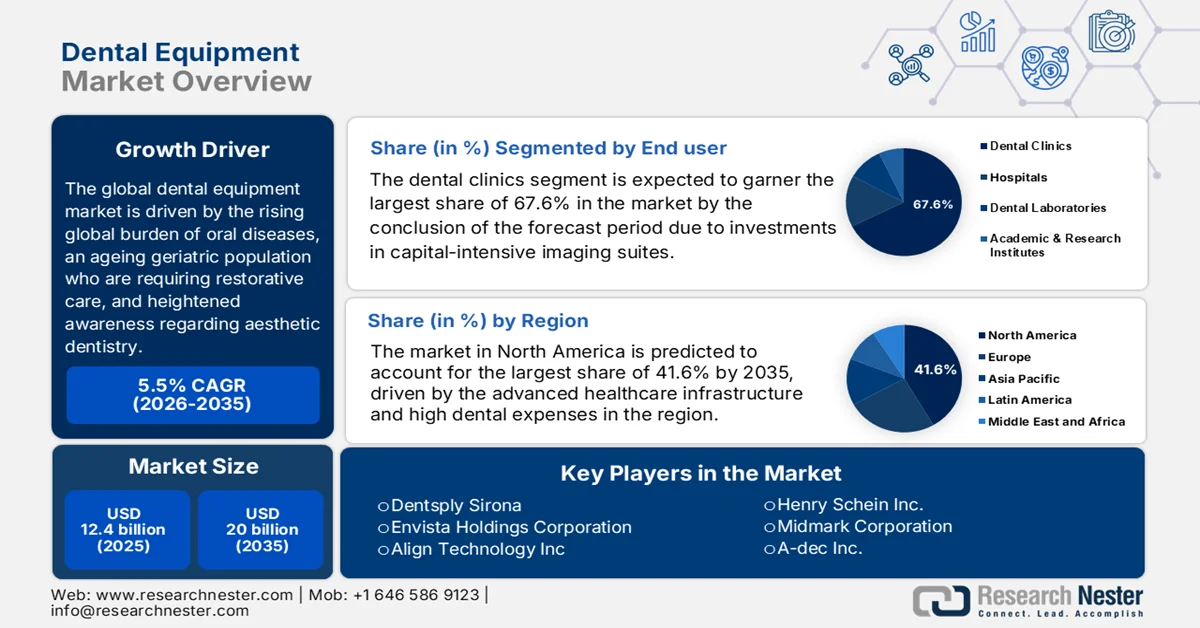
The global dental equipment market is witnessing noteworthy growth, which is efficiently driven by the rising global burden of oral diseases, an ageing geriatric population who are requiring restorative care, and heightened awareness regarding aesthetic dentistry. According to the official statistics published by the World Health Organization (WHO) in March 2025, oral diseases affect around 3.7 billion people worldwide, making them one of the most prevalent health burdens. It also mentions that untreated dental caries in permanent teeth is the most common health condition globally, whereas severe periodontal disease impacts over 1 billion cases. Simultaneously, complete tooth loss affects about 7% of adults who are aged 20 and above, rising to 23% among those over 60, and oral cancer accounts for 389,846 new cases and 188,438 deaths annually. In addition, oro-dental trauma impacts 1 billion people, with a prevalence of 20% among children up to 12 years old, thus positively impacting the dental equipment market’s growth.
Furthermore, the aspect of payers' pricing for oral care is the foundational factor that is responsible for rearranging the competitive dynamics of the dental equipment market. As per the article published by the National Institute of Health (NIH) in January 2026, the studies indicate that direct and indirect costs of oral healthcare in India represented wide variability, wherein the hospital-based oral cancer treatment ranged from USD 1,959 for conventional radiotherapy to USD 15,609 for surgery plus radiotherapy, whereas routine dental procedures cost between USD 7.6 and 377. Indirect costs, primarily from lost wages, add economic burden, averaging USD 6 to USD 160 depending on disease severity. Catastrophic health expenditure affects 15% to 96 % of households, disproportionately impacting lower-income groups, with limited mitigation from insurance coverage, which is sparse, 3% to 13 %, and inequitable. Therefore, players in the dental equipment market need to balance affordability with innovation by offering cost-effective preventive and restorative solutions along with improved technologies, making sure that wider patient access is achieved without deepening financial burdens.
Key Dental Equipment Market Insights Summary:
Regional Highlights:
- North America is projected to dominate the dental equipment market with a 41.6% share by 2035, propelled by advanced healthcare infrastructure and high dental expenditure
- Asia Pacific is anticipated to emerge as the fastest-growing region in the forecast period 2026-2035, fueled by expanding middle-class income and rising dental tourism
Segment Insights:
- Dental clinics segment in the dental equipment market is expected to account for a 67.6% share by 2035, driven by increasing investments in capital-intensive imaging suites and advanced dental technologies
- Dental consumables subsegment is projected to secure a considerable revenue share over the forecast period 2026–2035, owing to recurring demand for implants and biomaterials
Key Growth Trends:
- Ageing population
- Technological advancements & digital dentistry
Major Challenges:
- High cost of advanced equipment
- Limited access in emerging markets
Key Players: Dentsply Sirona (U.S.), Envista Holdings Corporation (U.S.), Align Technology Inc. (U.S.), Henry Schein Inc. (U.S.), Midmark Corporation (U.S.), A-dec Inc. (U.S.), 3M Company (U.S.), Planmeca Oy (Finland), Straumann Group (Switzerland), Ivoclar Vivadent AG (Liechtenstein), GC Corporation (Japan), J. Morita Corporation (Japan), Nakanishi Inc. (Japan), Osstem Implant Co. Ltd. (South Korea), Dentium Co. Ltd. (South Korea), Carestream Dental LLC (U.S.).
Global Dental Equipment Market Forecast and Regional Outlook:
Market Size & Growth Projections:
- 2025 Market Size: USD 12.4 billion
- 2026 Market Size: USD 13.1 billion
- Projected Market Size: USD 20 billion by 2035
- Growth Forecasts: 5.5% CAGR (2026-2035)
Key Regional Dynamics:
- Largest Region: North America (41.6% Share by 2035)
- Fastest Growing Region: Asia Pacific
- Dominating Countries: United States, Germany, Japan, China, France
- Emerging Countries: India, South Korea, Brazil, Mexico, Thailand
Last updated on : 8 April, 2026
Dental Equipment Market - Growth Drivers and Challenges
Growth Drivers
- Ageing population: The globally ageing population, which is especially prevalent in developed regions, efficiently drives heightened demand for prosthodontic devices, implants, diagnostics, and preventive care, as older adults require more dental treatments. As per the article published by WHO in October 2025, the world is experiencing rapid population ageing, wherein the proportion of people aged above 60 is expected to nearly double to 22% by the end of 2050, and two-thirds of them will be in low- and middle-income countries. It also mentioned that by 2030, 1 out of every 6 people will be aged 60 or older, rising to 2.1 billion by 2050, whereas those aged above 80 will triple to 426 million. Therefore, longer lives often come with multiple health conditions and geriatric syndromes, wherein the UN decade of healthy ageing aims to reduce inequities and promote integrated care, thus supporting the growth of the dental equipment market.
- Technological advancements & digital dentistry: Innovations such as digital imaging, dental lasers, 3D printing, and AI‑based diagnostics improve precision, workflow efficiency, and patient experience. These technological trends are the major growth catalysts for the growth of dental equipment market. For instance, in October 2025, Align Technology introduced innovations for its iTero digital solutions ecosystem by combining intraoral scanners with advanced software tools to transform chairside consultations. The updates include aligning the oral health suite with simplified reports and patient galleries, the Invisalign Outcome Simulator Pro with smile video offering dynamic in-face visualizations with the main goal to boost treatment acceptance, and an expanded iTero Design Suite compatible with a wide range of 3D printers and mills for single-visit dentistry. Together, such innovations readily enhance diagnostics, patient engagement, and market exposure.
- Increased demand for cosmetic & aesthetic dentistry: The surging consumer demand for teeth whitening, veneers, clear aligners, and smile design is elevating the use of advanced equipment and encouraging more trade in these solutions. As per the article published by the National Health Service, in England, during the period from 2023-24, it has delivered almost 34 million courses of dental treatment, marking a 4.3% increase when compared to 2022-23, wherein 18 million adult patients and 6.6 million child patients were seen. Besides, it also stated that total units of dental activity rose by 3.4% to 73 million, thus reflecting growing utilization of dental services. In addition, among adults, 31% of courses included scale and polish, whereas 56% of children received fluoride varnish, highlighting preventive and aesthetic care trends. The workforce encompassed 24,200 dentists performing NHS dental activity, supporting the rising demand for both routine and elective dental procedures, thus benefiting the overall dental equipment market.
Global Dental Products Trade Statistics 2024: Top Exporters, Importers, Surpluses, and Market Trends
|
Category |
Value |
|
Global Trade Value |
USD 7.73 billion |
|
Share of World Trade |
0.034% |
|
Product Complexity (PCI) |
0.13 (Ranking 526 / 1056) |
|
Export Growth (2023- 2024) |
2.25% |
|
Top Exporters |
China (USD 1 billion), Germany (USD 719 million), Poland (USD 634 million) |
|
Top Importers |
U.S. (USD 612 million), Germany (USD 445 million), UK (USD 389 million) |
|
Largest Trade Surpluses |
China (USD 830 million), Thailand (USD 490 million), Poland (USD 404 million) |
|
Largest Trade Deficits |
Canada (USD -266 million), Philippines (USD -185 million), Australia (USD -182 million) |
|
Most Traded By-products (HS6 level) |
Dentifrices (USD 5.07 billion), Oral & dental hygiene preparations excl. dentifrice (USD 2.12 billion), Dental Floss (USD 542 million) |
Source: OEC
Challenges
- High cost of advanced equipment: One of the biggest obstacles in the dental equipment market is the burgeoning costs associated with advanced technologies such as CAD/CAM systems, 3D imaging devices, and laser dentistry tools. These systems require substantial amounts of investment, which makes them less accessible to small and mid-sized dental practices, especially in developing regions. In addition, the aspects of maintenance, software upgrades, and training increase the total cost of ownership in this sector. This financial burden ultimately causes delays in the adoption of modern solutions, thereby limiting market penetration. Furthermore, the larger organizations can deal with these costs, whereas smaller clinics may continue depending on conventional tools, slowing the overall pace of technological advancement and widening the gap between developed and emerging healthcare systems.
- Limited access in emerging markets: Access to dental equipment is considered to be uneven across emerging economies owing to the presence of infrastructure gaps, reduced healthcare expenses, and limited awareness about advanced dental care. At the same time, rural and underserved areas mostly do not have the facilities and skilled professionals who are required to operate modern equipment effectively. At the same time, import dependency also increases costs due to taxes and logistics challenges. Governments in these regions may showcase a priority towards essential healthcare services when compared to dental care, resulting in slower adoption of new technologies. Therefore, this disparity creates a fragmented dental equipment market where growth potential exists but is constrained by systemic challenges that are preventing manufacturers from fully capitalizing on opportunities in high-population, high-demand regions.
Dental Equipment Market Size and Forecast:
| Report Attribute | Details |
|---|---|
|
Base Year |
2025 |
|
Forecast Year |
2026-2035 |
|
CAGR |
5.5% |
|
Base Year Market Size (2025) |
USD 12.4 billion |
|
Forecast Year Market Size (2035) |
USD 20 billion |
|
Regional Scope |
|
Dental Equipment Market Segmentation:
End user Segment Analysis
In terms of end user, the dental clinics segment is expected to garner the largest share of 67.6% in the dental equipment market by the conclusion of the forecast period. The dominance of the segment is largely attributable to investments in capital-intensive imaging suites and sedation equipment. In November 2022, Investcorp led a USD 6 million investment in Global Dental Services (GDS), which operates more than 340 clinics across India under the Clove Dental brand. This particular funding was intended to support GDS’s expansion, including the addition of advanced dental equipment, digital practice management systems, and hybrid D2C dental solutions. Therefore, such investments reflect a broader trend of organized dental chains that are making investments in capital-intensive infrastructure and technology to meet growing patient demand. Furthermore, the segment benefits from increasing patient awareness and rising demand for specialized dental treatments, thus denoting a wider segment scope.
Product Segment Analysis
The dental consumables subsegment is anticipated to grow with a considerable revenue share in the dental equipment market during the forecast period. The growth of the segment is largely attributable to the recurring sales of implants and biomaterials. Their consistent demand across clinics ensures steady revenue streams, making consumables the most stable segment in the market. In addition, the strong supply chains and repeat purchase patterns solidify its strong position in this category. In March 2025, COLTENE Group introduced six new dental innovations at IDS 2025 by mainly focusing on infection control, endodontics, and restorative dentistry to improve outcomes and streamline workflows. The key innovations include HySolate Liquid Dam for gingiva protection, Kenda ShapeGuard polishing system, MicroMega One Glider & RECI Glider for endodontics, Roeko Gelatamp forte & white for hemostasis, and BRILLIANT Lumina tooth whitening.
Treatment Segment Analysis
By the end of 2035, the prosthodontic equipment is predicted to gain a significant revenue share in the dental equipment market. The high cost and widespread use of implant hardware, which remains a critical component of restorative dental procedures, is the main factor behind the subtype’s leadership. Clinics make heavy investments in prosthodontic tools and materials to meet patient demand for implants, crowns, and bridges, making this segment the most stable in terms of revenue generation. In June 2022, ZimVie announced the launch of two next-generation dental solutions in the U.S., which are the T3 PRO tapered implant and the encode emergence healing abutment, with the main goal to enhance restorative care and aesthetics. The T3 PRO builds on the proven T3 family, offering high stability, immediate function, and bone-preserving hybrid surfaces. At the same time, the encode emergence simplifies digital workflows with its 3-in-1 design, improving tissue healing and scan precision, hence denoting a positive dental equipment market outlook.
Our in-depth analysis of the dental equipment market includes the following segments:
|
Segment |
Subsegments |
|
End user |
|
|
Product |
|
|
Treatment |
|
|
Technology |
|
|
Distribution Channel |
|

Vishnu Nair
Head - Global Business DevelopmentCustomize this report to your requirements — connect with our consultant for personalized insights and options.
Dental Equipment Market - Regional Analysis
North America Market Insights
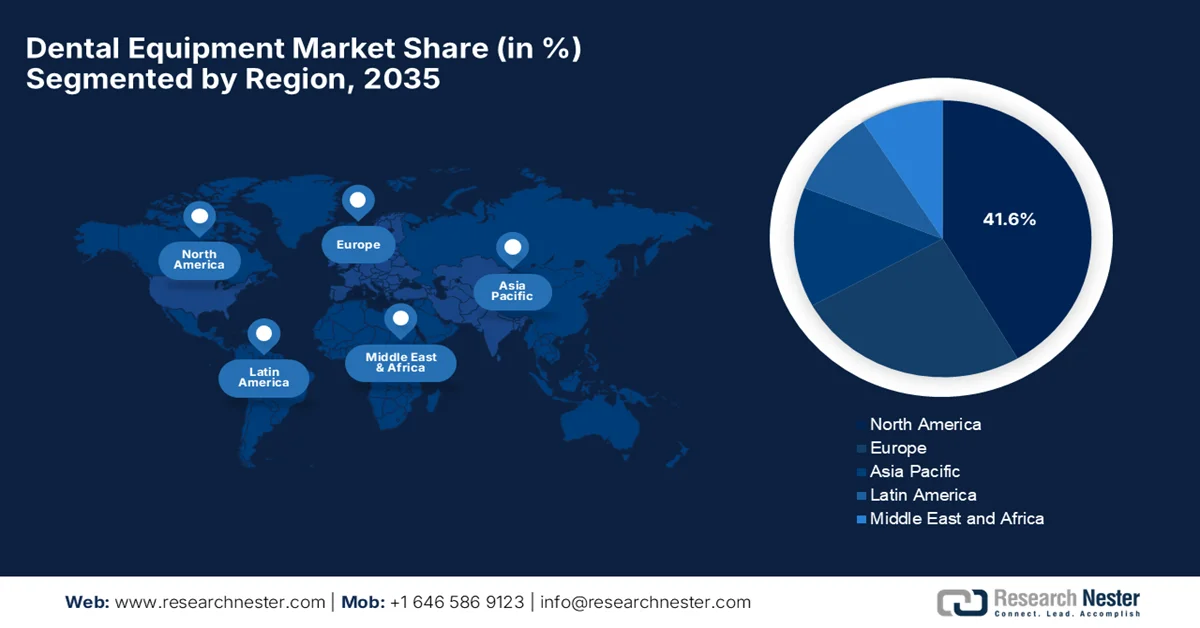
The North America dental equipment market is anticipated to garner the largest share of 41.6% over the forecasted years. The region’s leadership is effectively propelled by its advanced healthcare infrastructure and high dental expenditure. The region is witnessing the rapid integration of digital technologies and a growing emphasis on patient-centric care influenced by the rising disease burden. According to the article published by the Centers for Disease Control and Prevention (CDC) in May 2024 in the U.S., by age 9, 50% of children have experienced cavities, and children from lower-income households are more than twice as likely to have untreated cavities compared to wealthier peers. In addition, it also mentioned that among adults aged 20 to 64, 21% have at least one untreated cavity. At the same time, poor oral health also causes economic consequences, wherein 34 million school hours are lost annually, and over USD 45 billion in productivity is lost due to untreated dental diseases.
The rapid integration of advanced technologies and a shift toward digital dentistry are responsible for uplifting the dental equipment market in the U.S. Demand in the country is also carried forward by a growing geriatric population that requires specialized restorative and prosthodontic care, as well as a cultural surge in cosmetic dentistry. In this context, the International Trade Administration revealed that the global dental equipment and supplies market presents strong opportunities for U.S. exporters, particularly in Southeast Asia and Latin America, owing to the rising incomes, expanded health insurance, and increased government spending on dental care. U.S. manufacturers are recognized worldwide for innovation and advanced technology, helping them capture a larger share of international markets. Furthermore, continued economic expansion and structural reforms in well-established markets are expected to support export growth for U.S. dental equipment and supplies.
Canada dental equipment market has gained enhanced exposure, mostly driven by modernized clinical workflows. The country’s market also benefits from an aging population requiring complex restorative care and increased federal funding through the country’s Dental Care Plan. Clinicians in the country are opting for advanced technologies such as intraoral scanners and 3D printing to improve diagnostic accuracy and procedural efficiency. Based on the government data published in November 2025, Health Canada’s Oral Health Access Fund from 2025 to 2028 is supporting more than USD 35 million in projects that expand hands-on dental training and improve access to care using advanced equipment. Besides, the funded initiatives are mobile dental units in Alberta and British Columbia, VR simulation labs in Ontario, and clinical training enhancements in Saskatchewan, all requiring specialized dental tools and technology, thus creating encouraging opportunities for players in this field.
APAC Market Insights
The Asia Pacific dental equipment market is expected to register its position as the fastest-growing region from 2026 to 2035. The region’s prominence is effectively propelled by a massive population base, rising middle-class disposable income, and a significant surge in dental tourism across countries such as India, Thailand, and South Korea. The article published by NIH in October 2023 disclosed that dental expenditures in Japan in a span of four decades represented total spending rising from almost USD 19.6 billion to USD 30 billion, and is considered to be a 1.53-fold increase. Besides, it also mentioned that the largest growth occurred among older adults, wherein per capita spending nearly doubled, reflecting heightened demand for medical management, at-home care, and restorative treatments. Furthermore, expenditures on crown restoration and prostheses declined in proportion but remained a major cost, whereas newer materials such as CAD/CAM crowns and resin bases increasingly replaced expensive precious metal alloys.
A focus on high-tech, domestic manufacturing and the government policies supporting made in China initiatives and the expansion of private dental chains are certain drivers responsible for driving the dental equipment market in China. At the same time, the rise of clear aligner therapy and dental implant procedures is effectively fueling the demand for advanced 3D imaging and specialized surgical tools. Align Technology, in May 2025, announced that its Invisalign palatal expander system has been approved by the National Medical Products Administration (NMPA), which marks a major milestone for digital orthodontics in the country. It notes that the system is a direct 3D‑printed appliance that allows for removable, customized expansion of the upper jaw in children and adolescents, supporting both skeletal and dental malocclusions. Therefore, such launches exemplify the prominence of high-tech domestic manufacturing and regulatory support in driving the expansion of China’s dental equipment industry.
In India, the dental equipment market is growing exponentially on account of rising oral health awareness and a burgeoning middle class with increasing disposable income. The sector is witnessing a surge in terms of cosmetic dentistry and the expansion of dental tourism, which in turn encourages clinics to make investments in high-end equipment such as dental lasers and advanced chairs. As per the article published by the Press Information Bureau in September 2025, Union Minister of State for Science and Technology inaugurated the dental technology innovation hub at the Maulana Azad Institute of Dental Sciences, which is supported by the Department of Science & Technology and ICMR. Besides, this particular hub aims to boost the overall indigenous dental device research, diagnostics, and therapy, reducing reliance on imports and promoting Atmanirbhar Bharat. The policy is especially designed for innovators, start-ups, and MSMEs, and it aligns with the National Medical Devices Policy 2023, thus suitable for bolstering the country’s dental equipment market growth.
Europe Market Insights
The Europe dental equipment market prioritizes high-precision technology and sustainable, long-term clinical solutions. Growth in the market is largely propelled by stringent regulatory frameworks and a focus on minimally invasive dentistry are efficiently driving the demand for advanced dental lasers and ergonomic treatment centers. In May 2024, the European Commission adopted a regulation to make the Union mercury-free and banned the use of dental amalgam for all patients from January 2025, with limited medical exceptions. Exporting amalgam was also prohibited from 2025, whereas manufacturing and imports will be banned from July 2026. Also, these measures align with the region’s zero pollution ambition and commitments under the Minamata Convention, ensuring safer health and environmental standards across member states, thus denoting a huge growth opportunity for sustainable equipment.
The high density of dental professionals and a well-established healthcare infrastructure are the main reasons behind the robust growth of the dental equipment market in Germany. At the same time, robust statutory insurance provides a stable foundation for routine procedures, and the dental equipment market for premium devices is largely supported by widespread private supplementary insurance, which covers advanced treatments such as dental implants and clear aligners. In January 2025, Planmeca showcased a wide range of digital dental innovations across dental units, imaging, CAD/CAM, and software, marking 20 years since its first 3D imaging unit at IDS Cologne 2025. In this context, visitors experienced hands-on demonstrations of the Romexis all-in-one software platform, which integrates AI and virtual reality into digital workflows. Therefore, such an ecosystem will prompt a profitable business environment by driving continuous adoption of advanced digital dental technologies, thereby accelerating equipment replacement cycles and encouraging sustained investment in high-value solutions.
The UK dental equipment market is maintaining a strong position, prompted by the rapid digitisation of clinical workflows and a major shift toward private dentistry. Demand is further propelled by a rising interest in cosmetic procedures, such as clear aligners and professional whitening, as well as the expansion of large dental service organizations is centralising procurement and accelerating the rollout of high-tech infrastructure. In this context, the UK government in February 2024 reported that its NHS dentistry recovery plan - 2024 mainly aims to make services faster, simpler, and fairer by funding almost 1.5 million extra treatments and deploying mobile dental vans to underserved communities. The plan introduces a Smile for Life initiative with a main goal to promote oral health in children, expands fluoridation consultation, and supports prevention through schools and family hubs. Therefore, these measures seek to restore access, strengthen the workforce, and embed long-term oral health improvements in the country.
Key Dental Equipment Market Players:
- Dentsply Sirona (U.S.)
- Envista Holdings Corporation (U.S.)
- Align Technology Inc. (U.S.)
- Henry Schein Inc. (U.S.)
- Midmark Corporation (U.S.)
- A-dec Inc. (U.S.)
- 3M Company (U.S.)
- Planmeca Oy (Finland)
- Straumann Group (Switzerland)
- Ivoclar Vivadent AG (Liechtenstein)
- GC Corporation (Japan)
- J. Morita Corporation (Japan)
- Nakanishi Inc. (Japan)
- Osstem Implant Co. Ltd. (South Korea)
- Dentium Co. Ltd. (South Korea)
- Carestream Dental LLC (U.S.)
- Biolase Inc. (U.S.)
- SuperMouth (U.S.)
- DENTALEZ (U.S.)
- DEXIS (U.S.)
- Zest Dental Solutions (U.S.)
- Prevest DenPro Limited (India)
- Prime Dental Products Pvt. Ltd. (India)
- Aseptico Inc. (U.S.)
- Company Overview
- Business Strategy
- Key Product Offerings
- Financial Performance
- Key Performance Indicators
- Risk Analysis
- Recent Development
- Regional Presence
- SWOT Analysis
- Dentsply Sirona is identified as a global leader in this sector, which is offering a portfolio of products that spans imaging systems, CAD/CAM solutions, treatment centers, and consumables. The firm is highly focused on digital dentistry, including its CEREC platform, which has positioned it at the forefront of clinical innovation.
- Envista Holdings Corporation is yet another dominant force in this field that includes dental imaging, equipment, and implant solutions through brands such as Nobel Biocare and KaVo. The company mainly concentrates on integrated workflows and digital transformation in dentistry.
- Align Technology Inc. has revolutionized orthodontics with its Invisalign system and iTero intraoral scanners, which are playing an important role in advancing digital orthodontic solutions. Besides, the firm is extremely concentrated on proprietary software and 3D imaging technologies to deliver customized treatments.
- Straumann Group is a global leader in implant dentistry and digital solutions, which is best known for its premium-quality implants and prosthetics. In addition, the company has aggressively expanded its digital ecosystem through acquisitions and partnerships, integrating scanners, software, and manufacturing capabilities.
- Planmeca is a prominent manufacturer based in Europe, and it specializes in dental imaging systems, CAD/CAM solutions, and treatment units. The firm is very well recognized for its advanced technology, particularly in 3D imaging and software-driven workflows.
Below is the list of some prominent players operating in the global dental equipment market:
The global dental equipment market is mostly innovation-driven, which is characterized by the presence of multinational leaders and emerging regional players. Companies such as Dentsply Sirona, Planmeca Oy, and Align Technology Inc. are highly focused on digital dentistry and imaging technologies, with the main goal of strengthening their dental equipment market position. Strategic initiatives adopted by the leading players in this field include mergers and acquisitions, geographic expansion, and continuous R&D investments to enhance product portfolios and clinical efficiency. At the same time, players in this field are opting for AI integration and workflow automation to expand into high-growth markets. In March 2026, Zest Dental Solutions allied with Progressive Dental and The Closing Institute with the main goal of accelerating full-arch growth and improving patient outcomes. This particular collaboration integrates Zest’s LOCATOR solutions with Progressive’s practice growth systems.
Corporate Landscape of the Dental Equipment Market:
Recent Developments
- In April 2026, SuperMouth announced the launch of the Ultim8 SmartBrush System Ortho-Edition, which is an orthodontist-designed electric toothbrush built to deliver superior cleaning and hygiene for patients with braces.
- In February 2026, DENTALEZ introduced the Forest 5400 chair package, which is a value-focused dental solution designed to deliver essential performance, durability, and patient comfort.
- In February 2026, DEXIS announced the integration of the CephX platform into its DTX Studio system, thereby enabling AI-powered cephalometric analysis for faster and more precise orthodontic diagnostics.
- Report ID: 46
- Published Date: Apr 08, 2026
- Report Format: PDF, PPT
- Explore a preview of key market trends and insights
- Review sample data tables and segment breakdowns
- Experience the quality of our visual data representations
- Evaluate our report structure and research methodology
- Get a glimpse of competitive landscape analysis
- Understand how regional forecasts are presented
- Assess the depth of company profiling and benchmarking
- Preview how actionable insights can support your strategy
Explore real data and analysis
Frequently Asked Questions (FAQ)
About this Report
Connect with our Expert


Report, 2026-2035



Copyright @ 2026 Research Nester. All Rights Reserved.
