Urinary Collection Device Market Outlook:
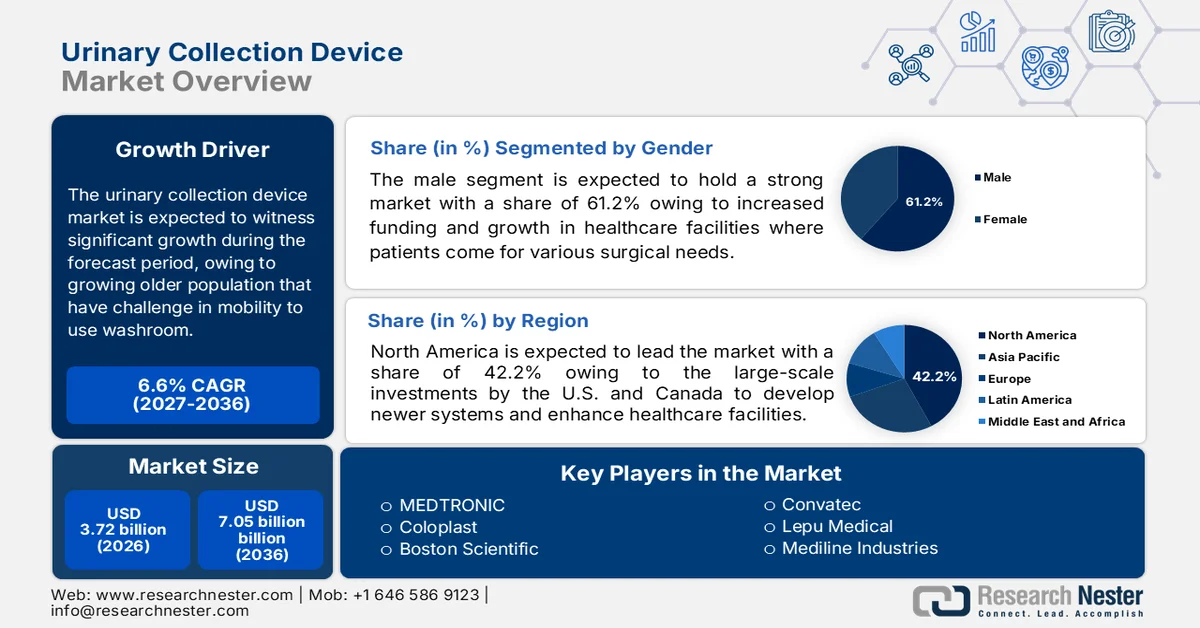
Urinary Collection Device Market size was over USD 3.72 billion in 2026 and is expected to reach USD 7.05 billion by the end of 2036, growing at around 6.6% CAGR during the forecast period, i.e., 2027-2036. In 2027, the industry size of urinary collection device is estimated at USD 3.97 billion.
Increasing urinary disorders among patients are driving the growth of the urinary collection device market. Patient lifestyle is fueling the growth of complex diseases such as diabetes, which can lead to an increased volume of urination, where urinary collection devices are used. Patients who undergo surgery often face mobility issues, where the demand for urinary collection devices is quite high. The rapid expansion of healthcare facilities is encouraging patients to undergo surgeries, leading to the utilisation of urinary collection devices, amplifying the market expansion.
According to the International Trade Administration, in August 2025, Germany added an economic footprint of more than USD 383 billion in 2025, demonstrating the strong healthcare infrastructure development, propelling the expansion of the urinary collection device market. As countries invest heavily in improving the healthcare infrastructure, surgeries and day-care procedures are growing rapidly, which is fuelling the growth of the urinary collection device market.
Key Urinary Collection Device Market Insights Summary:
Regional Highlights:
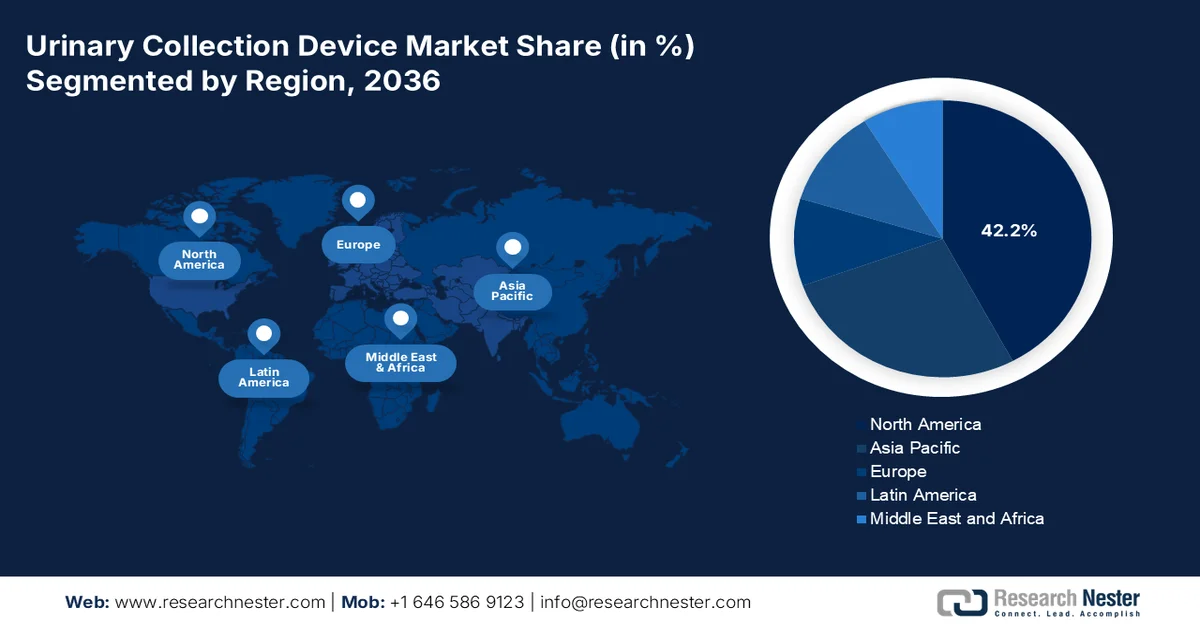
- North America is projected to command a 42.2% share of the urinary collection device market by 2036, supported by strong healthcare investments, high surgical volumes, and continuous innovation in high-performance and sensor-enabled urinary collection devices.
- Europe is anticipated to emerge as the fastest-growing region by 2036, accelerated by stringent patient-safety regulations, rising adoption of advanced catheter materials, and increasing integration of remote monitoring technologies.
Segment Insights:
- The male segment is expected to account for 61.2% share by 2036 in the urinary collection device market, attributed to higher post-surgical usage among men and continuous innovations in ergonomic, hygienic, and customizable male-specific urinary collection devices.
- The silicon material segment is forecasted to hold a significant share by 2036, reinforced by superior softness, elasticity, bacterial resistance, and growing manufacturer focus on patient-comfort-oriented catheter solutions.
Key Growth Trends:
- Ageing population
- Advancements in product development
Major Challenges:
- Risk of urinary tract infection
- Patient discomfort
Key Players: Medtronic (Ireland), B. Braun Melsungen AG (Germany), Coloplast (Denmark), Hollister Incorporated (U.S.), Convatec (UK), Boston Scientific (U.S.), Ethicon (Johnson & Johnson) (U.S.), Cook Medical (U.S.), Medline Industries (U.S.), Lepu Medical (China).
Global Urinary Collection Device Market Forecast and Regional Outlook:
Market Size & Growth Projections:
- 2026 Market Size: USD 3.72 billion
- 2027 Market Size: USD 3.97 billion
- Projected Market Size: USD 7.05 billion by 2036
- Growth Forecasts: 6.6% CAGR (2027-2036)
Key Regional Dynamics:
- Largest Region: North America (42.2% share by 2036)
- Fastest Growing Region: Europe
- Dominating Countries: United States, Germany, Japan, China, United Kingdom
- Emerging Countries: India, China, South Korea, Brazil, Spain
Last updated on : 31 August, 2026
Urinary Collection Device Market - Growth Drivers and Challenges
Growth Drivers
- Ageing population: Globally, the population is ageing, which is propelling the growth of the urinary collection device market. The older population often have challenges in mobility and faces severe urinary incontinence, leading to increased frequency of urination. A urinary collection device can effectively support in minimising mobility, enabling safety for them. According to the United Nations 2024, by 2070, the global population above the age of 65 will reach 2.2 billion, which will significantly demand Foley catheters and other types of urinary collection devices to limit their mobility and offer them safety, enhancing the scope of the urinary collection device market.
- Advancements in product development: Manufacturers have ramped up production for comfortable and safe urinary collection devices, which have accelerated the utilisation among patients. Patient discomfort is highly experienced while implanting catheters, which is now eased to a greater extent because of advanced technology that significantly minimises the discomfort. Moder catheters are equipped with sensors that can notify after the water levels reach a certain limit, making the draining process convenient for the older patients. Moreover, advancements in materials to limit the risk of infections and other factors have significantly increased, which is further propelling the expansion of the urinary collection device market. According to the National Library of Medicine, in August 2025, more than 40% of urinary tract infection is caused by catheters, demonstrating the demand for advanced urinary collection devices.
- Growth in urological surgeries: Prostate surgery for urine incontinence and enlargement of the gland, which may lead to cancer malignancy, demanding immediate surgical intervention. Patients undergoing such surgery find it difficult to control the frequency and flow of urine. Practitioners often prescribe urinary catheters to reduce mobility and control the flow of urine, leading to higher adoption. The growing healthcare facilities and their stress on urological surgeries are effectively expanding the use of catheters, impacting the market expansion. According to the National Cancer Institute, more than 3,518,978 men were living with prostate cancer in 2022, which raises the demand for prostate surgery, propelling the market of urinary collection devices.
Challenges
- Risk of urinary tract infection: Using catheters and other urinary collection devices often leads to UTI, which can severely infect the tract and lead to serious complications. The risk of infections has declined, leading to increased adoption in healthcare facilities, ultimately impacting the market's growth. A urinary tract infection can lead to increased healthcare costs and longer hospital stays.
- Patient discomfort: Despite efforts to develop cost-effective and comfortable catheters, manufacturers are failing, leading to the utilisation of traditional catheters, which cause significant discomfort to the patients. This can largely impact in non-compliance and lead to physiological discomfort. Older patients may have a psychological impact associated with the pain, leading to limited adoption of catheters and slowing down the market of urinary collection devices.
Urinary Collection Device Market Size and Forecast:
| Report Attribute | Details |
|---|---|
|
Base Year |
2026 |
|
Forecast Period |
2027-2036 |
|
CAGR |
6.6% |
|
Base Year Market Size (2026) |
USD 3.72 billion |
|
Forecast Year Market Size (2036) |
USD 7.05 billion |
|
Regional Scope |
|
Urinary Collection Device Market Segmentation:
Gender Segment Analysis
The male segment is anticipated to hold a market share of 61.2% by the end of 2036, owing to the use of urinary collection devices among men, especially after urological and cardiovascular surgeries. Male urinary collection devices have undergone various innovations, including ergonomic angles that can effectively function in both sitting and standing positions, enhancing their usability. The advancements in hygiene and customisation have severely impacted the growth of the male urinary collection device market. Manufacturers are focusing on producing comfortable and functional catheters that can be positioned at multiple angles without any discomfort to the patients.
Material Segment Analysis
The silicon segment is expected to hold a significant share by the end of 2036 because of the elasticity and softness of the tubes. Latex and rubber-based catheters are often hard and tend to irritate the intimate areas lading to wider adoption of silicone-based tubes and catheters. As medical facilities aim towards enhancing patient comfort, the silicon segment will hold a significant share in the future. Silicon also has the potential to resist the growth of bacteria, which can safeguard patients from UTIs and other types of infection, reducing their healthcare costs. Manufacturers have increased their research and manufacturing potential to produce silicon-based catheters and urinary collection bags.
Product Segment Analysis
The urinary bag segment is expected to hold a significant share by the end of 2036 due to its convenience and portability in different settings. Patient’s mobility can be reduced when urinary bags are used, as they can hold a large volume of liquid, which needs to be emptied at long intervals. The ease of access and ability to attach the urinary bag around the waist and legs support in keeping other activities running. In hospitals and diagnostic centres, patients are often assisted to use the washrooms, which depend on the availability of the nursing staff. High demand for the facilities often leads to delays. In such scenarios, the use of urinary bags can save time and reduce the pressure on healthcare staff.
Our in-depth analysis of the urinary collection device market includes the following segments:
|
Segment |
Subsegments |
|
Product |
|
|
Material |
|
|
Gender |
|
|
End user |
|

Vishnu Nair
Head - Global Business DevelopmentCustomize this report to your requirements — connect with our consultant for personalized insights and options.
Urinary Collection Device Market - Regional Analysis
North America Market Insights
The market in North America is expected to hold a share of 42.2% owing to the large-scale investment in healthcare facilities. Patients undergo surgeries in various specialisations, such as cardiovascular and neurovascular, which increases the demand for urinary collection devices, as they find mobility a challenge after surgery. The region has a rich source of innovation and research, which is advancing the growth of high-performance urinary collection devices. Researchers are also trying to integrate technology, such as sensors that would notify the patients of the volume level, helping them understand the time by which the urinary bags should be emptied. Innovation within the urinary bags and growing healthcare infrastructure are effectively fueling the expansion of the urinary collection device market of North America.
The U.S. healthcare infrastructure is monitored by various agencies that emphasise patient safety and compliance, leading to the adoption of advanced and high-performance urinary collection devices. The growing healthcare infrastructure is a result of increased demand from patients suffering from chronic diseases, including cardiovascular diseases, where surgical intervention is highly recommended. According to the CDC, in October 2024, every year, more than 805,000 people suffer from heart disease, which demands active involvement in surgical needs. Post surgery patients are advised to rest, as using the washrooms physically can be of potential risk. Practitioners often advise the use of catheters to eliminate the rise arising from frequent washroom visits.
Canada is also leading the urinary collection device market as manufacturers within the country focus on the production of catheters that cause less irritation and discomfort to the patients. The manufacturers are also focusing on silicon-based catheters and tubes that can minimise the chances of infection and help in maintaining hygiene. The manufacturers are also integrating technology within the products, such as sensors that can inform patients of the level of urine. The growing advancements within healthcare facilities and the manufacturer’s focus to improve the product portfolio are effectively fueling the growth of the urinary collection device market in Canada.
Europe Market Insights
The market in Europe is also expected to be the fastest growing by the end of 2036 because of strong regulations towards patient safety. Agencies such as the NHS oversee the activities of the healthcare facilities, including the due diligence followed by them. Each of the facilities is required to ensure patient-centric care and reduce trauma-related pain and discomfort. Catheterisation is a painful process where patients often feel discomfort during the insertion. Hospitals and facilities are urged to use advanced materials that would significantly reduce the pain and help in reducing the risk of UTIs. Some urinary bags are equipped with remote monitoring technology that enables practitioners to assess the urine condition remotely. These features within the market is propelling the growth of the urinary collection device market of Europe.
The UK is also expected to hold a significant share in the urinary collection device market as health infrastructure is developing at a fast pace, which is fueling the growth of urinary collection devices. The active monitoring of the health agencies and the rising protocols of health infrastructure are leading to the growth of compliance, which is effectively fueling the growth of modern and technologically advanced urinary collection devices that can reduce pain and discomfort and enhance the adoption. The older population is rising in the country, who are prone to the usage of urinary collection devices because of mobility issues, leading to the expansion of the market.
Germany is experiencing a rise in chronic diseases, which is propelling the government's investment in to build top notch medical facilities where surgeries have increased, demanding the use of urinary collection devices. The International Trade Administration, in August 2025, published that Germany generates an economic footprint of USD 838 billion every year, demonstrating the growing healthcare infrastructure to meet the rising demand for chronic diseases. The diseases often demand surgical intervention, post which patient mobility is challenged, leading to the adoption of urinary collection devices in Germany.
Asia Pacific Market Insights
The market in the Asia Pacific will hold a significant share because of the low cost of manufacturing various medical equipment. The healthcare infrastructure is experiencing a rise in urinary incontinence disorders, where patients need to urinate frequently. Practitioners often advise patients to use catheters and other forms of urinary baggage to limit the need to visit washrooms physically. Moreover, other conditions such as diabetes and prostate condition is also growing in the region because of cultural influences that are effectively fueling the growth of the urinary collection device market of the Asia Pacific. The region has also improved the accessibility of patients, enabling wider adoption of surgical interventions and propelling the growth of the urinary collection device market.
China is building the healthcare infrastructure to meet the growing demand of the population. Apart from healthcare expansion, the country holds great skills and precision in the manufacturing of low-cost medical product including catheters and urinary bags. China is ahead with innovation, where it is aiming to develop cost-effective silicon-based collection devices that ease patient discomfort and reduce trauma. The large population level of China and the innovation capabilities of the country are propelling the expansion of the urinary collection device market.
India is experiencing a growth in cancer cases, which is leading to oncological surgeries. These surgeries are quite essential and demand high-quality catheters to ensure timely exclusion of urinary fluids. The ageing population is also contributing to the growth of urinary collection devices, as older people may experience trouble in mobilising to the washrooms. The use of catheters and urinary bags for these demographics is propelling the market of urinary collection devices.
Key Urinary Collection Device Market Players:
- Medtronic (Ireland)
- B. Braun Melsungen AG (Germany)
- Coloplast (Denmark)
- Hollister Incorporated (U.S.)
- Convatec (UK)
- Boston Scientific (U.S.)
- Ethicon (Johnson & Johnson) (U.S.)
- Cook Medical (U.S.)
- Medline Industries (U.S.)
- Lepu Medical (China)
- Company Overview
- Business Strategy
- Key Product Offerings
- Financial Performance
- Key Performance Indicators
- Risk Analysis
- Recent Development
- Regional Presence
- SWOT Analysis
- Medtronic: A global producer of medical equipment and tools needed for various interventions, including oncological and cardiovascular surgeries. It is also one of the key players in urinary collection devices such as catheters and urinary bags. The products offer advanced solutions for urinary incontinence and post-surgical recovery.
- B. Braun Melsungen AG: A leading producer of medical and continence care, which has developed innovative products that belong to urinary collection devices. The business also offers biocompatible products, which reduce the risk of infections and help maintain the safety of patients.
- Coloplast: A leading provider of oncological and continence care, which has focused on improving the solutions for urinary collection. The urinary bags are designed to support the needs of male and female patients. It has also innovated towards silicon-based catheters, which are aimed towards reducing infections among users.
- Hollister Incorporated: A medical device manufacturer with a special focus on urology and continence care. The business manufactures various types of catheters and urinary bags for patients and the older population. The business operates in multiple regions with special emphasis on quality. The global recognition and utilisation of the products have enabled the business to become one of the global leaders in urinary collection device manufacturing.
- Convatec: A leading producer of medical products with specialisation in wound care, ostomy care and incontinence management. The business has a strong portfolio of urinary collection devices and continence care products. Convatec is also integrating technologies with the products to enhance remote monitoring of the products and improve decision-making regarding patient health
Here is a list of key players operating in the global urinary collection device market:
The urinary collection device market is expected to experience intense competition throughout the forecast period, driven by the presence of both well-established companies and emerging entrants. Although the market remains moderately fragmented, the growing number of new players is increasing competitive pressure, limiting the ability of existing firms to dominate revenue share. Specialized manufacturers continue to play a significant role in shaping the competitive landscape. Additionally, major market participants benefit from substantial government support for research and innovation, further strengthening their market position.
Corporate Landscape of Urinary Collection Device Market Players
Recent Developments
- In October 2025, Convatec announced an investment of USD 1 million to improve the research and innovation of the company. The investment will help in establishing new-age healthcare solutions and increasing capacity by 50%
- In February 2023, Boston Scientific received FDA approval for LithoVue, a ureteroscope system that can monitor internal pressure through the effective use of AI. The products enabled practitioners and urologists to perform a variety of duties.
- Report ID: 572
- Published Date: Aug 31, 2026
- Report Format: PDF, PPT
- Explore a preview of key market trends and insights
- Review sample data tables and segment breakdowns
- Experience the quality of our visual data representations
- Evaluate our report structure and research methodology
- Get a glimpse of competitive landscape analysis
- Understand how regional forecasts are presented
- Assess the depth of company profiling and benchmarking
- Preview how actionable insights can support your strategy
Explore real data and analysis
Frequently Asked Questions (FAQ)
About this Report
Connect with our Expert


Report, 2027-2036



Copyright @ 2026 Research Nester. All Rights Reserved.
