Smart Packaging Market Outlook:
Smart Packaging Market size was valued at USD 26.7 billion in 2025 and is projected to reach USD 44.7 billion by the end of 2035, rising at a CAGR of 5.9% during the forecast period, i.e., 2026-2035. In 2026, the industry size of smart packaging is evaluated at USD 28.2 billion.
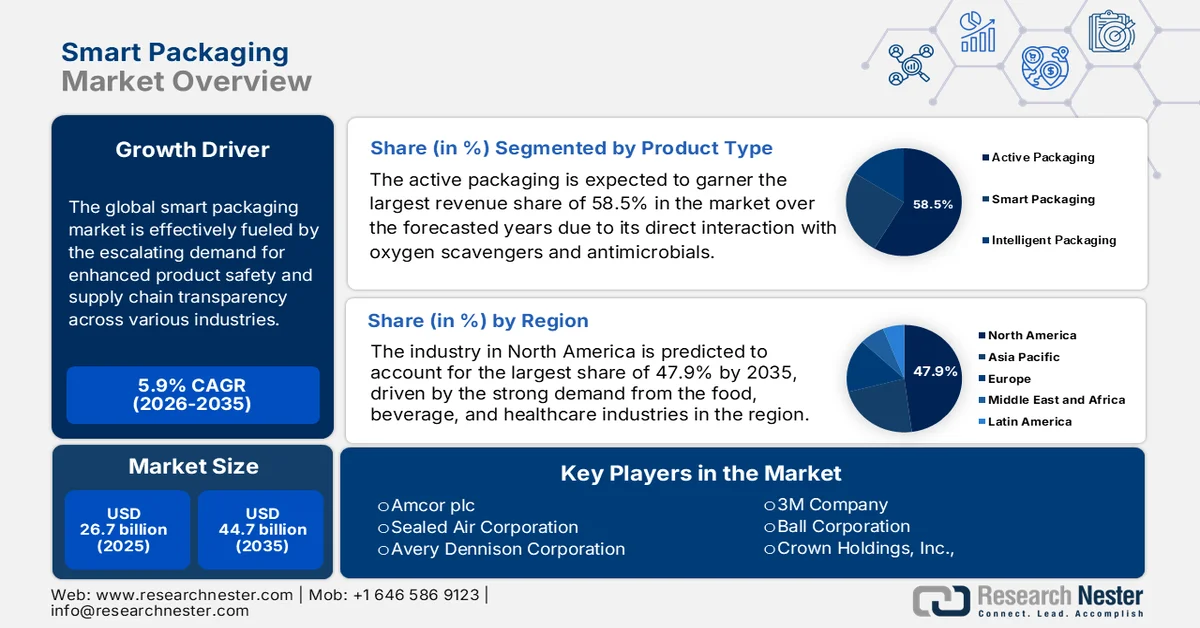
The smart packaging market is all set to witness extensive growth, which is effectively fueled by the escalating demand for enhanced product safety and supply chain transparency across various industries. The tightening of regulatory frameworks around packaging waste and food safety, coupled with measurable environmental externalities, is also stimulating consistent market growth. In November 2024, Our World in Data report stated that around 40% of global plastic waste comes from packaging, which is making it one of the largest contributors to pollution. Besides, in the U.S., packaging accounts for almost 37% of plastic waste, whereas in Europe it is 38%, and in China it rises to 45%. Altogether, these three regions generate around 60% of the world’s packaging waste. These figures reflect the urgent need for sustainable packaging solutions to reduce environmental impact, thus denoting a lucrative growth opportunity for the smart packaging market.
The rapid growth of e-commerce, which necessitates durable and connected packaging solutions, is also propelling a profitable business environment for pioneers in the smart packaging market. In February 2026, as per the official statistics by Gitnux, the global packaging industry reached a market size of USD 1.07 trillion in 2023 and is projected to grow at a CAGR of 4.2% through 2030. It mentioned that flexible packaging led with a total of 35% market share, whereas paper and paperboard accounted for 41% of materials used. At the same time, plastic packaging is considered to be dominant, which is making up 42% of total plastic production, with the Asia Pacific consuming 50% of global plastic packaging. The reports highlighted that sustainability is a major growth driver, which has 60% of consumers preferring eco-friendly options and recycled plastics now representing 18% of packaging materials globally.
Emerging Smart Packaging Technologies and Adoption Metrics 2023
|
Technology |
Key Metric |
Notes |
|
3D printed packaging prototypes |
Time reduction |
70% faster development |
|
Robotized packaging lines |
Production speed |
+40% efficiency |
|
Blockchain in pharma packaging |
Adoption rate |
10% of total packaging |
|
Holographic labels |
Counterfeit deterrence |
80% effectiveness |
|
AR packaging apps |
Downloads |
50 million in 2023 |
|
Personalized AI packaging |
Demand increase |
300% growth |
|
Vacuum skin packaging |
Market growth |
12% CAGR |
|
Laser-etched codes |
Production penetration |
5% of packaging |
Source: Gitnux Organization
Key Smart Packaging Market Insights Summary:
Regional Highlights:
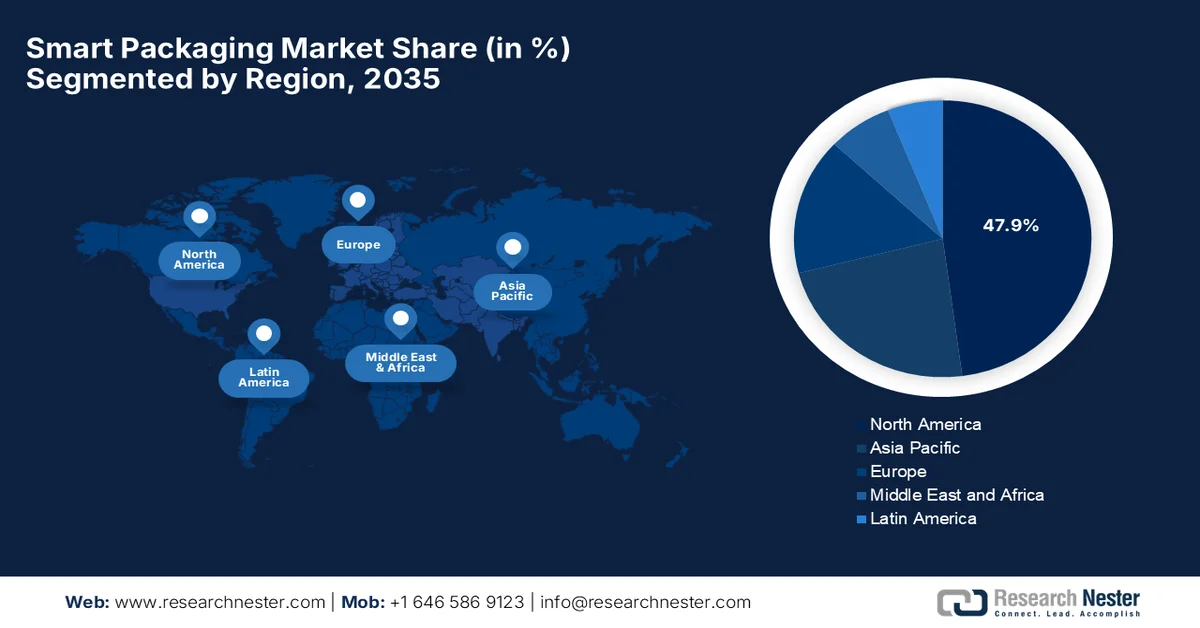
- North America is projected to dominate with a 47.9% share by 2035 in the smart packaging market, fueled by strong demand across food, beverage, and healthcare sectors
- Asia Pacific is poised to witness substantial growth through 2035, attributable to expanding e-commerce ecosystems and rising consumer expectations for product safety and authenticity
Segment Insights:
- Active Packaging is projected to account for a dominant 58.5% share by 2035 in the smart packaging market, propelled by its direct interaction with products enhancing shelf life and safety
- Shelf-life Extension is anticipated to capture a considerable share by 2035, impelled by the rising need to minimize food spoilage and meet stringent regulatory standards
Key Growth Trends:
- Plastic utilization
- Adoption of advanced technologies
Major Challenges:
- High implementation costs
- Technological complexity and integration issues
Key Players: Amcor plc Switzerland, Sealed Air Corporation U.S., Avery Dennison Corporation U.S., 3M Company U.S., Ball Corporation U.S., Crown Holdings Inc. U.S., WestRock Company U.S., International Paper Company U.S., Berry Global Group Inc. U.S., Sonoco Products Company U.S., BASF SE Germany, Tetra Pak International S.A. Switzerland, Huhtamäki Oyj Finland, Crane NXT U.S., TruTag Technologies U.S., NXP Semiconductors Netherlands, DataLase UK, TamperTech UK, Smart Packaging Industries AS Norway, Royal NNZ Group BV Netherlands, Stora Enso Oyj Finland, Smurfit Kappa Group plc Ireland, Mitsubishi Gas Chemical Company Inc. Japan, Thin Film Electronics ASA Norway, Manjushree Technopack Limited India, Polyplex Corporation Ltd.
Global Smart Packaging Market Forecast and Regional Outlook:
Market Size & Growth Projections:
- 2025 Market Size: USD 26.7 billion
- 2026 Market Size: USD 28.2 billion
- Projected Market Size: USD 44.7 billion by 2035
- Growth Forecasts: 5.9% CAGR (2026-2035)
Key Regional Dynamics:
- Largest Region: North America (47.9% Share by 2035)
- Fastest Growing Region: Asia Pacific
- Dominating Countries: United States, China, Japan, Germany, United Kingdom
- Emerging Countries: India, South Korea, Brazil, Mexico, Indonesia
Last updated on : 13 April, 2026
Smart Packaging Market - Growth Drivers and Challenges
Growth Drivers
- Plastic utilization: The aspect of plastic packaging is an important growth driver in the smart packaging market since it combines protection and efficiency. Its lightweight, durable design deliberately supports reducing waste and optimizing logistics, making it a major enabler of advanced supply chain solutions. In June 2025, the Plastics Industry Association stated that plastic packaging provides significant sustainability benefits in terms of the modern supply chains by reducing material use, energy demand, and greenhouse gas emissions. Its lightweight nature makes it 3.6 times lighter when compared to alternatives such as glass or aluminum, lowering fuel consumption and logistics costs. The report also mentioned that lifecycle assessments show plastics contribute only 0.6% to the consumer carbon footprint when compared to 1.7% from traditional materials, thereby extending food shelf life and preventing waste, thus benefiting the overall smart packaging market’s growth.
- Adoption of advanced technologies: There has been a rising utilization of IoT, AI, printed electronics, and smart sensors, which makes packaging intelligent and interactive for more end users. In this context, innovations such as printed electronics, nano‑coatings, and smart labels efficiently enhance freshness indication. In October 2025, Wiliot entered into a partnership with Walmart to deploy ambient IoT sensors across its supply chain, which is the first large-scale rollout of this technology in retail. By integrating Wiliot’s IoT Pixels with Walmart’s AI systems, the collaboration enhanced the inventory accuracy, cold chain compliance, and overall supply chain efficiency, thereby providing visibility to the users. Therefore, such constant enhancements in terms of technology will bolster the smart packaging market growth in the years ahead.
- E‑commerce and retail transformation: Rising e‑commerce deliberately increases the need for packaging that can protect, track, and authenticate products in transit. At the same time, features such as interactive QR codes and NFC enhance brand interaction and influence purchase decisions. According to the U.S. Census Bureau reports published in March 2026, retail e-commerce sales in the fourth quarter of 2025 reached almost USD 316.1 billion, which is up 1.7% from the previous quarter and 5.3% higher than the same period in 2024, representing 16.6% of total retail sales. At the same time, the report underscored that on a not-adjusted basis, e-commerce sales totaled USD 365.2 billion, which is an increase of 21.8% from the third quarter, accounting for 18.3% of total sales. For the full year 2025, e-commerce sales were USD 1,233.7 billion, up 5.4% from 2024, whereas total retail sales grew 3.5%, hence positively impacting the smart packaging market.
Quarterly U.S. Retail and E-Commerce Sales Trends (2024-2025)
|
Quarter |
Total Retail Sales (USD Million) |
E-commerce Sales (USD Million) |
E-commerce % of Total |
Year-over-Year Total % Change |
Year-over-Year E-commerce % Change |
|
Adjusted |
|||||
|
4th Q 2025 (p) |
1,900,496 |
316,130 |
16.6 |
2.7 |
5.3 |
|
3rd Q 2025 (r) |
1,893,291 |
310,817 |
16.4 |
4.1 |
5.3 |
|
2nd Q 2025 |
1,865,704 |
304,464 |
16.3 |
3.9 |
5.4 |
|
1st Q 2025 |
1,856,815 |
299,909 |
16.2 |
4.4 |
6 |
|
4th Q 2024 (r) |
1,850,829 |
300,329 |
16.2 |
3.8 |
8.5 |
|
Not Adjusted |
|||||
|
4th Q 2025 (p) |
1,999,520 |
365,167 |
18.3 |
2.8 |
5.6 |
|
3rd Q 2025 (r) |
1,896,573 |
299,717 |
15.8 |
4.2 |
5.2 |
|
2nd Q 2025 |
1,887,093 |
293,140 |
15.5 |
3.8 |
5.3 |
|
1st Q 2025 |
1,735,586 |
275,715 |
15.9 |
3.2 |
5.6 |
|
4th Q 2024 |
1,944,449 |
345,872 |
17.8 |
4.5 |
8.8 |
Challenges
- High implementation costs: One of the biggest challenges in the smart packaging market is the burgeoning expenses associated with implementation. In this context, technologies such as radio frequency identification, NFC chips, sensors, and data infrastructure exacerbate these expenses when compared to conventional packaging. In the case of industries that are operating on thin margins, especially in food and beverage, this cost increase can be difficult to justify at scale. Also, incorporating smart components into existing manufacturing lines necessitates huge capital investment and technical upgrades. Therefore, small and medium-sized enterprises are particularly affected, since they lack the financial flexibility of large corporations. These costs are slowly declining with technological advancements, but affordability is considered to be a major hurdle, ultimately slowing down widespread adoption across price-sensitive markets.
- Technological complexity and integration issues: The smart packaging depends on the inclusion of multiple technologies, which include sensors, connectivity systems, and data platforms, making this implementation complex. At the same time, combining physical packaging materials with digital components such as near field communication and IoT systems mostly leads to compatibility issues. Manufacturers need to make sure that these technologies function reliably across different environments, i.e., changing temperatures and humidity levels. In addition, including this smart packaging data into existing enterprise systems can be technologically challenging. Also, the lack of standardized protocols in turn complicates interoperability between devices and platforms. Therefore, these complexities increase development time and can deter companies from adopting solutions from the smart packaging market at scale.
Smart Packaging Market Size and Forecast:
| Report Attribute | Details |
|---|---|
|
Base Year |
2025 |
|
Forecast Period |
2026-2035 |
|
CAGR |
5.9% |
|
Base Year Market Size (2025) |
USD 26.7 billion |
|
Forecast Year Market Size (2035) |
USD 44.7 billion |
|
Regional Scope |
|
Smart Packaging Market Segmentation:
Product Type Segment Analysis
In the product type segment, active packaging is expected to garner the largest revenue share of 58.5% in the smart packaging market over the forecasted years. Its direct interaction with products such as oxygen scavengers and antimicrobials is the main factor driving the sub-segment’s leadership. At the same time, proven effectiveness and compatibility with existing systems drive widespread adoption of the segment. Besides, it is also seeing innovation through biodegradable and eco-friendly materials, thereby aligning with the growing sustainability requirements. Integration of nanotechnology is enabling precise control over antimicrobial and antioxidant release, enhancing product shelf life. Consumer demand for fresher and safer packaged foods is readily accelerating the adoption of active packaging solutions, thus denoting an optimistic opportunity for the segment to grow over the next decade.
Functionality Segment Analysis
The shelf-life extension, which is under the functionality segment, is anticipated to grow with a considerable share in the smart packaging market by the end of 2035. The segment’s growth is largely driven by the food & beverage industry’s urgent need to reduce spoilage, ensure product safety, and comply with stringent regulatory standards. Besides, shelf-life extension directly addresses both economic losses and regulatory compliance, positioning it at the forefront of revenue generation in this category. In August 2024 at ProPak Indonesia 2024, Mitsubishi Gas Chemical Company, Inc. showcased its advanced packaging solutions, including AGELESSTM and AGELESS OMACTM, which are especially designed to extend the shelf life of food by actively absorbing oxygen and preserving freshness. The company also highlighted MX Nylon, which is a high-performance polyamide with excellent O₂ and CO₂ barrier properties, widely used in food and beverage packaging, hence suitable for standard smart packaging market growth.
Application Segment Analysis
By the end of the forecast period, the food & beverage application is forecasted to emerge as the strongest segment in the smart packaging market. The growing demand for food safety and waste reduction is the primary driver for the segment’s growth and exposure. Smart packaging helps monitor freshness, reduce spoilage of food, and ensure compliance with safety standards. In February 2026, Avery Dennison announced the launch of the AD IdentiFresh inlay series, which is an RFID solution especially designed for fresh food categories such as bakery, meat, deli, and produce. These inlays leverage Impinj’s M800 series ICs and Gen2X enhancements, which improve readability in challenging cold, high-moisture environments while integrating seamlessly into existing label formats. Thus, such innovations position the segment as the gold standard for revenue generation in this category.
Our in-depth analysis of the smart packaging market includes the following segments:
|
Segment |
Subsegments |
|
Product Type |
|
|
Functionality |
|
|
Application |
|
|
Material |
|
|
Technology Components |
|
|
Packaging Type |
|
|
End use Industry |
|

Vishnu Nair
Head - Global Business DevelopmentCustomize this report to your requirements — connect with our consultant for personalized insights and options.
Smart Packaging Market - Regional Analysis
North America Market Insights
The North America smart packaging market is expected to attain the largest revenue share of 47.9% by the end of the forecast period. The region’s dominance is largely propelled by strong demand from the food, beverage, and healthcare industries. The growth of direct-to-consumer grocery and meal kit services is encouraging investments in packaging since it engages a large consumer group. In this context, the U.S. Food & Drug Administration in May 2025 extended the comment period for its proposed front-of-package nutrition labeling rule to July 2025, which allows stakeholders additional time to provide feedback. Besides, this proposed Nutrition Info box aims to give consumers simplified, at-a-glance information on saturated fat, sodium, and added sugars as low, med, or high, thereby complementing the existing nutrition facts label, thus positively impacting the smart packaging market’s growth.
The presence of a well-established food & beverage industry, coupled with a supervised pharmaceutical sector, is responsible for uplifting the overall smart packaging market in the U.S. The country’s market is also fueled by the rise of e-commerce and a growing consumer demand for information regarding product freshness and authenticity. Therefore, the official press release by the U.S. General Services Administration (GSA) finalized a rule in June 2024, which is encouraging Federal Supply Schedule contractors to offer single-use plastic-free packaging for products with the main goal of supporting the reduction of plastic waste in federal supply chains. In addition, this rule, which guides the GSA Acquisition Regulation, allows contractors to indicate whether SUP-free packaging is available as the default option, with a new icon on platforms such as GSA Advantage, which is to help agency buyers make sustainable choices.
The presence of a sophisticated retail sector and stringent health regulations is responsible for uplifting the smart packaging market in Canada. The country is highly focused on harmonizing digital tracking capabilities with its rigorous recycling standards, which is leading to the development of eco-friendly, data-driven packaging formats. In April 2024, the government of Canada announced the launch of the federal plastics registry under the country’s Environmental Protection Act to collect annual data from producers on the types and quantities of plastic they manufacture, import, and place on the smart packaging market. The registry will track plastic waste management, including reuse, recycling, composting, and disposal, providing consistent, accessible data to support a circular plastics economy. Also, this initiative is part of Canada’s broader plan to reduce plastic pollution, strengthen reuse and recovery processes thus suitable for standard market growth.
APAC Market Insights
The Asia Pacific smart packaging market is positioned for immense growth in the upcoming years, owing to the massive e-commerce ecosystem and a burgeoning middle class with high standards for food safety and product authenticity. Besides the rising urbanization and a powerhouse manufacturing base, particularly in China, Japan, and India, are encouraging the shift from normal materials to active packaging solutions. In this context, the Japan Academic Society for E-Commerce reported that the country’s e-commerce packaging industry was valued at USD 8 billion in 2025 and projected to reach USD 13 billion by 2030. It is being shaped by growing sustainability awareness and stricter environmental regulations. Companies are innovating with biodegradable materials, bio-based plastics, flexible packaging, and reusable solutions. At the same time, the country’s online retail sector is emerging in sustainable e-commerce, thereby leveraging innovation and regulatory compliance to enhance competitiveness.
The country’s digital consumer base is the main factor driving the growth of the smart packaging market in China. The country’s manufacturing sector prioritizes active packaging to extend the shelf life of fresh produce and pharmaceuticals across vast logistics networks. Also, there has been an increasing domestic focus on merging these high-tech tracking capabilities with sustainable materials. In November 2025, Packnode Organization reported that the country introduced a national green packaging mandate by targeting the e-commerce sector, requiring platforms such as Alibaba, JD.com, and Pinduoduo to adopt recyclable, reusable, or compostable packaging by 2030. It mentioned that the policy handled more than 100 billion parcels, and it aims to cut packaging-related CO2 emissions by more than 20 million tonnes each year. At the same time, pilot programs in cities such as Shanghai and Shenzhen are already involved in testing biodegradable mailers and reusable delivery boxes to standardize sustainable logistics.
In India, the smart packaging market has gained enhanced exposure, mainly propelled by growing focus on food safety and pharmaceutical integrity. Domestic manufacturers are integrating some of the smart features with cost-effective materials to enhance overall supply chain transparency in the country. As per an article published by Press Information Bureau (PIB) in February 2024 at the Digital India FutureLABS Summit 2024, SAMEER under MeitY introduced the smart food grain storage system, which is especially designed to modernize grain storage with RFID-enabled traceability, online weight and moisture measurement, and radio frequency-based moisture removal. Besides, it stated that this system can process nearly one truckload of grains, which is about 28 tons, in just 40 minutes, hence significantly improving efficiency. The technology has been transferred to Paras Defense and Space Technology Ltd for manufacturing and supply, thus making it suitable for bolstering the country’s market growth.
Europe Market Insights
A profound commitment to environmental sustainability and a circular economy is responsible for uplifting the smart packaging market in Europe. There has been a shift towards technological solutions such as active systems that physically extend shelf life and intelligent components, such as digital sensors and trackers, that provide real-time data on freshness and authenticity. In June 2024, the Europe’s Parliament adopted legislation to tackle packaging waste, aiming to reduce, reuse, and recycle across the region’s vast geography. These rules set ambitious reduction targets of 5% by 2030, 10% by 2035, and 15% by 2040, along with bans on certain single-use plastics and PFAS chemicals in food packaging. It also mentioned certain measures, which include limiting space in e-commerce packaging, mandating recyclability standards, and requiring deposit-return systems to collect 90% of beverage containers by 2029, thus positively impacting the market’s growth and exposure.
Germany smart packaging market is the primary growth engine for regional innovation, which is characterized by integration of high-tech manufacturing and digital connectivity. The market focuses heavily on intelligent systems such as RFID and NFC to support its advanced logistics and Industry 4.0 initiatives for supply chain transparency. In 2024, the country approved a national food preservation program, which is aimed at cutting food waste in half by 2030, addressing the current 11 million tons wasted annually, which is about 55 kg per person. Moreover, the strategy spans the entire product cycle, from production to consumption, with measures such as reducing order volumes, adjusting packaging sizes, and offering price promotions for near-expiry goods. It also deliberately emphasizes education and the introduction of smart packaging with electronic chips to monitor shelf life, thus encouraging more players to establish their footprint in the country.
The heightened demand for enhanced product safety and consumer engagement within the food, beverage, and pharmaceutical sectors is responsibly accelerating growth in the UK smart packaging market. The market is making a shift towards eco-friendly materials and, with a strong e-commerce landscape, innovations in smart labelling are bolstering efforts to improve convenience for consumers. Based on the government data published in March 2026, PackUK appointed UK Packaging PRO as the Producer Responsibility Organisation (PRO) for the country’s packaging Extended Producer Responsibility. In this context, the scheme will be investing a total of USD 1.7 billion in its first year to improve recycling services. Hence, this industry-led model brings together over 100 major brands and trade bodies, aiming to boost recycling rates, reduce landfill waste, and accelerate the UK’s transition to a circular economy.
Key Smart Packaging Market Players:
- Amcor plc (Switzerland)
- Sealed Air Corporation (U.S.)
- Avery Dennison Corporation (U.S.)
- 3M Company (U.S.)
- Ball Corporation (U.S.)
- Crown Holdings, Inc. (U.S.)
- WestRock Company (U.S.)
- International Paper Company (U.S.)
- Berry Global Group, Inc. (U.S.)
- Sonoco Products Company (U.S.)
- BASF SE (Germany)
- Tetra Pak International S.A. (Switzerland)
- Huhtamäki Oyj (Finland)
- Crane NXT (U.S.)
- TruTag Technologies (U.S.)
- NXP Semiconductors (Netherlands)
- DataLase (UK)
- TamperTech (UK)
- Smart Packaging Industries AS (Norway)
- Royal NNZ Group BV (Netherlands)
- Stora Enso Oyj (Finland)
- Smurfit Kappa Group plc (Ireland)
- Mitsubishi Gas Chemical Company, Inc. (Japan)
- Thin Film Electronics ASA (Norway)
- Manjushree Technopack Limited (India)
- Polyplex Corporation Ltd. (India)
- Company Overview
- Business Strategy
- Key Product Offerings
- Financial Performance
- Key Performance Indicators
- Risk Analysis
- Recent Development
- Regional Presence
- SWOT Analysis
- Amcor plc is a predominant leader in terms of flexible and rigid packing along with a strong focus on sustainable solutions. The company proactively integrates advanced materials with a strong push toward smart and sustainable solutions. Besides, Amcor also focused on digital capabilities, enabling packaging that enhances shelf life, safety, and recyclability.
- Avery Dennison Corporation is at the forefront of intelligent packaging through its knowledge in RFID, NFC, and smart labeling technologies. The firm enables real-time tracking, authentication, and consumer engagement through connected packaging solutions.
- Sealed Air Corporation is yet another prominent player that specializes in protective and food packaging, with a growing focus on smart and automated systems. The company incorporates packaging with digital monitoring and automation technologies with the main goal of improving food safety, reducing waste, and optimizing logistics.
- BASF SE is a central player that leads by supplying advanced materials utilized in smart packaging, including functional coatings, barrier technologies, and active packaging components. The firm also makes heavy investments in R&D to develop materials that extend shelf life and support intelligent features.
- Tetra Pak International S.A. is a major player in food and beverage packaging, which is integrating smart features into its solutions. The company focuses on digitalization, traceability, and sustainability, offering packaging systems that support product safety and transparency.
Below is the list of some prominent players operating in the global smart packaging market:
The smart packaging market is moderately fragmented, which hosts global leaders along with regional innovators. Major pioneers in this field are highly focused on extensive R&D, IoT integration, and sustainable materials with the main goal to strengthen their smart packaging market position. Strategic initiatives adopted by leading companies in this sector are partnerships with technology providers, mergers and acquisitions, and expansion into emerging markets. At the same time, companies are also making investments in RFID, NFC, and sensor-based solutions in order to enhance supply chain visibility and consumer engagement. In October 2024, Crane NXT announced the acquisition of the Smart Packaging assets of TruTag Technologies to strengthen its portfolio in product security and authentication. It mentioned that this particular technology enables direct-to-product marking with smartphone verification, enhancing supply chain integrity and expanding Crane NXT’s OpSec business offerings.
Corporate Landscape of the Smart Packaging Market:
Recent Developments
- In January 2026, NXP Semiconductors introduced UCODE X, which is a next-generation RAIN RFID chip delivering industry-leading read, write sensitivity, and ultra-low power consumption. It is designed to track high-volume packaging applications in retail, logistics, and healthcare.
- In April 2025, DataLase and TamperTech introduced a next-generation tamper-evident tape that integrates photonic pigment technology for instant, non-contact tamper detection. This smart, sustainable solution enhances packaging security, supports track-and-trace functionality, and reduces waste.
- In October 2024, Smart Packaging Industries AS and the Royal NNZ Group BV announced a global collaboration to introduce the patented Q-Bic Tray. This partnership will deliver innovative, sustainable packaging solutions that reduce costs, extend shelf life, and improve logistics for fruit and vegetable producers.
- Report ID: 6270
- Published Date: Apr 13, 2026
- Report Format: PDF, PPT
- Explore a preview of key market trends and insights
- Review sample data tables and segment breakdowns
- Experience the quality of our visual data representations
- Evaluate our report structure and research methodology
- Get a glimpse of competitive landscape analysis
- Understand how regional forecasts are presented
- Assess the depth of company profiling and benchmarking
- Preview how actionable insights can support your strategy
Explore real data and analysis
Frequently Asked Questions (FAQ)
About this Report
Connect with our Expert


Report, 2026-2035



Copyright @ 2026 Research Nester. All Rights Reserved.
