Smart Fertility Tracker Market Outlook:
Smart Fertility Tracker Market size was valued at USD 203.5 million in 2025 and is projected to reach USD 508.9 million by the end of 2035, rising at a CAGR of 9.6% during the forecast period, i.e., 2026-2035. In 2026, the industry size of smart fertility tracker is assessed at USD 223 million.
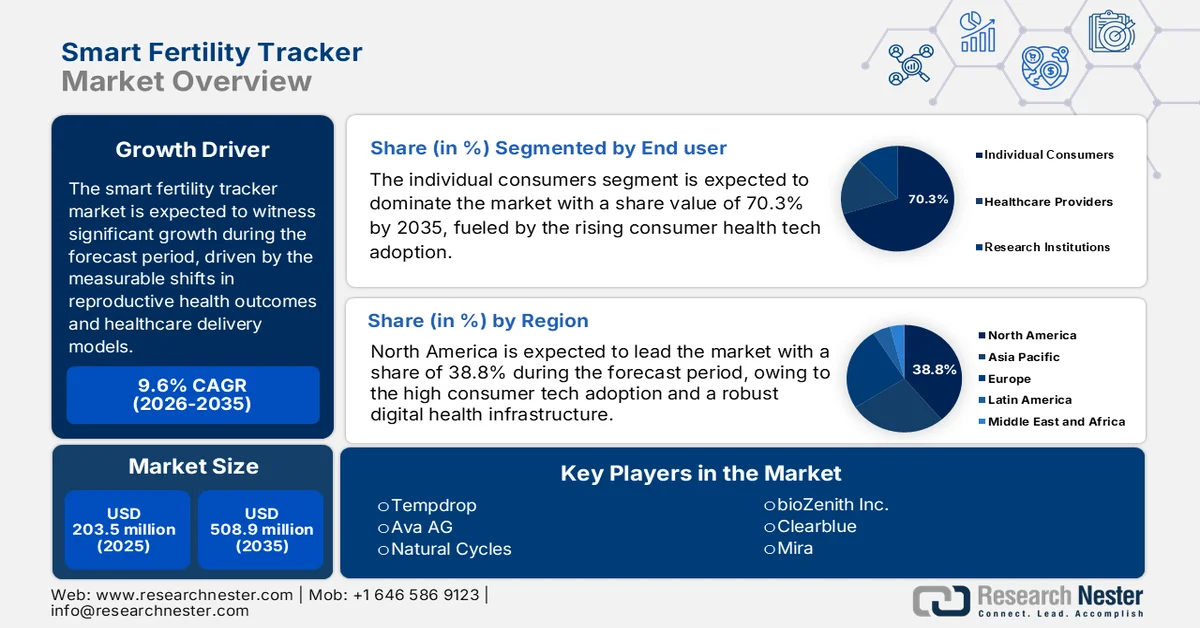
The demand for the smart fertility tracker market is being shaped by measurable shifts in reproductive health outcomes and healthcare delivery models rather than consumer novelty. Across major countries, declining fertility rates and delayed family planning are translating into a larger addressable base for cycle monitoring and fertility optimization tools. The U.S. Department of Health & Human Services data in May 2026 reports that around 10% of U.S. women, i.e., 6.1 million, who are aged 15–44 struggle with getting or staying pregnant. At the same time, infertility is rising in clinical settings. The WHO data in April 2023 estimates that about 17.5% of adults worldwide experience infertility at the same point in their lives, indicating a sustained demand for early detection and cycle-level insights. The macro indicators are pushing the payers to view fertility tracking not as a gadget but as a preventive health and reproductive planning ecosystem.
On the delivery side, structural changes in healthcare access are surging the institutional interest in smart fertility tracking. The telehealth utilization stabilized and is higher than pre-pandemic baselines, creating a durable infrastructure for remote reproductive health monitoring. This shift aligns with policy-driven priorities around early intervention and data-driven population health management. Government and non-profit health bodies increasingly emphasize preconception care and menstrual health literacy around early intervention and data-driven population health management. According to the article published by the U.S Bureau of Labor Statistics in August 2025, women aged 30 to 39 now represent a growing share of the female workforce, reinforcing the demand for tools that support informed reproductive timing, positively benefiting the smart fertility tracker market.
Key Smart Fertility Tracker Market Insights Summary:
Regional Highlights:
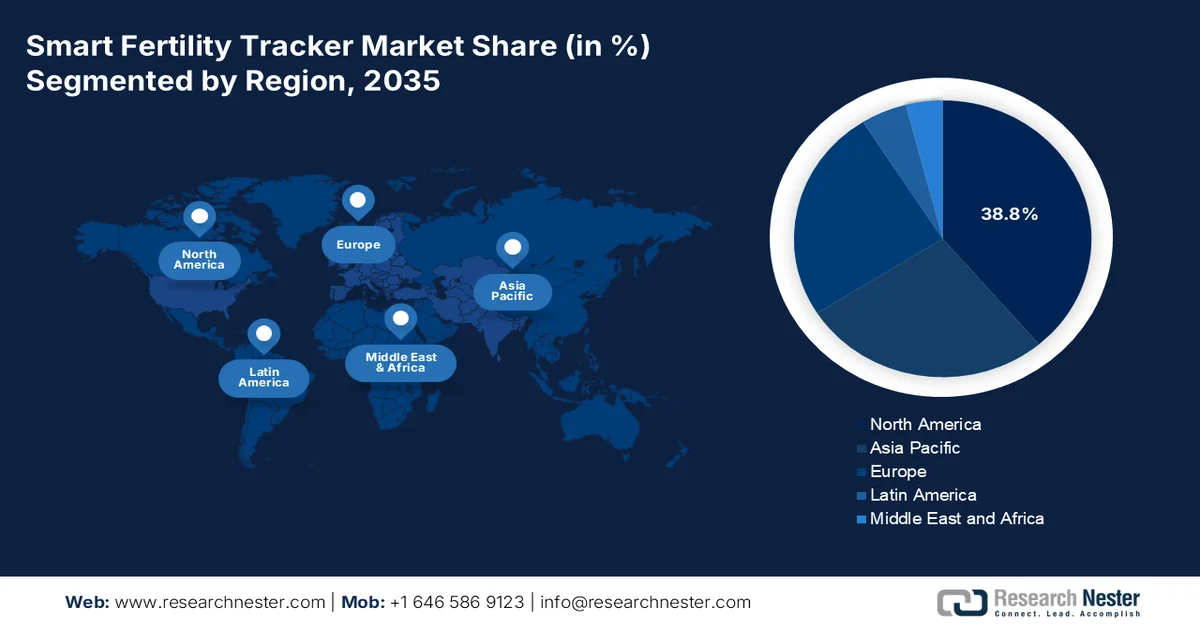
- The North America region is anticipated to command 38.8% by 2035, bolstered by high consumer technology adoption, robust digital health infrastructure, and expanding integration of fertility benefits into corporate health plans
- The market in the U.S. accounts for 42.7% of the share in North America, which is driven by high digital health adoption, strong wearable penetration, and increasing consumer awareness regarding reproductive health technologies
- Asia Pacific is poised to witness the fastest growth in the smart fertility tracker market during 2026-2035, catalyzed by high smartphone penetration, rising female workforce participation, increasing reproductive health awareness, and strong government-backed digital health initiatives
Segment Insights:
- The individual consumers segment is projected to account for 70.3% by 2035, underpinned by rising consumer health tech adoption, growing demand for personal data sovereignty in reproductive health, and expanding direct-to-consumer marketing
- Wearable devices are anticipated to secure a considerable revenue share in the smart fertility tracker market throughout 2026-2035, spurred by increasing consumer preference for continuous passive health monitoring solutions and advancements in sensor technology integrated with AI-based analytics
Key Growth Trends:
- Increasing infertility prevalence and clinical demand
- Increased public awareness of fertility-related issues
Major Challenges:
- Regulatory hurdles and medical device classification
- Consumer skepticism and accuracy concerns
Key Players: Tempdrop, Ava AG, Natural Cycles, bioZenith Inc., Clearblue, Mira, OvuSense, Kindara, Flo Health, Premom, Inito Health Inc., Ultrahuman, Maven Clinic, iFertracker, Samsung, Apple, Kegg, OVIA, Valencell, Femometer, Samplytics Technologies, Inne, Lalicue.
Global Smart Fertility Tracker Market Forecast and Regional Outlook:
Market Size & Growth Projections:
- 2025 Market Size: USD 203.5 million
- 2026 Market Size: USD 223 million
- Projected Market Size: USD 508.9 million by 2035
- Growth Forecasts: 9.6% CAGR (2026-2035)
Key Regional Dynamics:
- Largest Region: North America (38.8% Share by 2035)
- Fastest Growing Region: Asia Pacific
- Dominating Countries: United States, China, Japan, Germany, United Kingdom
- Emerging Countries: India, South Korea, Singapore, Australia, United Arab Emirates
Last updated on : 10 June, 2026
Smart Fertility Tracker Market - Growth Drivers and Challenges
Growth Drivers
- Increasing infertility prevalence and clinical demand: The clinical pressures from the rising infertility rates are a strong structural driver for the smart fertility tracker market. This supports the early detection and cycle-level insights. The WHO data in April 2023 estimates that 1 in 6 people globally experience infertility at some point, making it a mainstream public health issue rather than a niche concern. In the U.S., the CDC report in May 2024 says that 1 in 5 married women aged 15 to 49 with no prior births face difficulty conceiving after one year of trying. These trends expand the preclinical market for individuals and couples seeking data-driven tools before entering expensive treatment pathways. This clinical pressure directs more users toward diagnostic and monitoring technologies as a first-line, cost-effective intervention, thereby expanding the total addressable smart fertility tracker market for integrated fertility management platforms.
- Increased public awareness of fertility-related issues: The public health initiatives have increased the awareness of conditions that impact fertility, such as polycystic ovary syndrome. This is reflected in the healthcare utilization data that drives the smart fertility tracker market. Further, the NIH study in October 2025 states that in a year, there were 65.8 million prevalent cases of PCOS, indicating greater diagnosis and systemic attention to the condition. This educational push is driven by the resources from entities such as the Office on Women's Health, which creates a pre-diagnostic market segment. Individuals are now proactively using smart trackers to collect objective cycle data before clinical consultation, broadening the user base from those actively trying to conceive to a larger audience engaged in long-term reproductive health monitoring.
- Growth of telehealth and integrated care models: Telehealth is stimulated by the pandemic and creates a seamless integration point for the fertility trackers. This device data can be directly shared with the healthcare providers during virtual consultations, enabling remote monitoring and personalized guidance. This integration positions the smart fertility tracker market solutions as essential components of a connected health ecosystem, increasing their utility and perceived medical value. The government policies expanding telehealth reimbursement, such as those from the Centers for Medicare and Medicaid Services, further solidify this care model. This creates a powerful pull-through demand channel as healthcare providers begin to recommend or prescribe specific tracking solutions as part of standardized diagnostic and treatment protocols.
Challenges
- Regulatory hurdles and medical device classification: Overcoming the global regulations is a costly and time consuming also the first barrier in the smart fertility tracker market. Achieving clearance requires rigorous clinical trials to prove safety and efficacy. In Europe, the new medical device regulation has increased compliance complexity, potentially slowing the time to market for the new players. In addition, the constantly changing regulatory standards across different nations create fragmentation in terms of product approval pathways. This, in turn, forces companies to tailor clinical validation strategies for each geography, thereby increasing development costs. Smaller firms in this field find it struggling to meet these compliance requirements, limiting innovation, scalability, and smart fertility tracker market entry speed.
- Consumer skepticism and accuracy concerns: Overcoming users' concerns regarding the efficacy of tech-based tracking hampers growth in the smart fertility tracker market. Publicized inaccuracies questioning the real-world effectiveness of some period tracking apps also fuel this. Companies generally counter this by publishing clinical outcomes data and securing endorsements from fertility clinics to build medical credibility and directly address these accuracy concerns with evidence-based marketing. Moreover, the aspect of inconsistent results due to individual hormonal variability can reduce long-term user trust in app-based predictions. On the other hand, users sometimes compare digital forecasts with clinical fertility assessments, which in turn creates higher expectations for precision. Therefore, to address this, companies are integrating multi-sensor and hormone-based validation technologies to improve reliability and user confidence.
Smart Fertility Tracker Market Size and Forecast:
| Report Attribute | Details |
|---|---|
|
Base Year |
2025 |
|
Forecast Year |
2026-2035 |
|
CAGR |
9.6% |
|
Base Year Market Size (2025) |
USD 203.5 million |
|
Forecast Year Market Size (2035) |
USD 508.9 million |
|
Regional Scope |
|
Smart Fertility Tracker Market Segmentation:
End user Segment Analysis
Under the end user segment, individual consumers are expected to dominate the smart fertility tracker market with a share value of 70.3% by 2035. The segment is fueled by the rising consumer health tech adoption, a desire for personal data sovereignty in reproductive health, and direct-to-consumer marketing. The shift towards proactive at-home fertility management, especially among demographics delaying pregnancy, has solidified this segment. Supporting this trend, the U.S. government data shows a consistent pattern of later first births, which correlates directly with increased demand for self-managed fertility tools. The CDC January 2023 data states that the mean age of the first-time mothers in the U.S. was 27.3 years in 2022, reflecting a steady decades-long increase that drives the smart fertility tracker market.
Product Type Segment Analysis
On the basis of product type, wearable devices are anticipated to grow with a considerable revenue share in the smart fertility tracker market during the forecast period. The segment’s growth is effectively propelled by rising consumer preference for continuous and passive health monitoring solutions that offer proper fertility understanding without manual intervention. In addition, advancements in terms of sensor technology and integration with AI-based analytics are readily enhancing the accuracy and usability of wearable fertility trackers. For instance, in February 2023, Samsung announced a partnership with Natural Cycles to integrate advanced temperature-based menstrual cycle tracking into the Galaxy Watch5 series, which marks the first time Natural Cycles’ algorithm has been adapted for a smartwatch. This collaboration combines Samsung’s BioActive Sensor and infrared temperature technology with Natural Cycles’ fertility app, thereby giving users a proper understanding of their reproductive health.
Application Segment Analysis
By the end of 2035, fertility monitoring in the application category is forecasted to grow with a notable share in the smart fertility tracker market. The sub-type’s upliftment is largely driven by the heightening adoption of smartphone-based health tracking solutions, which offer users convenient, non-invasive, and cost-effective access to fertility insights. Increasing integration of AI and machine learning algorithms is further enhancing cycle prediction accuracy and personalization of recommendations. For instance, in September 2023, Natural Cycles integrated with Apple Watch, which allows users to measure wrist temperature overnight for hormone-free birth control. This FDA-cleared feature efficiently syncs with the NC° app and provides daily fertility status and deeper health insights without any need for a basal thermometer, thus denoting a wider segment scope.
Our in-depth analysis of the smart fertility tracker market includes the following segments:
|
Segment |
Subsegments |
|
End user |
|
|
Product Type |
|
|
Application |
|

Vishnu Nair
Head - Global Business DevelopmentCustomize this report to your requirements — connect with our consultant for personalized insights and options.
Smart Fertility Tracker Market - Regional Analysis
North America Market Insights
The North America smart fertility tracker market is dominating and is expected to hold the revenue share of 38.8% by 2035. The market is led by the U.S. and is defined by the high consumer tech adoption, a robust digital health infrastructure, and significant employer-driven demand. The key drivers include the integration of fertility benefits into corporate health plans and supportive FDA regulatory pathways for digital health devices. A primary trend is the convergence of devices with clinical care, where tracker data is used in telehealth consultations and fertility clinic protocols. Advanced sensor integration and AI-driven analytics are pushing product advancements. However, smart fertility tracker market growth is tempered by data privacy regulations and the high out-of-pocket cost for many consumers despite increasing insurance coverage for associated diagnostic services.
The formal integration of fertility trackers into a structured healthcare ecosystem defines the growth of the U.S. smart fertility tracker market. A primary trend is their prescription or recommendation by the clinicians as a covered benefit within the employer-sponsored plans, moving beyond pure direct-to-consumer sales. This is facilitated by FDA clearances for digital contraception and ovulation prediction devices, providing a regulatory foundation for clinical use. Data from the CDC in March 2025 underscores the need, with married women aged 15 to 49, the percentage is 16.3% experiencing impaired fecundity. Furthermore, the evolving telehealth reimbursement policies from the Centers for Medicare & Medicaid Services create a sustained channel for remote monitoring using the tracker data, embedding these tools in standard care pathways.
The public healthcare system is highly influencing the Canada smart fertility tracker market, with a trend towards incorporating digital fertility tools into the provincially managed care to improve access and efficiency. The focus is on using trackers for early intervention and to streamline referrals to publicly funded fertility clinics, which face significant wait times. Statistics Canada's January 2024 data estimates that the country’s total fertility rate fell to a record 1.33 in 2022, which is the lowest level observed since the national record began, and this decline was seen across 10 of 13 provinces and territories. Fertility has become a policy-relevant issue rather than a personal one. This environment is expanding the demand for data-driven tools that support pregnancy planning, early risk identification, and long-term reproductive health management, mainly as fertility rates fell across all female age groups under 40 between 2021 and 2022.
Fertility Rate by Age 2022: Number of Children Per 1,000 Women
|
Geographical region |
15 to 19 years |
20 to 24 years |
25 to 29 years |
30 to 34 years |
35 to 39 years |
40 to 44 years |
45 to 49 years |
|
Canada |
4.4 |
24.8 |
69.4 |
98.7 |
55.6 |
12.6 |
0.9 |
|
Newfoundland and Labrador |
5.6 |
32.3 |
73.4 |
84.8 |
41.8 |
6.2 |
0.1 |
|
Prince Edward Island |
4.9 |
24.1 |
65.6 |
96.7 |
44.4 |
7.8 |
0.6 |
|
Nova Scotia |
5.8 |
27.1 |
63.9 |
84.9 |
46.8 |
8.5 |
0.4 |
|
New Brunswick |
7.0 |
42.5 |
89.3 |
82.6 |
36.8 |
6.9 |
0.2 |
|
Quebec |
4.2 |
31.2 |
90.2 |
106.5 |
53.3 |
12.2 |
0.7 |
|
Ontario |
3.0 |
18.6 |
58.7 |
99.5 |
60.0 |
13.7 |
1.0 |
Source: Statistics Canada, January 2024
APAC Market Insights
The Asia Pacific smart fertility tracker market is expected to grow at the fastest rate during the forecast period, 2026 to 2035. The market is driven by a confluence of high smartphone penetration, rising female education and workforce participation, and increasing awareness of reproductive health. A key regional driver is the significant government and corporate push towards digital health infrastructure, as seen in initiatives such as India’s National Digital Health Mission and China’s internet and healthcare policy, which create a favorable ecosystem for app-based solutions. In developed economies such as Japan and South Korea, demand is fueled by extremely low birth rates and an aging population, leading to national policies that subsidize fertility treatments and supportive technologies.
Rapid digital adoption and a unique regulatory landscape governed by the National Medical Product Administration are driving the China smart fertility tracker market. The primary driver of the fertility tracker industry is the national push to address the declining birth rate, with the government encouraging eugenics and broader reproductive health awareness via digital tools. The market is dominated by the local tech giants and startups that integrate tracking into super apps such as WeChat, offering comprehensive services from cycle logging to teleconsultations. According to the data from Radio Free Asia in January 2024, the country’s birth rate fell to a record low of 6.39 births per 1,000 people in 2023, a decline that highlights the demographic pressure fueling both the government and consumer interest in fertility optimization technologies.
The Japan smart fertility tracker market is driven by one of the world’s most acute demographic crises, with a rapidly aging population and a persistently low birth rate creating an urgent national policy focus. A key driver is government-led initiatives such as subsidies for infertility treatments and public awareness campaigns. Products that offer high clinical accuracy and seamless integration with a traditional doctor-centric healthcare system see greater adoption. A significant trend is the development of advanced wearable sensors that require minimal user input, catering to a culture that values convenience and discretion. Supporting this data from the NLM study in December 2025 shows the number of in vitro fertilization treatment cycles in Japan in 2023 reached 561,664, indicating a vast population actively engaged with assisted reproductive technologies and creating a direct adjacent market for diagnostic and tracking devices.
Europe Market Insights
The Europe smart fertility tracker market is a growing segment and is defined by a highly informed and proactive consumer base. A primary driver of this growth is the region’s strong emphasis on data privacy governed by the General Data Protection Regulation. This regulatory environment creates consumer trust and imposes stringent requirements on manufacturers regarding health data handling. The key demand is fueled by demographic trends such as delayed parenthood and rising infertility rates, which are consistent across developed economies. This has spurred the innovation, leading to a market with diverse products ranging from basic cycle tracking apps to advanced, medically integrated wearable sensors. A major trend is the integration of tracker data into clinical settings, where the information is used by gynecologists and fertility specialists to support diagnoses and personalize treatment plans, moving the devices beyond consumer wellness into professional healthcare tools.
The sustained declines in national fertility levels are responsible for boosting the Germany smart fertility tracker market, with the total fertility rate falling to 1.35 children per woman in 2024, down from 1.38 in 2023, according to the Destatis data in July 2025. Although the pace of decline has slowed compared with the sharp drops of 8% in 2022 and 7% in 2023, the fertility remains well below replacement level, keeping demographic pressure high. This environment is expanding the demand for data-driven pregnancy planning and reproductive health management tools, mainly among women under 40, where fertility declines have been most pronounced in recent years. On the other hand, lower fertility is pushing both public health stakeholders and employers to prioritize early intervention and prevention-oriented reproductive care rather than relying solely on late-stage fertility treatments.
Total Fertility Rate Age Wise 2015 - 2024
|
Age |
2015 |
2016 |
2017 |
2018 |
2019 |
2020 |
2021 |
2022 |
2023 |
2024 |
|
25 |
55.7 |
58 |
56.7 |
55 |
53.5 |
51.8 |
51.8 |
50.6 |
47 |
46.3 |
|
26 |
67.4 |
69.8 |
67.9 |
66.4 |
63.7 |
62.9 |
63.9 |
63.3 |
56.2 |
54.6 |
|
27 |
78.1 |
81.7 |
79.9 |
77 |
75.3 |
74.3 |
75 |
72.8 |
68 |
64.1 |
|
28 |
89.3 |
93.1 |
90.6 |
89.9 |
87.1 |
87 |
88.1 |
85.3 |
78.4 |
75.2 |
|
29 |
98.7 |
103.3 |
102.4 |
100.6 |
99.4 |
98.2 |
102 |
96.3 |
88.7 |
85.6 |
|
30 |
106 |
110.6 |
110.6 |
109.6 |
108 |
109 |
112.4 |
107 |
96.8 |
94.5 |
Source: Destatis December 2025
The UK smart fertility tracker market operates within the distinct National Health Service context, where digital health tools are used to manage the demand for fertility services and to reduce wait times. A primary trend is the development of integrated care systems that may commission or recommend specific fertility tracking apps as part of a digital-first pathway for patients before a specialist referral. This shifts some demand from pure consumer purchase to institutional procurement. Another driver is the high public awareness of fertility issues supported by charities and NHS public information campaigns. For statistical context, the NLM study in November 2024 shows that the number of patients waiting over 18 weeks for a consultant-led gynecology appointment in England was significant, creating pressure to use the remote monitoring tools, such as fertility trackers, to triage and manage patient flow more efficiently.
Key Smart Fertility Tracker Market Players:
- Tempdrop (Israel)
- Ava AG (Switzerland)
- Natural Cycles (Sweden)
- bioZenith Inc. (U.S.)
- Clearblue (Switzerland)
- Mira (U.S.)
- OvuSense (UK)
- Kindara (U.S.)
- Flo Health (UK)
- Premom (U.S.)
- Inito Health Inc. (India)
- Ultrahuman (India)
- Maven Clinic (U.S.)
- iFertracker (China)
- Samsung (South Korea)
- Apple (U.S.)
- Kegg (U.S.)
- OVIA (U.S.)
- Valencell (U.S.)
- Femometer (China)
- Samplytics Technologies (India)
- Inne (Germany)
- Lalicue (Malaysia)
- Company Overview
- Business Strategy
- Key Product Offerings
- Financial Performance
- Key Performance Indicators
- Risk Analysis
- Recent Development
- Regional Presence
- SWOT Analysis
- Tempdrop is a leading player in the wearable segment of the smart fertility tracker market. Its core strategy centers on its patented continuous wearable sensors, which measure the basal body temperature overnight for maximum accuracy. The company focuses on algorithm refinement and seamless app integration, targeting users of fertility awareness methods and those seeking natural hormone-free tracking to distinguish itself in the competitive landscape.
- AVA AG has carved a significant niche in the market by combining clinical research with a multi-parameter wearable. Its strategic initiative is based on tracking nine physiological parameters via its bracelet to identify the fertile window. Ava emphasizes scientific validation via peer-reviewed studies and partnerships with research institutions, positioning its device as a medical-grade tool for both contraception and pregnancy planning.
- Natural Cycles pioneered the first FDA-cleared app for birth control in the market. Its strategy revolves around a software as a medical device model using algorithm-based analysis of user-inputted basal body temperature. Key initiatives include obtaining regulatory clearances globally, forming collaborations with healthcare providers for prescription pathways, and expanding its educational platforms to promote fertility awareness as a primary health tool.
- BioZenith Inc. competes in the market with a strategic focus on predictive saliva-based microscopy. Its key initiative is making ovulation prediction more accessible and affordable via a compact Bluetooth-connected pocket microscope that analyzes the saliva ferning patterns. The company uses direct-to-consumer digital marketing and emphasizes ease of use without consumable test strips to attract users seeking a complementary tracking method.
- Clearblue, a legacy brand, maintains dominance in the digital home testing segment of the market. Its strategic initiatives involve integrating the advanced optical sensors and the connectivity into its traditional ovulation test sticks. By linking its Bluetooth-connected digital tests to a comprehensive app, Clearblue creates a hybrid ecosystem using its extensive retail presence and brand trust to transition users into the connected health space.
Here is a list of key players operating in the global smart fertility tracker market:
The smart fertility tracker market is fragmented and is highly competitive, with the key players from Europe and North America leading via technological innovation and brand recognition. The strategic initiatives are centered on enhancing algorithm accuracy via AI and machine learning, expanding into holistic women’s health platforms, and forming partnerships with healthcare providers and issuers. Consolidation is occurring as leading health tech companies acquire startups to expand their product portfolios. For instance, Vitrolife AB acquired all the shares in eFertility in May 2024. This acquisition is a key element of the Vitrolife Group’s strategy to bring increased standardization and digitalization to IVF clinics. Direct-to-consumer marketing and a strong emphasis on clinical validation to build user trust are critical commercial strategies. The market is seeing increased competition from cost-competitive manufacturers in Asia, driving global expansion and localization efforts.
Corporate Landscape of the Smart Fertility Tracker Market:
Recent Developments
- In May 2026, Inito Health Inc. announced that its new Inito Insight Wireless Reader™ delivers the most precise fertility hormone readings at home with patented Spectral Mapping technology, which is built with Wi-Fi, and supports both iOS and Android.
- In August 2025, Ultrahuman announced its acquisition of viO HealthTech and the launch of Cycle & Ovulation Pro for Ultrahuman Ring AIR. It is now rolling out in the U.S., UK, Europe, Australia, and Canada as a new plug-in for Ultrahuman Ring AIR, Cycle & Ovulation Pro, boasting best-in-class 90%+ accuracy for ovulation confirmation.
- In August 2025, Maven Clinic, a global virtual clinic for women’s and family health, launched a new feature to support women and men trying to conceive. The features are cycle tracking and sperm testing that support fertility.
- In September 2024, Premom, a leading Femtech innovator in fertility solutions and products, announced that its Smart Basal Body Fertility Tracker and Smart Basal Body Thermometers (BBT) are now available at CVS Pharmacy stores across the country.
- Report ID: 8341
- Published Date: Jun 10, 2026
- Report Format: PDF, PPT
- Explore a preview of key market trends and insights
- Review sample data tables and segment breakdowns
- Experience the quality of our visual data representations
- Evaluate our report structure and research methodology
- Get a glimpse of competitive landscape analysis
- Understand how regional forecasts are presented
- Assess the depth of company profiling and benchmarking
- Preview how actionable insights can support your strategy
Explore real data and analysis
Frequently Asked Questions (FAQ)
About this Report
Connect with our Expert


Report, 2026-2035



Copyright @ 2026 Research Nester. All Rights Reserved.
