Sex Toys Market Outlook:
Sex Toys Market size was valued at USD 42.1 billion in 2025 and is projected to reach USD 98.7 billion by the end of 2035, rising at a CAGR of 8.9% during the forecast period, i.e., 2026-2035. In 2026, the industry size of sex toys is assessed at USD 45.8 billion.
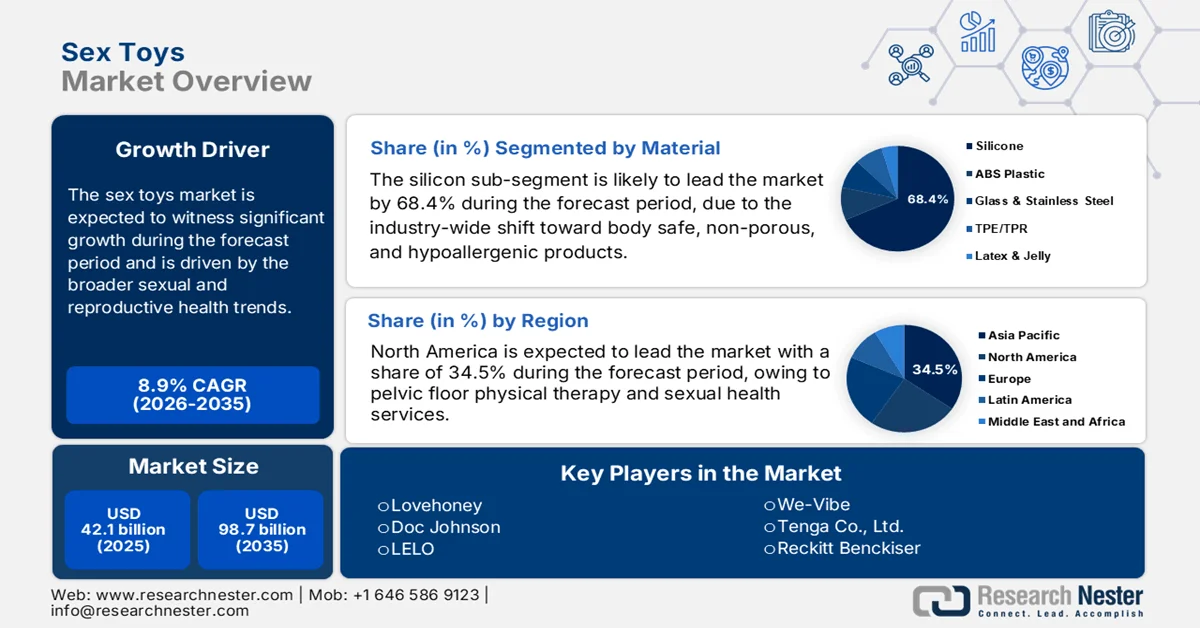
The sex toys market is closely linked to the broader sexual and reproductive health trends documented by the public health agencies, mainly rising awareness, improved access to sexual wellness services, and shifting attitudes toward personal well-being. The WHO 2026 data depict that sexual health is the core component of overall health, with unmet needs in sexual wellbeing affecting the quality of life across the age groups. The public health surveys indicate the demand for sexual wellness solutions. According to the CDC August 2025 data, nearly 54.3% of females are using some form of contraceptive method, reflecting sexual dysfunction and wellbeing, mainly among the aging population, where the prevalence of erectile dysfunction alone affects many men. These indicators point to sustained institutional recognition of sexual wellness needs, indirectly supporting the demand for consumer products.
Besides, the demographic and behavioral shift remain central. The WHO 2026 data notes that global urbanization exceeded 56% and continues to rise, correlating with higher disposable income and greater acceptance of individual lifestyle products, including those related to intimacy. Additionally, the aging population in the OECD countries is contributing to increased demand for products addressing sexual wellbeing in later life stages. Moreover, the public health bodies also report the growing openness around the sexual health discussions. The Local Government Association's June 2025 data depicts that there is a steady increase in sexual health service utilization, exceeding 4.5 million attendances annually in England alone. This normalization, combined with expanding e-commerce infrastructure and discreet distribution models, is facilitating B2B opportunities across manufacturing, logistics, and compliance-led retail.
Key Sex Toys Market Insights Summary:
Regional Highlights:
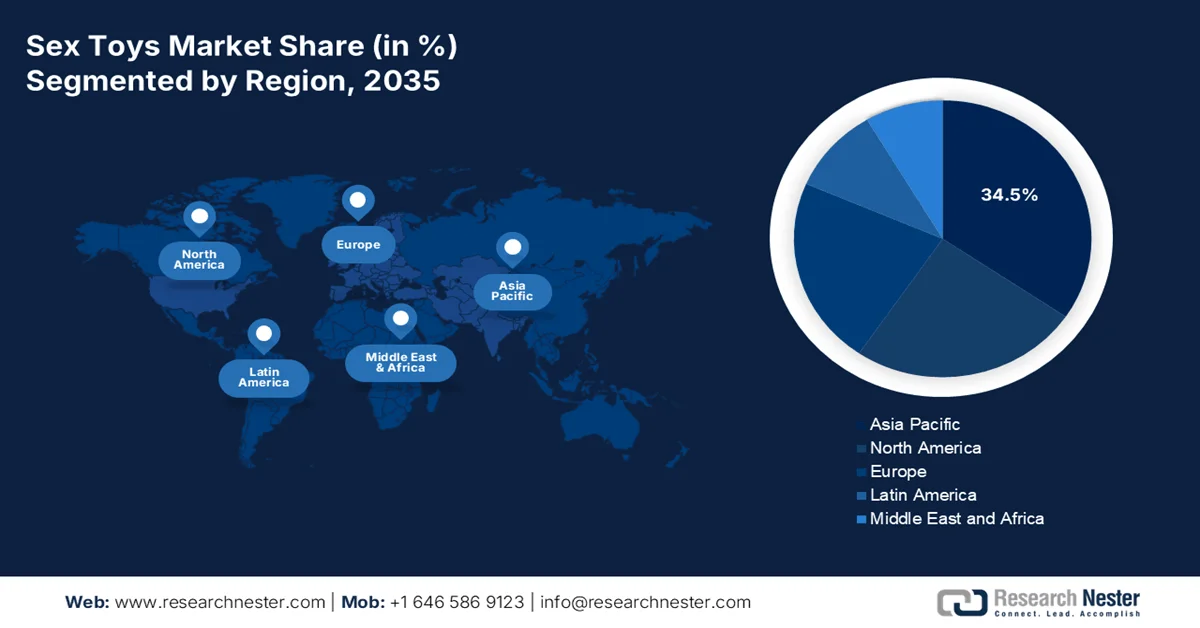
- North America in the sex toys market is anticipated to command a 34.5% revenue share by 2035, attributed to its mature regulatory framework and strong integration of sexual wellness within mainstream healthcare systems
- Asia Pacific is projected to register the fastest growth with a CAGR of 9.8% during 2026-2035, stimulated by rapid urbanization, rising disposable incomes, and evolving cultural attitudes
Segment Insights:
- The silicon segment in the sex toys market is projected to account for a 68.4% share by 2035, propelled by the industry-wide shift toward body safe, non-porous, and hypoallergenic products
- The solo use segment is anticipated to dominate the market by 2035 with a significant share, fueled by the growing cultural acceptance of self-care and sexual wellness as integral components of mental and physical health
Key Growth Trends:
- Rising aging population
- Increased funding for mental and behavioral health
Major Challenges:
- Social stigma and cultural taboos
- Product safety and quality standards
Key Players: Lovehoney, Doc Johnson, LELO, We-Vibe, Tenga Co., Ltd., Reckitt Benckiser, WOW Tech Group, Church & Dwight, Fun Factory, Bad Dragon, Satisfyer, Vibratex, Nalone.
Global Sex Toys Market Forecast and Regional Outlook:
Market Size & Growth Projections:
- 2025 Market Size: USD 42.1 billion
- 2026 Market Size: USD 45.8 billion
- Projected Market Size: USD 98.7 billion by 2035
- Growth Forecasts: 8.9% CAGR (2026-2035)
Key Regional Dynamics:
- Largest Region: North America (34.5% Share by 2035)
- Fastest Growing Region: Asia Pacific
- Dominating Countries: United States, China, Germany, Japan, United Kingdom
- Emerging Countries: India, South Korea, Brazil, Mexico, Indonesia
Last updated on : 30 March, 2026
Sex Toys Market - Growth Drivers and Challenges
Growth Drivers
- Rising aging population: The aging population is a significant demand driver in the sex toys market, supported by the increased public healthcare spending on age-related conditions. According to the World Bank 2025 data, nearly 10% the global aging population is above 65 years old, while governments continue to expand the geriatric care budgets. Moreover, sexual health remains a critical component of healthy aging, with conditions such as erectile dysfunction affecting a certain percentage of men. The public healthcare programs increasingly address these issues via awareness and treatment funding. This creates a downstream demand for supportive consumer products. The stakeholders can target this segment with the medically compliant age-specific product lines and partnerships with healthcare providers and pharmacies.
- Increased funding for mental and behavioral health: Governments are expanding budgets for mental health, recognizing its link to overall wellbeing including sexual health. According to the WHO September 2025 data, nearly 2% of the health budgets are allocated to mental health, with increasing emphasis on holistic wellbeing. Sexual satisfaction and intimacy are increasingly included in mental health discussions, mainly in developed healthcare systems. Public campaigns addressing loneliness, stress, and relationship health indirectly support the demand for the intimacy-enhancing products. Moreover, integrating products into wellness narratives and collaborating with mental health platforms presents new growth channels. This convergence also encourages innovation in discreet, user-centric product design aligned with wellbeing outcomes.
- International development funding for sexual health: Multilateral development organizations funded by governments are allocating resources to sexual and reproductive health programs in emerging markets, expanding awareness and reducing stigma in regions with high growth potential. These programs create an enabling environment for commercial markets to develop alongside public health infrastructure. Moreover, the global fund allocated a significant amount for sexual and reproductive health programs across several countries with increasing emphasis on comprehensive sexual health approaches beyond HIV/AIDS prevention. The WHO, funded by member state contributions, published updated sexual health guidelines that emphasize pleasure and well-being as components of sexual health, representing a significant policy that influences government health priorities globally.
Challenges
- Social stigma and cultural taboos: Social stigma remains a barrier in the sex toys market as the sexual wellness products are still considered taboo in many regions, limiting consumer openness and restricting mainstream retail acceptance. This cultural constraint pushes the manufacturers to invest heavily in consumer education to normalize the product usage. Manufacturers utilize an audience intelligence platform to break down the taboos by targeting the demographics using the granular consumer data to normalize sexual wellness.
- Product safety and quality standards: The absence of uniform global safety standards creates significant liability risks with low-quality products using porous phthalate-laden materials, damaging consumer trust. Manufacturers must proactively adopt medical-grade materials to differentiate themselves. Manufacturers have positioned themselves as standard setter by participating in a wide range of quality standards, moving beyond basic enterprise-level compliance. The company invests heavily in millions and maintains material SKUs to ensure safety.
Sex Toys Market Size and Forecast:
| Report Attribute | Details |
|---|---|
|
Base Year |
2025 |
|
Forecast Year |
2026-2035 |
|
CAGR |
8.9% |
|
Base Year Market Size (2025) |
USD 42.1 billion |
|
Forecast Year Market Size (2035) |
USD 98.7 billion |
|
Regional Scope |
|
Sex Toys Market Segmentation:
Material Segment Analysis
Under the material segment, the silicon segment is driving the sex toys market and is expected to hold a share value 68.4% by the end of 2035. The segment is driven due to an industry-wide shift toward body safe, non-porous, and hypoallergenic products. Consumers have become increasingly educated about the health risks associated with phthalates and porous materials such as jelly and TPE, driving the sustained demand for silicone that can be fully sterilized. This material allows manufacturers to command premium pricing while ensuring compliance with the international safety standards, making it the most profitable sub-segment. According to the PIB September 2024 data, India produced 400 million silicon toys, which include sex toys, reflecting a direct market demand towards safer material compositions.
Usage Segment Analysis
Within the usage segment, the solo use represents the largest sub-segment in the sex toys market. This dominance is driven by the growing cultural acceptance of self-care and sexual wellness as integral components of mental and physical health. Products designed for solo care, mainly clitoral vibrators and high-tech masturbators, benefit from simplified user interfaces and targeted functionality that prioritizes individual pleasure without the complexity of partner coordination. The rise of discreet app-controlled devices has further reinforced the usage by allowing users to explore their preferences privately. According to the NLM study, November 2021 data, 41% to 65% of men are reported to engage in solo masturbation, underscoring the growing normalization and frequency of solo sexual activity as a key market driver.
Monthly Masturbation Prevalence by Gender
|
Gender |
Reported Prevalence |
|
Men |
41% to 65% |
|
Women |
27% to 40% |
Source: NLM November 2021
Distribution Channel Segment Analysis
Online e-commerce is driving the distribution channel segment in the sex toys market. The segment's growth is fueled by the direct-to-consumer brands that leverage social media marketing, subscription models, and user-generated reviews to build trust without the need for physical retail presence. Consumers consistently cite privacy as the primary reason for choosing online purchases over brick-and-mortar stores, mainly in regions where the social stigma remains a barrier. According to the U.S. Census Bureau, e-commerce sales reached USD 316.1 billion in Q3 2025, significantly driving the overall retail e-commerce growth, therefore reflecting the sustained consumer preference for the digital purchasing channels in this sector.
Our in-depth analysis of the sex toys market includes the following segments:
|
Segment |
Subsegments |
|
Product Type |
|
|
Material |
|
|
Distribution Channel |
|
|
End user |
|
|
Technology |
|
|
Price Range |
|
|
Usage |
|

Vishnu Nair
Head - Global Business DevelopmentCustomize this report to your requirements — connect with our consultant for personalized insights and options.
Sex Toys Market - Regional Analysis
North America Market Insights
North America is dominating in the global sex toys market and is poised to hold the regional revenue share of 34.5% by the end of 2035. The region represents the most mature and institutionally integrated market for sexual wellness products globally, defined by the dual track framework that distinguishes consumer novelties from the medically indicated devices. The region benefits from the established regulatory oversight via the FDA in the U.S. and Health Canada, which provide clear classification pathways that manufacturers can leverage for credibility and market access. The e-commerce serves as the dominant distribution channel supported by the advanced logistics infrastructure and the consumer expectations of discreet fulfillment. The market is also shaped by the robust healthcare ecosystem, where pelvic floor physical therapy and sexual health services are recognized within mainstream medicine.
The product safety concerns and evolving regulatory oversight, particularly around the material composition and chemical exposure is driving the sex toys market in the U.S. According to the NLM March 2023 study, the release of microplastics and the presence of phthalates reported at 24% to 60% by weight in certain products aligns with broader regulatory attention from U.S. agencies. Moreover, the U.S. Consumer Product Safety Commission and Environmental Protection Agency have already restricted phthalates in consumer goods with federal regulations limiting concentrations to 0.1% in children’s products due to endocrine disruption risks. While sex toys are not uniformly regulated under a dedicated federal framework, these findings are pushing the market toward medical-grade silicone and body-safe materials, particularly in premium segments. These data show an active market growth and expansion.
The rising public health investment and increasing incidence of sexually transmitted and blood-borne infections are driving the demand for the sex toys market in Canada. According to the Government of Canada, March 2024, the STBBI Action Plan emphasizes expanded funding for prevention, testing, and treatment, aligning with WHO 2030 targets and reinforcing nationwide sexual health infrastructure. Moreover, the epidemiological data highlight the urgency of these initiatives, such as infectious syphilis cases increased by 109% while congenital syphilis rose by 599% during the same period, indicating significant gaps in prevention and early intervention. Additionally, approximately 62,790 people were living with HIV in Canada, with 4.7 new diagnoses per 100,000 population reported in 2022, reflecting sustained disease burden. This creates a favorable environment for medically compliant body safe products positioned within the broader sexual health ecosystem.
APAC Market Insights
The Asia Pacific sex toys market is projected to emerge as the fastest-growing region and is poised to expand at a CAGR of 9.8% during the assessed period, 2026 to 2035. The region is driven by rapid urbanization, rising disposable incomes, and shifting cultural attitudes across diverse national contexts. The regulatory frameworks vary significantly, with Japan maintaining the most mature market infrastructure China experiencing a rapid e-commerce expansion despite the content restrictions, and India navigating the complex customs enforcement rooted in the colonial era legislation. The region benefits from the advanced manufacturing capabilities, with China and Malaysia serving as the primary production hubs for the global brands, while developing a domestic consumption sex toys market. Cultural normalization progresses unevenly, with South Korea witnessing rapid adoption among the younger demographics.
The rapid socioeconomic changes and increased exposure to digital information sources are driving the sex toys market in China. According to the NLM August 2025 study, the average age of first sexual experience declined from 22.8 years to 18.4 years, indicating earlier engagement with the sexual activity and a growing need for sexual wellness solutions. On the other hand, the gaps in formal sexual and reproductive health education persist, with only 53.28% of surveyed youth achieving basic SRH knowledge scores, highlighting insufficient awareness of safe practices. In the absence of comprehensive education and open family communication, a significant proportion of youth turn to digital media and online platforms for information, with nearly 60% of university students reporting exposure to pornographic content often influencing behavior and preferences. These data show a high-growth, digitally driven market.
The rising awareness and gradual shifts in consumer behavior are shaping the sex toys market in India. According to the NLM November 2024 data, nearly 98.5% of adults aged 18 to 44 are aware of sex toys, while 40.56% report using them in solo or partnered contexts, highlighting a meaningful transition from awareness to adoption. Moreover, 35.30% of people reported solo usage, signaling a growing individual consumption segment. The demand is particularly concentrated among the 25 to 44 age group, which is nearly twice as likely to use such products compared to younger adults, and is higher among women and non-heterosexual populations, indicating diversification of the consumer base. However, growth remains constrained by structural challenges, including social taboos, limited retail visibility, and concerns around privacy and accessibility. This creates a dual dynamic, strong latent demand alongside the need for discreet distribution models, digital-first sales channels, and awareness-led positioning. These data show India is expected to transition into a high-growth, volume-driven market.
Sex Toy Awareness and Usage Patterns Among Adults
|
Variable |
Entire Sample (% of N = 2071) |
Partnered People (% of N = 1429) |
|
Knowledge / Awareness |
98.46% |
99.37% |
|
General Sex Toy Use |
40.56% |
48.64% |
|
Solo Sex Toy Use |
35.20% |
41.43% |
|
Partnered Sex Toy Use |
20.91% |
30.30% |
Source: NLM November 2024
Europe Market Insights
The sex toys market in Europe is shaped by the harmonized regulatory frameworks and divergent cultural acceptance levels across the member states. The European Commission establishes unified safety standards across member states, reducing the compliance complexity for manufacturers. This regulatory harmonization has stimulated the cross border e-commerce. The market is driven by the increasing integration of sexual wellness into public health frameworks. Demographic trends, including the delayed marriage ages and rising solo living arrangements expands the addressable consumer base. Moreover, the cultural normalization varies significantly between Northern and Southern Europe, with Nordic countries demonstrating the highest acceptance levels and the Southern European markets experiencing the rapid growth from a lower base.
Strong consumer interest and cultural normalization of sexual wellness products are shaping the sex toys market in Germany. According to the NLM November 2024 study, Germany ranks prominently for both product categories, scoring 49 for anal plug-related searches and 92 for masturbators, highlighting sustained and product-specific demand concentration. This level of search intensity signals a well-established consumer base with differentiated preferences, creating opportunities for targeted product segmentation and premiumization strategies. Additionally, the Canadian Taxpayers Federation data in May 2023 depicts that the cultural initiatives, such as curated exhibitions and events, evidenced by spending of USD 8,813.70 on a sex toy art show in Germany. The data positions Germany as a key revenue-generating and innovation-driven market within Europe.
The sex toys market in the UK is supported by a well-established public health framework and rising engagement with sexual wellness services, which together contribute to sustained demand. The NLM study in September 2023 reported that new sexually transmitted infection diagnoses exceeded 37,692 cases among people aged above 45, indicating a continued need for prevention and awareness initiatives. Government-backed education and access programs, including free contraception and STI testing through the NHS, are normalizing conversations around intimate health and reducing stigma. This environment supports downstream demand for sexual wellness products through both retail and e-commerce channels. These data indicate the UK as a rising opportunities nation for premium and certified product positioning.
Key Sex Toys Market Players:
- Lovehoney (UK)
- Doc Johnson (U.S.)
- LELO (Sweden)
- We-Vibe (Canada)
- Tenga Co., Ltd. (Japan)
- Reckitt Benckiser (K-Y & Durex) (UK)
- WOW Tech Group (Womanizer & Arcwave) (Germany)
- Church & Dwight (Trojan) (U.S.)
- Fun Factory (Germany)
- Bad Dragon (U.S.)
- Satisfyer (Netherlands)
- Vibratex (U.S.)
- Nalone (South Korea)
- SVAKOM (U.S.)
- Ann Summers (UK)
- Dame (U.S.)
- Emojibator (U.S.)
- Lovense (U.S.)
- Cipla Health (India)
- Pleasing (U.S.)
- Company Overview
- Business Strategy
- Key Product Offerings
- Financial Performance
- Key Performance Indicators
- Risk Analysis
- Recent Development
- Regional Presence
- SWOT Analysis
- Lovehoney is a dominant player in the sex toys market, operating as a vertically integrated retailer and manufacturer. The company has significantly made advancements by leveraging direct-to-consumer data analytics to identify emerging trends, allowing for rapid production development. This advancement ensures that the consumer preferences for the body safe materials and innovative couples products.
- Doc Johnson stands as a legacy manufacturer in the sex toys market, renowned for its extensive catalog of novelty and medical grade silicon products. The company has significantly made advancements by pioneering automated manufacturing processes in its North Hollywood facility to ensure consistency and quality control.
- LELO is a premium innovator in the sex toys market, credited with revolutionizing the industry with its luxury design aesthetics and high-grade silicone. The company has made significant advancements in the market by integrating advanced haptic feedback engines and long-distance app-based connectivity into its product lines.
- We Vibe, a brand under the WOW Tech Group, is a category leader in the sex toys market, specifically within the couples and teledildonics segments. The company has significantly made advancements by pioneering C-shaped wearable technology that allows for simultaneous internal and external stimulation during intercourse.
- Tenga Co., Ltd is a cultural icon in the sex toys market, celebrated for its minimalist Japanese design and the focus on male sexual wellness. The company has significantly made advancements by redefining the male category via ergonomic engineering and the single-use luxury disposable products that emphasize hygiene and accessibility.
Here is a list of key players operating in the global sex toys market:
The global sex toys market is defined by fragmentation, with a mix of established Western brands and rapidly growing Asian manufacturers. Intense competition drives innovation in the IoT-connected devices, body safe materials, and sustainable production. Strategic initiatives include aggressive direct to consumer e-commerce expansion strategic mergers and acquisition to consolidate the market share and leveraging pop culture collaborations to destigmatize products. The key players are also focusing on the supply chain diversification and entering conservative markets via discreet branding and localized marketing strategies. For example, in February 2024, Dame, a U.S.-based sexual wellness brand, acquired Emojibator.
Corporate Landscape of the Sex Toys Market:
Recent Developments
- In January 2026, Lovense debuted at CES 2026 with a product that is hard to ignore. The brand, known for its app-connected sex toys, unveiled an AI-powered companion doll that combines physical intimacy with conversational intelligence.
- In October 2025, Cipla Health has entered the sexual wellness category with the launch of Unfold, a new brand that promotes openness, trust, and choice in intimate wellbeing. To develop its visual identity, Cipla Health collaborated with dCell, the design arm of MullenLowe Lintas Group, creating a modern and distinctive look that sets a fresh tone for the category.
- In July 2025, Harry Styles’ Pleasing brand pivots into the bedroom with a risqué new launch. The company, which sells nail polish, fragrance, apparel, and more, has made a turn into the bedroom with a new launch: sex toys.
- Report ID: 8485
- Published Date: Mar 30, 2026
- Report Format: PDF, PPT
- Explore a preview of key market trends and insights
- Review sample data tables and segment breakdowns
- Experience the quality of our visual data representations
- Evaluate our report structure and research methodology
- Get a glimpse of competitive landscape analysis
- Understand how regional forecasts are presented
- Assess the depth of company profiling and benchmarking
- Preview how actionable insights can support your strategy
Explore real data and analysis
Frequently Asked Questions (FAQ)
About this Report
Connect with our Expert


Report, 2026-2035



Copyright @ 2026 Research Nester. All Rights Reserved.
