Oral Biologics Market Outlook:
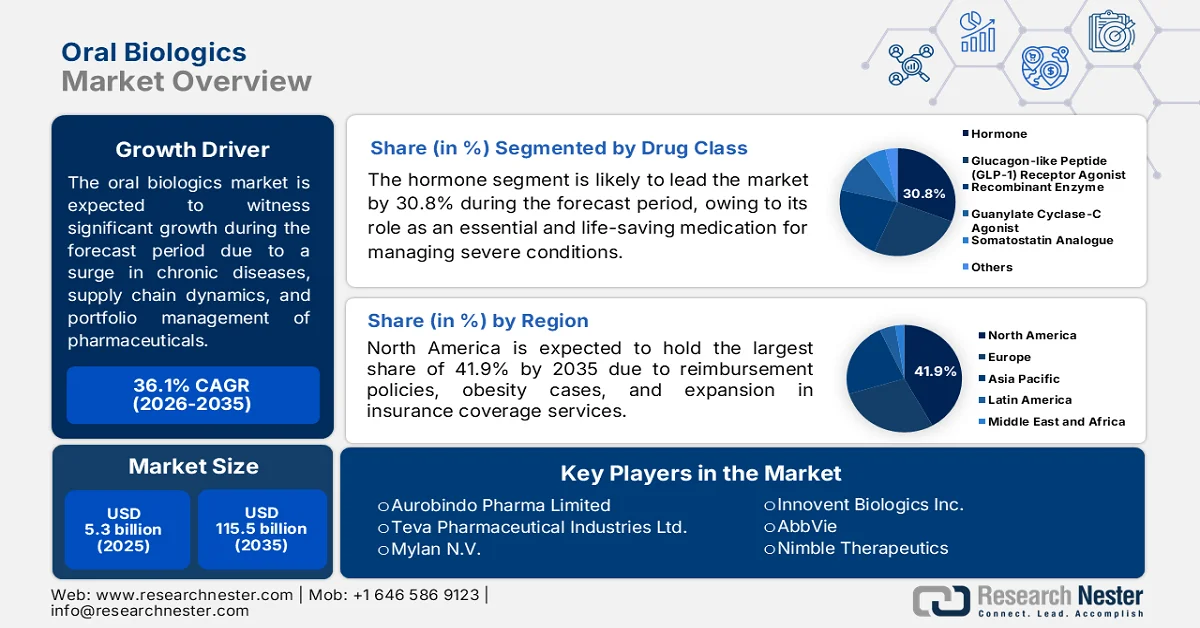
Oral Biologics Market size was valued at USD 5.3 billion in 2025 and is anticipated to reach USD 115.5 billion by the end of 2035, expanding at around 36.1% CAGR during the forecast period, i.e., 2026-2035. In 2026, the industry size of oral biologics is estimated at USD 7.2 billion.
The worldwide oral biologics market is continuously expanding due to factors including the chronic disease prevalence, the patient preference for oral administration, import dynamics on biologics and active pharmaceutical ingredients (APIs), the gastrointestinal bioavailability, and a shift towards pharmaceutical portfolio management. According to official statistics published by OECD in November 2025, 44% people across the lowest income quartile, accounting for 15 percentage points, are more likely to be impacted by a long-term chronic condition, in comparison to 28% people in the highest income segment. Besides, the economic burden of diabetes amounted to USD 670 billion for aiding and combating complications. Moreover, the ongoing export dynamics of pharmaceutical products from different nations are also catering to disease management, thus driving the oral biologics market exposure.
Pharmaceutical Products Export Analysis by Country, 2025
|
Country |
Export Value (USD 1,000) |
|
Germany |
132,143,323.2 |
|
Switzerland |
120,567,797.2 |
|
U.S. |
97,790,834.1 |
|
Italy |
75,401,367.7 |
|
Netherlands |
39,206,391.3 |
|
Slovenia |
35,853,205.9 |
|
UK |
27,999,106.7 |
|
Denmark |
24,711,123.2 |
|
Spain |
23,302,341.6 |
|
Sweden |
14,970,284.4 |
Source: World Integrated Trade Solution
Furthermore, the tactical collaboration between platform technological companies and large-scale pharmaceuticals, along with the emergence of macrocycles as the latest therapeutic modality, and smart capsule services for precision oral delivery, are a few trends that are responsible for enhancing the oral biologics market globally. In February 2026, Novo Nordisk and Vivtex Corporation partnered with each other to develop next-generation oral biologic medicines, particularly for aiding associated comorbidities, diabetes, and obesity. Likewise, in January 2025, Iconovo AB collaborated with Lonza to create spray-dried formulations of an intranasal biologic for Iconovo’s proprietary intranasal device ICOone Nasal®. Therefore, with such organizational contributions globally, the market is gradually gaining increased exposure and growth across different regions.
Key Oral Biologics Market Insights Summary:
Regional Highlights:
- North America market is projected to capture 41.9% of the market share by 2035, underpinned by rising obesity prevalence, expanding reimbursement frameworks, increased adoption of oral GLP-1 agonists, broader Medicare and Medicaid coverage, and substantial healthcare investments
- Asia Pacific is poised to witness the fastest growth in the oral biologics market throughout 2026–2035, stimulated by high-volume manufacturing in China, rapid private-sector adoption in Japan, increasing government funding, regulatory approvals for novel delivery systems, and organizational contributions
- The oral biologics market in the U.S. accounts for 55.7% of the share in North America, which is driven by the provision of generous investments, the transition from injectable to oral drugs, and innovation in regulatory policies.
- The oral biologics in Japan accounts for 2.9% of the share in the Asia Pacific, owing to the advancements in the healthcare system for the elderly population and suitable government support for ensuring modernization.
Segment Insights:
- The hormone sub-segment is expected to command 30.8% of the oral biologics market by 2035, reinforced by its critical role as life-saving chemical messengers that regulate growth, reproduction, and metabolism
- The diabetes segment is anticipated to secure a considerable share of the market during 2026–2035, accelerated by the growing adoption of GLP-1 receptor agonists aimed at replacing painful injections and improving diabetes management
Key Growth Trends:
- Regulatory validation through clinical trials
- Increase in local manufacturing
Major Challenges:
- Regulatory obstacles for novel delivery platforms
- Competition from advanced injectable formulations
Key Players: Rigel Pharmaceuticals, Inc. (U.S.), UCB (Belgium), Novo Nordisk A/S (Denmark), Eli Lilly and Company (U.S.), Novartis International AG (Switzerland), AstraZeneca plc (UK), Sanofi S.A. (France), F. Hoffmann-La Roche Ltd (Switzerland), Pfizer Inc. (U.S.), GlaxoSmithKline PLC (UK), Merck & Co. Inc. (U.S.), Biocon Limited (India), Rani Therapeutics Holdings Inc. (U.S.), Oramed Pharmaceuticals Inc. (U.S.), Entera Bio Ltd. (Israel), Takeda Pharmaceutical Company Limited (Japan), Dr. Reddy's Laboratories Ltd. (India), Aurobindo Pharma Limited (India), Teva Pharmaceutical Industries Ltd. (Israel), Mylan N.V. (U.S.), 3SBio Inc. (China), Innovent Biologics Inc. (China), AbbVie (U.S.), Nimble Therapeutics (U.S.), Obris Medicine (Denmar), Seres Therapeutics, Inc. (U.S.), Circle Pharma (U.S.).
Global Oral Biologics Market Forecast and Regional Outlook:
Market Size & Growth Projections:
- 2025 Market Size: USD 5.3 billion
- 2026 Market Size: USD 7.2 billion
- Projected Market Size: USD 115.5 billion by 2035
- Growth Forecasts: 36.1% CAGR (2026-2035)
Key Regional Dynamics:
- Largest Region: North America (41.9% Share by 2035)
- Fastest Growing Region: Asia Pacific
- Dominating Countries: United States, China, Japan, Germany, United Kingdom
- Emerging Countries: India, South Korea, Singapore, Australia, Brazil
Last updated on : 2 June, 2026
Oral Biologics Market - Growth Drivers and Challenges
Growth Drivers
- Regulatory validation through clinical trials: The oral biologics market growth is highly propelled by clinical validation that demonstrates endpoint advantages by conducting numerous trials. For instance, as per the November 2023 Biomaterials article, through clinical trials, the median launch pricing of prescription drugs increased by 8,411%, amounting to USD 177,892. Additionally, the pricing of biological products ranged between USD 18,861 and USD 288,759. Besides, the payers’ pricing of hemophilia A drug Roctavian amounted to USD 2.9 million per patient and USD 3.5 million per patient for hemophilia B Hemgenix. Moreover, the approximate pricing for developing the newest biological product was an estimated USD 2.6 billion, thereby positively impacting the market’s growth and demand globally.
- Increase in local manufacturing: The aspects of packaging materials, APIs, and imported biologics have readily emerged as growth catalysts for the oral biologics market in terms of domestic production capacities. As per an article published by NLM in March 2024, the API industry is projected to increase from USD 193.1 billion to USD 285.2 billion by the end of 2028. Based on this growth, 60.5% of API is increasingly produced in Asia, which is followed by 27.9% in West Europe, 4.6% in North America, and 7% in other nations. Additionally, India and China are considered the leading suppliers of pharmaceutical excipients and raw materials worldwide, thereby making it suitable for enhancing the market demand and expansion.
Challenges
- Regulatory obstacles for novel delivery platforms: Regulatory agencies experience a challenging evaluation task while assessing oral biologic delivery platforms that combine novel excipients, complex manufacturing processes, and unprecedented mechanisms of action. Besides, permeation enhancers, while effective, raise questions about long-term intestinal safety when used chronically. Simultaneously, repeated exposure causes local inflammation, microbiome disruption, or increased susceptibility to infections, and traditional safety study designs may not capture these risks adequately. Furthermore, regulatory frameworks were historically designed for either small molecule drugs or injectable biologics, not hybrid products that incorporate elements of both. Therefore, determining appropriate bioequivalence standards presents particular difficulty for the global oral biologics market.
- Competition from advanced injectable formulations: The aspect of progress in injectable biologic technology represents a competitive threat to oral alternatives. Moreover, extended-release injectable formulations requiring only weekly, monthly, or even semi-annual administration significantly reduce injection burden. A patient receiving four injections annually may not perceive sufficient inconvenience to warrant switching to a daily oral tablet, particularly if the injectable formulation has established efficacy and safety data. Similarly, microneedle patches and auto-injector pens have reduced the psychological and physical barriers associated with injections. For many patients and physicians, the perceived advantages of oral administration are partially offset by the need for daily dosing compared to less frequent injectable schedules, thus causing a hindrance in the oral biologics market growth.
Oral Biologics Market Size and Forecast:
| Report Attribute | Details |
|---|---|
|
Base Year |
2025 |
|
Forecast Year |
2026-2035 |
|
CAGR |
36.1% |
|
Base Year Market Size (2025) |
USD 5.3 billion |
|
Forecast Year Market Size (2035) |
USD 115.5 billion |
|
Regional Scope |
|
Oral Biologics Market Segmentation:
Drug Class Segment Analysis
The hormone sub-segment, part of the drug class segment, is anticipated to garner the highest share of 30.8% in the oral biologics market by the end of 2035. The sub-segment’s upliftment is primarily attributed to its importance as life-saving and vital medications for acting as chemical messengers to manage critical functions, including growth, reproduction, and metabolism. According to official statistics published by The Innovation in April 2025, globally, 81 first-in-class drugs were approved between 2023 and 2024. Of these, small-molecule drugs effectively cater to 51.95, demonstrating the discovery of the newest chemical entities. Simultaneously, macromolecule drugs account for 48.1%, majorly comprising antibody analogs. Besides, as per the June 2024 NLM article, the pricing strategy of drugs accounted for 278% of overall prices, particularly in the U.S., in comparison to other countries as of 2022, thus bolstering the sub-segment’s exposure.
Gross Pricing Comparison of Drugs Among Different Countries, 2022
|
Countries |
Price % |
|
Global |
278 |
|
Canada |
229 |
|
France |
326 |
|
Germany |
294 |
|
Italy |
268 |
|
Japan |
347 |
|
Mexico |
172 |
|
UK |
270 |
Source: NLM
Disease Indication Segment Analysis
During the forecast period, the diabetes segment, which is part of the disease indication, is projected to grab a considerable share in the oral biologics market. The segment’s growth is effectively fueled by the adoption of GLP-1 receptor agonists, with the intention of revolutionizing diabetes treatment by diminishing painful injections. As stated in an article published by the International Diabetes Federation in 2026, 1 in 9 adults, which is 11.1% of the population aged between 20 and 79 years, are impacted by diabetes as of 2025. Moreover, 1 in 8 adults, which is an estimated 853 million adults globally, is projected to be residing with diabetes by the end of 2050, demonstrating a surge by 46%. Besides, more than 90% of people with this disease have type 2 diabetes, which is highly attributed to genetic, environmental, demographic, and socio-economic factors, thus boosting the market demand.
Distribution Channel Segment Analysis
The hospital pharmacies segment is expected to account for a suitable share in the oral biologics market by the end of the stipulated timeline. The segment’s development is highly propelled by the aspect of remaining as a critical, albeit transitioning, distribution channel for oral biologics. In the current market landscape, this distribution channel serves as the primary launch pad for novel oral biologic therapies. Besides, when a new oral peptide or monoclonal antibody receives regulatory approval, hospital formularies are typically the first point of clinical adoption, driven by the need for physician oversight and patient monitoring for potential adverse reactions. This channel is characterized by high-touch patient management, often involving specialty pharmacists who guide patients through the transition from intravenous or injectable biologics to their first oral regimen.
Our in-depth analysis of the oral biologics market includes the following segments:
|
Segment |
Subsegments |
|
Drug Class |
|
|
Disease Indication |
|
|
Distribution Channel |
|
|
Technology Platform |
|
|
Formulation Type |
|
|
Molecule Type |
|

Vishnu Nair
Head - Global Business DevelopmentCustomize this report to your requirements — connect with our consultant for personalized insights and options.
Oral Biologics Market - Regional Analysis
North America Market Insights
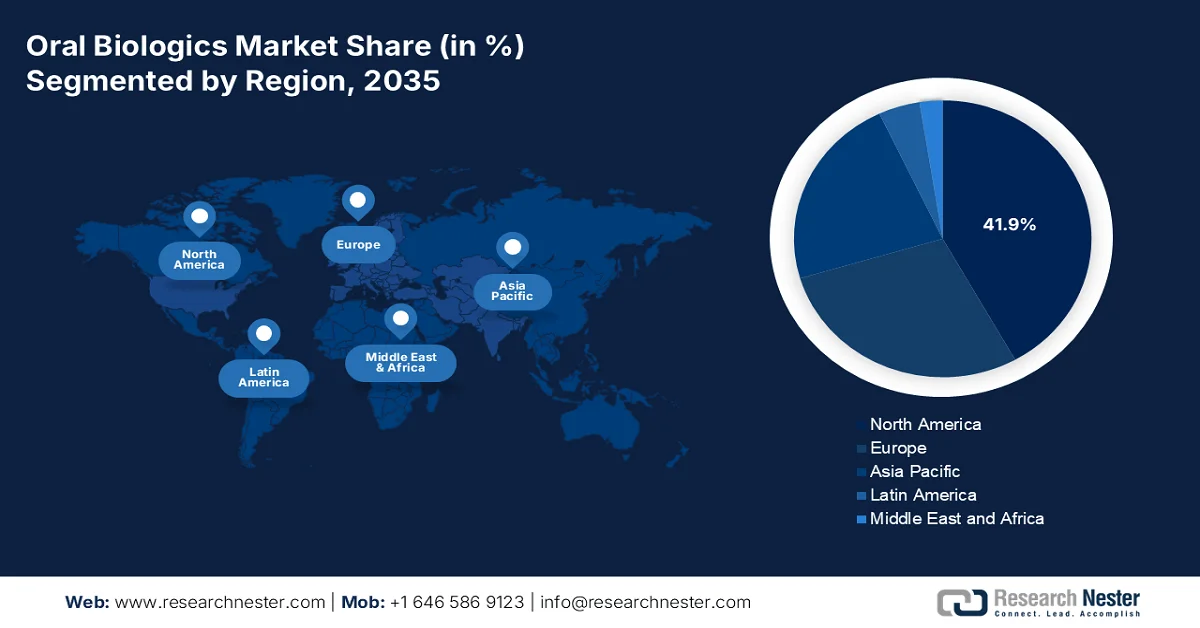
North America in the oral biologics market is anticipated to account for the largest share of 41.9% by the end of 2035. The market’s upliftment in the region is primarily driven by an increase in obesity prevalence, the establishment of reimbursement frameworks, the increased adoption of oral GLP-1 agonists, an expansion in Medicare and Medicaid coverage, and generous healthcare investments. According to official statistics published by the USDA Government in August 2025, there was a year-on-year (YoY) rise in adult obesity rates, especially in the U.S., by 0.6 percentage points. In addition, between March 2023 and 2024, the average adult obesity rate was 43.1%, indicating a 0.2 percentage point decrease from the 43.3% between March 2022 and 2023. Therefore, with the increased prevalence of the disorder, the market is continuously expanding in the region.
Overall U.S. Adult Obesity Yearly Rate Analysis, 2019-2024
|
Year Range |
Obesity Rate |
|
2019-2020 |
40.1% |
|
2020-2021 |
41.5% |
|
2021-2022 |
42.5% |
|
2022-2023 |
43.3% |
|
2023-2024 |
43.1% |
Source: USDA Government
The oral biologics market in the U.S. is growing significantly, owing to an expansion in insurance coverage, the transition from injectable to oral drugs, federal investment in biomanufacturing, a rise in chronic diseases, regulatory modernization, and the presence of research centers. As stated in an article published by the HIV Government in February 2026, there were roughly 31,800 new HIV infections in the country, and the rate accounted for 11.3% per 100,000 people. In this regard, people injecting drugs in the country catered to 7%, which is 2,300 of the overall HIV infections as of 2022. Additionally, the male population injecting drugs constituted for 4%, which is 1,300 of the new infections, while the female population constituted for 3%, which is 1,000 of the total infections. Therefore, based on the intake of injectable drugs, the market is eventually growing in the overall country.
The increased regulatory transformation, modernization in advanced therapeutics, the provision of investments by the government, provincial health ministries, reduction in hospital admission rates for rare diseases, and suitable medication adherence are certain factors that are boosting the oral biologics market in Canada. In terms of investments, in April 2026, the Government of Canada declared a combined USD 127 million in strategic response fund (SRF) contributions to readily support 2 projects. These projects included Aspect Biosystems and Providence Health Care (PHC) in British Columbia. In addition, the government also contributed USD 79 million for supporting Aspect Biosystems, and meanwhile, the Province of British Columbia also offered USD 23.8 million to the project to ensure further expansion, thereby bolstering the market growth and demand.
APAC Market Insights
The Asia Pacific is expected to emerge as the fastest-growing region in the oral biologics market during the forecast period. The market’s development in the region is highly propelled by the high-volume manufacturing, particularly in China, along with rapid private-industry adoption in Japan, government funding, an increase in regulatory approval for novel delivery systems, and organizational contributions. For instance, in September 2024, Rigel Pharmaceuticals, Inc. entered into an exclusive supply and license agreement with Kissei Pharmaceutical Co., Ltd. for developing and commercializing REZLIDHIA® in Taiwan, Korea, and Japan. Likewise, in August 2024, UCB proclaimed a divestment deal in China for ensuring the license of its business segments, such as the Zhuhai manufacturing site, Xyzal®, Zyrtec®, Neupro®, Vimpat®, and Keppra®, thereby denoting a huge growth opportunity for the market in the region.
The oral biologics market in China is gaining increased traction, owing to growth in the manufacturing industry, localized drug availability, volume-based procurement policies, government intervention, generous investments in oral insulin, and a focus on cold-chain logistics. As stated in an article published by Xinhua in May 2026, the country’s National Medical Products Administration (NMPA) successfully approved 76 advanced drugs, indicating a record-high number, as well as a surge from the 48 approved as of 2024. Besides, since the initiation of the Provisions for Drug Registration, 629 drug registration applications have been effectively included in the approval procedure and priority review, with over 40% targeted for tumors. Moreover, the overall valuation of out-licensing deals for domestic drugs surpassed USD 60 billion, thereby positively impacting the market development.
The aspects of an increase in the incidence of lifestyle-based diseases, such as hormonal imbalances and age-related comorbidities, an increase in the elderly population, the presence of a national health system, a sudden shift from hospital-driven injectables to pharmacy-dispensed oral tablets, and suitable government support are a few trends that are responsible for fueling the oral biologics market in Japan. Besides, the Japan oral biologics market was valued at USD 151.5 million as of 2025, which is further predicted to be worth USD 185.3 million by 2026 and USD 3,690 million, along with a 39.5% growth rate by the end of 2035. Moreover, as per the Japan External Trade Organization (JETRO) article, the number of people aged more than 65 years rose to nearly 36 million as of 2023. Additionally, this is further projected to reach almost 40 million by the end of 2040, thereby making it suitable for enhancing the market demand in the country.
Elderly Population and its Share Analysis in Japan, 1950-2040
|
Year |
Population Under 65 Years (10,000 people) |
Population Above 65 Years (10,000 people) |
Total Population (10,000 people) |
|
1950 |
7,907 |
411 |
8,318 |
|
1960 |
8,807 |
535 |
9,432 |
|
1970 |
9,639 |
733 |
10,372 |
|
1980 |
10,641 |
1,065 |
11,706 |
|
1990 |
10,868 |
1,493 |
12,361 |
|
2000 |
10,481 |
2,204 |
12,693 |
|
2010 |
9,858 |
2,948 |
12,806 |
|
2020 |
9,012 |
3,603 |
12,615 |
|
2023 |
8,819 |
3,623 |
12,442 |
|
2030 |
8,316 |
3,696 |
12,012 |
|
2040 |
7,356 |
3,298 |
11,284 |
Source: JETRO
Europe Market Insights
Europe in the oral biologics market is projected to experience considerable expansion by the end of the stipulated timeline. The market’s growth in the region is effectively attributed to regulatory modernization, aging population demographics, the tactical prioritization of biosimilar adoption, and a rise in Type 2 diabetes, along with the demand for patient-friendly oral alternatives. According to official statistics published by MedTech Europe in September 2022, type 2 diabetes accounts for almost 90% of overall diabetes cases in the region. The overall pricing strategy of treatments for this particular diabetes type was worth USD 189 billion, which is 19.6% of the worldwide spending. In addition, of the overall cases, healthcare expenses in the region are owing to hospitalizations for emergencies and suitable management, thus denoting an optimistic outlook for the market growth.
The oral biologics market in Germany is gaining increased exposure, owing to the existence of a competition-based and decentralized healthcare system, the rapid adoption of advanced therapies, reimbursement pathways, the adoption of a prescription model, and the robust biosimilar and generic industry. As stated in a data report published by the World Health Organization (WHO) in 2024, the country’s health system readily serves a population of 84.7 million as of 2023. Additionally, in terms of funding mechanisms, the general fixed SHI contribution rate accounts for 14.6% of gross incomes, along with additional sickness funds catering to 1.7% as of 2024. Besides, the country significantly spent 12.7% of its gross domestic product (GDP) on health as of 2022, with expenditure amounting to USD 8,166 to health, thus proliferating the market expansion.
The existence of the centralized procurement system, strong biosimilar substitution policies, equivalent clinical profiles, an expansion in patient accessibility, the government’s Innovation 2035 plan, generous healthcare savings, eliminated cold-chain logistics expenses, and an increase in biologic prescriptions are a few factors that are enhancing the oral biologics market in France. As per a data report published by OECD in December 2025, the health system effectiveness caters to 137 per 100,000 population in terms of preventable mortality, as well as 59 per 100,000 population for treatable mortality. Besides, unmet medical demands among domestic people reported 4.5% lower needs, but 6.5% higher for people at risk of poverty. Moreover, in terms of dental care, a total of 8.2% and 13.7% account for unmet demands, thereby driving the market’s growth in the country.
Key Oral Biologics Market Players:
- Rigel Pharmaceuticals, Inc. (U.S.)
- UCB (Belgium)
- Novo Nordisk A/S (Denmark)
- Eli Lilly and Company (U.S.)
- Novartis International AG (Switzerland)
- AstraZeneca plc (UK)
- Sanofi S.A. (France)
- F. Hoffmann-La Roche Ltd (Switzerland)
- Pfizer Inc. (U.S.)
- GlaxoSmithKline PLC (UK)
- Merck & Co. Inc. (U.S.)
- Biocon Limited (India)
- Rani Therapeutics Holdings Inc. (U.S.)
- Oramed Pharmaceuticals Inc. (U.S.)
- Entera Bio Ltd. (Israel)
- Takeda Pharmaceutical Company Limited (Japan)
- Dr. Reddy's Laboratories Ltd. (India)
- Aurobindo Pharma Limited (India)
- Teva Pharmaceutical Industries Ltd. (Israel)
- Mylan N.V. (U.S.)
- 3SBio Inc. (China)
- Innovent Biologics Inc. (China)
- AbbVie (U.S.)
- Nimble Therapeutics (U.S.)
- Obris Medicine (Denmar)
- Seres Therapeutics, Inc. (U.S.)
- Circle Pharma (U.S.)
- Company Overview
- Business Strategy
- Key Product Offerings
- Financial Performance
- Key Performance Indicators
- Risk Analysis
- Recent Development
- Rigel Pharmaceuticals, Inc. is advancing its pipeline of oral small molecule inhibitors targeting kinase pathways relevant to immune disorders. The company focuses on developing oral alternatives to injectable biologics for conditions like immune thrombocytopenia.
- UCB is strategically investing in oral biologic platforms to complement its established portfolio in neurology and immunology. The company leverages its expertise in inflammation to develop next-generation oral peptide therapeutics.
- Novo Nordisk A/S remains a dominant force in the oral biologics space, having successfully commercialized the first widely adopted oral peptide for chronic metabolic disease. The company continues to expand its oral delivery capabilities across multiple therapeutic areas.
- Eli Lilly and Company is aggressively pursuing oral biologic formulations to extend its leadership in metabolic disorders. The company is investing heavily in proprietary delivery technologies to enable oral administration of complex macromolecules.
- Novartis International AG is leveraging its deep expertise in formulation science to develop oral biologics targeting immunology and oncology indications. The company focuses on overcoming gastrointestinal absorption barriers through innovative excipient technologies.
Here is a list of key players operating in the global market:
The oral biologics market is characterized by intense rivalry between established multinational pharmaceutical giants and agile biotechnology firms specializing in novel delivery platforms. Moreover, strategic initiatives increasingly focus on overcoming gastrointestinal bioavailability barriers through proprietary permeation enhancer technologies and enteric coatings. Major players are pursuing aggressive partnership models, licensing agreements, and acquisitions to capture market share in diabetes, obesity, and immunology segments. For instance, in December 2024, AbbVie and Nimble Therapeutics stated their definitive agreement by acquiring Nimble’s lead asset and the investigational oral peptide IL23R inhibitor in preclinical development, which is suitable for aiding psoriasis. In addition, the company also acquired the pipeline of other notable oral peptide candidates with suitable potential across numerous autoimmune diseases, thereby proliferating the oral biologics industry’s growth.
Corporate Landscape of the Oral Biologics Market:
Recent Developments
- In January 2025, Orbis Medicines closed the USD 104 .7 million (EUR 90 million) Series A funding round, amounting to an overall USD 135 million (EUR 116 million), which was suitable for supporting the development of the organizational pipeline of next-generation oral macrocycle drugs, referred to as nCycles.
- In September 2024, Seres Therapeutics, Inc. completed the commercialization of its very own VOWST business to Société des Produits Nestlé S.A, with the intention of strengthening its financial position and ensuring the development of the notable platform with numerous patient populations at a high risk of bacterial infections.
- In September 2024, Circle Pharma successfully closed the USD 90 million Series D financing round, which comprises the conversion of a convertible note and focus on the clinical developed of CID-078, the first-and-only-in-class cyclin A/B RxL inhibitor.
- Report ID: 8593
- Published Date: Jun 02, 2026
- Report Format: PDF, PPT
- Explore a preview of key market trends and insights
- Review sample data tables and segment breakdowns
- Experience the quality of our visual data representations
- Evaluate our report structure and research methodology
- Get a glimpse of competitive landscape analysis
- Understand how regional forecasts are presented
- Assess the depth of company profiling and benchmarking
- Preview how actionable insights can support your strategy
Explore real data and analysis
Frequently Asked Questions (FAQ)
About this Report
Connect with our Expert


Report, 2026-2035



Copyright @ 2026 Research Nester. All Rights Reserved.
