Ophthalmic Viscosurgical Devices Market Outlook:
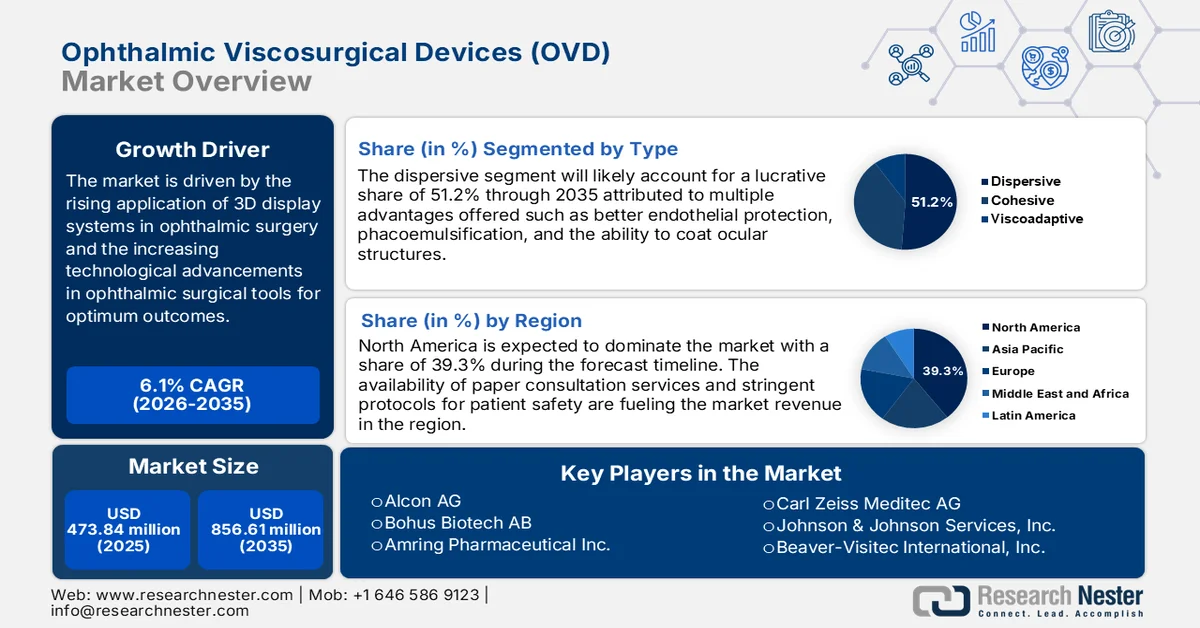
Ophthalmic Viscosurgical Devices (OVD) Market size was valued at USD 473.84 million in 2025 and is likely to cross USD 856.61 million by 2035, expanding at more than 6.1% CAGR during the forecast period i.e., between 2026-2035. In the year 2026, the industry size of ophthalmic viscosurgical devices (OVD) is assessed at USD 499.85 million.
The ophthalmic viscosurgical devices market is experiencing notable growth primarily due to their role in intraocular space stabilization, protection of corneal endothelium, aid in instrument handling, and improving treatment approaches. For instance, in June 2024, Alcon's UNITY Cataract System (CS) and UNITY Vitreoretinal Cataract System (VCS) were approved by the FDA. These represent the initial offerings from Alcon's recently launched Unity line. This approval is a major turning point for Alcon as it broadens its product line in the eye care industry. It is anticipated that the UNITY systems will offer novel approaches to cataract surgery.
Moreover, the rising growth in the aging population across the globe based on which there are occurrences of cataracts and other eye illnesses, demands for more eye procedures with the support of the latest approach of surgery and equipment. For instance, in December 2023, as per the reports by UNFPA India, by 2050, there will be an astounding 347 million elderly people (those 60 and older), up from the current 153 million. In addition, increasing the requirement for minimum-invasive procedures with growing awareness amongst patients towards treating eyes is escalating market demand.
Key Ophthalmic Viscosurgical Devices (OVD) Market Insights Summary:
Regional Insights:
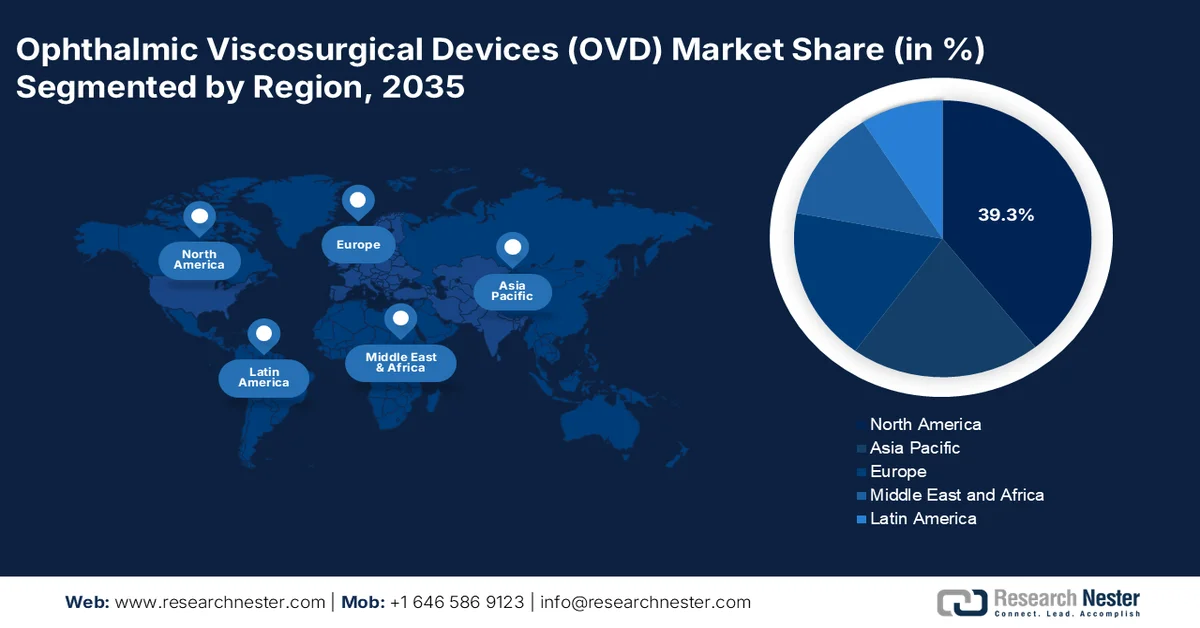
- North America in the ophthalmic viscosurgical devices market is estimated to hold over 39.3% revenue share by 2035, owing to advanced healthcare infrastructure, strong regulatory frameworks, and high healthcare expenditure supporting increased surgical volumes.
- Asia Pacific is anticipated to expand at a rapid pace through 2035, fueled by rising healthcare spending, improving medical infrastructure, and growing demand for advanced ophthalmic procedures amid increasing cataract surgeries.
Segment Insights:
- The Dispersive segment in the ophthalmic viscosurgical devices market is predicted to account for around 51.2% share by 2035, driven by its critical role in protecting intraocular structures and maintaining anterior chamber stability during cataract procedures.
- The Cataract surgery segment is projected to garner a remarkable share by 2035, stimulated by the high global incidence of cataracts and continuous advancements in intraocular lens technologies enhancing surgical outcomes.
Key Growth Trends:
- Innovations in ophthalmic surgery
- Establishment of specialized centers
Major Challenges:
- Safety concern with cohesive OVDs
- Market entry barriers
Key Players: Synaptics Incorporated, VESA, Himax Technologies, Inc., Raydium Corporation, New Vision Display, Inc., HTC Corporation, Lenovo, LG Electronics, Valve Corporation, Acer Inc.
Global Ophthalmic Viscosurgical Devices (OVD) Market Forecast and Regional Outlook:
Market Size & Growth Projections:
- 2025 Market Size: USD 473.84 million
- 2026 Market Size: USD 499.85 million
- Projected Market Size: USD 856.61 million by 2035
- Growth Forecasts: 6.1% CAGR (2026-2035)
Key Regional Dynamics:
- Largest Region: North America (39.3% Share by 2035)
- Fastest Growing Region: Asia Pacific
- Dominating Countries: United States, Germany, Japan, China, France
- Emerging Countries: China, India, Japan, South Korea, Brazil
Last updated on : 25 February, 2026
Ophthalmic Viscosurgical Devices Market - Growth Drivers and Challenges
Growth Drivers
- Innovations in ophthalmic surgery: Advanced eye surgery is the major growth driver in the ophthalmic viscosurgical devices market primarily due to the technological developments in increasing the efficiency of surgery and patient safety. For instance, in October 2024, Beyeonics Vision Ltd. created and produced the first fully digital ophthalmic microscope, the Beyeonics oneTM, which gives surgeons enhanced visualization and accuracy. Emerging technologies implement new technologies to offer greater accuracy with treatments, thereby reducing the incidence of complications and patient recovery times.
- Establishment of specialized centers: The emerging centers in the ophthalmic viscosurgical devices (OVD) market are equipped with the latest technology and staff dedicated to eye care and hence can afford to offer more premium surgery, such as glaucoma and cataract surgery. For instance, in September 2024, Centre for Sight announced a strategic partnership with Laxmi Eye Hospital, a prestigious eye care facility with more than thirty years of history. With this collaboration, Centre for Sight's expansion strategy reaches a major turning point, increasing its footprint in Maharashtra to nine locations.
Challenges
- Safety concern with cohesive OVDs: A significant challenge in the ophthalmic viscosurgical devices market is complications of protocols in place during the procedures and correct procedure team training, hence providing added workload for the health care provider. Greater exposure to such dangers will discourage their use as combined OVDs and will get them reassessed for standalone procedures and impact on market forces. Furthermore, the execution of numerous government programs to curb the increasing rate of visual impairment by forcing manufacturers to release new eyewear is improving the market's outlook.
- Market entry barriers: The ophthalmic viscosurgical (OVD) market face a pivotal challenge due to incumbent firms having vast research and development complexes, established quality, and efficacy to maintain them. In addition, rigid drug approval and clinical certification regulatory requirements discourage entry into the industry. Therefore, these barriers not only limit the number of products available to be brought into the marketplace but also discourage innovation since new companies will no longer be in a position to introduce new ophthalmic viscosurgical devices that enhance the performance of surgeries and safety for patients.
Ophthalmic Viscosurgical Devices Market Size and Forecast:
| Report Attribute | Details |
|---|---|
|
Base Year |
2025 |
|
Forecast Year |
2026-2035 |
|
CAGR |
6.1% |
|
Base Year Market Size (2025) |
USD 473.84 million |
|
Forecast Year Market Size (2035) |
USD 856.61 million |
|
Regional Scope |
|
Ophthalmic Viscosurgical Devices Market Segmentation:
Type Segment Analysis
Based on the type, the dispersive segment is predicted to account for ophthalmic viscosurgical devices market share of around 51.2% by 2035. Dispersive OVDs are created to provide anterior chamber stability by intraocular structure protection against endothelial cell injury and mechanical trauma. It is utilized for cataract surgery, among others, where corneal endothelium integrity is required for optimal postoperative outcomes. For instance, in February 2025, Glenmark Pharmaceuticals Inc., USA introduced Latanoprost ophthalmic solution, 0.005% (0.05 mg/mL) in the market. While the patient is most important in the success of surgery and patient protection, the preference to use dispersive OVDs is also unfolding dominance.
Application Segment Analysis
The cataract surgery segment in the ophthalmic viscosurgical devices market is projected to garner a remarkable share by 2035. The most widespread use for the market is cataract surgery due to high occurrence rates of cataracts in the world and very high procedure volume per year. For instance, in September 2024, with Johnson & Johnson's new TECNIS Odyssey's next-generation intraocular lens, cataract patients can see clearly at any distance and in any lighting. The new full visual range IOL provides better distance vision2 and a 14% smaller readable print size than PanOptix3. Hence, advancements in surgical devices foster innovative treatment approach with enhanced outcomes.
Our in-depth analysis of the global market includes the following segments:
|
Type |
|
|
Source |
|
|
Application |
|

Vishnu Nair
Head - Global Business DevelopmentCustomize this report to your requirements — connect with our consultant for personalized insights and options.
Ophthalmic Viscosurgical Devices Market - Regional Analysis
North America Market Insights
North America in ophthalmic viscosurgical devices market is estimated to hold over 39.3% revenue share by the end of 2035. The region also features high-tech healthcare facilities and research centers that fuel innovation in ophthalmic devices. In addition, regulation is firmly rooted in the incentive to supply quality products, and high health expenditure is the driving force to conduct more ophthalmic viscosurgical surgical procedures.
The factors propelling the U.S. ophthalmic viscosurgical devices market is humongous R&D expenditure paying its dividend in the high-technology surgery and quality OVDs positioning the patient in good stead. For instance, in July 2024, according to the American Medical Association, in 2022, U.S. health spending climbed 4.1% to USD 4.5 trillion, or in terms of per person the cost is estimated to be USD 13,493. Thus, rising disposable income enables the patient population to access advanced medical devices and treatments.
The ophthalmic viscosurgical devices market in Canada is significantly expanding owing to the investment in healthcare infrastructure and the eHealth solutions by the government is building an access ecosystem favorable for high-end ophthalmic practice. For instance, in January 2023, HOYA Vision Care announced a multi-million-dollar investment in its manufacturing lab network to expand its capabilities and support eye care professionals throughout Canada. It invested USD 10 million with a focus on growing the national lab network. Therefore, Canada is increasingly becoming a trendsetter among the markets fueled by a quest for surgical excellence and quality patient experience.
Asia Pacific Market Insights
Asia Pacific ophthalmic viscosurgical devices market is evolving at an extremely high pace, driven most significantly by magnificent economic growth in health spending within the region. The rapidly growing economies within region are experiencing augmenting demand for advanced ophthalmic procedures due to rising incomes and growing consciousness of eye health. Improved healthcare centers in the region are also lowering the expense of specialist eye treatment, and in turn, number of cataracts are being operated on, which represent a massive use of ophthalmic viscosurgical devices.
The ophthalmic viscosurgical devices (OVD) market in India is expanding due to the increasing popularity of the nation's medical tourism, with foreign patients benefiting from quality eye care at competitive prices. Moreover, the surging incidences of eye problems in the country is compelling the excessive use of surgical devices. For instance, in May 2022, the National Library of Medicine stated that, in India, there were an estimated 70 million people with vision impairments and 4.95 million blind people.
China's ophthalmic viscosurgical devices market is also experiencing record growth led primarily by the record high rate of urbanization underpinned by the rapidly increasing rate of age-related eye disease within its vast base population. For instance, in January 2025, it was unveiled that China's urbanization rate has risen from 17.9%in 1978 to 66.2%in 2023. The investment in high-tech coverage of hospitals and its upgrades has facilitated specialty eye clinics to take the lead in a battle to be able to cope with the increased use of high-capacity viscosurgical equipment.
Ophthalmic Viscosurgical Devices Market Players:
- Carl Zeiss Meditec AG
- Company Overview
- Business Strategy
- Key Product Offerings
- Financial Performance
- Key Performance Indicators
- Risk Analysis
- Recent Development
- Regional Presence
- SWOT Analysis
- Alcon AG
- Beaver-Visitec International, Inc.
- Amring Pharmaceutical Inc.
- Rayner Intraocular Lenses Limited
- Bohus Biotech AB
- Johnson & Johnson Services, Inc.
- Rayner Group
- Bohus BioTech AB
- BVI
- Nordic Pharma, Inc.
- Truviz Ophthalmic
The company landscape in the ophthalmic viscosurgical devices (OVD) market is characterized by a competitive environment where leading manufacturers are increasingly focused on innovation and strategic partnerships to improve product offerings. For instance, in July 2024, Topcon Healthcare announced its collaboration with TESSAN. The collaboration provided a teleconsultation service that enabled eye exams to be conducted remotely for eye care professionals and their patients.
Here's the list of some key players:
Recent Developments
- In April 2024, Carl Zeiss Meditec AG announced that it had acquired the Dutch Ophthalmic Research Center (D.O.R.C.). By combining the companies' strengths, this strategic move seeks to spur innovation in surgery and ophthalmic medical devices.
- In April 2023, Bausch + Lomb Corporation launched the StableViscTM cohesive ophthalmic viscosurgical device (OVD) and the TotalViscTM Viscoelastic System in the U.S.
- Report ID: 7243
- Published Date: Feb 25, 2026
- Report Format: PDF, PPT
- Explore a preview of key market trends and insights
- Review sample data tables and segment breakdowns
- Experience the quality of our visual data representations
- Evaluate our report structure and research methodology
- Get a glimpse of competitive landscape analysis
- Understand how regional forecasts are presented
- Assess the depth of company profiling and benchmarking
- Preview how actionable insights can support your strategy
Explore real data and analysis
Frequently Asked Questions (FAQ)
About this Report
Connect with our Expert


Report, 2026-2035



Copyright @ 2026 Research Nester. All Rights Reserved.
