Offshore Substation Market Outlook:
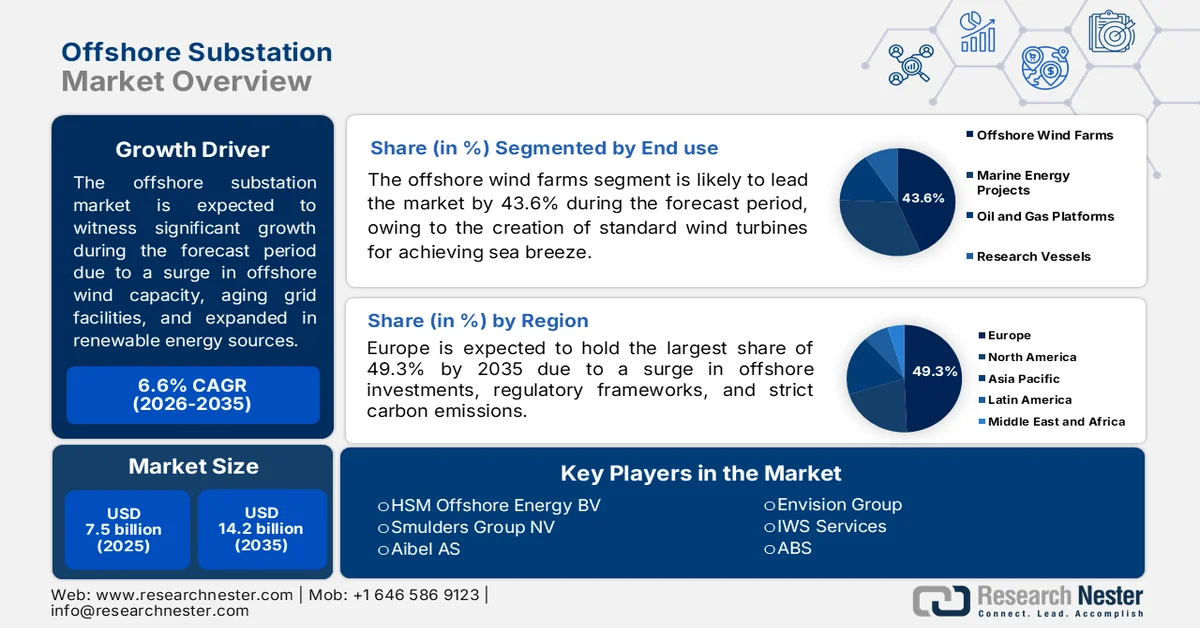
Offshore Substation Market size was valued at USD 7.5 billion in 2025 and is expected to reach USD 14.2 billion by the end of 2035, registering around 6.6% CAGR during the forecast period, i.e., 2026-2035. In 2026, the industry size of offshore substation is estimated at USD 8 billion.
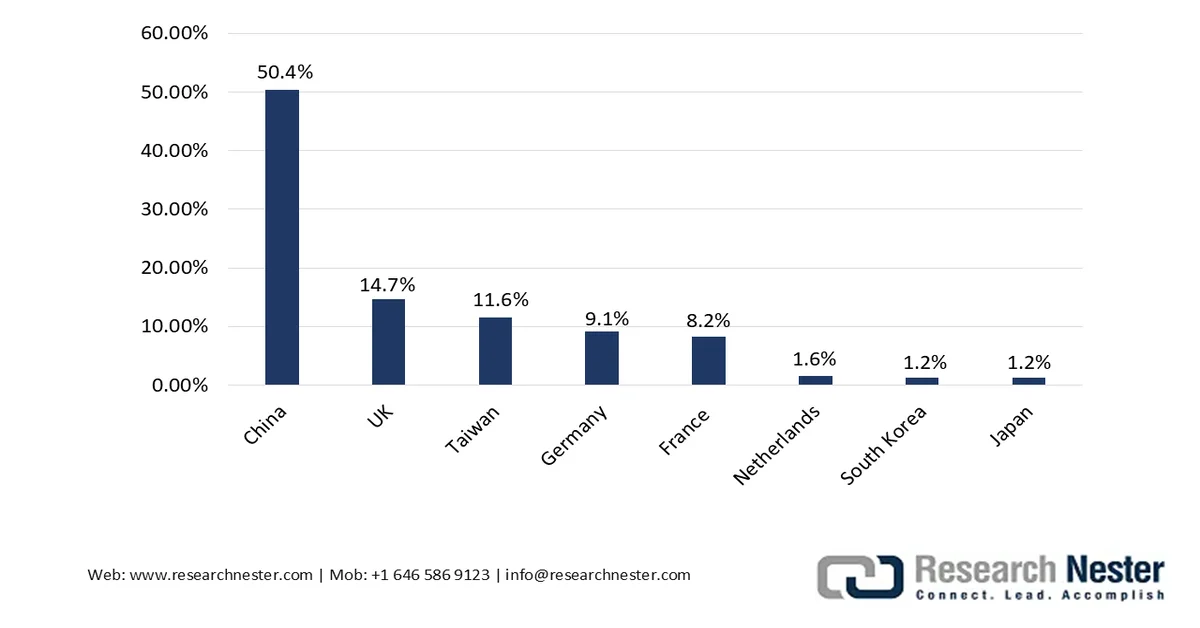
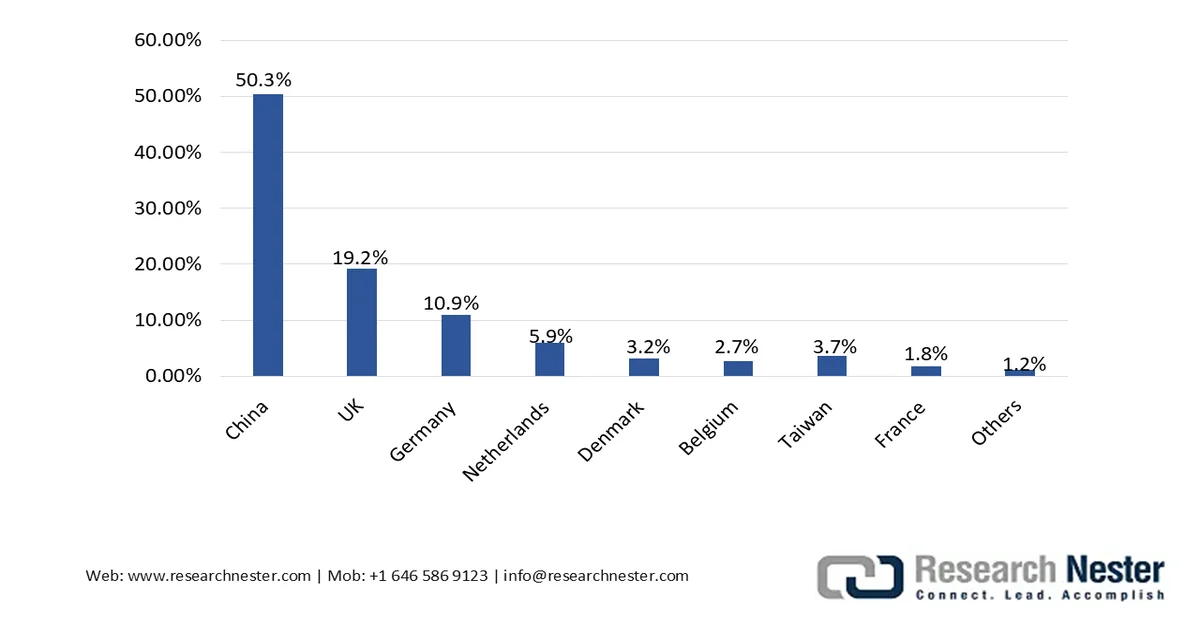
The worldwide offshore substation market is significantly expanding, which is driven by an increase in offshore wind capacity, the imperative to revolutionize aging grid infrastructure, and the extension of deep-water projects from shore, necessitating innovative transmission solutions. According to an article published by the Global Wind Energy Council (GWEC) in June 2025, the global offshore wind sector added 8 GW capacity as of 2024, which demonstrates an overall installed wind capacity of 83 GW, which is suitable for powering 73 million households. Besides, government-based auctions offered 56 GW of the latest capacity globally in 2023, while the industry is expected to develop another 48 GW of offshore wind across different nations, highlighting a regulatory breakthrough and significant policy for creating the next stage of the offshore wind sector, particularly in the Philippines, South Korea, and Japan, thus bolstering the market’s upliftment globally.
Newest Offshore Wind Installations by Economy, 2024
Source: GWEC
Total Offshore Wind Installations by Economy, 2024
Source: GWEC
Furthermore, the innovation of floating substation technologies and the presence of modular standardized design strategies are a few trends that are also responsible for driving the offshore substation market globally. As stated in an article published by the Global Energy Monitor Organization in 2026, the global wind power tracker (GWPT) comprises more than 33,000 prospective and operating wind power projects across different nations, including 1 TW of operating utility-scale wind power, along with 2.7 TW of wind in announced construction and pre-construction phases. Besides, China is readily leading in wind energy, catering for almost half of the operating capacity, which is followed by the U.S. with 14%. Additionally, India is also a noteworthy wind developer with 50% of its planned capacity under construction, thus denoting an optimistic outlook for the market’s growth.
Key Offshore Substation Market Insights Summary:
Regional Highlights:
- Europe is projected to command 49.3% of the offshore substation market by 2035, underpinned by sustained investment in offshore wind infrastructure, supportive regulatory frameworks, stringent carbon emission reduction targets, and grid modernization requirements for renewable energy integration
- North America is poised to be the fastest-growing region throughout 2026-2035, fueled by supportive federal policies, ambitious renewable energy goals, the transition toward green energy sources, and net-zero emission objectives
Segment Insights:
- The offshore wind farms sub-segment is expected to account for 43.6% of the offshore substation market by 2035, buoyed by the expanding deployment of offshore wind turbines to harness strong sea breezes and generate electricity
- Fixed platforms are forecast to secure a 40.1% share of the market by 2035, benefiting from their proven structural stability for housing heavy electrical equipment and facilitating efficient maintenance and cable routing
Key Growth Trends:
- Rapid investment in grid infrastructure
- The presence of shared and interoperable offshore networks
Major Challenges:
- Regulatory and permitting delays
- Harsh marine environments and technical complexity
Key Players: Siemens Energy AG (Germany), ABB Ltd (Switzerland), General Electric (GE Vernova) (USA), Hitachi Energy (Switzerland), Schneider Electric (France), Aker Solutions ASA (Norway), Petrofac Limited (UK), Prysmian Group (Italy), Nexans S.A. (France), Burns & McDonnell (USA), Keppel Offshore & Marine (Singapore), HSM Offshore Energy BV (Netherlands), Smulders Group NV (Belgium), Aibel AS (Norway), Semco Maritime A/S (Denmark), Hollandia Offshore BV (Netherlands), SLPE SA (Luxembourg), Envision Group (China), IWS Services (U.S.),ABS (U.S.),Smulders (Belgium).
Global Offshore Substation Market Forecast and Regional Outlook:
Market Size & Growth Projections:
- 2025 Market Size: USD 7.5 billion
- 2026 Market Size: USD 8 billion
- Projected Market Size: USD 14.2 billion by 2035
- Growth Forecasts: 6.6% CAGR (2026-2035)
Key Regional Dynamics:
- Largest Region: Europe (49.3% Share by 2035)
- Fastest Growing Region: Asia Pacific
- Dominating Countries: China, United Kingdom, Germany, United States, Netherlands
- Emerging Countries: Vietnam, South Korea, Japan, India, Thailand
Last updated on : 30 June, 2026
Offshore Substation Market - Growth Drivers and Challenges
Growth Drivers
- Rapid investment in grid infrastructure: This is one of the primary drivers that is positively impacting the growth and expansion of the offshore substation market globally. According to official statistics published by the World Economic Forum in January 2026, the worldwide yearly investment for electricity grids amounted to nearly USD 300 billion as of 2023, which further increased to almost USD 400 billion as of 2024. Besides, utilities at COP30 proclaimed upgraded investment strategies that are poised to witness an investment of USD 1.2 trillion in storage and network. Additionally, every USD 1 is expected to be invested in renewable generation, significantly mobilizing about USD 1 trillion in overall energy transition expenditure by the end of 2030, thus making it suitable for fueling the market.
- The presence of shared and interoperable offshore networks: This is yet another driver for the offshore substation market, which demonstrates the tactical shift from project-by-project and isolated connections to coordinated network architectures and increased focus on green energy. As per an article published by NLM in June 2025, hydrogen imports currently attracted significant interest, with the European Commission’s plan to import a shipment of 10 million tons or 333 TWh of hydrogen and its derivatives by the end of 2030. In addition, the newest import approach in Germany has been planned to cover almost 70% of its need for hydrogen and its derivatives by the same year. Therefore, this effectively highlighted bilateral partnerships and an expansion of import infrastructure as a suitable means to accomplish this approach.
Challenges
- Regulatory and permitting delays: The offshore substation market is heavily dependent on government approvals and permitting processes, which are often lengthy, fragmented, and unpredictable. Besides, securing environmental impact assessments, marine licenses, and construction permits can take several years, delaying project commencement and increasing development expenses. In many jurisdictions, overlapping responsibilities between federal, regional, and local authorities create bureaucratic hurdles that frustrate developers. Moreover, modified political landscapes and shifting energy policies further introduce uncertainty, as seen in recent moratoriums on new offshore wind leases in certain regions. These delays not only push back revenue generation but also strain contractual obligations with turbine suppliers and grid operators.
- Harsh marine environments and technical complexity: The aspect of operating in open seas exposes offshore substations to extreme weather conditions, including high waves, strong currents, corrosive saltwater, and severe storms, posing immense engineering and operational challenges. Therefore, designing equipment that can withstand these conditions for decades without failure requires sophisticated materials, robust structural designs, and rigorous testing regimes. Besides, maintenance and repair operations are extraordinarily difficult and expensive, often requiring specialized vessels and weather windows that are unpredictable. The technical complexity is further heightened for floating substations, which must account for dynamic motion, fatigue loads, and mooring system integrity, adding layers of engineering risk.
Offshore Substation Market Size and Forecast:
| Report Attribute | Details |
|---|---|
|
Base Year |
2025 |
|
Forecast Year |
2026-2035 |
|
CAGR |
6.6% |
|
Base Year Market Size (2025) |
USD 7.5 billion |
|
Forecast Year Market Size (2035) |
USD 14.2 billion |
|
Regional Scope |
|
Offshore Substation Market Segmentation:
End use Segment Analysis
The offshore wind farms sub-segment, which is part of the end use segment, is anticipated to capture the largest share, at 43.6%, in the offshore substation market by the end of 2035. The segment’s upliftment is primarily attributed to the development of wind turbines in the ocean for capturing robust sea breezes and converting them into electricity. According to an article published by the GWEC Organization in April 2026, the worldwide wind sector readily installed a record-high 165 gigawatts of the latest wind capacity in 2025, indicating an increase by 40% from 2024. Additionally, the capacity reached 1,299 GW, with 138 nations currently pioneering their respective economies with wind power. Based on this, offshore wind presently approaches the 100 100 GW milestone, while 9.3 GW was recorded in 2025, demonstrating a 16% increase, thereby bolstering the sub-segment’s growth.
Country-Wise Wind Power Installations and Capacity, 2025
|
Countries |
Yearly Installations (GW) |
Overall Capacity (GW) |
|
China |
120.5 |
640.5 |
|
U.S. |
6.9 |
161.2 |
|
India |
6.3 |
54.5 |
|
Germany |
5.7 |
77.7 |
|
Brazil |
2.3 |
36.0 |
Source: GWEC
Installation Type Segment Analysis
During the forecast period, the fixed platforms sub-segment under the installation type segment is predicted to garner the second-highest share of 40.1% in the offshore substation market. The sub-segment’s growth is effectively driven by the most established and widely deployed installation type in the offshore substation market, characterized by steel or concrete structures anchored directly to the seabed. They are predominantly utilized in shallow to medium water depths, wherein seabed conditions permit pile-driven or gravity-based foundations. Besides, its primary advantage lies in structural stability, offering a robust and stationary base for heavy electrical equipment such as transformers, switchgear, and control systems. This stability simplifies maintenance access, reduces motion-induced wear on components, and enables straightforward cable routing.
Technology Segment Analysis
Based on technology, the hybrid systems segment is predicted to account for the third-highest share of 26.7% in the offshore substation market by the end of the stipulated timeline. The segment’s development is highly fueled by combining storage technologies and multiple energy sources, including wave, solar, and wind in ocean environments. As per an article published by Energy Conversion and Management: X in October 2024, a hybrid energy system was analyzed in Cameroon in Central Africa by integrating photovoltaic, wind, biogas, and geothermal technologies with demand-actuated technology. The analysis demonstrated a reduction in energy expenses and battery demands from USD 0.27 per kWh to USD 0.26 per kWh, particularly for lead-acid batteries and from USD 0.26 per kWh to USD 0.25 per kWh for lithium-ion batteries, thus proliferating the segment’s growth.
Our in-depth analysis of the offshore substation market includes the following segments:
|
Segment |
Subsegments |
|
End use |
|
|
Installation Type |
|
|
Technology |
|
|
Application |
|
|
Component Type |
|

Vishnu Nair
Head - Global Business DevelopmentCustomize this report to your requirements — connect with our consultant for personalized insights and options.
Offshore Substation Market - Regional Analysis
Europe Market Insights
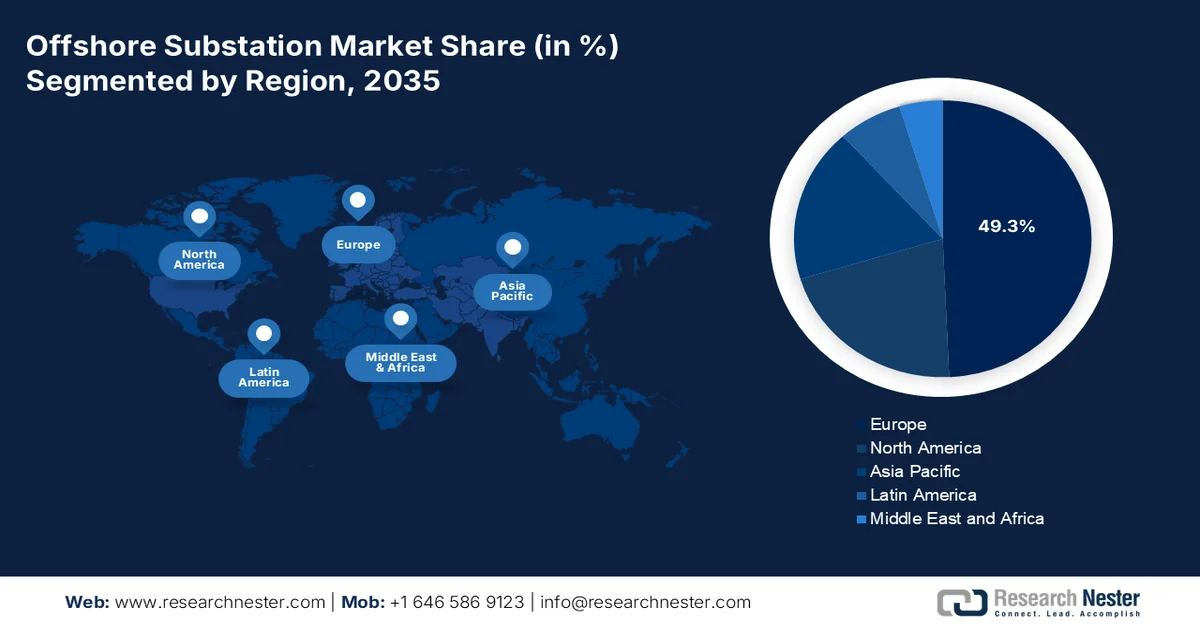
Europe offshore substation market is anticipated to grab the largest share of 49.3% by the end of 2035. The market’s upliftment in the region is effectively attributed to sustained investment in offshore wind infrastructure, supportive regulatory frameworks, strict carbon emission reduction targets, and the requirement to modernize aging grid systems for integrating fluctuating renewable energy power. According to a data report published by the IEA Organization in 2026, carbon dioxide emissions from fuel combustion in the region accounted for 3,346.5 MtCO2 as of 2023, along with a 26% trend. Besides, energy is highly responsible for the majority of climatic modifications resulting in greenhouse gas emissions, mostly from fossil fuels. Moreover, the emission is different across different countries, based on which, there is a huge growth opportunity for the market in the region.
Carbon Dioxide Emissions from Fuel Combustion in Europe, 2023
|
Countries |
Emission (MtCO2) |
|
Germany |
549.2 |
|
Turkey |
392.3 |
|
UK |
289.0 |
|
Italy |
284.1 |
|
France |
262.6 |
|
Poland |
258.2 |
|
Spain |
200.4 |
|
The Netherlands |
112.0 |
|
Ukraine |
103.8 |
|
Czechia |
79.6 |
Source: IEA Organization
The UK offshore substation market is growing significantly, owing to strong expansion in offshore wind, the presence of multiple large-scale projects, governmental contributions, significant public and private capital, along with the existing industrial base and offshore energy expertise. As stated in an article published by Offshore Energies UK in May 2026, the country needs to deliver almost 5 GW of the latest offshore wind annually and cater to the government’s objective of clean power. Besides, the government is also aiming to boost 7 GW of offshore wind in the upcoming renewables auction, permitting the minimum demand for 5 GW every year. In addition, the objective is to keep projects cost-effective in comparison to renewable technologies and electricity expenses. Likewise, a standard electricity grid is poised to be established to deliver suitable wind energy, thus proliferating the market growth.
The growth of the energy transition policy, the shift to the phase-out of nuclear power and renewable energy, the necessary overhaul of grid infrastructure, and the emphasis on integrating digital monitoring technologies for smart grid solutions are certain factors that are responsible for bolstering the offshore substation market in Germany. As per a data report published by the Federal Ministry for Economic Affairs and Climate Action in November 2024, the Energy Efficient Act focuses on reducing end user energy by 26.5%, along with primary energy consumption by 39.3% by the end of 2030. Additionally, the Renewable Energy Act is constituted with 80% of renewable electricity consumption by 2030 and 100% by the end of 2035. Besides, in terms of heating strategy, 50% of the overall heat is projected to be generated in a climate-neutral approach by the end of 2030, thus positively impacting the market expansion in the country.
North America Market Insights
The North America offshore substation market is expected to emerge as the fastest-growing region during the forecast period. The market’s development in the region is highly propelled by supportive federal policies, ambitious renewable energy, a shift to green energy sources, and the objective to achieve net-zero emissions. According to the July 2024 EIA data report, the net electricity generation from utility-scale generators, especially in the U.S., accounted for almost 4,178 billion kilowatthours or nearly 4.18 trillion kWh as of 2023. In addition, about 60% of domestic utility-scale electricity generation was significantly produced from fossil fuels, such as petroleum, natural gas, and coal, along with 21% from renewable energy sources, and 19% from nuclear energy. Additionally, in terms of natural gas, the net electricity generation catered to 43.1%, followed by 16.2% of coal, 5.7% of hydroelectric, and 0.8% of petroleum, thus driving the offshore substation market growth.
Overall Utility-Scale Electricity-Generation Capacity by Energy Sources in the U.S., 2023
|
Energy Sources |
Capacity % |
|
Natural Gas |
42.7 |
|
Renewables |
28.1 |
|
Non-hydroelectric |
21.3 |
|
Hydroelectric |
6.7 |
|
Coal |
15.2 |
|
Nuclear |
8.0 |
|
Petroleum |
2.4 |
|
Other Sources |
3.5 |
Source: EIA
The U.S. offshore substation market is gaining traction, owing to generous investment based on the Inflation Reduction Act, coordination in transmission development, legislative efforts, and the issuance of a presidential memorandum. As stated in an article published by the National Conference of State Legislatures in January 2026, the transmission grid is considered the ultimate backbone of the country’s electricity system, with the presence of more than 600,000 miles of high-voltage transmission lines for delivering electricity from power facilities to population centers. Besides, as per the Energy Department’s National Transmission Planning Study, the transmission system is poised to expand by 3.5 times by the end of 2050, to meet the future requirement growth and reliability demands, thereby making it suitable for fueling the market’s expansion.
The robust governmental commitment to decarbonization and renewable energy, maturity in the offshore wind industry, support from provincial and federal policies, efforts for establishing regulatory frameworks, and investment incentives are a few trends that are responsible for boosting the offshore substation market in Canada. As per an article published by the Government of Canada in January 2026, the country has successfully developed a wide-ranging climate plan, including pollution expenses, regulations, and more than USD 50 billion in federal investments. Besides, the country is predicted to boost its climate ambitions, with the intention of diminishing greenhouse gas emissions by 40% to 45% by the end of 2030, and also ensure a commitment to reaching net-zero emissions by 2050, thereby making it suitable for fueling the market’s development.
APAC Market Insights
The Asia Pacific offshore substation market is predicted to witness considerable growth by the end of the stipulated timeline. The market’s growth in the region is effectively driven by rapid industrialization, robust renewable energy objectives, an increase in wind power installations, and the wide-ranging high-voltage substation. According to an article published by the Southeast Asia Public Policy Institute in August 2024, Vietnam, Thailand, Singapore, and Brunei successfully aimed at mitigating 68% of emissions from cooling by the end of 2050. Besides, Thailand, Malaysia, Singapore, and Brunei are readily part of the Global Renewables and Energy Efficiency Pledge and focus on tripling installed renewables capacity to nearly 11,000 GW by 2030. Based on this, the renewable energy capacity in the region is predicted to increase by 73% by 2028, totaling almost 430 GW, thereby indicating an optimistic outlook for the offshore substation market expansion.
The Japan offshore substation market is gaining increased exposure, owing to suitable government renewable energy targets, an expansion in the exclusive economic zone, generous support and funding, investments in grid infrastructure and modernization, and technological advancements. As stated in the April 2026 IEEJ article, a surge is expected in the national electricity demand at a yearly rate of 0.5% by 2035. This eventually represents a transition from the past outlook to an anticipated yearly decline of 0.2% by 2032. Besides, in 2026, the electricity need is expected to continue boosting, which is highly fueled by the construction of the newest semiconductor facilities and data centers, and economic growth. Moreover, localization increases the electricity demand, which positively contributes to the market exposure of the nation.
The aspects of an upsurge in offshore wind installations, a suitable partnership with global technological providers, the dominating manufacturing base, and the government-backed project pipeline are a few trends that are responsible for boosting the offshore substation market in China. As per an article published by the State Council Information Office in April 2026, Guangdong Province, which is considered an offshore wind farm project, is located almost 80 km offshore to generate 1.6 billion kWh of clean power every year and diminish carbon emissions by 1.2 million tons once completed. Besides, the nation’s operational offshore wind farm project at Shandong Province operates in waters ranging between 52 and 56 meters deep and an estimated 70 KM offshore, while the pilot wind project at Hainan Province is expected to generate 150 million kWh of clean power annually, thereby enhancing the market exposure in the nation.
Key Offshore Substation Market Players:
- Siemens Energy AG (Germany)
- ABB Ltd (Switzerland)
- General Electric (GE Vernova) (USA)
- Hitachi Energy (Switzerland)
- Schneider Electric (France)
- Aker Solutions ASA (Norway)
- Petrofac Limited (UK)
- Prysmian Group (Italy)
- Nexans S.A. (France)
- Burns & McDonnell (USA)
- Keppel Offshore & Marine (Singapore)
- HSM Offshore Energy BV (Netherlands)
- Smulders Group NV (Belgium)
- Aibel AS (Norway)
- Semco Maritime A/S (Denmark)
- Hollandia Offshore BV (Netherlands)
- SLPE SA (Luxembourg)
- Envision Group (China)
- IWS Services (U.S.)
- ABS (U.S.)
- Smulders (Belgium)
- Company Overview
- Business Strategy
- Key Product Offerings
- Financial Performance
- Key Performance Indicators
- Risk Analysis
- Recent Development
- Regional Presence
- SWOT Analysis
- Siemens Energy AG is a key OEM partner for HVDC converter technology and provides critical electrical transmission equipment, such as transformers and switchgear, for major offshore wind projects. The company is also expanding its digital service capabilities to secure long-term recurring revenue from grid operations.
- ABB Ltd is a leader in delivering complete electrical systems for offshore substations, including auxiliary control systems, digitalization, and advanced power distribution. The company specializes in providing critical electrification, automation, and digital solutions to ensure reliable power transmission from large-scale offshore wind farms.
- General Electric (GE Vernova) provides comprehensive substation and electrical grid solutions for the offshore wind sector. The company focuses on delivering both onshore and offshore substation infrastructure to integrate renewable energy into national grids.
- Hitachi Energy has nearly 20 years of experience manufacturing transformers specifically ruggedized for offshore applications. The company offers a complete portfolio for offshore wind, from turbine transformers to collection substation solutions.
- Schneider Electric provides specific solutions and products for the offshore renewables sector. The company offers a broad portfolio of medium and low voltage switchgear, automation, and control systems for both offshore and onshore substations.
Here is a list of key players operating in the global offshore substation market:
The offshore substation market is characterized by a consolidated competitive landscape dominated by a few large multinational conglomerates and specialized engineering, procurement, construction, and installation (EPCI) contractors. Market leadership is defined by a combination of broad electrical equipment portfolios and deep offshore project execution capabilities, allowing incumbents to secure large-scale, integrated contracts. Besides, in January 2026, IWS Services accomplished a tactical merger between Hyndla and ProCon, which resulted in the development of an integrated supplier within the offshore wind supply chain. Additionally, this particular merger ensures low-voltage electrical engineering, project management, and installation services, along with high-voltage cable administration, thus positively impacting the offshore substation market’s growth and development.
Corporate Landscape of the Offshore Substation Market:
Recent Developments
- In January 2026, ABS successfully issued an approval in principle to Seatrium for its next-generation offshore substation design, which features 500 MW modules and also supports large-scale renewable energy generation.
- In March 2025, Smulders acquired 100% of HSM Offshore Energy by signing a deal and strengthened its expertise in the offshore energy industry, and expand their capacity and efficiency for delivering large-scale projects.
- In May 2022, GE’s grid solutions and the EPIC platform under HSM Offshore Energy signed a memorandum of understanding and successfully partnered on alternating current projects, especially in Europe.
- Report ID: 8647
- Published Date: Jun 30, 2026
- Report Format: PDF, PPT
- Explore a preview of key market trends and insights
- Review sample data tables and segment breakdowns
- Experience the quality of our visual data representations
- Evaluate our report structure and research methodology
- Get a glimpse of competitive landscape analysis
- Understand how regional forecasts are presented
- Assess the depth of company profiling and benchmarking
- Preview how actionable insights can support your strategy
Explore real data and analysis
Frequently Asked Questions (FAQ)
About this Report
Connect with our Expert


Report, 2026-2035



Copyright @ 2026 Research Nester. All Rights Reserved.
