Immuno-oncology Clinical Trial Market Outlook:
Immuno-oncology Clinical Trial Market size was over USD 11.3 billion in 2025 and is expected to reach USD 38.1 billion by the end of 2035, growing at around 12.9% CAGR during the forecast period i.e., between 2026-2035. In 2026, the industry size of immune-oncology clinical trial is estimated at USD 12.8 billion.
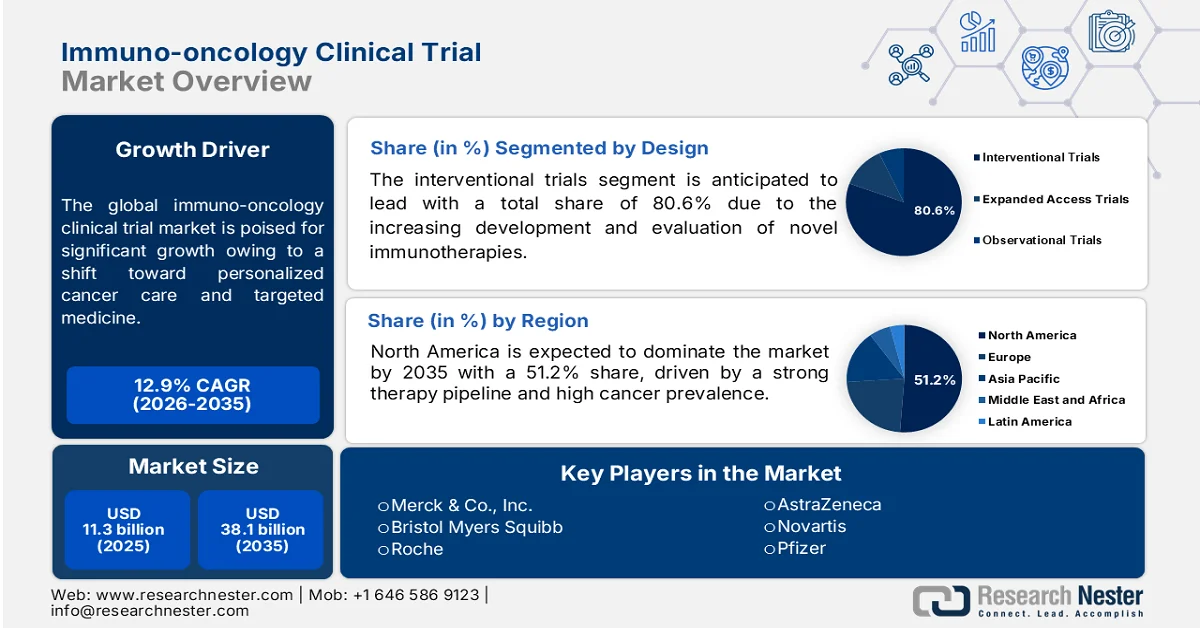
The global immuno-oncology clinical trial market is expanding at a notable pace, which is driven by a shift toward personalized cancer care and targeted medicine. In addition, pharmaceutical and biotechnology companies are proactively expanding their pipelines, transitioning from traditional monotherapies to innovative combination protocols that pair immunotherapies with existing standard treatments. In this context, the National Institutes of Health (NIH) in August 2023 reported that immuno-oncology treatments, such as immune checkpoint inhibitors and T-cell engagers, have advanced cancer therapy by stimulating immune-mediated attacks on cancer cells. It also mentioned that successful clinical development requires careful selection of cancer indications, treatment settings, combination partners, and adaptive trial designs. Future progress of the category depends on optimized dosing strategies, reliable biomarkers, clinical endpoints, and well-designed early- and late-stage trials in order to ensure durable efficacy.
Furthermore, the integration of digital health technologies, decentralized trial designs, and artificial intelligence for predictive patient matching is streamlining operations and expanding geographic reach, propelling the growth of immuno-oncology clinical trial market. As researchers across different nations are unveiling deeper insights into cellular mechanisms, the market is poised for sustained long-term growth. In this context, Biomunex Pharmaceuticals in May 2026 announced strategic AI collaborations with Gordion Bioscience and Tangramed Biotech to accelerate the discovery and development of next-generation cancer immunotherapies using its proprietary BiXAb® bispecific and multi-specific antibody platforms. The partnerships will leverage AI-based target discovery, biomedical data analytics, and generative AI approaches to identify novel therapeutic combinations and enhance oncology pipeline development.
Key Immuno-oncology Clinical Trial Market Insights Summary:
Regional Highlights:
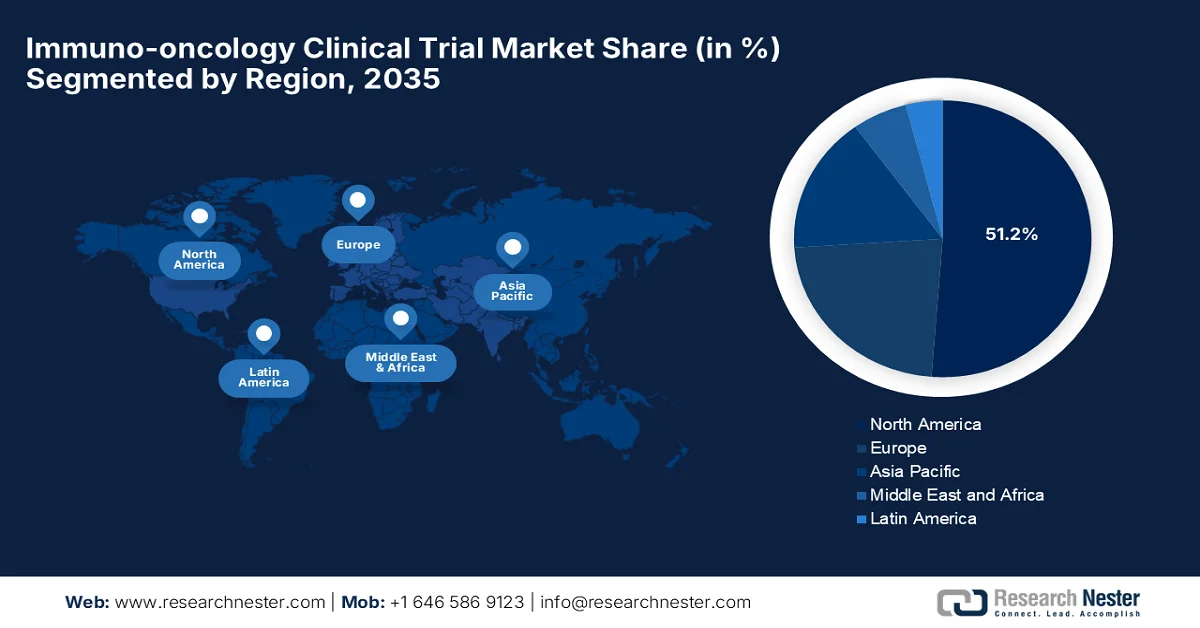
- The immuno-oncology clinical trial market is expected to see North America account for 51.2% of the market share by 2035, underpinned by a strong regional pipeline of novel therapies and a high prevalence of cancer
- Asia Pacific is anticipated to witness the fastest expansion throughout 2026-2035, fueled by a vast and diverse patient pool that accelerates recruitment timelines for complex cancer studies
Segment Insights:
- The immuno-oncology clinical trial market is projected to have the Interventional trials segment capture 80.6% of the market share by 2035, reinforced by the increasing development and evaluation of novel immunotherapies
- Solid Tumors are poised to secure a considerable share in the indication segment by 2035, stimulated by the high global burden of solid malignancies, expanding clinical evaluation of immune checkpoint inhibitors, and personalized cancer vaccines
Key Growth Trends:
- Increasing pharmaceutical and biotechnology investments
- Supportive regulatory approvals and government initiatives
Major Challenges:
- Patient recruitment and trial enrollment challenges
- Tumor heterogeneity and treatment response variability
Key Players: Merck & Co., Inc. (U.S.) ,Bristol Myers Squibb (U.S.) ,Roche (Switzerland) ,AstraZeneca (UK) ,Novartis (Switzerland) ,Pfizer (U.S.) ,Gilead Sciences (U.S.) ,Agenus (U.S.).
Global Immuno-oncology Clinical Trial Market Forecast and Regional Outlook:
Market Size & Growth Projections:
- 2025 Market Size: USD 11.3 billion
- 2026 Market Size: USD 12.8 billion
- Projected Market Size: USD 38.1 billion by 2035
- Growth Forecasts: 12.9% CAGR (2026-2035)
Key Regional Dynamics:
- Largest Region: North America (51.2% Share by 2035)
- Fastest Growing Region: Asia Pacific
- Dominating Countries: United States, China, Japan, Germany, United Kingdom
- Emerging Countries: South Korea, India, Singapore, Australia, Canada
Last updated on : 29 July, 2026
Immuno-oncology Clinical Trial Market - Growth Drivers and Challenges
Growth Drivers
- Increasing pharmaceutical and biotechnology investments: Substantial investments by pharmaceutical and biotechnology companies are remarkably contributing to the expansion of the immuno-oncology clinical trial market. In addition, companies are allocating substantial resources toward research and development programs focused on novel cancer immunotherapies. In February 2024, Novartis announced an agreement to acquire MorphoSys AG for USD 77.6 per share, totaling around USD 2.9 billion in cash, with the main goal of strengthening its oncology pipeline and expanding its hematology portfolio. This acquisition includes pelabresib, a late-stage investigational BET inhibitor for myelofibrosis, and tulmimetostat, an early-stage EZH1/EZH2 inhibitor for solid tumors and lymphomas, thus denoting a positive market outlook.
- Supportive regulatory approvals and government initiatives: The supportive regulatory environments along with government backing are creating newer growth opportunities for pioneers in the market. Accelerated approval pathways, funding programs, and initiatives promoting cancer research are helping reduce development timelines, thus motivating companies to expand clinical research in advanced oncology treatments. In February 2024, the U.S. Food & Drug Administration (FDA) granted accelerated approval to lifileucel (Amtagvi), which was developed by Iovance Biotherapeutics, for adults with unresectable or metastatic melanoma previously treated with PD-1 inhibitors and, when applicable, BRAF/MEK inhibitors. In the clinical trial, lifileucel demonstrated an objective response rate of 31.5%, with the median duration of response not yet reached, thereby supporting its potential as a new treatment option for advanced melanoma patients.
Emerging Immuno-Oncology Therapies: Clinical Trial Developments and Market Growth Opportunities 2026
|
Year |
Organization |
Initiative |
Market Opportunity |
|
2026 - 2029 |
NRG Oncology |
Phase III HELIO-RT trial evaluating immunotherapy ± stereotactic body radiation therapy in advanced hepatocellular cancer |
Supports growth of Phase III immuno-oncology trials and combination therapy development in solid tumors |
|
2026 |
Anixa Biosciences |
Phase I trials of ovarian cancer CAR-T therapy (lira-cel) and breast cancer vaccine immunotherapy |
Highlights expansion of cell therapies and cancer vaccines in early-stage immunotherapy research |
Source: Official Press Releases
Challenges
- Patient recruitment and trial enrollment challenges: Recruiting suitable patients is considered to be a major challenge in the immuno-oncology clinical trial market due to strict eligibility criteria, biomarker requirements, and the complexity of tumor characteristics. Most of the trials require patients with specific genetic profiles, immune markers, or advanced disease stages, which in turn can limit the available participant pool. Apart from this, competition from concurrent oncology clinical trials can also slow patient recruitment, especially in common cancers where several investigational treatments are being tested at the same time. Hence, any type of delay in patient recruitment can increase trial costs, extend development timelines, and impact regulatory submission schedules, thus negatively impacting market expansion.
- Tumor heterogeneity and treatment response variability: Tumor heterogeneity also represents a major scientific challenge in the immuno-oncology clinical trial market, as cancer cells and immune environments can vary significantly among patients. The immune checkpoint inhibitors and other immunotherapies have demonstrated strong responses in certain populations, but numerous patients still experience limited or temporary benefits due to differences in tumor biology, immune system activity, and resistance mechanisms. On the other hand, identifying reliable predictive biomarkers remains challenging, which in turn affects patient selection and trial outcomes. In addition, understanding why some tumors respond while others remain resistant requires extensive research and advanced molecular profiling, thus complicating clinical trial design and slowing the development of effective therapies.
Immuno-oncology Clinical Trial Market Size and Forecast:
| Report Attribute | Details |
|---|---|
|
Base Year |
2025 |
|
Forecast Year |
2026-2035 |
|
CAGR |
12.9% |
|
Base Year Market Size (2025) |
USD 11.3 billion |
|
Forecast Year Market Size (2035) |
USD 38.1 billion |
|
Regional Scope |
|
Immuno-oncology Clinical Trial Market Segmentation:
Design Segment Analysis
The interventional trials segment is anticipated to lead the design category with a total share of 80.6% in the immuno-oncology clinical trial market over the forecasted years. The segment’s dominance is largely propelled by the increasing development and evaluation of novel immunotherapies, which include immune checkpoint inhibitors, CAR-T cell therapies, cancer vaccines, and monoclonal antibodies. In addition, companies are making heavy investments in terms of interventional studies to establish the efficacy and optimal dosing of these therapies. In this context, Merck in May 2024 announced that the Phase 3 KEYNOTE-811 trial achieved its dual primary endpoint of overall survival. Pembrolizumab (KEYTRUDA) combined with trastuzumab and chemotherapy significantly improved survival in patients with HER2-positive advanced gastric or gastroesophageal junction adenocarcinoma, thus denoting a wider segment scope.
Indication Segment Analysis
By the end of 2035, solid tumors, which are a part of the indication segment, are forecasted to grow with a considerable share in the immuno-oncology clinical trial market. The high global burden of solid malignancies, expanding clinical evaluation of immune checkpoint inhibitors, and personalized cancer vaccines are expanding growth opportunities for the segment. Apart from this, the substantial investment in combination immunotherapy strategies aimed at overcoming tumor resistance and improving long-term clinical outcomes is positioning the subtype for sustained growth. In April 2025, a trial which was led by NIH found that combining selected tumor-infiltrating lymphocyte therapy with pembrolizumab produced meaningful tumor shrinkage in patients with advanced metastatic gastrointestinal cancers that had progressed after multiple prior treatments. Hence, these findings underscore the potential of personalized cell-based immunotherapy to expand treatment options for common solid tumors and support extensive research to enhance its effectiveness.
Phase Segment Analysis
Phase III is expected to garner a significant share in the immuno-oncology clinical trial market during the discussed timeframe. The segment’s growth is effectively propelled by an increasing number of late-stage clinical studies evaluating novel immunotherapies, rising regulatory requirements for robust efficacy and safety data prior to product approval. In addition, the expanding pipeline of immune checkpoint inhibitors, cell and gene therapies, cancer vaccines, and combination treatment regimens is also driving the segment’s leadership in this field. Moreover, growing investments by pharmaceutical and biotechnology companies, increasing multinational and multicenter trial activities, and the rising demand for confirmatory studies to support global regulatory submissions and label expansions are also contributing to the strong growth of the Phase III segment.
Our in-depth analysis of the immuno-oncology clinical trial market includes the following segments:
|
Segment |
Subsegments |
|
Design |
|
|
Indication |
|
|
Phase |
|

Vishnu Nair
Head - Global Business DevelopmentCustomize this report to your requirements — connect with our consultant for personalized insights and options.
Immuno-oncology Clinical Trial Market - Regional Analysis
North America Market Insights
The North America immuno-oncology clinical trial market is projected to lead the global landscape with a total share of 51.2% during the forecast period. The region’s dominance is mainly driven by a strong regional pipeline of novel therapies and a high prevalence of cancer. North America is also supported by extensive government funding, favorable regulatory pathways such as fast-track designations, and a highly developed healthcare infrastructure. In October 2025, the U.S. Food & Drug Administration reported that its Immuno-Oncology Therapeutics Program supports research, education, and regulatory efforts to develop safer and more personalized immune-based cancer therapies. It also promotes innovative clinical trials and collaborations to improve the evaluation and availability of next-generation immuno-oncology treatments, thus making it suitable for standard market growth.
The exceptional research infrastructure and substantial venture capital investment in biotechnology are driving growth of the market in the U.S. The country’s market benefits from a dense network of academic medical centers and specialized contract research organizations that streamline complex protocol execution. In July 2026, City of Hope announced the launch of the IMMUNO-BIOMAP Phase 2 clinical trial to study how advanced non-small cell lung cancers develop resistance to immunotherapy and to improve treatment selection. This is a USD 23.7 million federally supported research project that will use biomarkers, tumor DNA analysis, and predictive models to create personalized therapies and identify patients most likely to benefit from specific treatments.
The Canada market is progressing at a notable pace, which is supported by a publicly funded healthcare system that provides a centralized framework for patient data and recruitment. Simultaneously, the country’s market is also driven by suitable government incentives, such as scientific research and experimental development tax credits, which encourage local investment and innovation in novel immunotherapies. Based on the government data published in August 2025, Canada has a strong clinical trial ecosystem, contributing around 4% of global trials and ranking among the leading countries for trial activity and productivity. In addition, the market is being supported by advanced healthcare infrastructure, skilled researchers, government funding, and industry investment, thereby providing an ideal environment for conducting complex clinical research across therapeutic areas.
APAC Market Insights
The Asia Pacific immuno-oncology clinical trial market is forecasted to grow at the fastest rate during the assessed timeframe. The region’s leadership is effectively propelled by a vast and diverse patient pool that accelerates recruitment timelines for complex cancer studies. Growth is also supported by government initiatives aimed at modernizing healthcare infrastructure and harmonizing regulatory frameworks with international standards to attract global biopharmaceutical investments. In November 2024, Japan’s National Cancer Center, Precision Medicine Asia, and Paradigm Health launched LC-SCRUM-CD, which is a nationwide clinical trial network to accelerate precision oncology research. This initiative will use genomic data from more than 150 hospitals to improve patient matching, expand access to trials, and streamline clinical trial operations for cancer therapies, thus evidently reshaping the growth dynamics of the regional market.
In China immuno-oncology clinical trial market is growing exponentially which is driven by a massive patient population that enables exceptionally rapid clinical trial recruitment. In addition, a surge in domestic biotechnology innovation and substantial venture capital funding have positioned local firms as global contenders, particularly in CAR-T cell therapies and PD-1/PD-L1 inhibitors. Based on the government data published in May 2024, China is rapidly expanding its clinical trial infrastructure through government support, improved regulatory systems, and disease-focused research platforms to accelerate drug development. The country benefits from thousands of registered drug trials and strong oncology research capabilities, thus strengthening its role in global clinical research.
A highly cost-effective operational environment and a booming domestic biopharmaceutical sector focused on affordable biosimilars and novel immunotherapies are positioning the immuno -oncology clinical trials market in India for solid growth. In addition, the country's network of specialized oncology centers provides world-class clinical expertise and high-quality data management. In September 2024, the Press Information Bureau (PIB) reported that ICMR has established partnerships with industry and academic organizations to strengthen India’s first-in-human phase 1 clinical trial capabilities and advance indigenous drug development. This initiative supports innovative therapies including cancer treatments, vaccines, and CAR-T cell therapy while building a self-reliant clinical research ecosystem.
Europe Market Insights
The Europe immuno-oncology clinical trial market is expected to expand at a considerable rate, which is driven by a highly sophisticated healthcare infrastructure and robust public funding for cancer research. The region’s trial sites are opting for decentralized trial methodologies and advanced digital health technologies to optimize patient retention and recruitment efficiency. In February 2026, the European Commission announced the 2026 Horizon Europe funding calls under the EU Mission on Cancer with a main goal to support innovative cancer research and patient-focused solutions. These initiatives will focus on areas such as virtual human models, early cancer prediction, immunotherapy trials, palliative care, survivor support, and improving cancer care capacity, thus making it suitable for bolstering the region’s market growth.
The Germany immuno-oncology clinical trial market is expanding owing to its position as a predominant hub for biomedical research and high-tech healthcare infrastructure. Market growth is propelled by strong collaboration between academic medical centers and leading global biopharmaceutical enterprises. The landscape benefits from highly structured clinical trial processes and strict adherence to international data quality standards, attracting more investments in the country’s market. In February 2023, Germany expanded the National Center for Tumor Diseases (NCT) from two to six sites to strengthen nationwide clinical cancer research and improve patient access to innovative treatments. This expanded network is supported by the Federal Ministry of Education and Research, and it focuses on personalized oncology, advanced clinical trials, and faster translation of discoveries into patient care.
The foundational life sciences ecosystem and the unique infrastructure of the National Health Service (NHS) are driving the UK immuno-oncology clinical trial market. Market growth is also being supported by government initiatives, along with which is offering proactive regulatory guidance from the Medicines and Healthcare products Regulatory Agency (MHRA), offering expedited review pathways. In October 2024, the UK launched MANIFEST, which is a nationwide immunotherapy research programme supported by almost USD 28 million in combined funding to understand cancer immunotherapy response and treatment-related side effects. The initiative will analyze biomarkers, tumor characteristics, immune profiles, and microbiome data from thousands of patients to enable more personalized immunotherapy strategies, thus accelerating new therapy developments.
UK Market Growth Opportunities: Key Government Initiatives and Clinical Trial Developments 2023 - 2026
|
Year |
Organization |
Initiative |
Immuno-Oncology Clinical Trial Market Opportunity |
|
2026 |
UK Department of Health and Social Care & NHS England |
NHS App integration for rare cancer clinical trial access |
Improves patient enrollment and accelerates innovative cancer research |
|
2024 |
NHS England & NICE |
KEYNOTE-A18 trial supports pembrolizumab approval for cervical cancer |
Drives adoption of late-stage immunotherapy trials and regulatory approvals |
|
2023 |
UK Government, NHS England & BioNTech SE |
Cancer Vaccine Launch Pad for personalized cancer immunotherapy trials |
Expands access to precision immunotherapy trials and boosts trial recruitment |
Source: Official Press Releases
Key Immuno-oncology Clinical Trial Market Players:
- Merck & Co., Inc. (U.S.)
- Bristol Myers Squibb (U.S.)
- Roche (Switzerland)
- AstraZeneca (UK)
- Novartis (Switzerland)
- Pfizer (U.S.)
- Gilead Sciences (U.S.)
- Agenus (U.S.)
- Company Overview
- Business Strategy
- Key Product Offerings
- Financial Performance
- Key Performance Indicators
- Risk Analysis
- Recent Development
- Regional Presence
- SWOT Analysis
- Merck & Co., Inc. is one of the leading players in the market, driven by its flagship PD-1 inhibitor KEYTRUDA® and a broad oncology development pipeline. The company conducts extensive global clinical trials across different cancer indications, which include solid tumors, hematological malignancies, and biomarker-defined patient populations.
- Bristol Myers Squibb is a major contributor to this landscape, which is supported by its established checkpoint inhibitor portfolio. Besides, the firm is highly focused on combination immunotherapies, next-generation immune-modulating agents, and clinical trial programs targeting different cancer types.
- Roche is a prominent market participant that benefits from a strong presence through its PD-L1 inhibitor Tecentriq® (atezolizumab) and expanding oncology pipeline. The company leverages its integrated diagnostics and therapeutics capabilities in order to support precision medicine approaches and biomarker-driven clinical trials.
- AstraZeneca has built a strong presence by advancing its oncology portfolio and expanding an extensive range of immune-focused therapeutic initiatives. In addition, the firm proactively conducts clinical studies across lung cancer, gastrointestinal cancers, gynecological cancers, and other solid tumors.
- Novartis is a foundational player that participates in the market through advanced cellular therapies and a growing pipeline of immune-based cancer treatments. The company is highly focused on developing personalized immunotherapies and novel treatment platforms targeting difficult-to-treat cancers.
Here is a list of key players operating in the global immuno-oncology clinical trial market:
The immuno-oncology clinical trial market is witnessing a competitive landscape that comprises pharmaceutical and biotechnology companies developing and sponsoring immunotherapy-based clinical trial programs as end-market offerings. The market is moderately consolidated, and it hosts leading global players leveraging extensive oncology pipelines, checkpoint inhibitor platforms, and biomarker-driven trial capabilities. Major manufacturers in this field compete through innovative immuno-oncology assets, strategic collaborations, and expanding indications across solid tumors and hematological cancers. For instance, NeoTX Therapeutics in May 2024 announced the acceptance of a poster presentation at the ASCO 2024 annual meeting, which consists of preliminary clinical activity and safety results of naptumomab estafenatox combined with docetaxel in a Phase 2 trial for previously treated advanced/metastatic NSCLC patients. The company is advancing its proprietary tumor-targeted superantigen platform, which is designed to redirect immune cells toward tumors and enhance anticancer immune responses.
Corporate Landscape of the Market:
Recent Developments
- In July 2026, Agenus Inc. announced a private placement of up to USD 340 million to advance its registrational ROBBIN Phase 3 trial of neoadjuvant botensilimab and balstilimab (BOT+BAL) in high-risk MSS colon cancer. This funding will support clinical milestones, including interim pathologic response and event-free survival analyses.
- In July 2026, Merck announced that KEYTRUDA® (pembrolizumab) significantly improved progression-free survival (PFS) as a monotherapy in patients with advanced or recurrent dMMR endometrial cancer compared to platinum-based chemotherapy in the Phase 3 KEYNOTE-C93 trial.
- Report ID: 8709
- Published Date: Jul 29, 2026
- Report Format: PDF, PPT
- Explore a preview of key market trends and insights
- Review sample data tables and segment breakdowns
- Experience the quality of our visual data representations
- Evaluate our report structure and research methodology
- Get a glimpse of competitive landscape analysis
- Understand how regional forecasts are presented
- Assess the depth of company profiling and benchmarking
- Preview how actionable insights can support your strategy
Explore real data and analysis
Frequently Asked Questions (FAQ)
About this Report
Connect with our Expert


Report, 2026-2035



Copyright @ 2026 Research Nester. All Rights Reserved.
