Electronic Chemicals Market Outlook:
Electronic Chemicals Market size was valued at USD 26.8 billion in 2025 and is expected to exceed USD 83.2 billion by the end of 2035, expanding at over 12% CAGR during the forecast period i.e., between 2026-2035. In 2026, the industry size of electronic chemicals is estimated at USD 30 billion.
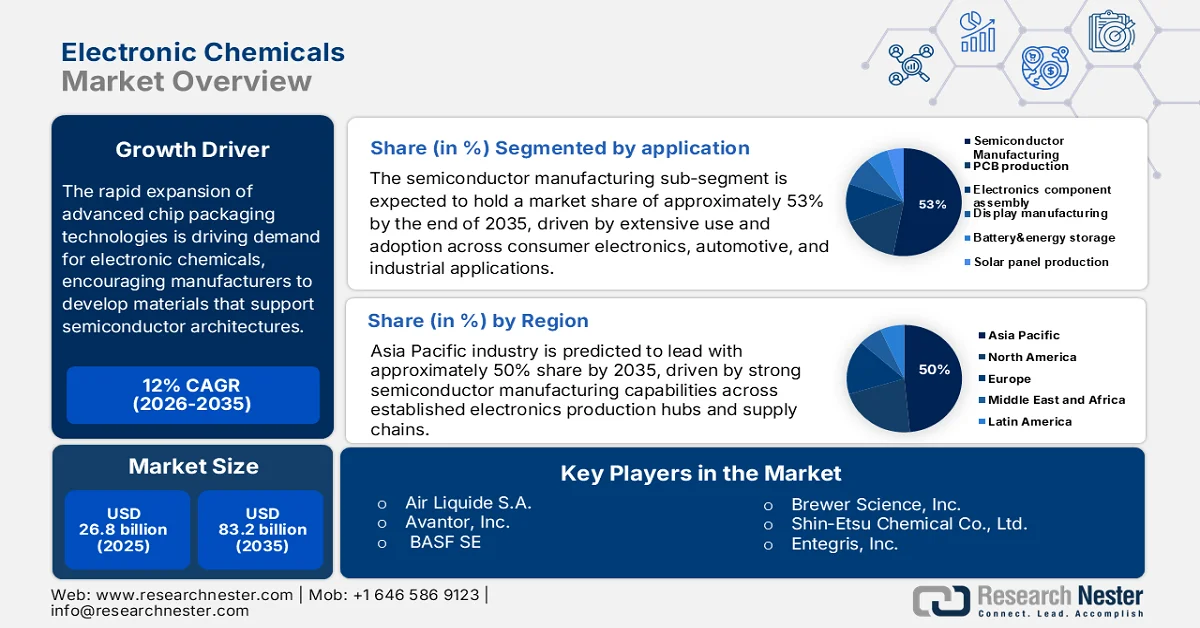
The electronic chemicals market is witnessing strong growth due to the increasing production of semiconductors and the increasing demand for advanced electronic devices across industries. Electronic chemicals play a major role in semiconductor fabrication, printed circuit board (PCB) manufacturing, display production, and electronic component assembly. There is a huge growing demand for artificial intelligence (AI) processors, data center infrastructure, consumer electronics, automotive electronics, and industrial automation technologies, which continues to support the consumption of high-purity electronic chemicals globally.
Across major economies, the electronic chemicals market is further profiting from increasing investments in semiconductor manufacturing capacity. Governments and industry are actively supporting domestic semiconductor development initiative programs and fabrication facility expansion projects. According to the U.S. CHIPS and Science Act, the U.S. government in July 2022 allocated approximately USD 52.7 billion to strengthen domestic semiconductor manufacturing, research and development, and workforce development programs between 2022 and 2027. Owing to these investments, the construction of new semiconductor fabrication facilities will increase demand for photoresists, specialty gases, etchants, chemical mechanical planarization (CMP) slurries, and other semiconductor processing chemicals.
Moreover, the increasing adoption of advanced semiconductor technologies, which includes AI chips, high-performance computing processors, 5G infrastructure components, and advanced packaging solutions, continues to support market expansion. According to SEMI, global semiconductor manufacturing capacity is anticipated to continue growing as new fabrication plants become operational across North America, Europe, and Asia Pacific. Furthermore, increasing demand for electric vehicles, renewable energy systems, advanced displays, and next-generation consumer electronics is expected to drive the consumption of electronic chemicals used in semiconductor manufacturing, PCB production, battery technologies, and display fabrication throughout the forecast period.
Key Electronic Chemicals Market Insights Summary:
Regional Highlights:
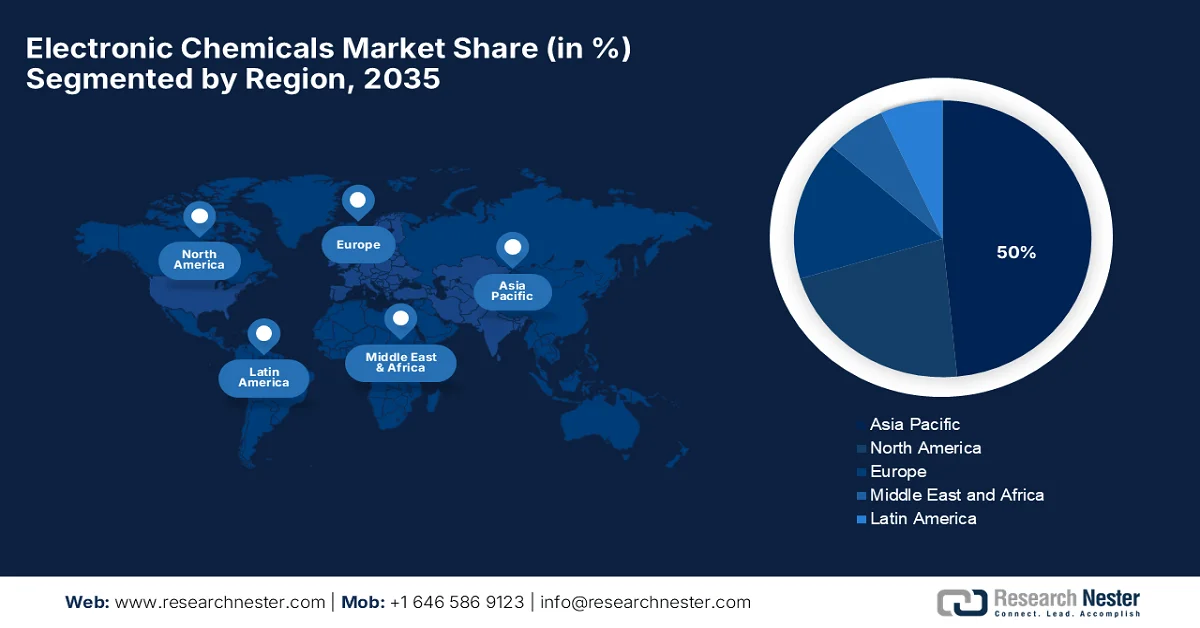
- Asia Pacific electronic chemicals market is projected to command over 50% share by 2035, reinforced by the region’s robust semiconductor and electronics manufacturing ecosystem across China, Japan, South Korea, and Taiwan
- North America is expected to maintain a major position in the market through 2035, stimulated by expanding semiconductor production capacity and substantial investments under the CHIPS and Science Act
Segment Insights:
- The semiconductor manufacturing sub-segment of the electronic chemicals market is anticipated to capture approximately 53% share by 2035, propelled by rising semiconductor production driven by growing demand for AI, cloud computing, and advanced electronic devices
- The photoresists & photochemicals sub-segment is forecast to lead the market by 2035, underpinned by increasing demand for high-performance chips across AI, 5G, consumer electronics, and automotive applications
Key Growth Trends:
- Increasing government investments in domestic semiconductor production
- Growing demand for consumer electronics
Major Challenges:
- Stringent environmental and chemical safety regulations
- Supply chain disruptions and raw material dependency
Key Players: Air Liquide S.A. (France), Avantor, Inc. (U.S.), BASF SE (Germany), Brewer Science, Inc. (U.S.), Shin-Etsu Chemical Co., Ltd. (Japan), Entegris, Inc. (U.S.), FUJIFILM Holdings Corporation (Japan), JSR Corporation (Japan), Kanto Chemical Co., Inc. (Japan), Linde plc (United Kingdom), Merck KGaA (Germany), Mitsubishi Gas Chemical Company, Inc. (Japan), Resonac Holdings Corporation (Japan), Sumitomo Chemical Co., Ltd. (Japan), Tokyo Ohka Kogyo Co., Ltd. (Japan).
Global Electronic Chemicals Market Forecast and Regional Outlook:
Market Size & Growth Projections:
- 2025 Market Size: USD 26.8 billion
- 2026 Market Size: USD 30 billion
- Projected Market Size: USD 83.2 billion by 2035
- Growth Forecasts: 12% CAGR (2026-2035)
Key Regional Dynamics:
- Largest Region: Asia Pacific (50% Share by 2035)
- Fastest Growing Region: North America
- Dominating Countries: China, United States, Japan, South Korea, Taiwan
- Emerging Countries: India, Vietnam, Singapore, Malaysia, Thailand
Last updated on : 28 July, 2026
Electronic Chemical Market - Growth Drivers and Challenges
Growth Drivers
- Increasing government investments in domestic semiconductor production: The electronic chemicals market is getting benefit from increasing government investments aimed at strengthening domestic semiconductor manufacturing capabilities. To reduce supply chain dependence and expand local chip production several countries are introducing semiconductor development initiatives, funding programs, and manufacturing support measures. According to the Semiconductor Industry Association (SIA), the U.S. CHIPS and Science Act authorized approximately USD 52.7 billion to support domestic semiconductor manufacturing, research, and workforce development. These investments are encouraging the construction of new semiconductor fabrication facilities, which need large quantities of electronic chemicals such as photoresists, specialty gases, etchants, deposition materials, and cleaning chemicals. As semiconductor manufacturing capacity continues to grow globally, the electronic chemical market demand will show a rise throughout the forecast period.
- Growing demand for consumer electronics: The increasing use of smartphones, laptops, tablets, wearable devices, gaming consoles, and smart home products is driving high production of semiconductors, printed circuit boards (PCBs), and display panels. Electronic chemicals play a vital role in the manufacturing of these components, that includes wafer processing, photolithography, cleaning, etching, and display fabrication.
According to the United Nations Conference on Trade and Development (UNCTAD), the annual shipments for smartphones has reached approximately 1.2 billion units in 2023, while the number of Internet of Things (IoT) devices is projected to increase to 39 billion by 2029. The demand for electronic chemicals throughout the forecast period is fueled by the growing deployment of connected electronic devices, which is expected to increase the consumption of semiconductors and electronic materials. - Increasing adoption of advanced semiconductor technologies: There is huge transition towards advanced semiconductor technologies, which include artificial intelligence (AI), high-performance computing (HPC), 5G infrastructure, data centers, and advanced packaging technologies, which is the reason for the demand for highly specialized electronic chemicals. Advanced semiconductor manufacturing requires ultra-high-purity chemicals, photoresists, specialty gases, deposition materials, and chemical mechanical planarization (CMP) slurries to support smaller process nodes and complex chip architectures. According to the Semiconductor Industry Association (SIA), global semiconductor sales reached USD 627.6 billion in 2024, representing a 19.1% increase compared to 2023. The manufacturing of advanced chips depends on specialized materials such as photoresists, CMP slurries, deposition precursors, and specialty gases, which supports complex device architectures and smaller process nodes. The demand for electronics chemicals is expected to rise throughout the forecast period, as semiconductor manufacturers continue to invest in next-generation chip technologies.
Challenges
- Stringent environmental and chemical safety regulations: The electronic chemicals market is being affected by increasingly strict regulations for using chemical substances such as PFAS-containing materials, specialty gases, and solvents. Manufacturers are needed to invest in compliance measures, process modifications, and the development of alternative formulations that meet environmental standards while maintaining product performance, as the official’s guidelines continue to increase. These requirements can increase operational costs and can create extra compliance burdens for manufacturers. According to the U.S. Environmental Protection Agency (EPA), PFAS chemicals are facing more attention due to environmental and public health concerns.
- Supply chain disruptions and raw material dependency: The electronics chemicals market is highly exposed to supply chain disruptions due to its strong dependency on a limited set of critical raw materials, including specialty gases, high-purity solvents, photoresists, and advanced etchants. The supplies usually come from a limited number of suppliers and from key regions, which increases the risk to geopolitical tensions, trade restrictions, transportation delays, and natural disasters. Moreover, some additional reasons for uncertainty include frequent fluctuations in raw material availability and their pricing.
Electronic Chemical Market Size and Forecast:
| Report Attribute | Details |
|---|---|
|
Base Year |
2025 |
|
Forecast Year |
2026-2035 |
|
CAGR |
12% |
|
Base Year Market Size (2025) |
USD 26.8 billion |
|
Forecast Year Market Size (2035) |
USD 83.2 billion |
|
Regional Scope |
|
Electronic Chemicals Market Segmentation:
Application Segment Analysis
Based on the application segment, the semiconductor manufacturing sub-segment is anticipated to account for the largest share of approximately 53% by the end of 2035, owing to its extensive use in the production of semiconductors for consumer electronics, telecommunications, automotive systems, and industrial applications. For the process of manufacturing semiconductor, electronic chemicals are an important part throughout, including wafer fabrication, cleaning, etching, and photolithography. According to World Semiconductor Trade Statistics (WSTS), the global semiconductor market is expected to grow, because of the demand for AI, cloud computing, and advanced electronic devices. As semiconductor production increases, the need for electronic chemicals is expected to grow accordingly, supporting the segment's leading position in the electronic chemicals market.
Product Segment Analysis
In the product category, the photoresists & photochemicals sub-segment is anticipated to hold the largest share of the electronics chemicals market by the end of 2035. The segment's growth is attributed to its essential role in the photolithography process used in semiconductor manufacturing. There is a need for high-performance photoresist materials more in electronic chemicals market, because of the demand for advanced chips that is continuing to increase across AI, 5G, consumer electronics, and automotive applications. Photoresists help create precise circuit pattering which gives supports to the smaller, more powerful semiconductor devices. There is demand for photoresists that is increasing alongside the rapid growth of the semiconductor industry, which recorded global sales of USD 630.5 billion in 2024, up 19.1% from the previous year, according to the Semiconductor Industry Association (SIA). Furthermore, ongoing development in chip manufacturing technologies and rising investments in semiconductor fabrication facilities continue to be the prominent reason for demand of photoresists, reinforcing their leading position in the electronic chemicals market.
Our in-depth analysis of the electronic chemicals market includes the following segments:
|
Segment |
Sub-segment |
|
Product |
|
|
Application |
|

Vishnu Nair
Head - Global Business DevelopmentCustomize this report to your requirements — connect with our consultant for personalized insights and options.
Electronic Chemicals Market - Regional Analysis
APAC Market Insights
Asia Pacific holds a significant base in the global electronic chemicals market and is expected to grow to over 50% of the market by the end of 2035. This region’s leadership is supported by its strong semiconductor and electronics manufacturing base, specifically across countries such as China, Japan, South Korea, and Taiwan. Moreover, the presence of major electronic material suppliers and semiconductor manufacturers continues to pose demand for photoresists, specialty gases, wet chemicals, and other process materials.
Japan represents a key market in the Asia Pacific electronic chemicals industry, which is supported by its strong position in semiconductor materials and specialty chemicals. Japan has some key market suppliers and manufacturers such as FUJIFILM and Kanto Chemical, providing photoresists, electronic-grade chemicals, and semiconductor process materials. Japan remains a leading supplier of semiconductor materials globally, particularly in areas such as photoresists and specialty electronic chemicals. Across the country, a settled supplier base, combined with continuous innovation in semiconductor and electronics manufacturing, continues to support demand for electronic chemicals.
The electronic chemicals market is gaining increased traction in China, backed by its strong electronics manufacturing industry and ongoing innovation for semiconductor production. The country has a large electronics manufacturing sector that produces a wide range of consumer electronics, telecommunications equipment, and electronic components. This is the prominent reason for steady demand for electronic chemicals used throughout the production process. In addition, the Chinese government's Made in China 2025 initiative continues to promote the development of domestic semiconductor manufacturing and advanced electronic technologies that can support long-term demand for electronic chemicals.
North America Market Insights
North America holds a major share of the global electronic chemicals market, supported by its well- established semiconductor industry, strong R&D capabilities, and ongoing investments in advanced manufacturing technologies. The region receives benefits from the presence of major semiconductor manufacturers and electronic material suppliers that drive demand for high-purity chemicals, specialty gases, photoresists, and wafer processing materials. Government initiatives are also playing a crucial part in supporting electronic chemicals market growth. For example, the article published stated that the U.S. CHIPS and Science Act provides more than USD 50 billion to increase semiconductor manufacturing, research, and supply chain resilience, which creates additional demand for electronic chemicals across the region.
The U.S. hold the largest share of the electronic chemicals market, by the support of their strong semiconductor manufacturing base and their ongoing investments in domestic chip production. The country remains a global center for semiconductor innovation and they have several leading companies and electronic material suppliers. This industry creates a consistent demand for specialty chemicals used in wafer fabrication, lithography, and advanced packaging applications, which support market growth across the country.
Canada is emerging as an important electronic chemicals market within North America, which is supported by growing investments in semiconductor research, advanced materials, and electronics manufacturing. For electronic chemical suppliers, the country’s strong focus is on innovation, clean technology, and next-generation electronic components. The Government of Canada has been supporting domestic semiconductor and advanced manufacturing capabilities through funding programs and strategic investments. Moreover, there have been collaborations between industry participants, research institutions, and government agencies that are contributing to the development of a more resilient semiconductor and electronics ecosystem, supporting electronic chemicals market growth over the forecast period.
Europe Market Insights
Europe holds a share of the global electronic chemicals market, supported by ongoing efforts to improve supply chain resilience. Demand for electronic chemicals comes from a strong presence of automotive manufacturers, industrial electronics producers, and advanced technology companies. Moreover, there are some initiatives such as the European Chips Act that encourage investments in semiconductor research, innovation, and manufacturing, that can create opportunities for electronic chemical suppliers across the region.
In Europe electronic chemicals market, Germany accounts for a significant share in the market, supported by its strong industrial base and leadership in automotive electronics manufacturing. Furthermore, ongoing investments in semiconductor production facilities and technology development are strengthening Germany's position within the regional electronics value chain.
France is actively promoting innovation through research programs and industry collaborations, which creates an opportunity for electronic material suppliers, making it an emerging country in electronic chemicals market. Moreover, initiatives that are conducted by government aimed at expanding domestic semiconductor capabilities are contributing to the development of a stronger electronics ecosystem and supporting market growth over the forecast period.
Key Electronic Chemicals Market Players:
- Air Liquide S.A. (France)
- Avantor, Inc. (U.S.)
- BASF SE (Germany)
- Brewer Science, Inc. (U.S.)
- Shin-Etsu Chemical Co., Ltd. (Japan)
- Entegris, Inc. (U.S.)
- FUJIFILM Holdings Corporation (Japan)
- JSR Corporation (Japan)
- Kanto Chemical Co., Inc. (Japan)
- Linde plc (United Kingdom)
- Merck KGaA (Germany)
- Mitsubishi Gas Chemical Company, Inc. (Japan)
- Resonac Holdings Corporation (Japan)
- Sumitomo Chemical Co., Ltd. (Japan)
- Tokyo Ohka Kogyo Co., Ltd. (Japan)
- Company Overview
- Business Strategy
- Key Product Offerings
- Financial Performance
- Key Performance Indicators
- Risk Analysis
- Recent Development
Here is a list of key players operating in the global electronic chemicals market:
Recent Developments
- In June 2026, Merck KGaA announced its acquisition of Bio-Techne to give strength to its Life Science business while continuously growing its technology portfolio. This contributes to the company’s electronics business that supplies semiconductor materials and electronic chemicals.
- In April 2025, FUJIFILM Holdings Corporation held Intel's 2025 EPIC Supplier Award for the recognition of its strong performance in supplying semiconductor materials and its continuous partnership with Intel.
- Report ID: 8703
- Published Date: Jul 28, 2026
- Report Format: PDF, PPT
- Explore a preview of key market trends and insights
- Review sample data tables and segment breakdowns
- Experience the quality of our visual data representations
- Evaluate our report structure and research methodology
- Get a glimpse of competitive landscape analysis
- Understand how regional forecasts are presented
- Assess the depth of company profiling and benchmarking
- Preview how actionable insights can support your strategy
Explore real data and analysis
Frequently Asked Questions (FAQ)
About this Report
Connect with our Expert


Report, 2026-2035



Copyright @ 2026 Research Nester. All Rights Reserved.
