Cattle Feed Additives Market Outlook:
Cattle Feed Additives Market size was valued at USD 98.9 billion in 2025 and is projected to reach USD 154.7 billion by the end of 2035, rising at a CAGR of 5.1% during the forecast period, i.e., 2026-2035. In 2026, the industry size of cattle feed additives is assessed at USD 103.9 billion.
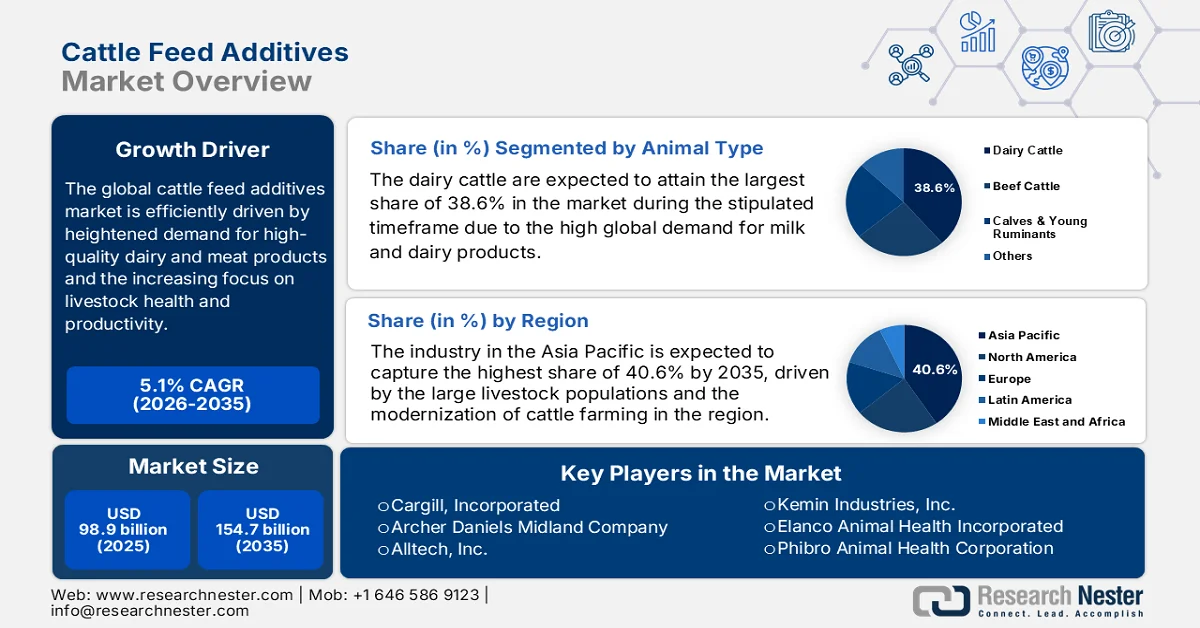
The heightened demand for high-quality dairy and meat products and the increasing focus on livestock health and productivity are factors responsible for uplifting the cattle feed additives market. According to the article published by Gitnux Organization in February 2026, global meat production reached a substantial 367 million metric tons in 2022, which marks a 1.4% rise when compared to the previous year, and poultry led this at 41% of total, whereas meat and pork followed at 36%. It also mentioned that beef production totaled 60.5 million metric tons, whereas global pork output reached 111 million tons in 2023, and sheep and goat meat combined accounted for more than 21 million tons. Processed meat consumption, including 10 million tons of chicken nuggets and 12 million tons of beef burger patties, reflects rising demand for convenience proteins, thus denoting a lucrative growth opportunity for cattle feed additives.
Furthermore, continuously evolving regulatory norms across different economies are enhancing animal nutrition and deliberately supporting sustainable farming practices, thus stimulating growth in the overall market. As per the article published by the U.S. Food & Drug Administration in January 2026, it requires that any substance that is added to animal food must either comply with food additive regulations or be generally recognized as safe for its intended use. It also mentions the premarket review options, which include Food Additive Petitions, GRAS notices, Investigational Food Additive files, Plant Biotechnology Notification files, and Animal Food Ingredient Consultations, each providing a structured pathway for regulatory approval. At the same time, the FDA also collaborates internationally through the ICCF to harmonize technical assessment standards for feed ingredients and continues to engage with firms developing cultured animal cell–based foods for regulatory compliance, thus encouraging innovations in safe and effective products.
Key Cattle Feed Additives Market Insights Summary:
Regional Highlights:
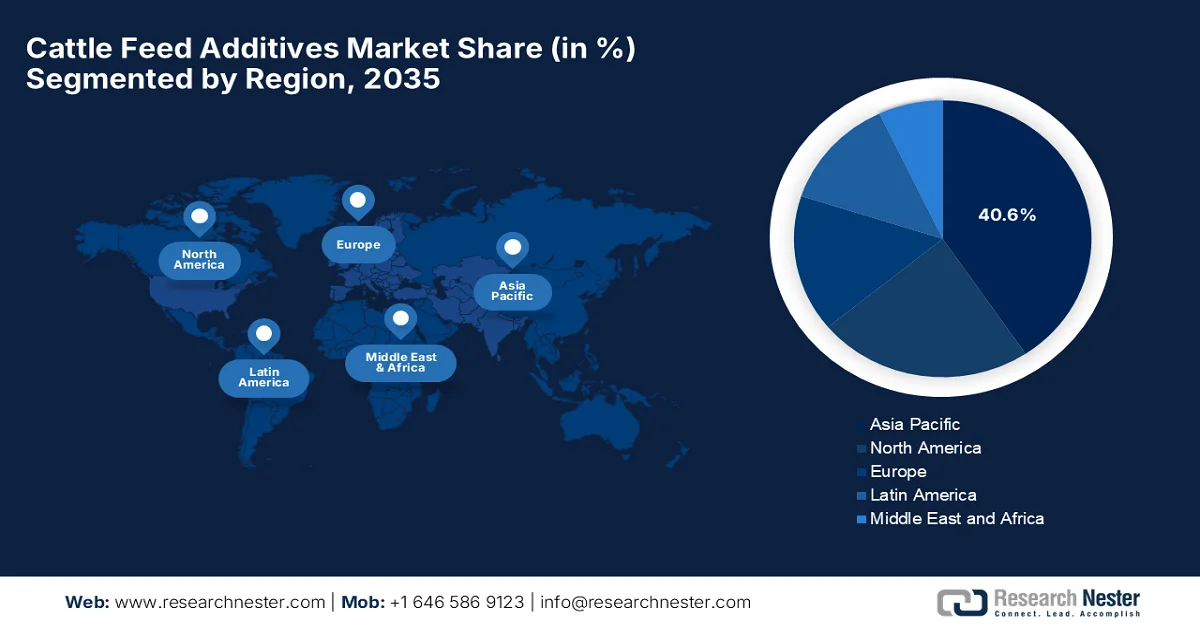
- Asia Pacific cattle feed additives market is projected to command a 40.6% share by 2035, propelled by expanding livestock population, modernization of farming practices, and rising protein consumption.
- North America is anticipated to secure a notable share by 2035, impelled by increasing adoption of preventive animal health measures and growing demand for antibiotic-free livestock products.
Segment Insights:
- In the cattle feed additives market, dairy cattle segment is forecasted to hold a 38.6% share by 2035, driven by rising global demand for milk and dairy products.
- Enzyme segment is expected to witness substantial growth through 2026–2035, fueled by enhanced feed efficiency and improved nutrient availability in cattle diets.
Key Growth Trends:
- Rising global demand for dairy
- Focus on animal health & performance
Major Challenges:
- Rising raw material costs
- Regulatory compliance and variability
Key Players: Cargill, Incorporated (U.S.), Archer Daniels Midland Company (U.S.), Alltech, Inc. (U.S.), Kemin Industries, Inc. (U.S.), Elanco Animal Health Incorporated (U.S.), Phibro Animal Health Corporation (U.S.), BASF SE (Germany), Evonik Industries AG (Germany), DSM-Firmenich (Netherlands), Nutreco N.V. (Netherlands), Nor-Feed (France), CVC Capital Partners (Luxembourg), Novonesis (U.S.), ABB (Switzerland), Novus International (U.S.), Halchemix Canada Inc. (Canada), Adisseo France S.A.S (France), Chr. Hansen Holding A/S (Denmark), Novozymes A/S (Denmark), DSM-Firmenich (Europe), Ajinomoto Co., Inc. (Japan), Sumitomo Chemical Co., Ltd. (Japan), Ridley Corporation Limited (Australia), Godrej Agrovet Limited (India), Avanti Feeds Limited (India), CJ CheilJedang Corporation (South Korea), QL Resources Berhad (Malaysia).
Global Cattle Feed Additives Market Forecast and Regional Outlook:
Market Size & Growth Projections:
- 2025 Market Size: USD 98.9 billion
- 2026 Market Size: USD 103.9 billion
- Projected Market Size: USD 154.7 billion by 2035
- Growth Forecasts: 5.1% CAGR (2026-2035)
Key Regional Dynamics:
- Largest Region: Asia Pacific (40.6% Share by 2035)
- Fastest Growing Region: North America
- Dominating Countries: United States, China, India, Germany, Brazil
- Emerging Countries: Vietnam, Indonesia, Thailand, Mexico, Turkey
Last updated on : 7 April, 2026
Cattle Feed Additives Market - Growth Drivers and Challenges
Growth Drivers
- Rising global demand for dairy: The rising consumption of beef and dairy products is one of the strongest growth drivers for the cattle feed additives market globally. As populations and incomes rise, especially in developing regions, demand for animal protein drives the need for improved cattle nutrition and performance, which in turn increases demand for feed additives. As per the article published by the U.S. Department of Agriculture (USDA) in December 2025, the global milk production by major exporters is forecast to rise 0.4% by the end of 2026, remarkably influenced by growth in the U.S., Australia, and Argentina. At the same time, output is expected to increase 1.2% as herd expansion supports growing cheese production and exports. Argentina’s production is forecast up 4% due to favorable pasture conditions and low feed costs, whereas Australia is all set to rebound at 1.8% with improved rainfall and stable prices.
Global Cows’ Milk Production by Country (2021-2026) - 1,000 Metric Tons Forecast and Trends
|
Country / Region |
2021 |
2022 |
2023 |
2024 |
2025 |
2026 (Forecasted) |
|
Europe |
144,833 |
144,378 |
145,122 |
146,073 |
145,500 |
144,800 |
|
India |
96,000 |
97,000 |
99,000 |
101,000 |
103,200 |
105,400 |
|
China |
36,830 |
39,200 |
41,970 |
40,790 |
40,600 |
40,600 |
|
Russia |
32,289 |
32,978 |
33,800 |
34,072 |
34,000 |
33,900 |
|
Brazil |
24,845 |
23,660 |
24,700 |
25,000 |
25,600 |
26,200 |
|
New Zealand |
21,884 |
21,051 |
21,247 |
21,531 |
21,900 |
21,800 |
|
UK |
15,448 |
15,317 |
15,322 |
15,503 |
16,200 |
16,400 |
|
Mexico |
12,867 |
13,110 |
13,333 |
13,555 |
13,825 |
14,100 |
|
Argentina |
11,900 |
11,904 |
11,665 |
10,590 |
11,490 |
11,950 |
|
Canada |
10,157 |
10,178 |
10,265 |
10,334 |
10,435 |
10,510 |
|
Australia |
9,067 |
8,450 |
8,469 |
8,668 |
8,500 |
8,650 |
|
Belarus |
7,830 |
7,910 |
7,980 |
8,050 |
8,300 |
8,500 |
|
Japan |
7,515 |
7,630 |
7,299 |
7,357 |
7,400 |
7,380 |
|
Ukraine |
8,800 |
7,780 |
7,452 |
7,274 |
6,950 |
6,650 |
|
South Korea |
2,034 |
1,975 |
1,930 |
1,942 |
1,940 |
1,934 |
|
Taiwan |
450 |
463 |
472 |
452 |
450 |
445 |
|
Philippines |
16 |
17 |
17 |
17 |
20 |
21 |
|
Subtotal |
442,765 |
443,001 |
450,043 |
452,208 |
456,310 |
459,240 |
|
U.S. |
102,620 |
102,701 |
102,653 |
102,452 |
104,959 |
106,193 |
|
Total |
545,385 |
545,702 |
552,696 |
554,660 |
561,269 |
565,433 |
Source: USDA
- Focus on animal health & performance: Farmers and producers across the globe are paying greater attention to animal health, disease prevention, and productivity. In this context, additives such as probiotics, prebiotics, and enzymes are known to improve digestive health, immunity, and feed conversion efficiency. As per the article, published by the National Institute of Health (NIH) in October 2025, probiotics play a highly essential role in enhancing the overall animal health by readily modulating gut microbiota, improving immune responses, and suppressing any kind of harmful pathogens, which leads to a much better feed conversion, growth performance, and disease prevention in livestock. This particular study also found that they serve as natural alternatives to antibiotics, support sustainable farming by reducing methane emissions, and contribute to overall productivity and welfare. These evidence-based studies are encouraging widespread adoption in the market.
- Technological advancements & functional ingredients: Introduction of most efficacious feed formulations, i.e., enzyme supplementation, natural extracts, and biotech‑derived ingredients, enhances nutrient utilization and performance outcomes, encouraging increased adoption among commercial feed producers. In March 2024, EW Nutrition announced the launch of Axxess XY at VICTAM 2024 in Bangkok. Besides, the company notes that this thermostable xylanase efficiently breaks down soluble and insoluble fiber in feed ingredients, unlocking nutrients and improving gut health. The product also offers feed producers cost savings and reliability under diverse processing conditions. Therefore, from a strategic perspective, such innovations from the leading pioneers will drive competitive differentiation and accelerate the adoption of precision nutrition solutions in the cattle feed additives market.
Challenges
- Rising raw material costs: The aspect of fluctuations in raw material prices, i.e., amino acids, vitamins, minerals, and enzymes, is negatively impacting the growth of the cattle feed additives market. At the same time, supply chain issues, geopolitical tensions, and severe climatic conditions increase costs by disrupting profit margins for manufacturers in the cattle feed additives industry. Smaller players find it challenging to absorb these price fluctuations, causing limitations on their capability to compete with larger companies. In addition, the process of sourcing quality ingredients is also complex as demand outpaces availability in emerging markets. Therefore, companies in this field need to adopt tactical strategies by balancing cost-effectiveness with proper product quality and regulatory compliance.
- Regulatory compliance and variability: The cattle feed additives are subject to stringent regulations that keep changing based on the country, which is creating a major obstacle for worldwide manufacturers. Regulatory bodies impose restrictions on additive types, dosages, and labeling, with stricter standards in Europe and North America. Also, the product’s non-compliance can result in product recalls and bans, which negatively impact revenue. In this context, companies from the market need to continuously monitor evolving regulations, conduct safety trials, and adapt formulations accordingly. At the same time, navigating different approval processes in emerging markets adds additional cost and time constraints. Therefore, ensuring compliance by maintaining efficiency requires intense legal and quality control frameworks, making regulatory variability one of the most continuous and costly challenges in the market.
Cattle Feed Additives Market Size and Forecast:
| Report Attribute | Details |
|---|---|
|
Base Year |
2025 |
|
Forecast Year |
2026-2035 |
|
CAGR |
5.1% |
|
Base Year Market Size (2025) |
USD 98.9 billion |
|
Forecast Year Market Size (2035) |
USD 154.7 billion |
|
Regional Scope |
|
Cattle Feed Additives Market Segmentation:
Animal Type Segment Analysis
In terms of the animal type segment, dairy cattle are expected to attain the largest share of 38.6% in the cattle feed additives market during the stipulated timeframe. The dominance is highly attributable to the high global demand for milk and dairy products. Additives that enhance milk yield, reproduction, and metabolic health are highly adopted to support intensive dairy operations. In March 2023, the UK’s Food Standards Agency (FSA) reported the completion of the assessment of 3‑nitrooxypropanol (3‑NOP, trade name Bovaer 10) as a feed additive for all ruminants, which is aimed at supporting milk production and reproduction. Besides, this particular additive consists of a minimum of 10% 3‑NOP, is intended to supply 52.8 to 88 mg/kg of complete feed, and was evaluated by AFFAJEG and ACAF for safety and efficacy. The assessment concluded that 3‑NOP is safe for target animals, consumers, and the environment, with acceptable stability, thus denoting a wider segment scope.
Additive Type Segment Analysis
Enzyme, which is a part of the additive type, is anticipated to witness foundational growth in the market by the conclusion of the forecast period. The enzyme additives improve digestion by breaking down fiber and other complex nutrients, increasing feed efficiency and nutrient availability in cattle diets. Besides these, bio‑catalysts are being utilized to enhance growth performance and reduce feed costs. In September 2023, as stated by the European Commission, it renewed the authorization of the fermentation product of Aspergillus oryzae NRRL 458 as a feed additive for dairy cows, classed under zootechnical additives and digestibility enhancers. The renewal confirms its safety for animals, consumers, and the environment, though it is considered a potential respiratory sensitizer, requiring protective measures for users, hence denoting a positive outlook for the segment’s growth and exposure.
Form Segment Analysis
By the end of 2035, the dry additives in the form segment are predicted to grow with a considerable share in the market. They are easier to handle, mix uniformly in compound feeds, and provide longer shelf life compared with liquids. This makes them preferable for large‑scale feed mills and commercial premixes. In June 2023, Evonik announced the launch of an updated generation of Biolys, its proven lysine source for livestock feeds. The new formulation contains 62.4% L-lysine, which is an 80% ratio to Lysine HCl when compared to the previous 60%, allowing farmers to meet animals’ amino acid needs more efficiently with less product. Produced through fermentation, Biolys also delivers additional nutrients and energy while carrying the lowest carbon footprint among lysine feed additives. Thus, such consistent product introductions will position the subtype at the forefront of revenue generation in this field.
Our in-depth analysis of the global cattle feed additives market includes the following segments:
|
Segment |
Subsegments |
|
Animal Type |
|
|
Additive Type |
|
|
Form |
|
|
Ingredients |
|
|
Distribution Channel |
|

Vishnu Nair
Head - Global Business DevelopmentCustomize this report to your requirements — connect with our consultant for personalized insights and options.
Cattle Feed Additives Market - Regional Analysis
APAC Market Insights
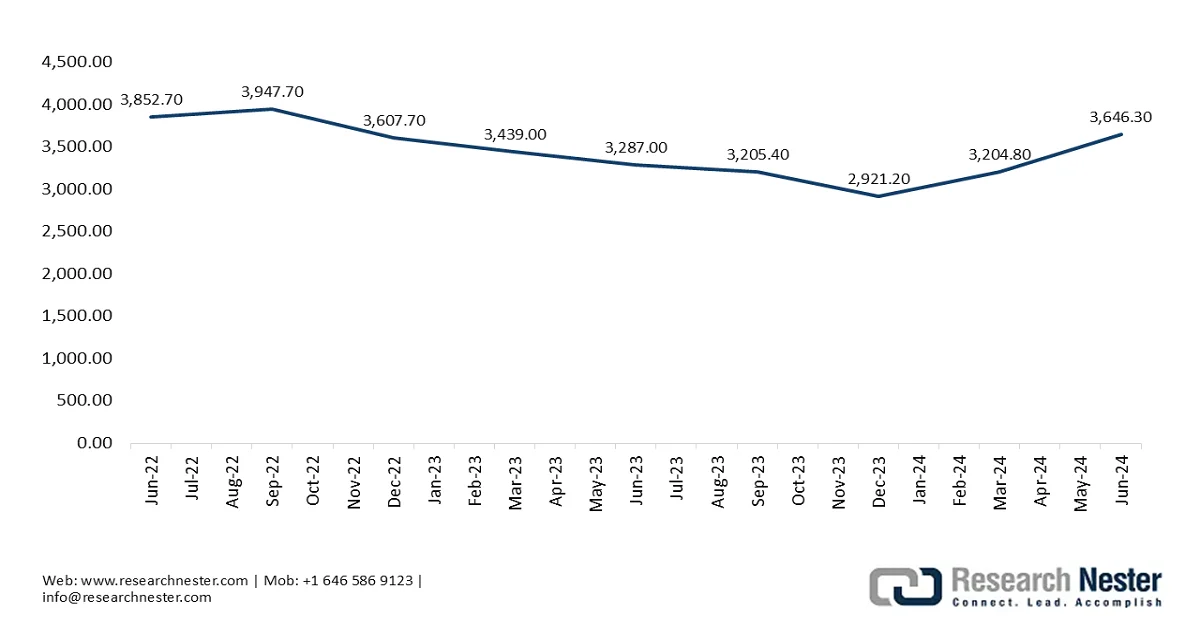
The Asia Pacific cattle feed additives market is expected to gain the largest share of 40.6% by the conclusion of the forecast period. The dominance of the region is mainly propelled by large livestock populations, modernization of cattle farming, and rising protein consumption, which is driving additive uptake. Dairy products witnessed a rising popularity in the region’s countries, which is partly driven by growing interest from vegan consumers. As per the article published by the Australia Bureau of Statistics in June 2025, the domestic value of poultry disposals rose 10.7% to USD 4 billion in the 2023-24 financial year. Besides the overall, livestock disposals and products were valued at USD 31.4 billion, cattle and calves representing almost USD 12.8 billion, and sheep and lambs USD 3.7 billion. As of June 2024, there were 30.4 million cattle on holding, including 28.2 million beef cattle and 2.2 million dairy cattle, thus denoting a huge demand for cattle feed additives.
Australia Cattle and Calves Gross Value (USD Million) by Quarter (June 2022 - June 2024)
Source: ABS
A major transition toward functional and biotechnology-oriented solutions influenced by rising domestic demand for premium beef and dairy products is propelling the growth of the market in China. A policy shift, notably the ban on antibiotic growth promoters, has readily accelerated the adoption of sustainable alternatives to maintain herd health and enhance productivity. As stated by the U.S. Department of Agriculture, in January 2025, updates to China’s feed additive regulations, in December 2024, MARA approved six new feed additives i.e., ferrous sucrose, iron dextran, gallic acid, red amorphous elemental selenium, zinc valine chelates, and ferulic acid along with expanding the application scope of protein zinc, silybin, and steviol glycosides. It also added Bacillus velezensis and Poria cocos extract to the Feed Additives Catalog, along with sea cucumber intestinal hydrolyzed protein to the Feed Ingredients Catalog, thus denoting a positive market outlook.
The modernization of one of the largest dairy herds and an increasing focus on enhancing milk yield per animal are certain trends that are supporting the growth of the cattle feed additives market in India. The rise of organized dairy farming and a growing consumer preference for high-quality milk products have also catalyzed the adoption of gut-health solutions, such as probiotics and enzymes. As per the article published by USDA in February 2026, the country’s cattle and water buffalo inventory is forecasted to reach 307.5 million head by the end of 2026, wherein higher slaughter is driven by strong export demand for buffalo meat (carabeef). Production is projected at 4.73 million metric tons carcass weight equivalent, whereas exports are expected to reach 1.7 MMT CWE, supported by competitive pricing. Hence, these statistics represent the country’s continued strength in carabeef exports globally, fueling demand for cattle feed additives.
North America Market Insights
The North America cattle feed additives market has acquired a prominent position, mainly attributable to a strong shift toward preventive animal health and adoption of clean-label nutrition solutions. The region's large-scale commercial livestock operations and a rising consumer preference for antibiotic-free produced beef and dairy products are efficiently boosting the market’s exposure. As per the March 2026 data published by the USDA, the U.S. live cattle imports are heavily concentrated from Canada and Mexico, confirming strong regional supply integration. Imports increased in March 2025 and declined after that, which is partly reflecting trade disruptions and animal health restrictions. In addition, exports were dominated by Canada, with a sharp spike in October 2025, whereas other destinations were considered to be small. Overall, the U.S. remains a net importer of live cattle, reflecting a huge demand for cattle feed additives.
Monthly U.S. Live Cattle Exports by Country (Canada & Mexico) - Head Count Data 2025-2026
|
Month |
Canada |
Mexico |
Total |
|
January |
22,501 |
840 |
23,431 |
|
February |
25,064 |
937 |
26,129 |
|
March |
21,038 |
1,399 |
22,579 |
|
April |
15,297 |
974 |
16,363 |
|
May |
31,430 |
1,039 |
32,687 |
|
June |
20,695 |
871 |
21,767 |
|
July |
21,283 |
1,006 |
22,328 |
|
August |
30,374 |
614 |
31,134 |
|
September |
65,929 |
1,073 |
67,322 |
|
October |
123,050 |
970 |
124,313 |
|
November |
65,682 |
646 |
66,490 |
|
December |
49,871 |
741 |
50,970 |
|
January (2026) |
34,585 |
534 |
35,166 |
Source: USDA
The transition towards precision nutrition and sustainable livestock management, influenced by the heightened demand for high-quality beef and dairy, is responsibly propelling the growth of the U.S. cattle feed additives market. The market is also being reshaped by the integration of advanced feed technologies and digital monitoring tools that allow for the proper delivery of amino acids and rumen-protected nutrients in order to maximize feed efficiency. In this context, in March 2026, the U.S. cattle and calves on feed for slaughter in feedlots with a capacity of 1,000 or more head totaled 11.5 million. It stated that February placements reached 1.61 million head, up 4% when compared to 2025, wherein most cattle weighed between 700 and 899 pounds. Hence, from a strategic perspective, these statistics denote that the U.S. cattle industry will create encouraging opportunities for targeted feed additives that enhance growth performance and support sustainable livestock management practices.
The market in Canada is expected to grow exceptionally in the next decade. The strong emphasis on climate-smart agriculture and high-performance nutrition, driven by the nation's significant dairy and beef sectors, is responsibly strengthening the country’s position in this field. Also, there is a notable focus on cold-weather nutritional management and the adoption of rumen-protected nutrients with the main goal to optimize protein bypass and milk components. In July 2024, the country’s food inspection agency published the Feeds Regulations, 2024, with a main goal to modernize rules to improve livestock feed safety, support innovation, and align with international best practices. The regulations introduce new labelling requirements effective immediately, preventive control plans and licensing, plus new regulated species. It also stated that transitional support will be provided through guidance materials and tools to help the industry adapt.
Europe Market Insights
Europe cattle feed additives market maintains a central position in the global dynamics, facilitated by the strong focus on sustainability and noteworthy animal welfare standards. These factors are positioning the region as a predominant leader in the structural transition toward circular and antibiotic-free livestock production. In February 2024, the European Commission evaluation of Regulation (EC) No 1831/2003 confirms that the feed additives regulation has generally met its objectives by ensuring animal, human, and environmental safety, thus supporting innovation and antimicrobial resistance reduction. At the same time, this particular evaluation underscores opportunities to enhance sustainability, animal welfare, and administrative efficiency, i.e., clearer categorisation of additives and streamlined authorisation processes. Overall, the regulation has added significant value through harmonised procedures, whereas further harmonisation and clarification can efficiently strengthen the internal market.
A primary emphasis on high-tech nutritional science and stringent environmental norms is a main factor responsible for uplifting the cattle feed additives market in Germany. A significant industry focus is also placed on climate-neutral farming, driving the huge adoption of rumen-modifiers and nitrogen-efficient amino acids designed to reduce enteric methane emissions and ammonia runoff. In April 2024, researchers at Ludwig-Maximilians-Universität München launched the ClimateCow project to develop methane-reducing feed additives for cattle. It was funded by the country’s Federal Ministry of Education and Research, and the project aims to reduce methane emissions in the rumen. Early in-vitro tests using rumen simulations showed promising results, wherein several candidates reduced methane far more effectively than existing additives, thus making them suitable for bolstering the country’s market growth.
The UK cattle feed additives market is reaping encouraging opportunities from the rising adoption of climate-mitigating nutritional technologies within the beef and dairy sectors. The country is highly focused on net-zero farming initiatives, which are driving the integration of innovative methane-suppressing additives and nitrogen-efficient amino acids to reduce the environmental footprint of livestock production. Based on the government data published in December 2024, the Food Standards Agency has confirmed that Bovaer, which is a feed additive designed to reduce methane emissions from dairy cows, is identified as safe for both animals and consumers. Milk and meat from cows fed Bovaer are safe to consume, as the additive is metabolised and does not pass into food products. Besides, it also mentioned that rigorous safety assessments, including over 58 studies, found no carcinogenic or genotoxic risks, and the additive is approved in Great Britain, Europe, Australia, Canada, and the U.S., thus denoting a positive market outlook.
Key Cattle Feed Additives Market Players:
- Cargill, Incorporated (U.S.)
- Archer Daniels Midland Company (U.S.)
- Alltech, Inc. (U.S.)
- Kemin Industries, Inc. (U.S.)
- Elanco Animal Health Incorporated (U.S.)
- Phibro Animal Health Corporation (U.S.)
- BASF SE (Germany)
- Evonik Industries AG (Germany)
- DSM-Firmenich (Netherlands)
- Nutreco N.V. (Netherlands)
- Nor-Feed (France)
- CVC Capital Partners (Luxembourg)
- Novonesis (U.S.)
- ABB (Switzerland)
- Novus International (U.S.)
- Halchemix Canada Inc. (Canada)
- Adisseo France S.A.S (France)
- Chr. Hansen Holding A/S (Denmark)
- Novozymes A/S (Denmark)
- DSM-Firmenich (Europe)
- Ajinomoto Co., Inc. (Japan)
- Sumitomo Chemical Co., Ltd. (Japan)
- Ridley Corporation Limited (Australia)
- Godrej Agrovet Limited (India)
- Avanti Feeds Limited (India)
- CJ CheilJedang Corporation (South Korea)
- QL Resources Berhad (Malaysia)
- Company Overview
- Business Strategy
- Key Product Offerings
- Financial Performance
- Key Performance Indicators
- Risk Analysis
- Recent Development
- Regional Presence
- SWOT Analysis
- Cargill, Incorporated is identified as a global leader in agricultural commodities and animal nutrition, which offers a wide portfolio of feed additives, i.e., amino acids, vitamins, and specialty enzymes. The company leverages its vast supply chain and global R&D network with the main goal of delivering customized nutrition solutions to improve cattle health and productivity.
- Archer Daniels Midland Company is a major global agribusiness which is providing feed additives that support growth, immunity, and metabolic health in cattle. Besides, the firm combines extensive research capabilities with large-scale production of enzymes, probiotics, and vitamins.
- Alltech, Inc. specializes in natural feed additives and nutritional solutions for livestock by emphasizing probiotics, organic trace minerals, and yeast-based products. The company makes heavy investments in terms of research and development, with facilities in the U.S., Europe, and the Asia Pacific to innovate in sustainable animal nutrition.
- Kemin Industries, Inc. is a prominent player in this field, which produces specialty feed additives such as antioxidants, carotenoids, enzymes, and microbial solutions. In addition, the company is highly focused on science-based innovation, leveraging its global R&D network to develop functional additives that efficiently enhance animal health and production efficiency.
- Elanco Animal Health Incorporated is a central player that provides feed additives and pharmaceuticals to improve cattle performance, immunity, and disease prevention. The company integrates veterinary expertise with nutritional science, offering probiotics, enzymes, and growth-promoting solutions.
Below is the list of some prominent players operating in the global market:
The cattle feed additives market is highlighted by the presence of established and emerging companies that are competing in terms of innovation, scale, and sustainability. Leading pioneers in this field are highly focused on mergers, acquisitions, and partnerships to expand geographic reach and strengthen product portfolios. Investment in R&D is a core strategy that is readily enabling the development of advanced additives such as probiotics, enzymes, and amino acids that improve feed efficiency and animal health. In addition, capacity expansions and digital nutrition platforms are being adopted to improve productivity across global livestock operations. In February 2023, Adisseo completed the acquisition of Nor-Feed, which is a France- based company that specializes in plant-based ingredients and extracts for animal nutrition. This move deliberately strengthens Adisseo’s strategy to become a global leader in specialty ingredients, focusing on natural and sustainable solutions.
Corporate Landscape of the Cattle Feed Additives Market:
Recent Developments
- In February 2026, DSM-Firmenich announced the divestment of its Animal Nutrition & Health (ANH) business to CVC Capital Partners for about USD 2.4 billion by retaining a 20% stake. The move follows its earlier feed enzymes sale to Novonesis, completing its shift toward a consumer-focused nutrition, health, and beauty portfolio.
- In May 2025, ABB received a contract to supply automation and electrical systems for DSM-Firmenich’s new cattle feed additive facility in Dalry, Scotland. The site will produce Bovaer, which is a methane-reducing additive licensed in more than 65 countries, that can cut emissions from dairy cows by 30% and feedlot cattle by 45%.
- In February 2024, Novus International announced a partnership with Halchemix Canada Inc. to distribute amino acid and trace mineral products in Canada’s animal agriculture sector. Halchemix is distributing MINTREX Bis-Chelated Trace Minerals and MHA Feed Additive, and is the sales agent for ALIMET Feed Additive from March 2024.
- Report ID: 29
- Published Date: Apr 07, 2026
- Report Format: PDF, PPT
- Explore a preview of key market trends and insights
- Review sample data tables and segment breakdowns
- Experience the quality of our visual data representations
- Evaluate our report structure and research methodology
- Get a glimpse of competitive landscape analysis
- Understand how regional forecasts are presented
- Assess the depth of company profiling and benchmarking
- Preview how actionable insights can support your strategy
Explore real data and analysis
Frequently Asked Questions (FAQ)
About this Report
Connect with our Expert


Report, 2026-2035


Copyright @ 2026 Research Nester. All Rights Reserved.
