Bioelectronic Sensors Market Outlook:
Bioelectronic Sensors Market size was valued at USD 44.8 billion in 2025 and is projected to cross USD 117.2 billion by the end of 2035, expanding at more than 10.1% CAGR during the forecast period, i.e., 2026-2035. In 2026, the industry size of bioelectronic sensors is estimated at USD 49.3 billion.
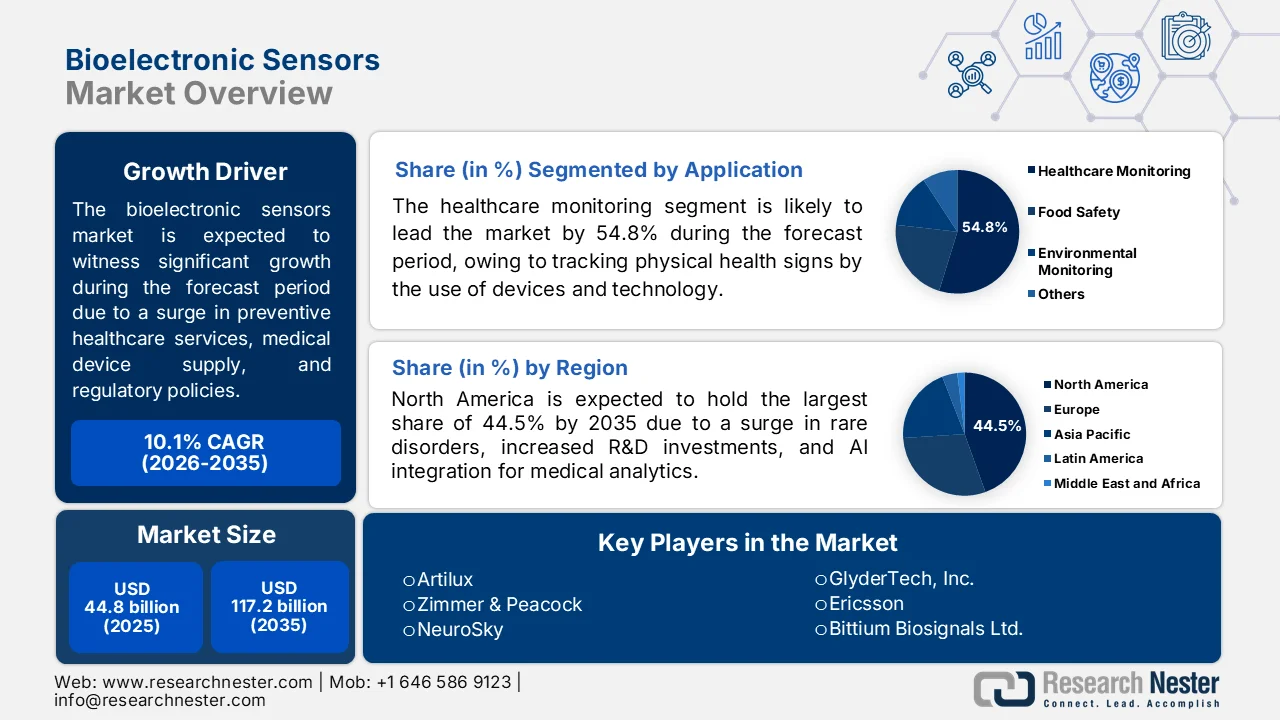
The worldwide bioelectronic sensors market is readily shaped by different foundational factors, including supply chain dynamics, regulatory frameworks, competitive intensity among organizations, and the transition to preventive healthcare. According to a report published by the World Health Organization (WHO) in December 2025, more than 1.6 billion people are at poverty risk, owing to out-of-pocket expenditure. Besides, upscaling primary health care solutions, especially across low and middle-income nations, has the intention to save 60 million people and enhance the average life expectancy by 3.7 years by the end of 2030. Moreover, roughly 75% of the benefits achieved from sustainable development objectives are gained through primary health solutions, along with a generous investment of USD 200 billion to USD 328 billion every year, thus bolstering the market upliftment.
Furthermore, the adoption of semiconductor nanostructures for enhanced sensitivity and the successful evolution to self-decision and autonomous bioelectric systems are certain trends that are responsible for fueling the bioelectronic sensors market globally. As stated in the May 2022 Biochimica et Biophysica Acta (BBA) - Reviews on Cancer article, the utilization of molecular markers, such as KRAS, for lung cancer is usually mutated among 25% to 35% of patients, especially with the subtype non-small cell lung cancer (NSCLC). Meanwhile, ALK gene rearrangements comprise prognostic valuation, and in both these cases, tumor samples are required for detecting mutations, which can be acquired through liquid biopsy or solid biopsy, including the circulating tumor DNA analysis, thus making it suitable for enhancing the market’s exposure.
Key Bioelectronic Sensors Market Insights Summary:
Regional Highlights:
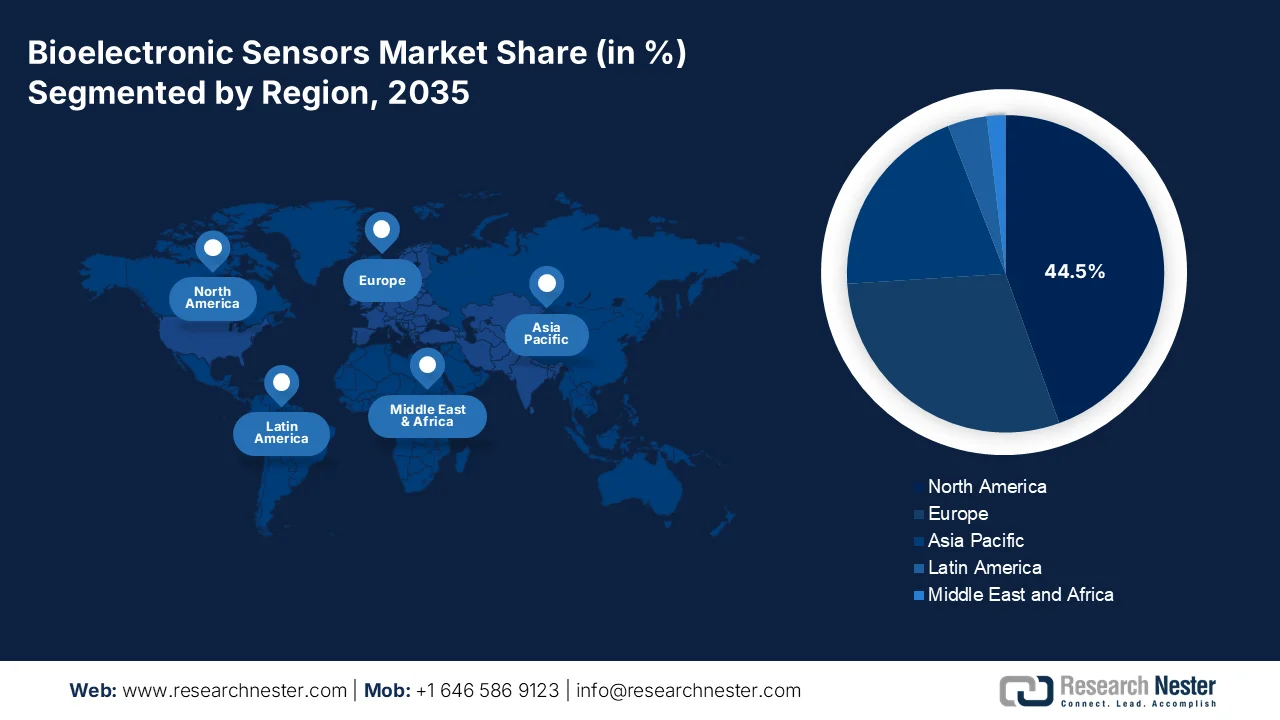
- The bioelectronic sensors market in North America is projected to command 44.5% of the market share by 2035, underpinned by the rising prevalence of chronic diseases and increasing adoption of AI-enabled continuous monitoring devices
- Asia Pacific is expected to secure a 20.1% share during the forecast period, stimulated by growing healthcare awareness, expanding elderly population, and supportive government healthcare initiatives
Segment Insights:
- The healthcare monitoring sub-segment is anticipated to capture 54.8% of the bioelectronic sensors market by 2035, fueled by the increasing utilization of smart health monitoring devices and IoT-enabled patient tracking systems
- The hospitals segment is forecast to account for 48.9% share by 2035, buoyed by the escalating demand for real-time and accurate patient monitoring in acute and critical care settings
Key Growth Trends:
- Rising demand for personalized medical devices
- Expansion in digital health ecosystems
Major Challenges:
- The lab-to-market translation barrier
- Technical complexities in device integration and performance
Key Players: Medtronic (Ireland), Goodix Technology (China), Artilux (Taiwan), Zimmer & Peacock (Germany), NeuroSky (U.S.), Universal Biosensors (Australia), GlyderTech, Inc. (U.S.), Ericsson (Sweden), Bittium Biosignals Ltd. (Finland), Abbott (U.S.),Trinity Biotech plc (Ireland), Synchron (U.S.).
Global Bioelectronic Sensors Market Forecast and Regional Outlook:
Market Size & Growth Projections:
- 2025 Market Size: USD 44.8 billion
- 2026 Market Size: USD 49.3 billion
- Projected Market Size: USD 117.2 billion by 2035
- Growth Forecasts: 10.1% CAGR (2026-2035)
Key Regional Dynamics:
- Largest Region: North America (44.5% Share by 2035)
- Fastest Growing Region: Asia Pacific
- Dominating Countries: United States, Germany, Japan, China, United Kingdom
- Emerging Countries: India, South Korea, Singapore, Australia, United Arab Emirates
Last updated on : 29 June, 2026
Bioelectronic Sensors Market - Growth Drivers and Challenges
Growth Drivers
- Rising demand for personalized medical devices: The bioelectronic sensors market is propelled by an increase in the focus on expanding medical devices for ensuring personalized healthcare solutions. According to a data report published by the IDC Organization in March 2026, worldwide wearable device shipments surged by 9.1% year-over-year (YoY) as of 2025, successfully reaching a production of 611.5 million units. In this regard, earwear shipments surged by 7.8% globally, fueled by an increase in low-cost China-based brands. Likewise, in terms of smartwatches, Huawei shipped 25.5 million units, recording a 21.7% YoY growth, while wristbands accounted for 14.7% growth, driven by Xiaomi, which contributed to a focus on cost-effectivity and scalability, thus proliferating the market expansion.
Global Wearable Device Industry Shipment and Growth, 2026-2030
|
Year |
Production in Units |
YoY Growth % |
|
2026 |
625,215,127 |
+2.2 |
|
2027 |
642,623,768 |
+2.8 |
|
2028 |
660,134,891 |
+2.7 |
|
2029 |
675,917,466 |
+2.4 |
|
2030 |
689,721,598 |
+2.0 |
Source: IDC
- Expansion in digital health ecosystems: The extension of these ecosystems represents a suitable growth driver for the bioelectronic sensors market, leading to an expansion of telemedicine. As per a data report published by OECD in November 2025, the average online digital health services availability successfully reached 82% as of 2024, indicating a 79% increase from 2023. In this regard, Estonia and Belgium presently offer complete accessibility to electronic health record functions. However, the availability is extremely low in Ireland, wherein citizens have access to less than 30% of such records since 2022. Therefore, with the availability of such digitalized healthcare technologies, telemedicine solutions are gradually increasing across different regions, thereby positively impacting the market growth.
Challenges
- The lab-to-market translation barrier: A significant challenge facing the bioelectronic sensors market is the persistent difficulty in translating promising laboratory prototypes into commercially viable, market-ready products. Electrochemical biosensors, in particular, have reached a high degree of analytical maturity; however, only a small portion of laboratory demonstrations actually progress to commercial products. This barrier arises from multiple factors, including supply chain design, scale-up manufacturing strategy, and regulatory-quality considerations. While electrochemical biosensors offer well-known advantages such as low cost, high analytical sensitivity, and compatibility with mass manufacturing techniques, they have not yet realized their full commercial potential.
- Technical complexities in device integration and performance: This challenge in designing devices that seamlessly integrate with biological systems presents a significant obstacle to the bioelectronic sensors market growth. Even with presently accelerated innovation for individual semiconductor components, poor integration remains a primary barrier inhibiting device performance. Wearable biosensors, despite rapid technological advancement, still struggle to scale beyond everyday wellness into clinically accepted healthcare solutions. The disparity between technological development and clinical adoption arises from several factors, including variations in biosignal acquisition, software interoperability challenges, AI integration, inconsistent regulatory frameworks, and human factors such as comfort and consistent utilization.
Bioelectronic Sensors Market Size and Forecast:
| Report Attribute | Details |
|---|---|
|
Base Year |
2025 |
|
Forecast Year |
2026-2035 |
|
CAGR |
10.1% |
|
Base Year Market Size (2025) |
USD 44.8 billion |
|
Forecast Year Market Size (2035) |
USD 117.2 billion |
|
Regional Scope |
|
Bioelectronic Sensors Market Segmentation:
Application Segment Analysis
The healthcare monitoring sub-segment under the application segment is anticipated to grab the largest share of 54.8% in the bioelectronic sensors market by the end of 2035. The sub-segment’s upliftment is primarily attributed to the standard process of tracking physical well-being and vital signs by utilizing devices such as smartwatches and blood pressure cuffs. According to an article published by NLM in October 2022, the development of an intelligent monitoring system assists in data collection for patients’ body temperature, heart rate, and other crucial signs, leading to an estimated 95% success rate. Besides, the information processing system for Internet of Things (IoT)-based healthcare monitoring systems accounts for 97% accuracy for managing big data effectively, thereby making it suitable for bolstering the sub-segment’s growth.
End user Segment Analysis
Based on the end user, the hospitals segment is predicted to account for the second-largest share of 48.9% in the bioelectric sensors market during the forecast period. The segment’s growth is effectively driven by the critical need for real-time, accurate patient data in acute and critical care settings. Within hospital environments, these sensors are predominantly deployed across healthcare monitoring applications, facilitating continuous tracking of vital signs, glucose levels, and cardiac activity. This application is supported by a diverse range of technologies, with electrochemical sensors leading due to their reliability in diagnostic testing, alongside optical and piezoelectric variants for specialized monitoring needs. Therefore, with all these benefits, there is a huge growth opportunity for the segment, which positively contributes to the market growth and development.
Technology Segment Analysis
By the end of the stipulated timeline, the electrochemical sub-segment, which is part of the technology segment, is expected to grab the third-largest share of 44.7% in the bioelectronic sensors market. The sub-segment’s development is highly propelled by utilizing electricity for driving or controlling chemical reactions, and is considered the foundation of modernized life. As stated in an article published by Current Opinion in Chemical Engineering in March 2026, hydrogen-based technologies, comprising water and cell electrolyzers, are expanding for establishing installations, for instance, by Sinopec for an overall capacity of 260 MW of alkaline electrolyzers. Additionally, the overall investment was worth USD 828 million, with a projected yearly hydrogen production of 30,000 tons, thus demonstrating an optimistic outlook for the sub-segment’s development.
Our in-depth analysis of the bioelectronic sensors market includes the following segments:
|
Segment |
Subsegments |
|
Application |
|
|
End user |
|
|
Technology |
|
|
Product Type |
|

Vishnu Nair
Head - Global Business DevelopmentCustomize this report to your requirements — connect with our consultant for personalized insights and options.
Bioelectronic Sensors Market - Regional Analysis
North America Market Insights
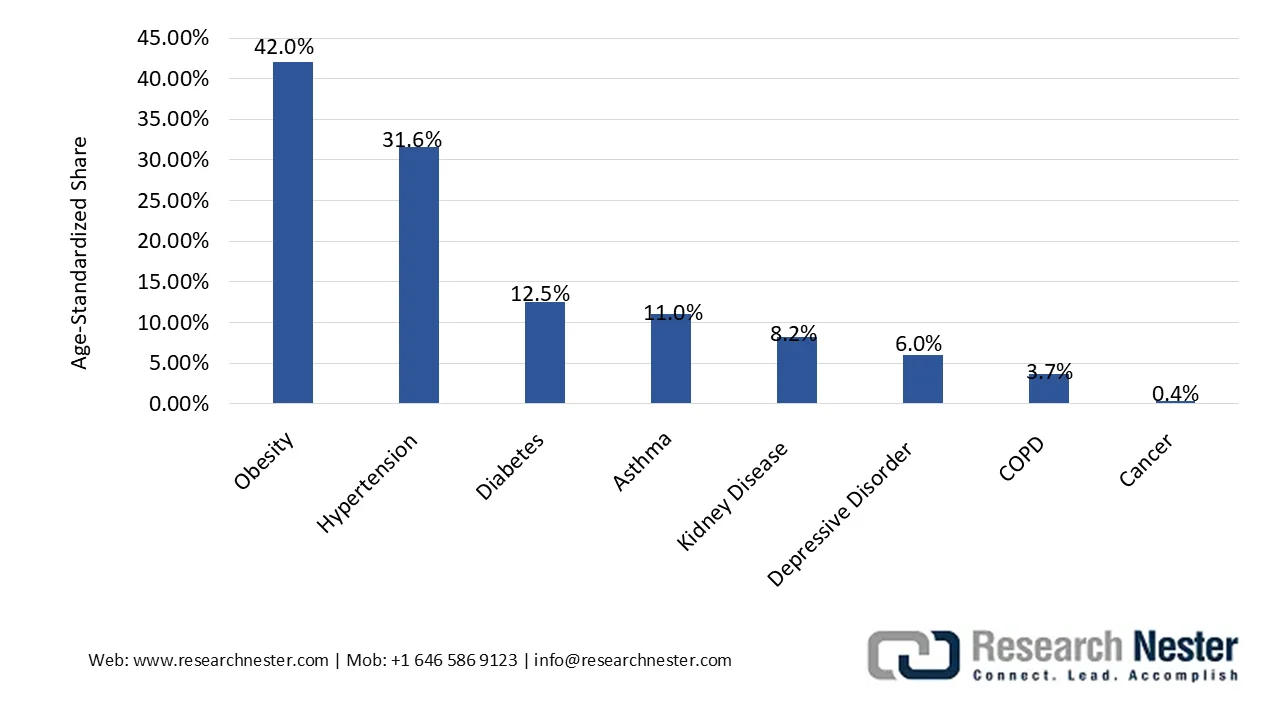
The North America bioelectronic sensors market is anticipated to grab the highest share of 44.5% by the end of 2035. The market’s upliftment in the region is primarily attributed to the growing prevalence of chronic diseases, an increase in the demand for continuous monitoring devices, the provision of research and development investment, and the adoption of AI with sensor data for ensuring predictive analytics. According to an article published by the Peterson-KFF Health System Tracker in April 2025, non-communicable or chronic diseases account for the top death incidences in the U.S. Based on this, obesity is considered one of the most prevalent chronic disorders in the country, impacting 42% of the population as of 2022. Likewise, high blood pressure or hypertension affects almost 32% of the population, thus positively driving the market demand in the region.
U.S. Age-Standardized Chronic Disease Share Analysis, 2022
Source: Peterson-KFF Health System Tracker
The bioelectronic sensors market in the U.S. is growing significantly, owing to a rise in the need for non-invasive monitoring solutions, the prevalence of rare diseases, technological innovations, favorable regulatory trends, and generous investment in healthcare technology. As stated in an article published by the Research America Organization in January 2022, 85% of adults in the country readily support the domestic federal government investing in basic research, while 75% of the regional population significantly favor federal government expenditure on medical research. Besides, during the pandemic, government investment for 25% of national medical and health research amounted to USD 61.5 billion, of which the National Institutes of Health (NIH) caters to 20% or USD 48.9 billion of such investments, thereby positively impacting the market growth.
The demand for wearable medical devices, the preference for health management through remote patient monitoring tools, the aging population, and strict regulatory demands are certain factors that are responsible for boosting the bioelectronic sensors market in Canada. As per an article published by Statistique Canada in December 2025, the medical devices manufacturing industry accounts for an overall gross value added of USD 13.7 billion as of 2023, constituting USD 7.3 billion from direct impacts or 53.4% of total valuation. This is followed by USD 3.0 billion or 22.2% from indirect impacts, along with USD 3.3 billion or 24.4% from induced impacts. Besides, the domestic employment totaled 88,394 equivalent full-time positions, while research and development spending is estimated to range from USD 404 million to USD 445 million, with 84.9% experimental development allocation, thus proliferating the market upliftment.
APAC Market Insights
The Asia Pacific bioelectronic sensors market is expected to emerge as the fastest-growing region, garnering a suitable share of 20.1% during the forecast period. The market’s development in the region is highly propelled by an increase in healthcare awareness, an upsurge in rare diseases, and standard government initiatives and expenditure. According to the July 2025 Open Access Government Organization article, the 2022 United Nations statistics noted that the region is poised to be the ultimate home to 1.3 billion people aged more than 60 years by the end of 2050. This is equivalent to roughly 1 in every 4 people projected to be impacted by health risks, including dementia, chronic obstructive pulmonary disease, and diabetes. Therefore, with this increase in the elderly population and a surge in disorders, there is a huge growth opportunity for the bioelectronic sensors market in the region.
The bioelectronic sensors market in Japan is gaining increased traction, owing to the rapidly increasing elderly population, a sustained demand for continuous glucose monitoring systems, an expansion in the medical sector, the incorporation of nanotechnology-specific biosensors, and standard government support. As stated in an article published by the World Economic Forum in September 2023, over 1 in 10 people in the nation are presently aged more than 80 years. This eventually accounts for 1/3rd of the domestic population to be over 65 years, which is equivalent to approximately 36.2 million. Besides, there is continuous optimization in the country’s gross domestic product (GDP), leading to nearly USD 4.2 trillion. Therefore, with the economic aspects and population surge, the market is continuously expanding in the overall country.
The aspects of the government’s focus on cost-effective healthcare solutions, growth in nanoelectronic technologies, the establishment of premier institutes for enabling indigenous technology commercialization and development are a few trends that are responsible for driving the bioelectronic sensors market in India. Based on the 2023 NITI Aayog data report, the foreign direct investment (FDI) in the country is catered to 100% of the automatic route in the hospital industry as well as in manufacturing medical devices. Besides, the country has surged from USD 2.5 billion to USD 50 billion in terms of increased FDI inflows. In this regard, the healthcare sector received interest from suitable investors in the past few years, with the transaction valuation surging from USD 94 million to USD 1,275 million, thereby making it suitable for developing the market in the nation.
Europe Market Insights
The Europe bioelectronic sensors market is projected to witness a considerable share of 29.5% by the end of the stipulated timeline. The market’s growth in the region is effectively driven by the presence of robust healthcare and medical systems, a focus on data integrity, compliance, and precision, as well as regulatory harmonization, and the integration of glucose monitoring. According to an article published by the Diabetes Voice Organization in March 2025, the number of people in the region with diabetes is poised to increase by 13% by the end of 2045. Factors, such as a surge in obesity due to sedentary lifestyles and urbanization, along with an aging population, are responsible for contributing to the disease prevalence. Besides, the overall region’s preventive healthcare policies, health-conscious population, and economic stability, thus enhancing the market’s expansion.
The bioelectronic sensors market in Germany is gaining increased exposure, owing to innovative healthcare facilities, the presence of notable medical technology organizations, the significant integration of advanced diagnostic solutions, and suitable governmental support. As stated in an article published by NLM in April 2025, the country comprises almost 1,200 specialists in laboratory medicine, along with 840 microbiology specialists, both of which cater to nearly 0.7% of overall specialized physicians. Simultaneously, an overall of 108,000 people are employed across medical laboratories, which account for 1.8% of the total healthcare workforce. Besides, the yearly payers’ pricing of laboratory diagnostics amounts to nearly USD 170.7 per capita, totaling about USD 14.6 billion every year, which corresponds to nearly 2.6% of the domestic healthcare system, thus boosting the market upliftment.
The increase in healthcare digitalization, a rise in the adoption of wearable medical devices, a growing emphasis on early disease detection, standard government initiatives, and rapid improvement in healthcare technology are a few trends that are fueling the bioelectronic sensors market in the UK. As per a data report published by the ITA in January 2026, the medical technology industry significantly generated an estimated USD 35.8 billion. Additionally, the industry comprises more than 138,000 employment opportunities, along with 31% of life sciences turnover, and over 4,000 businesses. Moreover, 85% of the industry constitutes small and medium-sized organizations across the nation, and meanwhile, medtech is rapidly expanding by over 200% since the past decade, thereby demonstrating an optimistic outlook for the market’s exposure.
Key Bioelectronic Sensors Market Players:
- Medtronic (Ireland)
- Goodix Technology (China)
- Artilux (Taiwan)
- Zimmer & Peacock (Germany)
- NeuroSky (U.S.)
- Universal Biosensors (Australia)
- GlyderTech, Inc. (U.S.)
- Ericsson (Sweden)
- Bittium Biosignals Ltd. (Finland)
- Abbott (U.S.)
- Trinity Biotech plc (Ireland)
- Synchron (U.S.)
- Company Overview
- Business Strategy
- Key Product Offerings
- Financial Performance
- Key Performance Indicators
- Risk Analysis
- Recent Development
- Regional Presence
- SWOT Analysis
- Medtronic is known for its advanced implantable and wearable devices. The company focuses on sensor technology for metabolic and cardiovascular therapies, with flagship products including the Guardian™ 4 Sensor for continuous glucose monitoring and the Linq II™ implantable cardiac monitor.
- Goodix Technology provides semiconductor solutions for smart devices, with a growing portfolio of health sensors for wearables and medical devices. Its health sensor family, including the GH3300 series, integrates PPG, ECG, Bio-Z, and temperature monitoring for applications like smartwatches and fitness bands.
- Artilux is a niche player specializing in optical sensing technology, offering the Aware Series, which is a multi-spectrum all-in-one bio-sensor based on CMOS SWIR technology. This solution is designed for hearables and wearables, capable of vital sign monitoring for digital health applications.
- Zimmer & Peacock is a developer and manufacturer of ISO13485 certified electrochemical biosensors and screen-printed electrodes (SPE). They provide standard and customized sensors for medical diagnostics, including wearable biosensors for sweat analysis, continuous glucose monitoring (CGM), and pH detection.
- NeuroSky specializes in EEG biosensors for brain activity monitoring and ECG biosensors for heart health analysis, supported by proprietary algorithms that deliver actionable health and wellness insights. The company's ThinkGear EEG chip and CardioChip™ ECG sensor are designed as compact, embeddable solutions for wearable devices and mobile applications.
Here is a list of key players operating in the global bioelectronic sensors market:
The global bioelectronic sensors market is moderately consolidated, characterized by the presence of large multinational healthcare conglomerates alongside specialized technology firms. Major players such as Abbott, Medtronic, and F. Hoffmann-La Roche dominate the market through established diabetes care and cardiac monitoring portfolios, leveraging decades of clinical validation and broad distribution networks. Moreover, competitive differentiation increasingly hinges on non-invasive sensing capabilities, integration with digital health ecosystems, and miniaturization for wearable form factors. Besides, in June 2025, Bittium Biosignals Ltd. and Boston Scientific Cardiac Diagnostics Inc. signed an agreement for supplying electrocardiogram measuring devices, particularly for monitoring cardiac arrhythmias, thus positively contributing to the bioelectronic sensors industry growth.
Corporate Landscape of the Bioelectronic Sensors Market:
Recent Developments
- In May 2026, Abbott successfully gained the CE Mark for the first-ever dual glucose-ketone sensing technology, suitable for patients with diabetes, which is branded as Libre Duo and Libre Duo 10 Day for continuously measuring ketone and glucose levels.
- In March 2026, Trinity Biotech plc proclaimed the number of standard technical innovations for developing its hinger-stick calibration-free and next-generation continuous glucose monitoring systems, which marked a major step to ensure technology availability.
- In November 2025, Synchron significantly raised USD 200 million in a Series D financing round, which escalated the commercialization of the organization’s first-generation Stentrode™ BCI platform, while innovating the development of a next-generation interface.
- Report ID: 8641
- Published Date: Jun 29, 2026
- Report Format: PDF, PPT
- Explore a preview of key market trends and insights
- Review sample data tables and segment breakdowns
- Experience the quality of our visual data representations
- Evaluate our report structure and research methodology
- Get a glimpse of competitive landscape analysis
- Understand how regional forecasts are presented
- Assess the depth of company profiling and benchmarking
- Preview how actionable insights can support your strategy
Explore real data and analysis
Frequently Asked Questions (FAQ)
About this Report
Connect with our Expert


Report, 2026-2035



Copyright @ 2026 Research Nester. All Rights Reserved.
