Beverage Carton Packaging Machinery Market Outlook:
Beverage Carton Packaging Machinery Market size was valued at USD 1.5 billion in 2025 and is projected to reach USD 2.5 billion by the end of 2035, rising at a CAGR of 5.1% during the forecast period, i.e., 2026-2035. In 2026, the industry size of beverage carton packaging machinery is assessed at USD 1.6 billion.
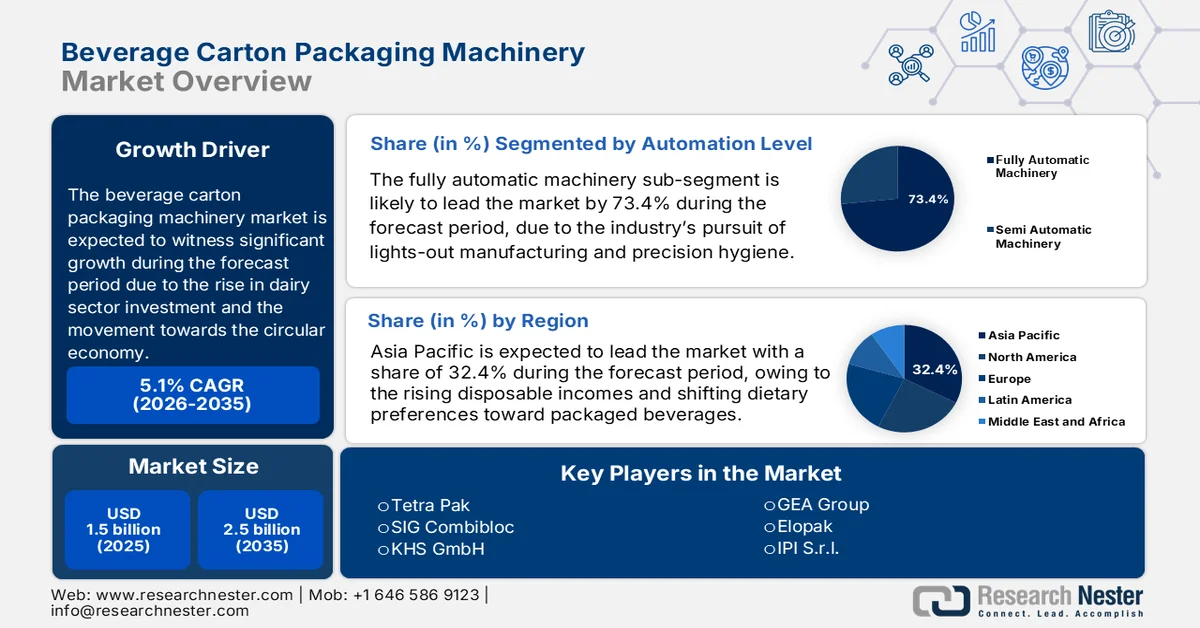
Government and multilateral data indicate sustained industrial demand for the beverage carton packaging machinery market as the beverage production and packaged liquid consumption expand globally. According to the FAO, June 2023, the global milk production exceeded 944 million tons in 2023, with continued growth driven by rising consumption in Asia and Africa, creating a strong requirement for high-volume aseptic and carton-based filling infrastructure used by dairy processors. Similarly, FAO beverage balance sheets show a rising processed fruit and vegetable. Further increased beverage processing capacity in large producing countries has therefore created a consistent capital expenditure on packaging machinery capable of handling liquid food products at an industrial scale. Further, the regulatory pressure is influencing equipment procurement strategies across beverage processors seeking machinery compatible with paper-based cartons and improved material recovery streams.
Moreover, the public sector sustainability programs and recycling targets are also shaping the procurement of the carton packaging equipment across the beverage manufacturing industries. According to the Eurostat October 2023 data, the European Union generated nearly 84 million tons of packaging waste, promoting stronger circular economy policies aimed at increasing the recycling rates and reducing the use of single-use plastics. In North America, the federal data show continued expansion of beverage manufacturing output, supporting packaging equipment demand. Moreover, the OEC 2024 data indicates that the global trade of cartons, boxes & cases of corrugated paper or board reached USD 10.1 billion. These materials are widely used for the secondary and tertiary packaging of beverages, such as shipping cartons that hold multiple beverage cartons. Furthermore, the regulatory, environmental, and production-volume factors collectively support sustained investment in beverage carton packaging machinery within global beverage processing supply chains.
Key Beverage Carton Packaging Machinery Market Insights Summary:
Regional Highlights:
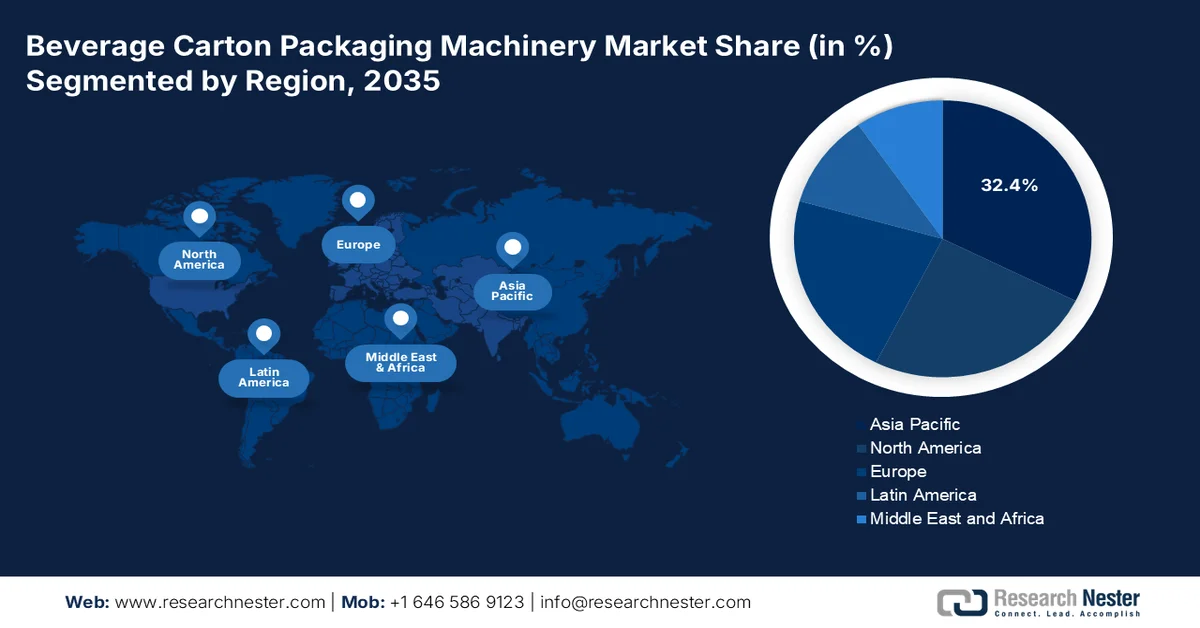
- Asia Pacific beverage carton packaging machinery market is projected to capture a 32.4% share by 2035, impelled by rapid urbanization, rising disposable incomes, and increasing demand for packaged beverages
- North America is anticipated to register the fastest growth with a CAGR of 4.8% during 2026–2035, fueled by rising demand for high-speed automated lines amid labor shortages and sustainability mandates
Segment Insights:
- Fully automatic machinery is anticipated to command a 73.4% share of the beverage carton packaging machinery market by 2035, propelled by the increasing shift toward lights-out manufacturing and precision hygiene
- Multi-layer cartons continue to dominate the carton layer segment over the forecast period 2026–2035, bolstered by their superior ability to enhance product shelf life and maintain beverage integrity
Key Growth Trends:
- Circular economy regulations
- Public dairy sector investments
Major Challenges:
- High initial capital investment
- Complex technology and R&D requirements
Key Players: Tetra Pak (Sweden), SIG Combibloc (Switzerland), KHS GmbH (Germany), GEA Group (Germany), Elopak (Norway), IPI S.r.l. (Italy), Shikoku Kakoki Co., Ltd. (Japan), Nissei ASB Machine Co., Ltd. (Japan), Aetna Group S.p.A. (Italy), Krones AG (Germany), U-flex Packaging Solutions (India), CFT S.p.A. (Italy), Serac Group (France), Dai Nippon Printing Co., Ltd. (Japan), Zhongya Global (China), R.A Jones (U.S.), Walpack Machinery Sdn. Bhd. (Malaysia), PDC International Corporation (U.S.), KHS Australia (Australia), Graphic Packaging International (U.S.).
Global Beverage Carton Packaging Machinery Market Forecast and Regional Outlook:
Market Size & Growth Projections:
- 2025 Market Size: USD 1.5 billion
- 2026 Market Size: USD 1.6 billion
- Projected Market Size: USD 2.5 billion by 2035
- Growth Forecasts: 5.1% CAGR (2026-2035)
Key Regional Dynamics:
- Largest Region: Asia Pacific (32.4% Share by 2035)
- Fastest Growing Region: North America
- Dominating Countries: United States, China, Germany, Japan, India
- Emerging Countries: Brazil, Mexico, Indonesia, Vietnam, Thailand
Last updated on : 24 March, 2026
Beverage Carton Packaging Machinery Market - Growth Drivers and Challenges
Growth Drivers
- Circular economy regulations: Environmental regulations aimed at reducing plastic waste are accelerating the adoption of paperboard cartons in beverage packaging, creating the downstream demand for specialized packaging machinery. The European Commission reports that the EU generated millions of tons of packaging waste with the policy initiatives under the circular economy action plan promoting recyclable and fiber-based packaging formats. Similarly, the U.S. EPA's October 2025 reports that the recycling rates of paper and paperboard reached 80.9%, significantly higher than plastic recycling rates, promoting the manufacturers to transition toward paper-based packaging systems. Beverage producers responding to these policies must install packaging machinery capable of forming filing and sealing multilayer cartons rather than plastic containers.
- Public dairy sector investments: Government-backed dairy sector expansion is a major contributor to beverage carton packaging machinery market demand because milk and flavored dairy beverages are commonly distributed in cartons. The milk production is set to have a strong growth in Asia and Africa. Public sector programs supporting the dairy infrastructure continue to expand the processing capacity. For instance, India’s Department of Animal Husbandry and Dairying launched the Animal Husbandry Infrastructure Development Fund to support dairy processing plants and cold chain infrastructure. New milk processing facilities require automated aseptic packaging systems for shelf-stable distribution. As dairy output expands and governments fund modernization of milk processing plants, processors increasingly deploy high-capacity carton-filling and packaging machinery to support retail and institutional supply chains.
- Agricultural processing and juice production policies: Public agricultural policies are promoting the fruit processing and value-added exports, which are driving growth in juice and plant-based beverage manufacturing, which commonly uses carton packaging. According to the FAO December 2022 data, the global fruit production reached 910 million tons, creating substantial processing opportunities for juices and beverages. Governments are investing in agro-processing clusters to reduce food waste and increase farmers' income. Pradhan Mantri Kisan SAMPADA Yojana supports mega food parks and processing clusters that integrate the beverage manufacturing facilities requiring automated packaging lines. These programs incentivize fruit juice, coconut water, and the plant-based beverage producers to adopt carton packaging formats due to their extended shelf life and transport efficiency, resulting in the higher demand for the beverage carton packaging machinery.
Challenges
- High initial capital investment: Entering the beverage carton packaging machinery market requires a significant capital investment for the R&D, precision manufacturing, robotics integration, and testing facilities. Advanced aseptic filling and forming machines can cost several million dollars per production line, creating a major barrier for new entrants. For example, the leading companies invest heavily in equipment innovation, limiting the market entry for smaller firms. Additionally, the manufacturers must establish global service networks to support installed equipment.
- Complex technology and R&D requirements: The beverage carton packaging machinery market requires an advanced engineering capability, including aseptic sterilization, high-speed filling, robotics, and digital automation. Developing such technologies demands an extensive R&D investment and specialized expertise. For instance, the leading players in the market integrate precision dosing, sterilization, and digital monitoring to maintain product safety and shelf life. Replicating this technology without patent infringement is challenging for new suppliers. Continuous innovation is also necessary to improve line speeds and reduce the contamination risk, further increasing the development costs.
Beverage Carton Packaging Machinery Market Size and Forecast:
| Report Attribute | Details |
|---|---|
|
Base Year |
2025 |
|
Forecast Year |
2026-2035 |
|
CAGR |
5.1% |
|
Base Year Market Size (2025) |
USD 1.5 billion |
|
Forecast Year Market Size (2035) |
USD 2.5 billion |
|
Regional Scope |
|
Beverage Carton Packaging Machinery Market Segmentation:
Automation Level Segment Analysis
Within the automation level segment, the fully automatic machinery is leading in the beverage carton packaging machinery market and is poised to hold the share value of 73.4% by the end of 2035. The segment is driven by the industry’s pursuit of lights-out manufacturing and precision hygiene. These advanced systems integrate robotic palletizers, servo-driven fillers, and vision inspection systems that operate with minimal human intervention, significantly reducing the risk of contamination. According to the PIB September 2025 data, the index of industrial production surged by 3.5%, a trend heavily supported by the investment in automation technologies that streamline packaging lines. Further, the smart manufacturing systems can reduce the downtime, which is a critical factor for beverage companies managing high-volume production runs.
Carton Layer Segment Analysis
Multi-layer cartons remain dominant in the carton layer segment in the beverage carton packaging machinery market due to their engineered ability to protect sensitive beverages. Combining paperboard for stiffness, polyethylene for moisture resistance, and a micro-thin layer of aluminum as a light and oxygen barrier, these cartons are essential for aseptic packaging. The U.S. Environmental Protection Agency states that while multi-layer packaging is complex, it significantly reduces food waste by extending shelf life, which accounts for a substantial portion of the packaging's environmental footprint. Additionally, trade data from the U.S. International Trade Commission shows that imports of multi-layer laminated cartonboard have surged, reflecting sustained global demand for shelf-stable beverage packaging. This structure ensures that products like UHT milk and premium juices retain their nutritional value during long distribution cycles.
Filling Technology Segment Analysis
Aseptic packaging technology represents the leading subsegment in the filling technology segment in the beverage carton packaging machinery market, allowing the liquid products to remain shelf-stable for months without refrigeration. This process involves separately sterilizing the product and the packaging material before filling them in a sterile closed environment, effectively decoupling the supply chain from cold storage requirements. The U.S. FDA maintains strict guidelines for aseptic processing. Furthermore, aseptic packaging has been pivotal in reducing the post-harvest losses of dairy in regions lacking refrigeration, demonstrating its critical role in global food security and the expansion of beverage markets into new geographies.
Our in-depth analysis of the beverage carton packaging machinery market includes the following segments:
|
Segment |
Subsegments |
|
Machine Type |
|
|
Filing Technology |
|
|
Packaging Format |
|
|
Automation Level |
|
|
Carton Layer |
|
|
End use Application |
|
|
Sales Channel |
|

Vishnu Nair
Head - Global Business DevelopmentCustomize this report to your requirements — connect with our consultant for personalized insights and options.
Beverage Carton Packaging Machinery Market - Regional Analysis
APAC Market Insights
The Asia Pacific dominates the global beverage carton packaging machinery market and is expected to hold the regional revenue share of 32.4% by the end of 2035. The market is driven by rapid urbanization, rising disposable incomes, and shifting dietary preferences toward packaged beverages across emerging economies. The region’s limited cold chain infrastructure in many areas makes aseptic carton packaging mainly attractive for shelf-stable dairy and juice products. Government initiatives supporting food processing modernization, mainly in China and India, are stimulating machinery investments. The plant-based beverage segment is experiencing exceptional growth across APAC, requiring dedicated aseptic filling capacity. The region benefits from significant intra-regional trade in packaging machinery and components.
The rapid growth of the broader food and beverage packaging sector and shifting material preferences are fueling the beverage carton packaging machinery market in India. According to the Teriin 2022 data, the food and beverage packaging market was USD 33.2 billion and is projected to grow at a CAGR of 9.3%, reflecting strong demand for packaged beverages across urban and semi-urban regions. Within the packaging mix, multilayered packaging accounted for 13% of the market, indicating a growing role for the carton-based formats, rigid plastic, and glass. Additionally, beverages represented 21% of the total consumer packaging market, underlining the scale of packaging requirements. On the other hand, the recycling trends also play a role in shaping packaging investments. Cartons in India have a recycling rate of around 54%, although recycled content remains limited, highlighting opportunities for improving circularity. These data show an active upliftment in the market growth.
Beverage Packaging Break Up by Type
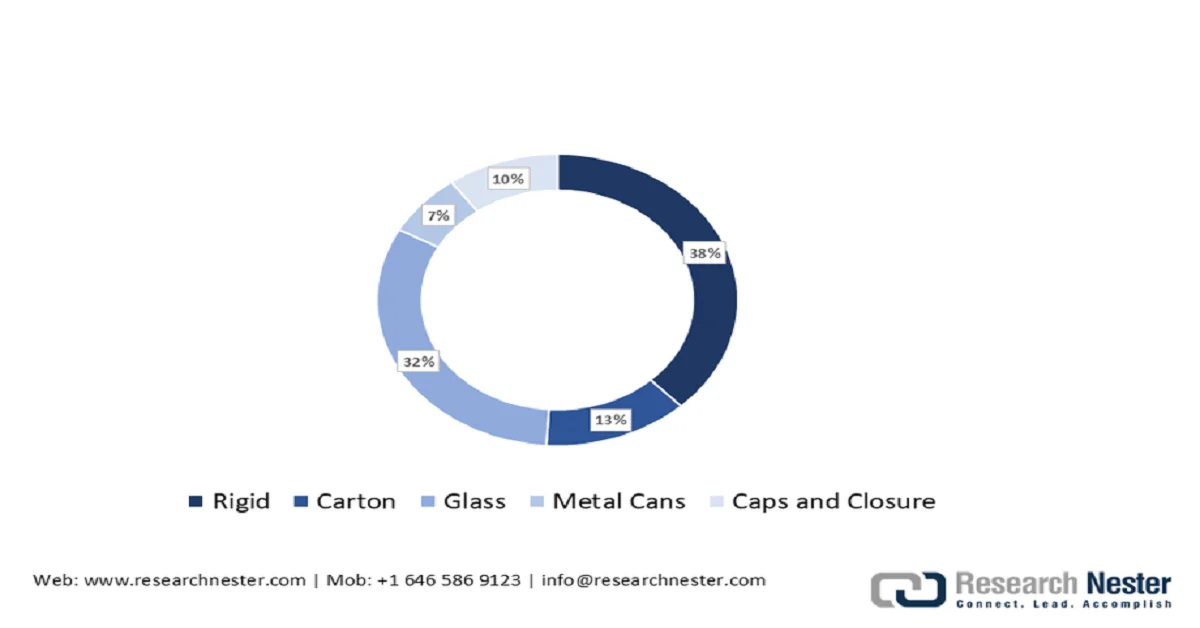
Source: Teriin 2022
The rapidly growing and diversifying beverage industry is shaping the beverage carton packaging machinery market in China. As per the APEDA June 2025 data, the beverage market reached USD 170 billion in 2024, growing at 6% YoY, and accounts for 12.7% of the global consumption, indicating substantial production volumes that require scalable and automated packaging solutions. The demand is mainly strong in segments such as ready-to-drink, tea juices, and functional beverages. Changing packaging preferences are also influencing machinery investments. While 400ml to 600 ml formats remain dominant, there is a growing shift toward larger packaging sizes, driven by cost efficiency and environmental considerations, which supports increased adoption of carton-based formats for bulk and family consumption. Moreover, the beverage manufacturers in China are investing in high-capacity carton forming, aseptic filling, and sealing machinery to support the evolving product formats, distribution scale, and sustainability trends.
North America Market Insights
North America is projected to be the fastest-growing region during the assessed period, 2026 to 2035, and is expected to grow at a CAGR of 4.8%. The region is driven by the replacement demand for the high-speed automated lines to address the labor shortages. Sustainability mandates from the major retailers and provincial EPR laws compel investment in machinery for recyclable fiber-based packaging. The region’s advanced food safety regime (FDA/CFIA) necessitates precision filling equipment. The beverage carton packaging machinery market growth is steady and is fueled by the expansion of plant-based beverage production requiring aseptic processing. Canada's population growth and US dairy consolidation underpin demand for large-scale, multi-format carton fillers.
The policy frameworks promoting recycled fiber use and reducing plastic waste are gradually influencing the beverage carton packaging machinery market in the U.S. The U.S. Environmental Protection Agency's October 2025 reports that containers and packaging accounted for about 82.2 million tons of municipal solid waste. According to the NLM October 2022 data, minimum recycled fiber content levels are often around 30% postconsumer fiber for the multiple paper product categories, reinforcing the broader shift toward paper-based materials in packaging supply chains. This policy-driven transition is supporting capital investment in carton packaging lines across U.S. beverage manufacturing plants, particularly as the output of beverage manufacturing in the U.S. reached 97.361 (index2017=100) in 2024, reflecting high production volumes that rely on advanced packaging automation based on FRED April 2025. These data show an optimistic market growth and expansion.
Output for Beverage Manufacturing
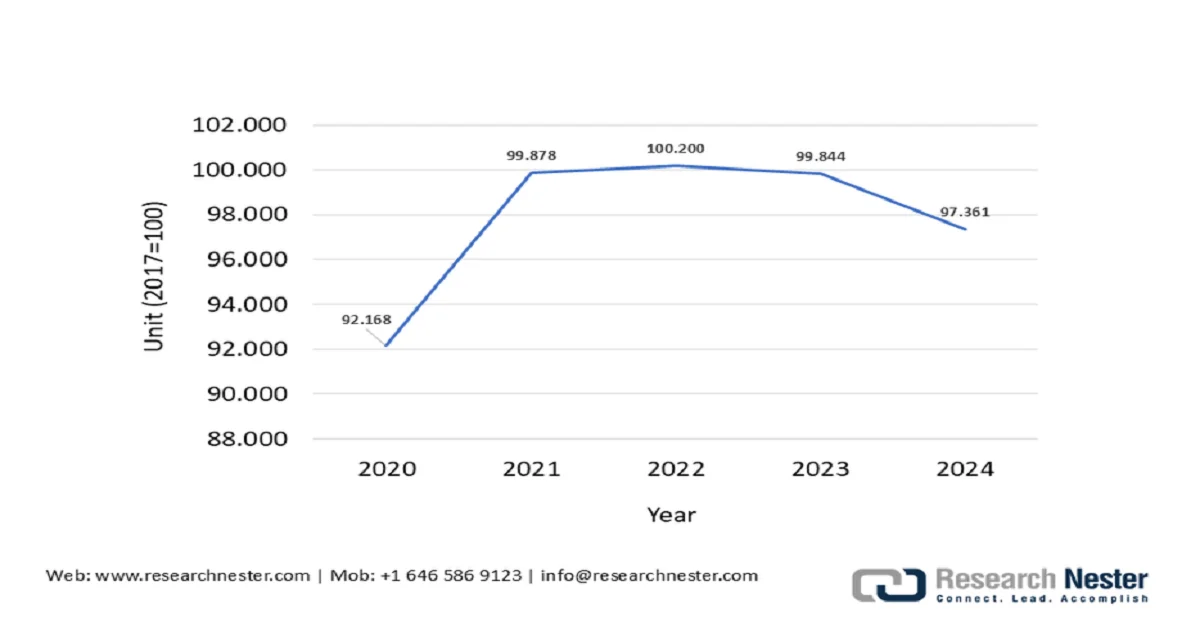
Source: FRED April 2025
Expanding beverage manufacturing sector and government-driven sustainability policies promoting recyclable fiber-based packaging are driving the beverage carton packaging machinery market in Canada. According to the Canada Beverage Association 2026 report, the beverage manufacturing industry reached USD 5.8 billion in 2023, reflecting steady growth in the domestic beverage production and the need for automated packaging systems capable of high-volume carton filling and sealing. Moreover, environmental regulations and recycling initiatives are encouraging the adoption of paper-based beverage cartons. According to the Government of Canada's June 2022 report, 4.4 million tons of plastic waste were generated, leading to the federal measures under the Zero Plastic Waste Agenda that encourage recyclable and fiber-based packaging alternatives. These data show an active beverage carton packaging machinery market growth.
Europe Market Insights
The beverage carton packaging machinery market in Europe is the most mature and sustainability-driven globally, shaped definitively by the European Commission’s Packaging and Packaging Waste Regulation. This regulatory environment compels beverage manufacturers to replace legacy lines with machinery capable of processing recyclable mono-material cartons. A key trend is the reshoring of production, with companies investing in automated, energy-efficient lines to reduce the supply chain dependencies. The EMA and EU health initiatives indirectly influence the market by setting stringent standards for sterile packaging of medical nutrition products, which often utilize carton formats. The market is also benefiting from the EU’s recovery and resilience funds, which support the digitalization in manufacturing.
The strong beverage manufacturing sector advanced packaging industry, and stringent sustainability policies encouraging recyclable materials in beverage carton packaging machinery in Germany. According to MOFPI 2025 data, the country exported 780 million liters of non alcoholic beverages, reflecting a large-scale beverage processing industry that requires automated filling, forming, and sealing equipment for carton-based packaging formats. On the other hand, the Destatis November 2024 reported that around 32.4 million tons of raw milk were produced in 2023, much of which is processed into packaged milk and dairy beverages distributed through retail channels using carton packaging. These factors are supporting continued demand for advanced beverage carton filling, forming, and sealing machinery across Germany’s beverage manufacturing sector.
The beverage carton packaging machinery market in UK is strongly driven by regulatory reforms under DEFRA’s Simpler Recycling framework, which mandates the inclusion of liquid cartons in core recyclable materials for businesses. This policy is supported by Extended Producer Responsibility regulations requiring packaging producers to fund the full cost of collection, sorting, and recycling, thereby accelerating investments in recyclable carton-based packaging systems. According to the ACE UK February 2024 data, around 66% of UK local authorities already collect liquid cartons, with a national target to achieve 90% kerbside collection by 2030, indicating significant expansion of recycling infrastructure and material throughput. The policy-driven transition toward standardized carton recycling, combined with funding mechanisms under EPR, is therefore creating sustained capital investment opportunities in beverage carton packaging machinery across the UK.
Key Beverage Carton Packaging Machinery Market Players:
- Tetra Pak (Sweden)
- SIG Combibloc (Switzerland)
- KHS GmbH (Germany)
- GEA Group (Germany)
- Elopak (Norway)
- IPI S.r.l. (Italy)
- Shikoku Kakoki Co., Ltd. (Japan)
- Nissei ASB Machine Co., Ltd. (Japan)
- Aetna Group S.p.A. (Italy)
- Krones AG (Germany)
- U-flex Packaging Solutions (India)
- CFT S.p.A. (Italy)
- Serac Group (France)
- Dai Nippon Printing Co., Ltd. (Japan)
- Zhongya Global (China)
- R.A Jones (U.S.)
- Walpack Machinery Sdn. Bhd. (Malaysia)
- PDC International Corporation (U.S.)
- KHS Australia (Australia)
- Graphic Packaging International (U.S.)
- Company Overview
- Business Strategy
- Key Product Offerings
- Financial Performance
- Key Performance Indicators
- Risk Analysis
- Recent Development
- Regional Presence
- SWOT Analysis
- Tetra Pak is a pioneering giant in the beverage carton packaging machinery market, having revolutionized the industry with its aseptic processing and filling technologies. The company has significantly made advancements in the market by adopting data-driven automation and IoT-enabled services into its end-to-end packaging lines. This advancement ensures the real-time monitoring and predictive maintenance for dairy and beverage producers, optimizing production efficiency and minimizing downtime.
- SIG Combibloc is a leading innovator in the beverage carton packaging machinery market, renowned for its carton sleeves and filling systems designed for aseptic packaging. The company has significantly made advancements in the market by adopting low-energy electron beam technology into its filing machines, replacing traditional hydrogen peroxide methods. In 2024, the company has made a revenue of USD 3.63 billion in 2024.
- KHS GmbH is a distinguished manufacturer with a robust portfolio in the beverage carton packaging machinery market, specifically via its Innopack series for carton packaging. The company has significantly made advancements in the market by adopting smart service solutions into its filling and packaging systems. In 2024, the company has made a net sale of USD 1.80 billion in 2024.
- GEA Group is a global technology powerhouse that plays a critical role in the beverage carton packaging machinery market, mainly in the processing and filling stages before carton packaging. The company has significantly made advancements in the market by adopting its better, faster, stronger service strategy into its aseptic filling blocks.
- Elopak is a leading European supplier in the beverage carton packaging machinery market, celebrated for its Pure Pak filling machines and fresh carton packaging. The company has significantly made advancements in the market by adopting fully renewable and recyclable materials into its high-speed filing lines.
Here is a list of key players operating in the global beverage carton packaging machinery market:
The global beverage carton packaging machinery market is defined by a mix of established Europe engineering powerhouses and specialized regional players. The competitive landscape is moderately consolidated, with companies such as Tetra Pak and SIG Combibloc dominating due to their integrated approach, offering both machinery and packaging materials. Strategic initiatives among the key players are heavily focused on sustainability, driving innovation in machinery designed for plant-based recyclable materials and lightweight cartons. For example, in August 2024, Duravant LLC announced that it had acquired T-TEK Material Handling LLC, a leading manufacturer of high-speed packaging machinery and systems solutions headquartered in Montgomery, Alabama. Further, there is a significant trend toward automation and digitalization with manufacturers integrating Industry 4.0 technologies to offer smart connected lines that improve efficiency, reduce downtime, and provide predictive maintenance for beverage producers worldwide.
Corporate Landscape of the Beverage Carton Packaging Machinery Market:
Recent Developments
- In December 2025, Graphic Packaging International, a global leader in sustainable consumer packaging, has announced the launch of its next-generation Boardio machinery technology, offering enhanced multi-footprint capability that transforms how brands and co-packers’ approach Boardio paperboard canister production.
- In March 2025, in an innovative step towards a circular economy and as a result of close collaboration, Tetra Pak and Schoeller Allibert will launch a new transport crate made of polyAl from used beverage cartons at the Plastics Recycling Show in Amsterdam.
- In November 2024, SIG announced the expansion of its SIG Neo filling machine portfolio, featuring the world's fastest and most flexible aseptic carton filling machine for multi-serve formats.
- Report ID: 8467
- Published Date: Mar 24, 2026
- Report Format: PDF, PPT
- Explore a preview of key market trends and insights
- Review sample data tables and segment breakdowns
- Experience the quality of our visual data representations
- Evaluate our report structure and research methodology
- Get a glimpse of competitive landscape analysis
- Understand how regional forecasts are presented
- Assess the depth of company profiling and benchmarking
- Preview how actionable insights can support your strategy
Explore real data and analysis
Frequently Asked Questions (FAQ)
About this Report
Connect with our Expert


Report, 2026-2035



Copyright @ 2026 Research Nester. All Rights Reserved.
