Vibrator Mesh Nebulizer Market Outlook:
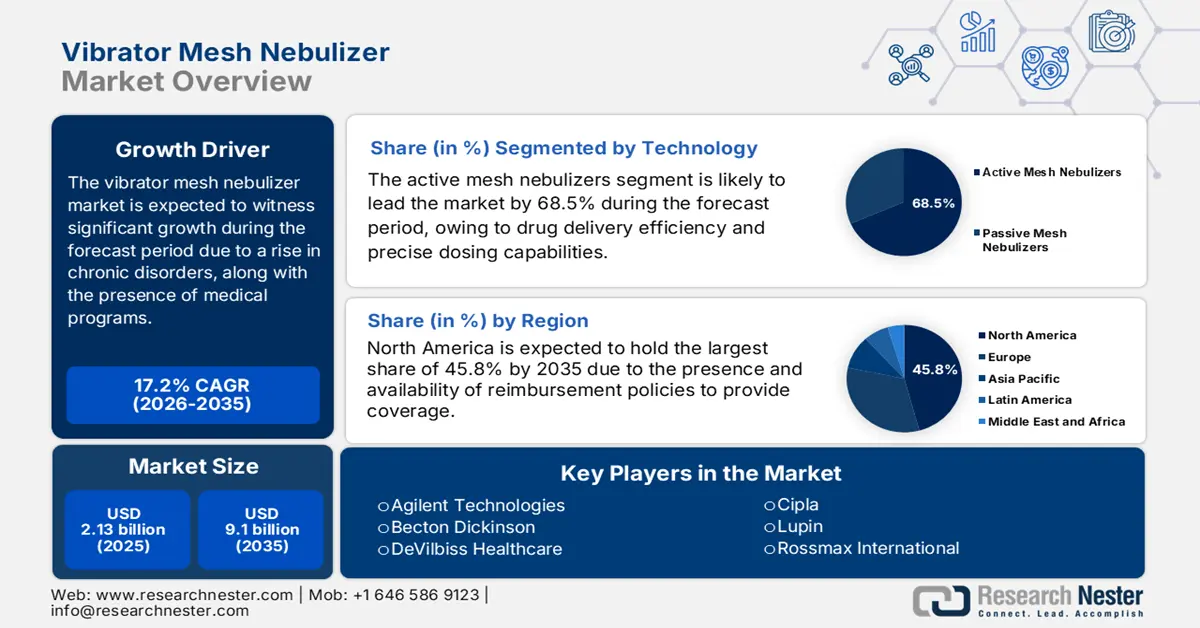
Vibrator Mesh Nebulizer Market size was valued at USD 2.13 billion in 2025 and is projected to reach USD 9.1 billion by the end of 2035, rising at a CAGR of 17.2% during the forecast period (2026-2035). In 2026, the industry size of vibrator mesh nebulizer is assessed at USD 3 billion.
The patient pool of the vibrator mesh nebulizer market is increasing, highly attributed to the rise in the occurrence of chronic respiratory disorders. As per an article published by the World Health Organization (WHO) in 2024, with 3.5 million fatalities from chronic obstructive pulmonary disease (COPD) in 2021, roughly 5% of all deaths globally, COPD is the fourth most common cause of mortality worldwide.
Almost 90% of deaths from COPD in those under 70 years old happen in low- and middle-income (LMIC) nations. These projections are further indicated to increase owing to a surge in the aging population, along with environmental factors, including air pollution. Besides, administrative health and medical programs are effectively increasing in developed countries, resulting in respiratory therapy accessibility, which is further driving the overall market growth globally. Furthermore, the vibrator mesh nebulizer market development is attributed to the supply chain aspect that includes different stages, such as assembly, medical device manufacturing, and active pharmaceutical ingredient (API) procurement.
In terms of geography, North America continues to be the leading region in the vibrator mesh nebulizer market because of its good healthcare infrastructure and coverage through universal insurance. The Asia-Pacific region is identified as the fastest-growing area, with more healthcare investment, a growing middle class. Europe continues to grow steadily with universal access and regulations through the Medical Device Regulation (MDR) resources. Dominating entities in the vibrator mesh nebulizer market include Philips Respironics, PARI GmbH, OMRON Healthcare, Aerogen, and Yuwell. These companies are investing in R&D to develop smaller, smarter, and more devices that are efficient. Other trends in terms of strategy are combinations with drug/devices, smart connections for devices, and disposable nebulizer pods for clinics.