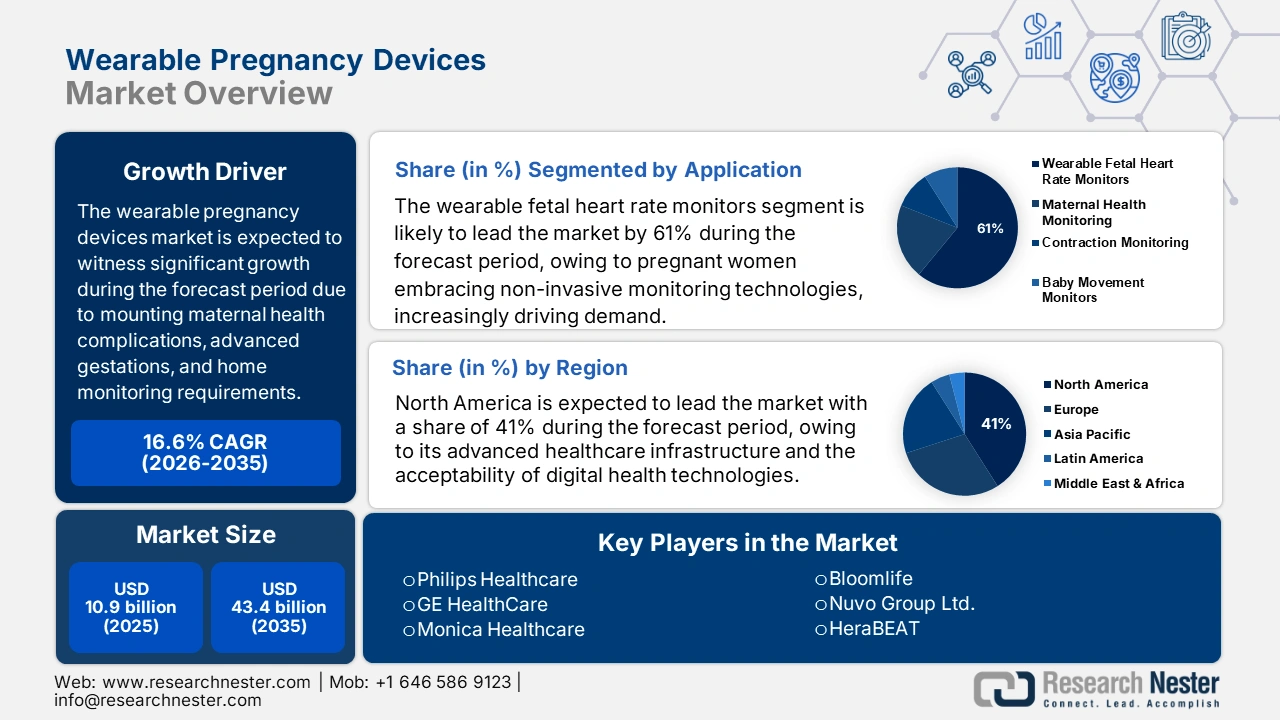
Wearable Pregnancy Devices Market Outlook:
Wearable Pregnancy Devices Market size is valued at USD 10.9 billion in 2025 and is projected to reach USD 43.4 billion by the end of 2035, rising at a CAGR of 16.6% during the forecast period, i.e., 2026-2035. In 2026, the industry size of wearable pregnancy devices is estimated at USD 12.7 billion.
The international market is facing significant growth due to mounting maternal health complications, advanced gestations, and home monitoring requirements. As per a report published by NIH in August 2024, in the U.S. alone, 3.6 million births occurred in 2023. This patient pool caused a consistent growth in the market. Additionally, as per a report by the BLS in August 2025, the producer price index (PPI) for medical supplies and devices increased 0.9% from July 2024 to July 2025, reflecting benign inflation in upstream device manufacturing costs. Current FDA regulations give importance to all wearable medical device parts imported into the nation, needing to meet U.S. requirements in submissions via the automated commercial environment system.
The market’s demographic foundation is growing with global demand for maternal health care. Government-funded R&D spending is fueling innovation in maternal health tech. For example, according to a report published by the NIH in August 2023, the NIH Institutes of Health provided USD 24 million in initial funding to establish Maternal Health Research Centers of Excellence. On the supply side, Research centers are expected to engage with community partners, such as state and local public health authorities, community health centers, and faith-based institutions. A high percentage of the medical devices or device components are imported into the U.S., with the majority from Asia, in which case assembly takes place locally under FDA-regulated frameworks. The problem of relying on imported APIs and semiconductors continues to affect the manufacturing and supply of wearable pregnancy devices.