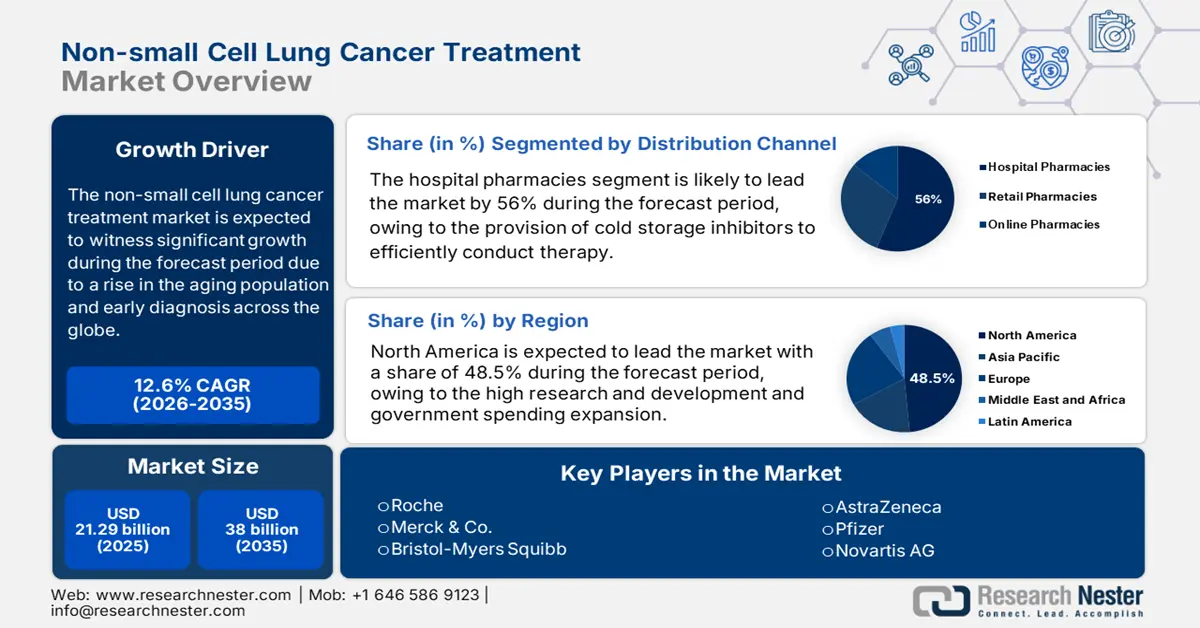
Non-small Cell Lung Cancer Treatment Market Outlook:
Non-small Cell Lung Cancer Treatment Market size was over USD 21.29 billion in 2025 and is estimated to reach USD 38 billion by the end of 2035, exhibiting a CAGR of 12.6% during the forecast period, i.e., 2026-2035. In 2026, the industry size of non-small cell lung cancer treatment is estimated at USD 23.57 billion.
According to the report published by the American Cancer Society (ACS), the number of new cases of lung cancer in the U.S. in 2025 is approximately 226,650. Lung cancer also causes about 124,730 deaths annually. The aging population is at high risk of non-small lung cancer due to the practice of smoking and exposure to pollution. The World Health Organization predicts that, with the greatest death rates among both men and women, lung cancer is the primary cause of cancer-related fatalities globally. This raises the demand for non-small cell lung cancer treatment. Furthermore, the supply chain management comprises complex logistics and sourcing of API to manufacture the drugs for non-small cell lung cancer treatment. Asia is the leading producer of API that are required for oncology drugs. On the contrary, linear accelerators used within radiation therapy are mainly manufactured in the U.S., Germany, and Japan.
Recent advancements in targeted therapies and immunotherapies have offered new possibilities in NSCLC therapies. The approval of new agents has provided greater options for patients with subpopulations and genetic alterations. The availability of these newer therapies has led to a more personalized and appropriate approach to patient therapy and possibly improved patient outcomes. There is also an increasing trend of offering NSCLC therapies in subcutaneous formulations to promote patient convenience and adherence. The approval of atezolizumab/hyaluronidase (Tecentriq Hybreza) as the first subcutaneous anti-PD-(L)1 cancer immunotherapy is a change in administration. The availability of subcutaneous therapy will foster a better patient experience and promote patient compliance with therapy.