Neuraminidase Inhibitors Drug Market Outlook:
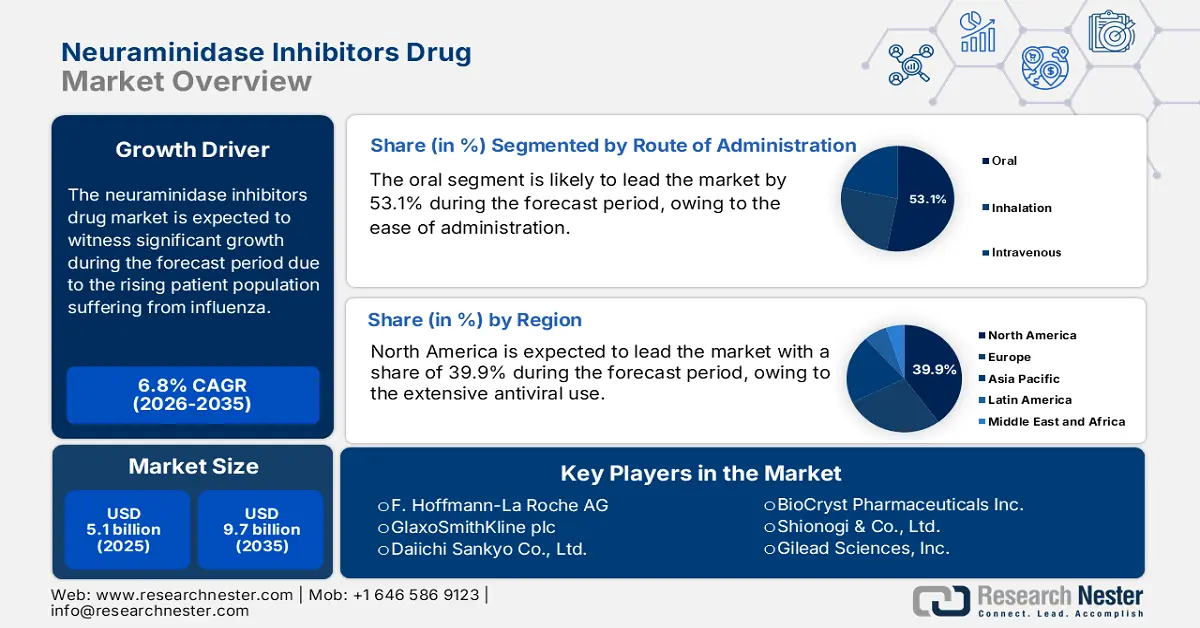
Neuraminidase Inhibitors Drug Market size was valued at USD 5.1 billion in 2025 and is projected to reach USD 9.7 billion by the end of 2035, rising at a CAGR of 6.8% during the forecast period, i.e., 2026-2035. In 2026, the industry size of neuraminidase inhibitors drug is assessed at USD 5.4 billion.
The neuraminidase inhibitors drug market is driven by the rising patient population suffering from influenza. The CDC data in May 2025 has reported that more than 47 million to 82 million people experience severe cases of flu illness, and nearly 27,000 to 130,000 deaths related to flu illness occur every year. Most of the elderly people and children are at high risk, and also people suffering from chronic illness. The CDC report has also stated that the U.S. has recorded 1.3 million hospitalization for flu, highlighting a high incidence rate that directly impacts the antiviral drug demand in the year 2023 to 2024. Neuraminidase inhibitors, including zanamivir and oseltamivir, are important for both inpatient and outpatient treatment, mainly during pandemics and flu outbreaks.
On the supply chain side, the active pharmaceutical ingredients for neuraminidase inhibitors are produced in parts of the EU, China, and India, with the final production made in Japan, Europe, and the U.S. According to the U.S. International Trade Commission's import/export data, most oseltamivir phosphate is imported from China to the U.S. in 2023. According to a March 2022 Gates Foundation report, the Bill & Melinda Gates Foundation, Novo Nordisk Foundation, and Open Philanthropy have contributed more than USD 90 million to the development of pandemic antiviral drugs. These investments focus on enhancing drug efficacy and the timely availability of neuraminidase inhibitors during seasonal and pandemic outbreaks.