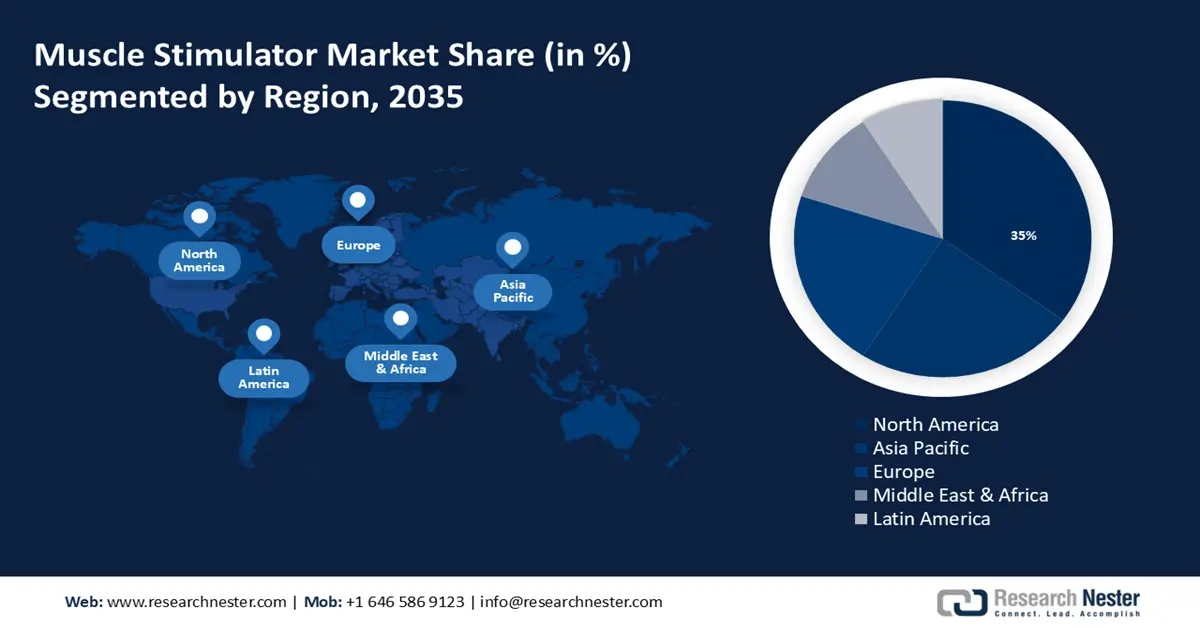
Muscle Stimulator Market Regional Analysis:
North American Market Insights
North America industry share is poised to cross 35% by 2035, owing to growing aging population of US, musculoskeletal diseases are becoming a greater burden every year. Elderly people are more prone to musculoskeletal diseases and injuries. The most common musculoskeletal problems prevalent in the area are osteoporosis, which increases the risk of fractures, back and neck discomfort, injuries from sports, arthritis and other activities. The quality of life, activity level, and productivity can all be negatively impacted by musculoskeletal disorders that affect the bones, joints, and muscles.
Further, many excruciating musculoskeletal illnesses are treated by electrical muscle stimulation. For instance, individuals with musculoskeletal disorders may benefit from using percutaneous electrical nerve stimulation (PENS) as a rehabilitation strategy to reduce mixed chronic pain in patients with musculoskeletal disorders. According to data, musculoskeletal ailment affects more than 120 million Americans.
APAC Market Insights
The Asia Pacific Muscle Stimulator Market is estimated to account for 24% share by the end of 2035. The market growth is propelled by growing understanding of electric muscle stimulator in the region. For instance, rising concern for health and fitness in the area has surged the demand for electric muscle stimulator. EMS training uses a spectrum of electric currents to trigger muscular contractions.
Moreover, active exercise can be substituted by electrical muscle stimulation (EMS), which doesn't require patient involvement. By raising the demand for oxygen, electrical stimulation of unloaded muscles induces cardiovascular activity. Further, electrical stimulation training has been found to increase muscular strength and endurance. For instance, Ab stimulators, which is a kind of muscle stimulator uses electricity to provide the appearance of tighter, more toned abdominal muscles. Recently, in India, several gyms are using EMS equipment, as it is practical, safe, and non-intrusive.
Europe Market Insights
The orthopedic prosthetic devices market in the European region is predicted to register moderate growth till 2035. The increasing number of the population suffering from lifestyle disorders coupled with the presence of the highly developed machines and devices will fuel the market growth. The rising industrial development in the region leads to the development of the enhanced healthcare infrastructure coupled with stringent government policies regarding the healthcare is anticipated to drive the market size in the region.