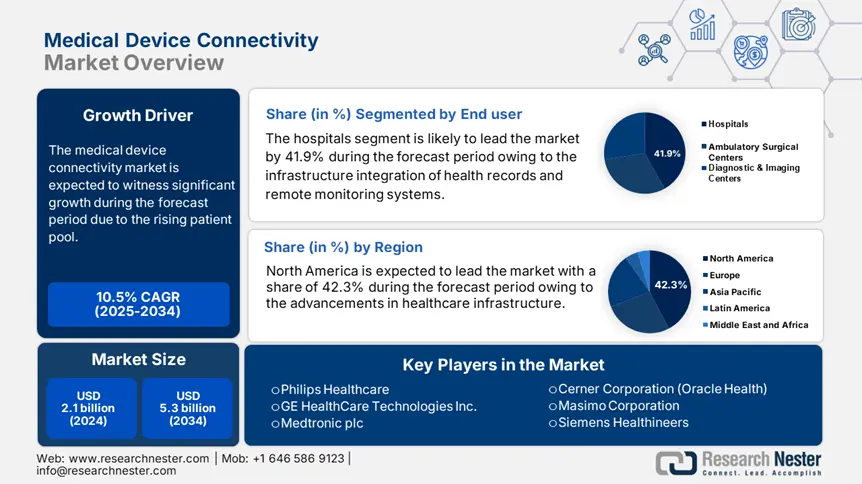
Medical Device Connectivity Market Outlook:
Medical Device Connectivity Market size was over USD 2.1 Billion in 2024 and is expected to reach USD 5.3 billion by the end of 2034, growing at around 10.5% CAGR during the forecast period i.e., between 2025-2034. In 2025, the industry size of medical device connectivity is estimated at USD 2.4 billion.
The global medical device connectivity market is experiencing a measurable transformation due to rising patient pool demands, increasing investments in device interoperability, and supply chain reconfigurations. As per the U.S. Centers for Disease Control and Prevention, nearly 60.4% of elderly people in the U.S. experience at least one chronic illness requiring medical device monitoring. The need for interoperable device infrastructure has grown as a result of an ageing population and rising rates of diabetes and COPD, particularly in hospital and ambulatory care settings. Further, according to the AHRQ report, connected monitoring devices enable remote intervention and reduce adverse events in an outpatient setting.
On the supply chain side, the import of microcontrollers, medical-grade sensors, and communication modules is heavily dependent on import networks. The producer price index rose to 4.4% for electromedical and electrotherapeutic apparatus. Whereas, the consumer price index increased to 2.8% for medical care commodities over the year as of Q1 2025. Further, the technological advancements impact the procurement planning and pricing models of connectivity platform providers. Regarding funding, the National Institutes of Health (NIH.gov) in the U.S. set aside more than USD 1.8 billion in FY2023 for technology-driven care coordination initiatives, such as real-time data transmission systems and connected devices. Further, the market is also driven by streamlined device certification and compliance with regional electronic health record (EHR) protocols.