Insect Growth Regulators Market Outlook:
Insect Growth Regulators Market size was valued at USD 1.14 billion in 2025 and is expected to grow to USD 1.90 billion by 2035, registering a CAGR of 5.8% over the forecast period from 2026 to 2035. In 2026, the industry size of insect growth regulators is evaluated at USD 1.21 billion.
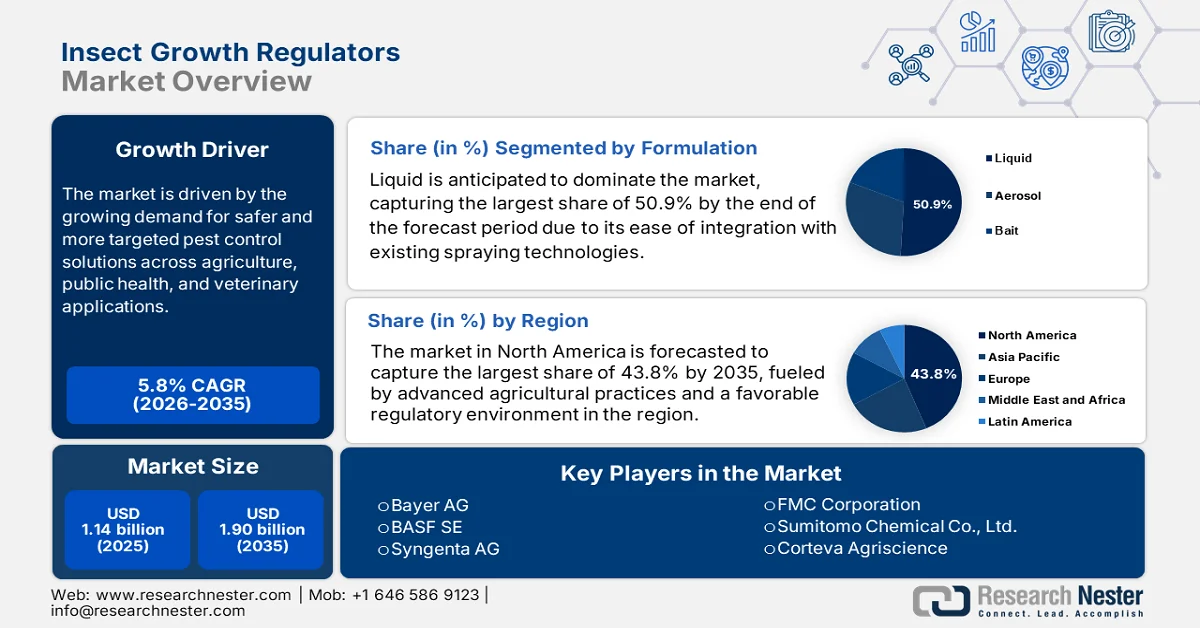
The insect growth regulators market is growing on account of demand for safer and more targeted pest control solutions across agriculture, public health, and veterinary applications. According to the data which was kept forward by the National Institute of Health (NIH) in January 2023, insect pests are a major factor which are limiting vegetable production in Nigeria, and they have affected crops such as tomatoes, okra, onions, cucumbers, and ginger. In addition, the article states that globally, insects contribute to 15% to 20% losses during field production and a similar percentage during storage of vegetables, underscoring their significant impact on food security. Specific examples in Nigeria are up to 45% loss in okra from flea beetles and 80% to 100% loss in tomatoes due to leaf miner infestations, with more than 155 insect species documented across 44 families causing different degrees of crop damage, underscoring the necessity for insect growth regulators.
Furthermore, the expanding use of IGRs in urban pest control highlights their long-term potential, benefiting the overall insect growth regulators market. The negative impact of insects and pests on human health is accelerating the adoption of insect growth regulators (IGRs) in residential pest control. According to the official statistics published by the World Health Organization in September 2024, vector-borne diseases held over 17% of all infectious ailments globally, causing more than 700,000 deaths annually, and malaria alone results in over 608,000 deaths each year. Besides, mosquitoes, ticks, fleas, and other insects transmit pathogens responsible for malaria, dengue, Zika, chikungunya, yellow fever, Lyme disease, and onchocerciasis, among others. The WHO emphasizes strengthening vector control through surveillance, community engagement, improved sanitation, and the development of new tools to reduce disease burden.
Key Insect Growth Regulators Market Insights Summary:
Regional Insights:
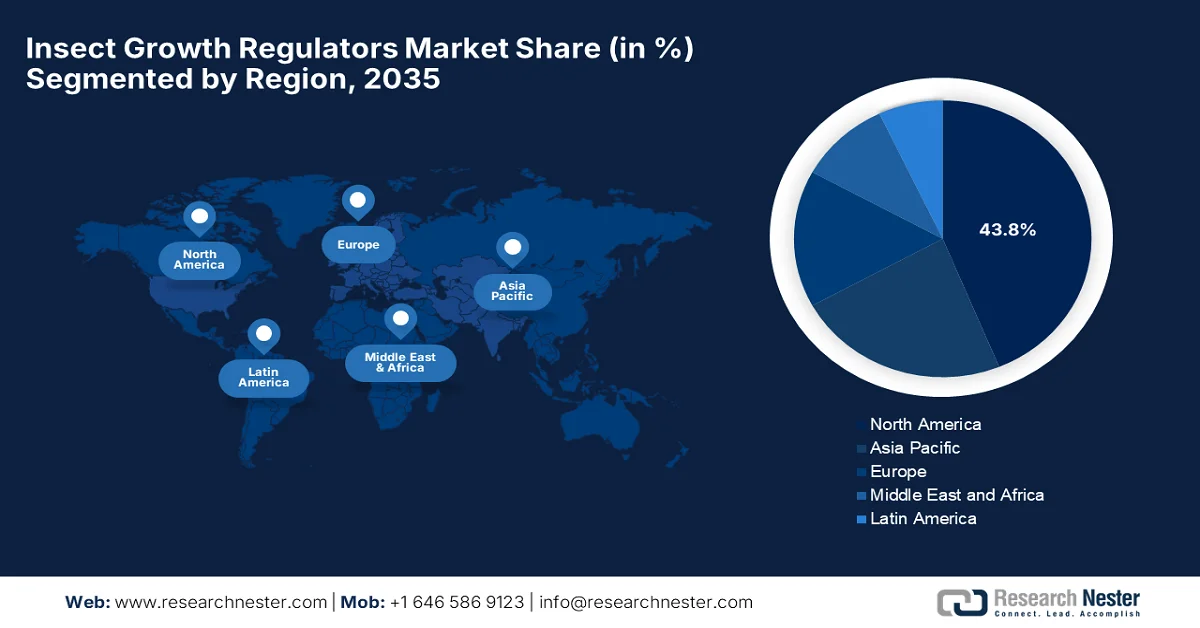
- North America insect growth regulators market is projected to hold a 43.8% share by 2035, reinforced by advanced farming practices and regulatory frameworks supporting sustainable pest control
- Asia Pacific is expected to witness notable expansion in the forecast period 2026–2035, fueled by rising agricultural output and supportive government-led pest management initiatives
Segment Insights:
- Liquid is anticipated to dominate the formulation segment of the insect growth regulators market with a 50.9% share by 2035, attributed to large-area applications and seamless integration with existing spraying technologies
- Chitin synthesis inhibitors are expected to secure a considerable share by 2035, supported by their effectiveness in disrupting insect exoskeleton formation during molting
Key Growth Trends:
- Growth of organic and sustainable farming
- Growth in urban and public health pest control
Major Challenges:
- Limited spectrum of activity
- Perceived complexity in usage
Key Players: Bayer AG (Germany), BASF SE (Germany), Syngenta AG (Switzerland), FMC Corporation (U.S.), Sumitomo Chemical Co., Ltd. (Japan), Corteva Agriscience (U.S.), Adama Agricultural Solutions Ltd. (Israel), Nufarm Limited (Australia), UPL Limited (India), Central Garden & Pet Company (U.S.), Russell IPM Ltd. (Europe), Valent U.S.A. LLC (U.S.), McLaughlin Gormley King Company (U.S.), Control Solutions, Inc. (U.S.), OHP, Inc. (U.S.), Certis U.S. LLC (U.S.), Pi Industries Limited (India), Sipcam Agro USA, Inc. (U.S.), Crystal Crop Protection Pvt. Ltd. (India), Gowan Company, LLC (U.S.)
Global Insect Growth Regulators Market Forecast and Regional Outlook:
Market Size & Growth Projections:
- 2025 Market Size: USD 1.14 billion
- 2026 Market Size: USD 1.21 billion
- Projected Market Size: USD 1.90 billion by 2035
- Growth Forecasts: 5.8% CAGR (2026-2035)
Key Regional Dynamics:
- Largest Region: North America (43.8% Share by 2035)
- Fastest Growing Region: Asia Pacific
- Dominating Countries: United States, China, Germany, Japan, India
- Emerging Countries: Brazil, South Korea, Australia, Canada, Indonesia
Last updated on : 19 March, 2026
Insect Growth Regulators Market - Growth Drivers and Challenges
Growth Drivers
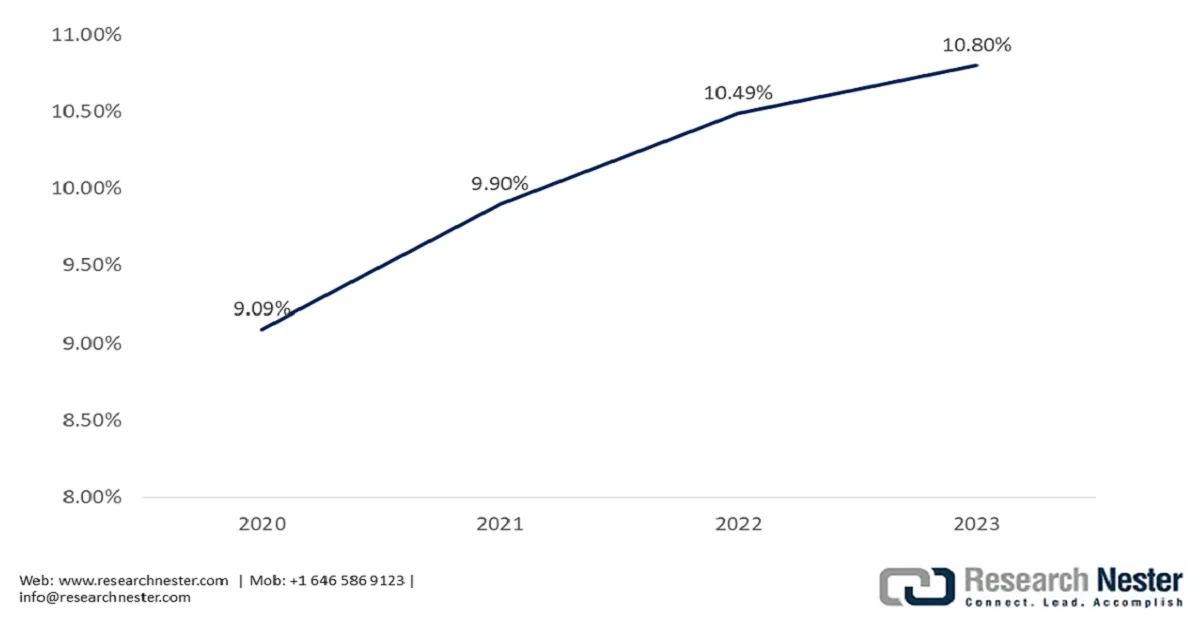
- Growth of organic and sustainable farming: Organic farming has become an extremely popular and widely accepted farming practice, which is efficiently driving demand for these low-toxicity pest products. In 2023, the official statistics that were published by Orgprints disclosed that organic agriculture has expanded significantly over the past two decades, rising from 7.4 million hectares across 62 countries in 2000 to more than 72 million hectares across 187 countries today. Therefore, this rapid expansion reflects strong global adoption of sustainable farming practices, with the sector maintaining an average annual growth rate of about 11.5% over the last 21 years. Hence, the growth trend underscores the increasing awareness of environmentally friendly agriculture, benefiting the overall insect growth regulators market.
Global Organic Farming Statistics: Producers, Market Value, and Land Distribution
|
Indicator |
Value |
|
Organic wild culture area |
35.1 million hectares |
|
Global organic market value |
USD 123 billion per year |
|
Number of organic producers |
3.1 million |
|
Share of global agricultural land |
1.5% |
|
Countries practicing biodynamic agriculture |
55 |
|
Biodynamic agriculture area |
252,000 hectares |
|
Largest organic farming country |
Australia |
|
Organic farmland in Australia |
35.7 million hectares |
|
Organic farmland in Argentina |
3.7 million hectares |
|
Organic farmland in Spain |
2.4 million hectares |
Source: Orgprints
- Growth in urban and public health pest control: The urban pest management programs across most nations use IGRs for mosquitoes, cockroaches, fleas, and flies. They help control vectors, which are responsible for diseases such as malaria and dengue, supporting demand in municipal and residential sectors. For instance, in March 2025, the Santa Clara County Vector Control District announced an aerial mosquito-larvae control treatment in the Palo Alto flood basin to reduce nuisance mosquito populations. Officially reported data states that this operation used the biological larvicide Bacillus thuringiensis israelensis together with the insect growth regulator Methoprene to prevent mosquito larvae from developing into biting adults. According to the district, this preventive public-health measure helps control mosquitoes that can travel long distances and affect nearby communities, hence benefiting the insect growth regulators market.
- Expansion of agriculture and food demand: The immense growth in population is increasing the demand for food, which in turn necessitates higher agricultural productivity. In this context, to improve yields, farmers across the world are adopting pest control technologies as IGRs. As per the article published by the Organization for Economic Co-operation and Development in July 2025, it projects that the global demand for agricultural and fish products will continue to rise over the next decade, which is largely driven by population growth, urbanization, and rising incomes in middle-income countries. To meet this demand, global agricultural and fish production is expected to increase by around 14% by 2034, mainly through productivity improvements and the adoption of improved technologies. The report also mentioned that the direct agricultural greenhouse gas emissions are projected to rise by about 6%, highlighting the need for sustainable production practices, thus suitable for driving the insect growth regulators market.
Challenges
- Limited spectrum of activity: The insect growth regulators are designed to target specific insect growth stages or certain species, which makes them extremely specialized when compared to the generally used chemical insecticides. This aspect reduces environmental impact and preserves non-target organisms, but it also results in limitations on the versatility of IGRs in multi-pest cases. Therefore, farmers managing diverse pest populations may need to use additional insecticides along with these insect growth regulators, which can increase operational complexity and expenses. The limited spectrum may reduce the insect growth regulators market attractiveness in regions where multi-species infestations are more common. Hence, in order to overcome this challenge, companies need to make investments in research to develop broader-spectrum IGR formulations and educate users on combination strategies.
- Perceived complexity in usage: The insect growth regulators necessitate careful timing, rotation, and integration into pest management programs, which can be complex for farmers who are habituated to traditional insecticides. Misapplication or misunderstanding of dosage and timing can reduce efficacy, disrupting adoption in the insect growth regulators market. On the other hand, small-scale farmers may find it challenging to implement integrated pest management strategies effectively, which ultimately slows the adoption. In this context, companies need to provide educational resources and simplified usage guidelines to address these adoption barriers. In addition, clear instructions and on-field demonstrations help users understand the benefits, application methods, and long-term advantages of IGRs, ensuring proper use and maximizing effectiveness.
Insect Growth Regulators Market Size and Forecast:
| Report Attribute | Details |
|---|---|
|
Base Year |
2025 |
|
Forecast Year |
2026-2035 |
|
CAGR |
5.8% |
|
Base Year Market Size (2025) |
USD 1.14 billion |
|
Forecast Year Market Size (2035) |
USD 1.90 billion |
|
Regional Scope |
|
Insect Growth Regulators Market Segmentation:
Formulation Segment Analysis
Liquid is anticipated to dominate the formulation segment of the insect growth regulators market, capturing the largest share of 50.9% by the end of the forecast period. The dominance of the segment is mainly attributable to large‑area applications and ease of integration with existing spraying technologies. In February 2025, Syngenta announced the upcoming introduction of its PLINAZOLIN technology, which consists of the active ingredient isocycloseram, for early-season insect management in corn, cereals, and pulses in the U.S. It also stated that the technology will be available in multiple formulations, including the liquid, at-planting product Opello, designed for soil-applied control of corn rootworm and other below-ground pests, compatible with starter fertilizers. Hence, such constant innovations in liquid formulations denote a positive outlook for the segment’s growth and exposure.
Product Type Segment Analysis
In the product type segment, chitin synthesis inhibitors are expected to expand with a considerable share in the insect growth regulators market by 2035. Its capability to disrupt insect exoskeleton formation at the molting stage is the main factor that is responsible for driving the subtype’s leadership. It also offers effective control against major crop pest groups with minimal non-target effects. In this context, in October 2024, the article published by the U.S. Environmental Protection Agency (EPA) states that it has approved Farnam Companies, Inc.’s RMI-2011-E, which is a feed-through insect growth regulator containing diflubenzuron, a chitin synthesis inhibitor, marketed under the brand names SIMPLIFLY Feed-Thru Fly Control and EQUITROL II Feed-Thru Fly Control. It is intended for use as part of an integrated pest management program, denoting a lucrative growth potential of chitin synthesis inhibitors in livestock pest control.
Application Segment Analysis
Agriculture, which is a part of the application segment, is expected to attain a significant share in the insect growth regulators market over the forecast period. The growth of the segment is highly attributable to rising global food demand and stringent regulations limiting conventional pesticide residues. The study by the U.S. Department of Agriculture (USDA) in June 2024 projects that global food consumption will rise significantly over the next 25 years owing to population growth and increasing incomes, particularly in low- and middle-income countries. Crop calories are expected to increase by 47% by 2050 under medium-population growth scenarios, which is driven by higher demand for animal products and vegetable oils. Therefore, these trends underscore the growing pressure on global agriculture to expand production and improve productivity to meet future food needs.
Our in-depth analysis of the insect growth regulators market includes the following segments:
|
Segment |
Subsegments |
|
Formulation |
|
|
Product Type |
|
|
Application |
|
|
End user |
|

Vishnu Nair
Head - Global Business DevelopmentCustomize this report to your requirements — connect with our consultant for personalized insights and options.
Insect Growth Regulators Market - Regional Analysis
North America Market Insights
The North America insect growth regulators market is forecasted to retain the largest share of 43.8% by the end of the discussed timeframe. The region’s dominance is mainly propelled by advanced farming practices and regulatory frameworks supporting sustainable pest control. The region is witnessing an incremental demand in public health and commercial sectors, whereas the awareness of insect resistance is fueling adoption in the agriculture sector. In June 2024 Centers for Disease Control and Prevention (CDC) reported that over the last two decades, the country witnessed more than 1 million cases of vector-borne diseases, and the annual cases more than doubled during this period. It also stated that 1 in 10 West Nile virus cases are reported, and Lyme disease cases may be underreported by up to tenfold. Therefore, these statistics underscore the huge necessity for IGRs in the public health sector.
The increasing concerns over pest management in both agricultural and urban environments are driving the insect growth regulators market in the U.S. Government funding plays a vital role, which is deliberately promoting research and innovation in safer insect growth regulators. Meanwhile, the advancements in formulation technologies, such as aerosol and bait-based products, readily enhance efficiency and adoption, thereby propelling market growth. In this context, the California Department of Pesticide Regulation (DPR) in July 2024 reported that it has allocated a total of USD 2.6 million in grants to advance safer and more sustainable pest management in both agricultural and urban settings. The funding included USD 1.72 million for research projects, such as developing pest-resistant crops, testing biocontrol drones, and exploring plant-based soil treatments, and USD 942,000 for outreach initiatives to promote integrated pest management, hence denoting a positive insect growth regulators market outlook.
The livestock industry's demand for safer pest control methods is driving the insect growth regulators market in Canada. There is a strong need to address rising insect resistance and consumer preference for eco-friendly products, both of which have become responsible for driving the country’s market. Based on the country’s government data, dairy has been a key contributor to farm cash receipts from 2020 to 2024, ranking among the top commodities in several provinces. Quebec leads with USD 2.9 billion, followed by Ontario and British Columbia at USD 2.6 billion and USD 760 million. In addition, other provinces such as Nova Scotia, Prince Edward Island, and Newfoundland and Labrador also rely on dairy, highlighting the widespread economic importance of Canada’s livestock sector. Hence, from a strategic perspective, targeting the dairy sector with effective insect growth regulators presents a significant opportunity to enhance pest management.
APAC Market Insights
The Asia Pacific insect growth regulators market is considered to be one of the prominent and influential landscapes fueled by the burgeoning agricultural output, supportive government initiatives, and escalating pest pressures. The agriculture sector is the major end user, particularly for crop protection and stored grain preservation. The article by Agriculture Victoria states that the partnerships against pests program in Victoria, which was launched under the 2022-2023 and 2023-2024 government budgets, promotes community-led management of established weeds and pest animals to protect agriculture, ecosystems, and culturally sensitive sites. It was funded through initiatives totaling USD 5.5 million over 4 years. The program supports grants, training, and advisory boards to strengthen local pest control efforts. In addition, it advances sustainable, long-term biosecurity and reduces farm production losses at USD 869 million on a yearly basis.
The shift toward modern farming techniques is responsible for uplifting the insect growth regulators market in China. The country’s market is influenced by the central government's zero-growth pesticide policy, which mandates a reduction in chemical usage and incentivizes the adoption of low-toxicity alternatives such as chitin synthesis inhibitors for major crops such as rice, wheat, and corn. The country’s government in October 2024 reported that the Ministry of Agriculture and Rural Affairs (MARA) issued the National Smart Agriculture Action Plan (2024 to 2028) with a prime goal to accelerate the adoption of digital and smart farming technologies across China. Besides, the plan is mainly focused on enhancing public service capabilities, promoting smart farms and ranches, and applying precision agriculture solutions to improve crop yields and efficiency, hence positively impacting insect growth regulators market growth.
In India, the insect growth regulators market is entering into a new phase of development due to the expansive farming sector and the rising concerns over food safety. Government initiatives are mainly aimed at accelerating adoption by promoting low-toxicity, residue-free alternatives for high-value export crops and staple grains. In December 2025, India Brand Equity Foundation (IBEF) reported that the country’s agriculture contributes about 18% of GDP and supports nearly 46% of the population as of 2025, making it the backbone of the economy. It also stated that organic production reached 3.6 million tons in the financial year 2024, whereas the organic food market is projected to grow from USD 1.91 billion in 2024 to USD 10.8 billion by 2033. The report highlighted that government schemes such as PKVY, MOVCDNER, and NPOP, and technologies such as drones and AI, are positioning India as a global hub for sustainable and organic farming, driving the overall insect growth regulators market growth.
Europe Market Insights
Europe insect growth regulators market is predicted to acquire a strong position in the global dynamics from 2026 to 2035. The region’s prominence in this field is mainly attributed to strict regulations on chemical pesticides and a rising preference for biological pest control methods. On the other hand, growing awareness of the negative impacts of synthetic pesticides has driven adoption across agriculture, horticulture, and urban pest management. In this context, the European Commission in August 2025 published updated harmonised risk indicators for pesticides by covering 2011-2023. It also stated that HRI 1, which measures pesticide use and risk, showed a 61% reduction compared to the 2011-2013 baseline and a 5% decline from 2022. HRI 2, based on emergency authorisations, recorded a 5% decrease when compared to the baseline and a 13% reduction when compared to 2022, reflecting progress in reducing pesticide risks across the region. Hence, these results highlight Europe’s focus on the sustainable use of pesticides directive and its goal of promoting safer farming practices.
Organic Farming Growth in the EU-27: Share of Utilized Agricultural Area (2020-2023)
Source: EEA
A strong emphasis on precision agriculture and the aspect of reduced pesticide usage are responsible for driving the insect growth regulators market in Germany. Farmers in the country are adopting IGRs as a low-risk alternative in order to protect major cereal and grain crops. Market growth is also carried forward by the rising demand for residue-free produce and the integration of biological insecticides into integrated pest management programs. In November 2024, the country’s government reported that it had reaffirmed its target of reducing pesticide use by 50% by 2030, in line with its future programme for plant protection, which was launched in September 2024. This focus reflects the country’s role as a signatory to the Kunming-Montreal Global Biodiversity Framework, which calls for halving pesticide risks globally by 2030, hence suitable for bolstering market growth in the overall country.
In France insect growth regulators market is witnessing solid growth, which is propelled by the country's rigorous focus on agroecology and the reduction of synthetic chemical dependency. The country’s market benefits from high adoption of these bio-rational compounds to protect extensive cereal, oilseed, and vineyard rotations. Ongoing R&D efforts aimed at enhancing product safety and effectiveness efficiently support market expansion in this country. In May 2024, the government of France published the Ecophyto 2030 strategy, which is a roadmap to meet the region’s sustainable pesticide use directive. The strategy concentrates on accelerating alternatives to chemical pesticides, promoting biocontrol and low-risk substances, and streamlining approval processes through fast-track evaluations by ANSES, hence suitable for standard market expansion.
Key Insect Growth Regulators Market Players:
- Bayer AG (Germany)
- BASF SE (Germany)
- Syngenta AG (Switzerland)
- FMC Corporation (U.S.)
- Sumitomo Chemical Co., Ltd. (Japan)
- Corteva Agriscience (U.S.)
- Adama Agricultural Solutions Ltd. (Israel)
- Nufarm Limited (Australia)
- UPL Limited (India)
- Central Garden & Pet Company (U.S.)
- Russell IPM Ltd. (Europe)
- Valent U.S.A. LLC (U.S.)
- McLaughlin Gormley King Company (U.S.)
- Control Solutions, Inc. (U.S.)
- OHP, Inc. (U.S.)
- Certis U.S. LLC (U.S.)
- Pi Industries Limited (India)
- Sipcam Agro USA, Inc. (U.S.)
- Crystal Crop Protection Pvt. Ltd. (India)
- Gowan Company, LLC (U.S.)
- Company Overview
- Business Strategy
- Key Product Offerings
- Financial Performance
- Key Performance Indicators
- Risk Analysis
- Recent Development
- Regional Presence
- SWOT Analysis
- Bayer AG is a leader in terms of agrochemicals, and it has a diversified portfolio of products, including insect growth regulators for agriculture and urban pest management. The company highly concentrates on R&D-driven innovation, eco-friendly formulations, and integrated pest management solutions, which are allowing it to maintain a leading position in the market.
- BASF SE is a prominent player that maintains a robust presence in the insect growth regulators market through its BioSolutions and crop protection portfolios. Besides, the firm makes heavy investments in R&D to develop environmentally safe and efficient insect control solutions to expand its biological insect control capabilities.
- Syngenta AG’s IGR solutions are focused on sustainable pest management, particularly in urban pest control and agriculture. The company emphasizes integrated pest management programs by employing field-tested formulations and professional support to strengthen its market leadership.
- FMC Corporation is a leading U.S.-based agrochemical company which is offering a range of insect growth regulators for agricultural and urban use. The firm pursues strategic partnerships, product launches, and technology acquisitions to maintain a predominant position in the market.
- Sumitomo Chemical Co., Ltd. has established a strong presence through its global crop protection business, integrating both chemical and biorational products. In addition, the company is primarily focused on R&D, sustainable agriculture solutions, and expansion through mergers and business reorganization.
Below is the list of some prominent players operating in the global insect growth regulators market:
The insect growth regulators market is witnessing intense competition between global agrochemical pioneers that harness extensive product portfolios and strong R&D capabilities. Europe‑based players benefit from stronger distribution networks and innovation in terms of eco‑friendly formulations, whereas players from the U.S focus on targeted IGR solutions for agriculture as well as urban pest control. Strategic initiatives such as product launches, acquisitions, and partnerships in this field are a few tactical strategies adopted by the leading pioneers in this field. In this context, in January, 2025, Sumitomo Chemical reported that it has completed the full acquisition of its crop protection sales subsidiaries Philagro in France and Kenogard in Spain with a goal to strengthen its presence in Europe. Therefore, the integration of these companies with Sumitomo Chemical Agro Europe S.A.S. aims to expand the crop protection portfolio, including chemical products and biorationals.
Corporate Landscape of the Insect Growth Regulators Market:
Recent Developments
- In January 2026, BASF Agricultural Solutions announced its agreement to acquire AgBiTech, which is a biological insect control company specializing in nucleopolyhedrovirus technology. The acquisition will expand BASF’s BioSolutions portfolio by providing farmers with sustainable, virus-based solutions for controlling insect pests.
- In November 2025, Corteva reported that it had introduced two new nature-inspired crop protection solutions to control insects and protect crops. Goltrevo targets sap-feeding and chewing pests with a longer shelf life and lower resistance risk, and Varpelgo active controls chewing insects and fits into sustainable pest management programs.
- In July 2025, Syngenta announced the registration of Advion Trio cockroach gel bait in California. The triple-action formula combines two insect growth regulators, pyriproxyfen and novaluron, with indoxacarb to target cockroaches at all life stages, making it effective for residential and commercial infestations.
- Report ID: 4382
- Published Date: Mar 19, 2026
- Report Format: PDF, PPT
- Explore a preview of key market trends and insights
- Review sample data tables and segment breakdowns
- Experience the quality of our visual data representations
- Evaluate our report structure and research methodology
- Get a glimpse of competitive landscape analysis
- Understand how regional forecasts are presented
- Assess the depth of company profiling and benchmarking
- Preview how actionable insights can support your strategy
Explore real data and analysis
Frequently Asked Questions (FAQ)
About this Report
Connect with our Expert


Report, 2026-2035



Copyright @ 2026 Research Nester. All Rights Reserved.
