Electric Vehicle Battery Housing Market Outlook:
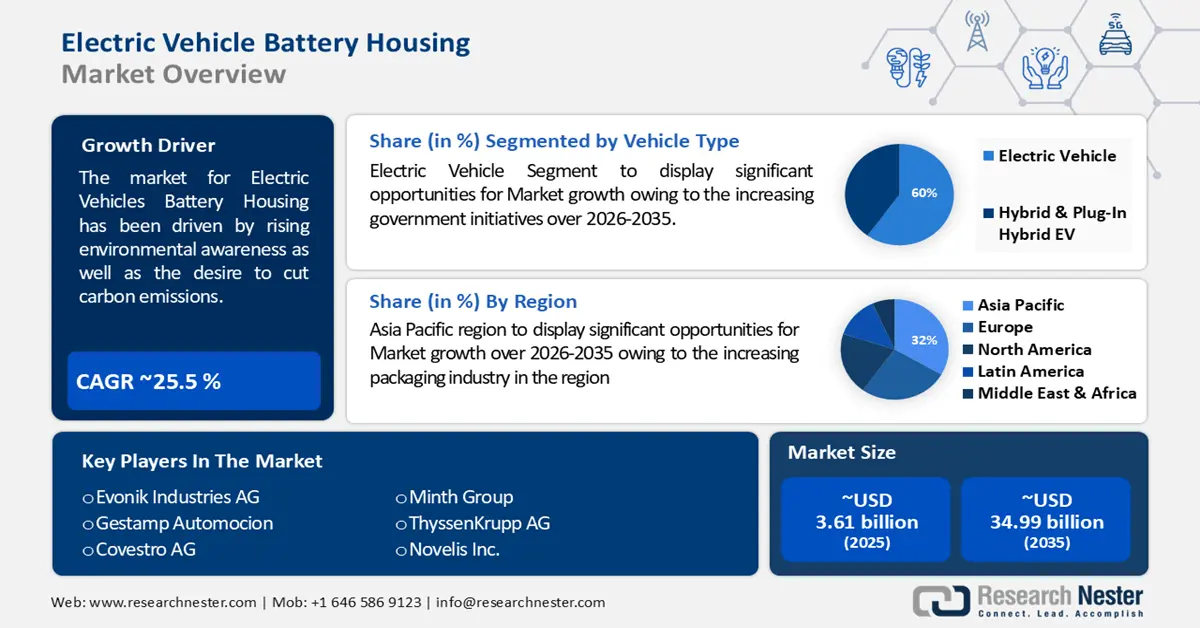
Electric Vehicle Battery Housing Market size was over USD 3.61 billion in 2025 and is poised to exceed USD 34.99 billion by 2035, growing at over 25.5% CAGR during the forecast period i.e., between 2026-2035. In the year 2026, the industry size of electric vehicle battery housing is estimated at USD 4.44 billion.
The market for electric vehicles battery housing has been driven by rising environmental awareness as well as the desire to cut carbon emissions. Every year, a typical passenger car emits 4.6 metric tons of CO2. This assumes that the average gas-powered vehicle on the road currently gets about 22.2 mpg and covers 11,500 miles per year. For every gallon of gasoline used, about 8,887 grams of CO2 are created.
In addition to these, policies & incentives from the government will be crucial in determining how the EV battery housing industry develops. Globally, a large number of governments are putting laws and incentives into place to encourage the use of electric vehicles. Subsidies, tax breaks, and legislative initiatives are some of the strategies used to lessen reliance on cars using conventional internal combustion engines. Over the next few years, there will be a major increase in demand for EV batteries and associated components, such as battery housing, as more automakers make investments in electric vehicle technology.