Contrast Media Market Outlook:
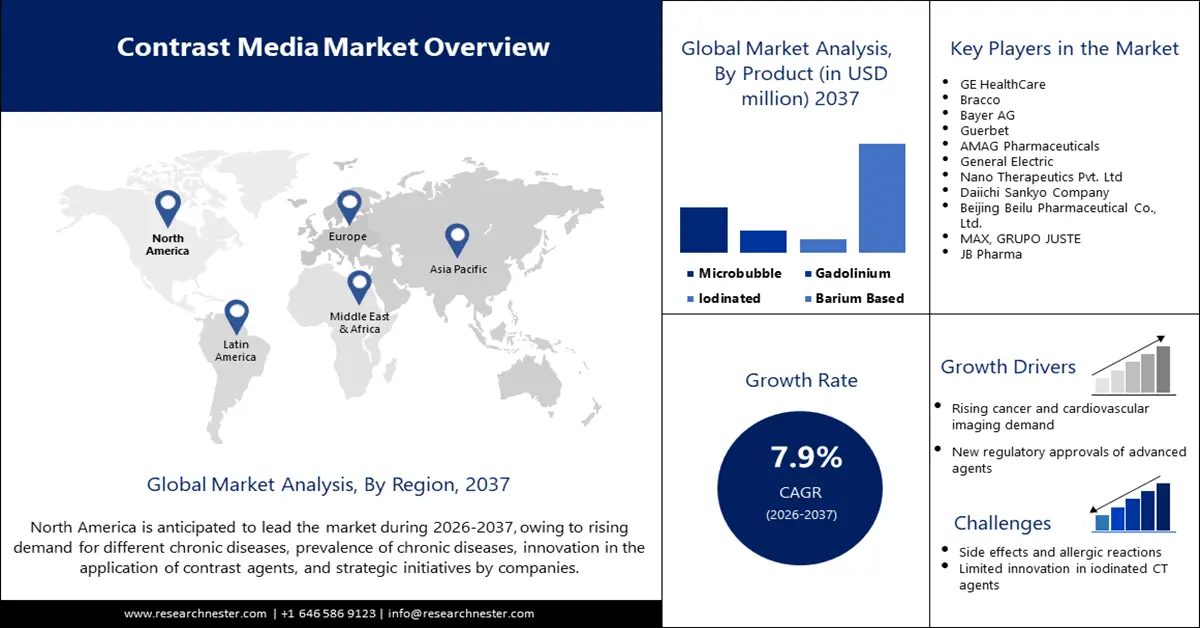
Contrast Media Market size was valued at USD 6.9 billion in 2025 and is expected to reach USD 17.1 billion by the end of 2037, registering a CAGR of 7.9% during the forecast period, i.e., 2026-2037. In 2026, the contrast media is assessed at USD 7.4 billion.
The rising prevalence of chronic diseases, such as pulmonary disease, dementia, diabetes, and depression, and the growing aging population are expected to increase the demand for contrast media used for diagnostic purposes. In October 2024, the World Health Organization reported that 1 in every 6 individuals is expected to reach the age of 60 and above by 2030. This indicates the likelihood of rising prevalence of common health conditions, such as hearing loss, refractive and, cataract errors, pain in the back and neck, and osteoarthritis. As a result, the demand for contrast media used for the procedure of diagnostic imaging is expected to increase.
Adequate availability of contrast agents, including barium sulfate, and iodinated compounds like iodine-based contrast media, fuels the growth of the market. The use of contrast agents is common for effective visibility across diagnostic procedures, such as angiography, CT scans, and others.
Patient Safety - Contrast Media
|
Topic |
Details |
|
Types of Contrast Materials |
- Iodine-based: used in X-ray and CT; administered via ingestion, injection, or into body spaces - Barium-sulfate: most common for oral or rectal use in GI studies; forms: powder, liquid, paste, tablets - Gadolinium: used in MRI; alters the magnetic properties of water molecules |
|
Administration Methods |
swallowed, administered via enema, injected into veins or arteries, or injected into body cavities |
|
Iodine-Based Reactions |
- Mild: nausea, vomiting, headache, itching, flushing, mild rash/hives - Moderate: severe rash/hives, wheezing, arrhythmias, blood pressure changes, shortness of breath - Severe: difficulty breathing, throat swelling, profound hypotension |
|
MRI–Gadolinium Safety |
- Allergic reactions are rare and mostly mild (hives, itchy eyes); severe reactions are very rare - Nephrogenic systemic fibrosis (NSF) is a rare risk in patients with severe kidney disease - Gadolinium retention in organs (including brain) has been observed, but no known adverse outcomes; the choice of agent may vary based on risk factors and patient profile |
|
Oral/Rectal Barium-Sulfate Effects |
Pre-exam: fasting or colon cleansing may be required Effects: unpleasant taste, fullness, urge to evacuate (if enema) After exam: increased fluid intake recommended; stools may appear white for a few days; bowel pattern changes possible for 12–24 hours |
|
Pregnancy & Breastfeeding Considerations |
- Pregnancy: Inform your provider. Iodinated CT contrast not known to pose significant risk. Gadolinium for MRI typically avoided unless essential due to unknown fetal risk - Breastfeeding: Despite manufacturer advice to pause breastfeeding for 24–48 hours, the ACR and European Society of Urogenital Radiology assert it is safe to continue, as trace exposure is minimal |
Source: RNSA
Organizations are investing in deploying the diagnostic processes that need iodinated compound agents as a precursor in the deposition of chemical vapor, which indicates their adequate availability. One such example is the announcement by American Elements in January 2023, regarding its expansion of the less common metals, organometallics, and rare earth production facilities with the motive of meeting the rising demand for precursors for deposition of thin film.