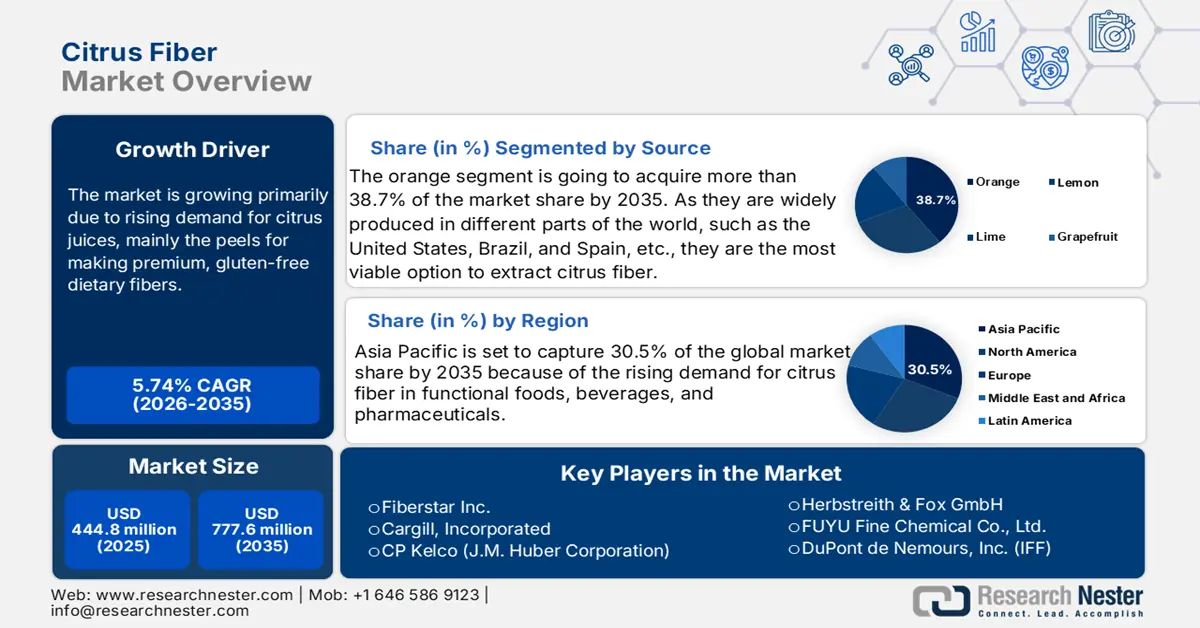
Citrus Fiber Market Outlook:
Citrus Fiber Market size was valued at USD 444.8 million in 2025 and is projected to reach USD 777.6 million by the end of 2035, growing at a CAGR of 5.74% during the forecast period, i.e., between 2026-2035. In 2026, the industry size of citrus fiber is assessed at USD 450 million.
The growing use of citrus juice processing side-streams—especially peels—to make premium, gluten-free dietary fibers drives expansion in the citrus fiber market. According to USDA Agricultural Research Service (ARS) statistics, peel biomass accounts for approximately 45% of fresh citrus weight—about 1.52 million metric tons in the U.S. alone. The rise in state-sponsored R&D, including steam explosion processing, demonstrates significant investment in enhancing fiber yield, water retention, and color quality, hence fostering industrial adoption. In manufacturing plant-based meat and beverage stabilization, citrus fibers serve as efficient emulsifiers and fat replacers.
Anchored in citrus juice facilities, mostly in Florida and São Paulo, the raw material supply chain generates huge volumes of peel trash. Steam explosion and decolorization plants are helping to increase manufacturing capacity. Citrus fiber from processing hubs within integrated assembly lines is traded worldwide. Although fiber supports worldwide food and feed industries, low per-ton tariffs and shipping expenses help to maintain consistent growth devoid of market distortions. Additionally, an upgrade in the logistics is such as refrigerated storage, is lowering spoilage and preserving functional quality during long-haul shipments.