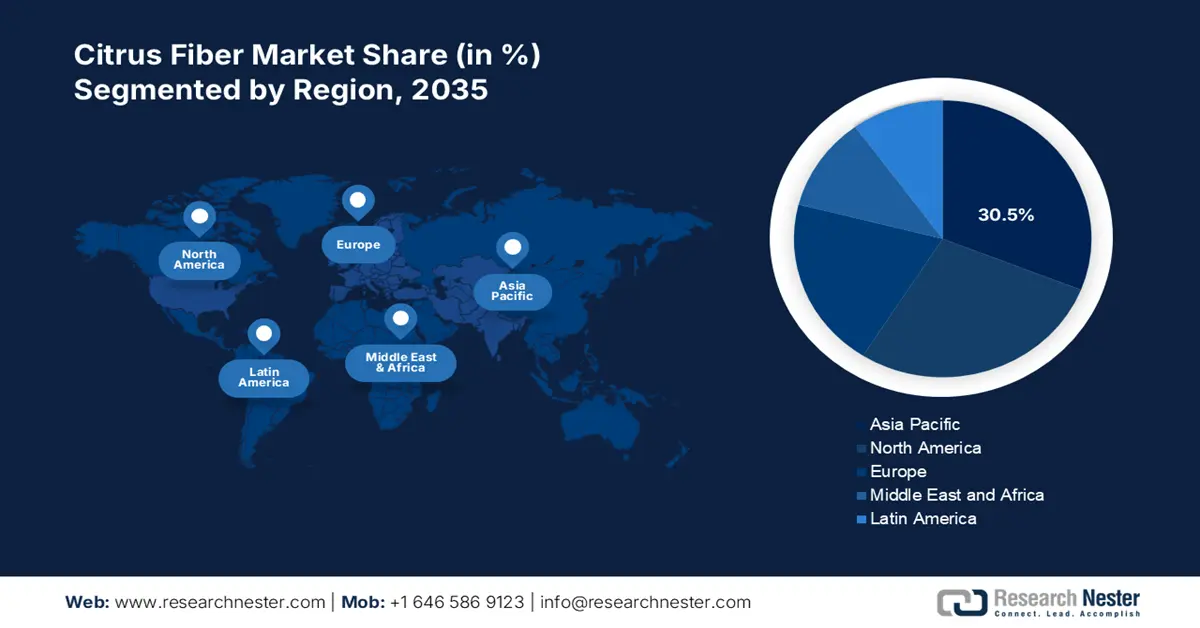
Citrus Fiber Market - Regional Analysis
Asia Pacific Market Insights
By 2035, the Asia Pacific market is expected to hold a 30.5% market share, driven by an increase in demand for functional foods, beverages, and pharmaceuticals. The growth of the market in the region can be attributed to the widespread nutraceutical industry. The spending on preventive medicine in the region has exponentially increased, resulting in increased demand for the citrus fiber. China leads the Asia Pacific citrus fiber market because its production continues to increase along with the output of citrus fruits, providing a strong manufacturing base. The quick expansion of the plant-based food and drink sector, as well as government projects encouraging agri-waste usage, is fueling the market growth. For instance, a report published by the USDA in January 2025, owing to the favorable weather, the country’s production of tangerines/mandarins is anticipated to reach 100,000 tons.
India's market for citrus fiber is growing in response to growing demand for clean-label products and expanding citrus production. According to a report published by the government of India, the citrus industry is the 3rd largest fruit industry in the country. Also, the country ranks 9th among the top orange-producing countries in the world. Furthermore, strong government support under PMFME (Pradhan Mantri Formalization of Micro Food Processing Enterprises) and increased interest from food and nutraceutical businesses are catalyzing the market growth. High availability of citrus waste from processing clusters in Andhra Pradesh and Maharashtra also helps to boost the Indian market.
North America Market Insights
North America market is expected to hold 28.2% of the market share. North America will lead in demand, fueled by a rise in clean-label and natural ingredients in food, drinks, and cosmetics. The strong food processing industry and growing focus on health and eco-friendly products have helped the region take the top spot. In U.S., more consumers are looking for citrus fiber in baked goods, dairy products, and snacks due to its health benefits and clean labels. A report published by Penn State Health News in March 2024, more than 59 million Americans use some types of supplements regularly. The rising intake of nutraceuticals is also propelling the market growth in the country.
Canada is also a prominent player in the citrus fiber market due to its increasing application in cosmetics and functional foods. Consumer demand for naturally occurring and ethically sourced ingredients is fueling this expansion. Clear labeling, compassionate legislation, and a culture that promotes healthy eating are all crucial components. Additionally, brands in Canada are investing in including citrus fiber as there are supportive regulatory environment from the government. Consumers as well as regulators are inclined towards transparent, plant-based components in personal care and food.
Europe Market Insights
The Europe market is expected to hold 25.9% of the market share by 2035. The growth of the market in the region can be attributed to the rising demand for the clean label momentum across mainstream brands. In UK, the growth is driven by rapid expansion of the food processing industry that uses in citrus fiber to enhance stability and texture. According to data published by government of UK in 2023, the country imported 2,490 thousand tones of citrus and exotic fruits. Market players are using citrus fibers to enhance the gelation and lower the syneresis. Also, the sustainability initiatives in the country and goals for circular economy are propelling the market growth.
In Germany, the growth of the market is fueled by rising demand for the plant-based product. There is a strong shift toward plant-based diets in the country that require citrus fiber to be added. Various market players are offering extensive range of the functional dietary fibers with a focus on fruit derived fibers. The dietary fiber guidelines in the country recommend the intake of fiber for adults. The rising consumer awareness and policy support for the fiber rich products, the demand for citrus fiber is rising exponentially.