Building Analytics Market Outlook:
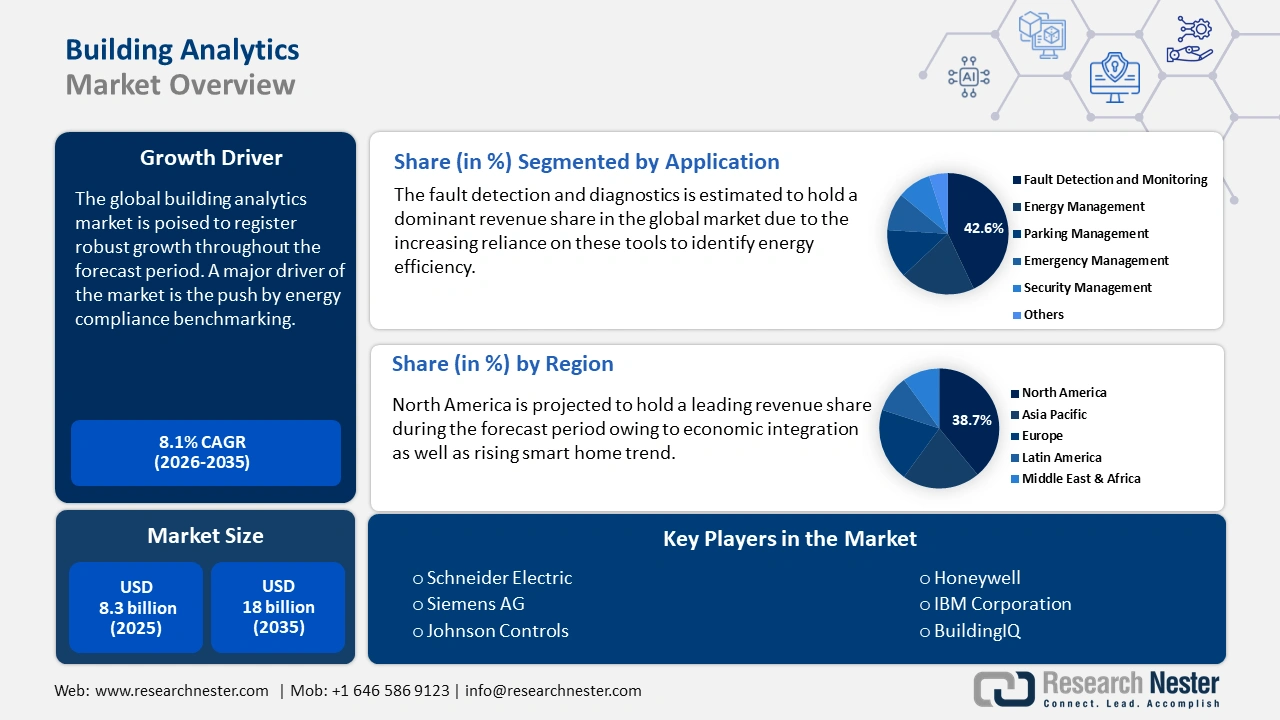
Building Analytics Market size was valued at USD 8.3 billion in 2025 and is projected to reach USD 18 billion by the end of 2035, rising at a CAGR of 8.1% during the forecast period 2026-2035. In 2026, the industry size of building analytics is estimated at USD 8.9 billion.
The market’s growth trajectory is favorably influenced by the rising adoption of smart building technologies that are able to optimize energy consumption. Multiple factors, ranging from the rising urbanization to the growth in smart city initiatives, are impacting the market dynamics. In terms of economic indicators, the producer price index (PPI) for application software publishing stood at 112.538 in August 2025, according to the Federal Reserve Bank of St. Louis.
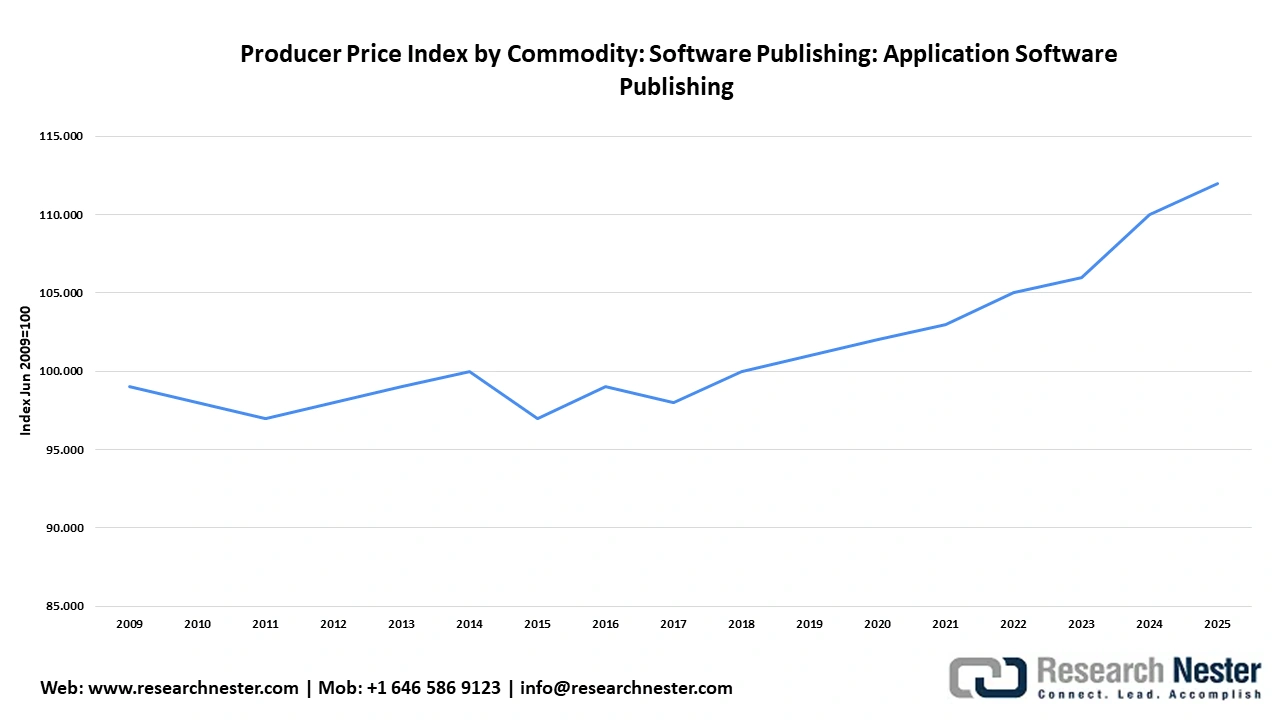
Source: Federal Reserve Bank of St. Louis
In terms of operational metrics of the market, hybrid models of workflow have contributed to the fluctuation in utilization patterns. From the real estate sector, occupancy variances are increasing in certain urban hubs, leading to the rising demand for analytics solutions that bolster dynamic space management. Additionally, the regional pressure has intensified the adoption of building analytics. For instance, the EU’s Energy Performance of Buildings Directive (EPBD) and California’s Title 24 have pushed greater adoption of advanced analytics.
The market's supply chain is multifaceted, spanning software development and hardware production. The trade flow is experiencing a transfer of high-tech software solutions from developed markets to emerging economies. Moreover, the hardware components are flowing from APAC to North America and Europe. The global market is also impacted by a bifurcated investment pattern, especially with the capital expenditures for hardware manufacturing reflecting moderate levels of growth. The trends highlight that the market is poised to maintain its expansion throughout the anticipated timeline.