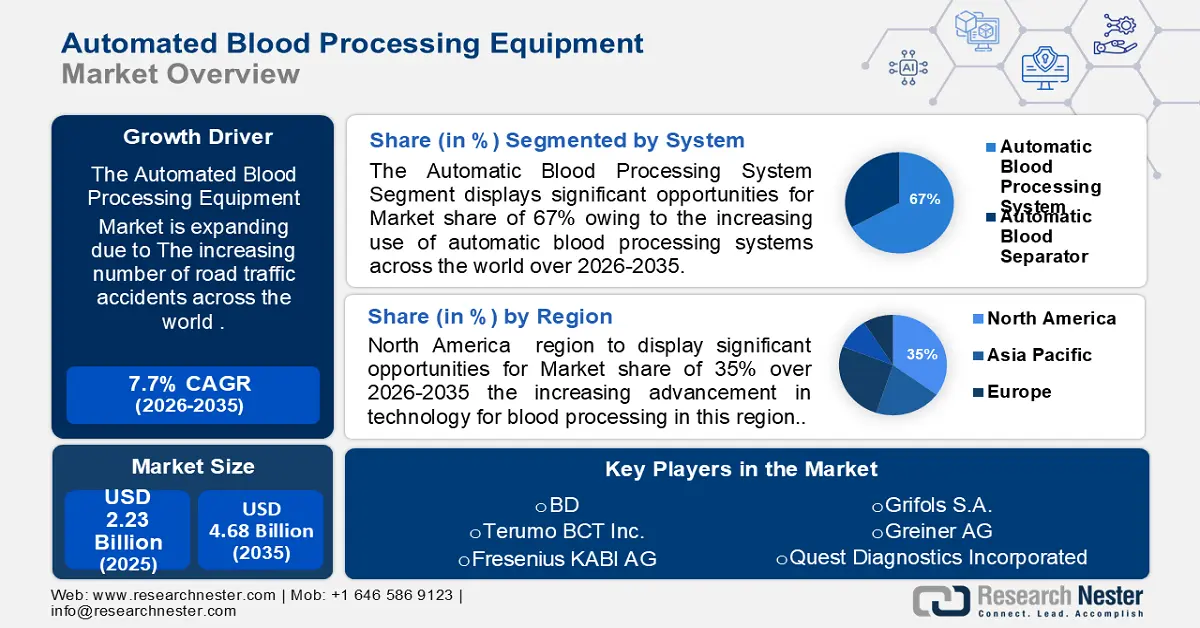
Automated Blood Processing Equipment Market Outlook:
Automated Blood Processing Equipment Market size was valued at USD 2.23 billion in 2025 and is expected to reach USD 4.68 billion by 2035, expanding at around 7.7% CAGR during the forecast period i.e., between 2026-2035. In the year 2026, the industry size of automated blood processing equipment is evaluated at USD 2.38 billion.
The increasing number of road traffic accidents across the world will exponentially help the automated blood processing equipment market to grow in the expected CAGR. Approximately 2 million people lose their lives in automobile accidents yearly. Additionally, there are 30 to 60 million non-fatal injury issues, many of which outcome in lifetime disability. Road traffic accidents are foreseeable and avoidable, but reliable statistics are necessary to comprehend how road safety technologies and treatments may be successfully implemented in industrialized nations where they are successful.
Another reason to propel automated blood processing equipment market by the end of 2036 is the continuous need for diagnostic tests for different diseases globally. Expands the panel of tests for infectious and vaccine-preventable diseases and non-communicable diseases (including diabetes and cancer). It also includes the WHO-recommended COVID-19 tests (PCR and Antigen) and adds a section on endocrinology—a crucial area for women's and reproductive health. The list now contains tests that should not be provided in countries for the first time, either because they are too expensive, too unreliable, or have been superseded by more user-friendly, more recent technologies. The public and policymakers are unaware of the effects of traffic injuries. In developing nations, comprehensive measures for road safety must be incorporated into national planning. In many low- and middle-income countries, basic diagnostic capacity is only accessible in 1% of primary-care clinics due to a systemic lack of testing investment.