Aromatherapy Market Outlook:
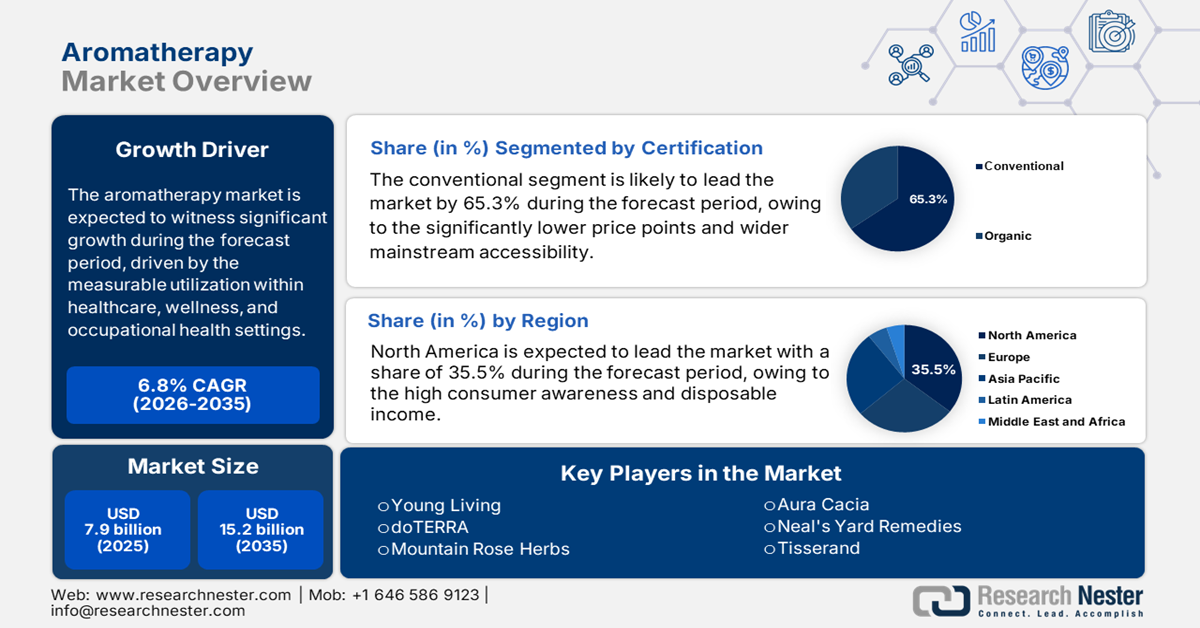
Aromatherapy Market size was valued at USD 7.9 billion in 2025 and is projected to reach USD 15.2 billion by the end of 2035, rising at a CAGR of 6.8% during the forecast period, i.e., 2026-2035. In 2026, the industry size of aromatherapy is estimated at USD 8.4 billion.
Institutional demand for the aromatherapy market services and supplies are shaped by the measurable utilization within healthcare, wellness, and occupational health settings rather than consumer-led trends. The National Cancer Institute report in September 2023 indicates that 53 patients with different types of cancer have undergone 6 aromatherapy sessions and have experienced a decrease in anxiety and depression. This data indicates that the higher usage is observed in hospital-affiliated integrative medicine programs and long-term care environments. Hospitals increasingly embed complementary health approaches within pain management, anxiety reduction, and palliative care pathways as a part of opioid and non-pharmacologic care strategies supported by federal health agencies. Further, the U.S. Department of Veterans Affairs has also expanded the medical centers, incorporating integrative health modalities, including aromatherapy, to address the chronic pain and stress among the veterans.
From a workforce and facility perspective, the aromatherapy market is supported by the sustained growth in healthcare and wellness employment and infrastructure. The U.S. Bureau of Labor Statistics in November 2025 shows that the employment in healthcare and social assistance exceeded 64.0 thousand in November 2025, creating a broad institutional base where complementary therapies are increasingly offered as adjunct services. Long-term care facilities and hospices represent a steady channel for the procurement of aromatherapy-related inputs tied to resident well-being and staff-assisted care programs. Regulatory oversight also influences the aromatherapy market structure by maintaining clear distinctions between cosmetic wellness and drug claims, shaping the compliance-driven sourcing and limiting unsubstantiated standardization, practitioner training, and safety monitoring for complementary therapies, which is shifting towards the institutionally acceptable solution.