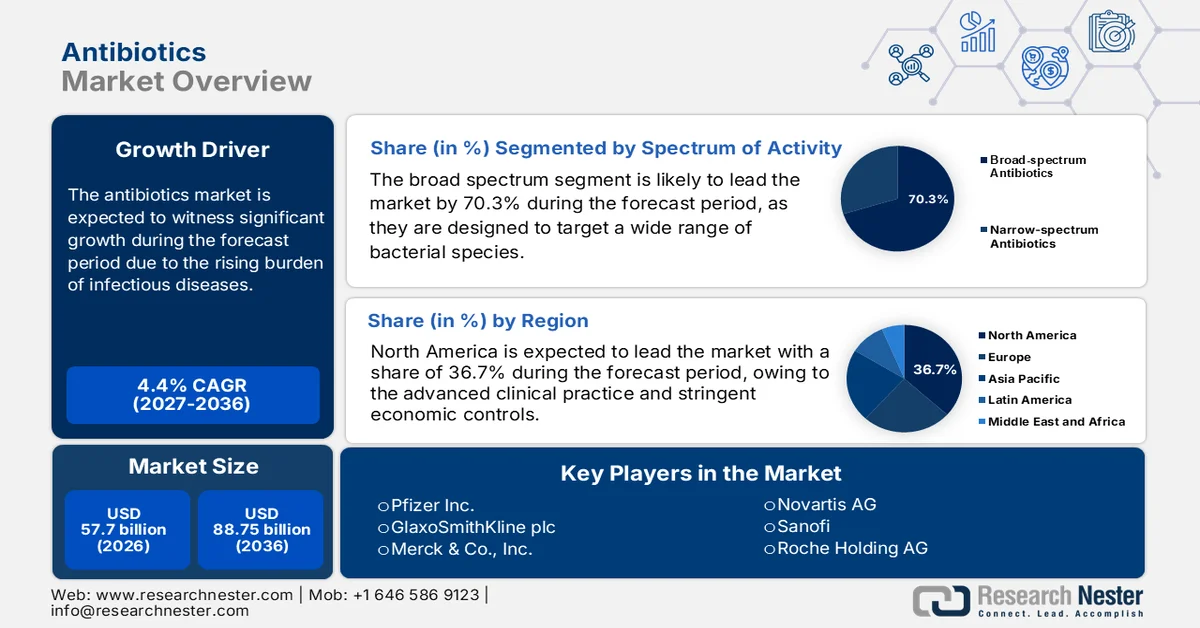
Antibiotics Market Outlook:
Antibiotics Market size was over USD 57.7 billion in 2026 and is expected to reach USD 88.75 billion by the end of 2036, growing at around 4.4% CAGR during the forecast period, i.e., 2027-2036. In 2027, the industry size of antibiotics is evaluated at USD 60.24 billion.
The global market operates within a complex framework defined by the critical public health needs and significant economic challenges. The core demand driver is the rising burden of infectious diseases. According to the WHO November 2023 data, bacterial infectious is the leading cause of global mortality, and antimicrobial resistance is responsible for nearly 1.27 million global deaths directly attributable to drug-resistant infections. This clinical burden sustains baseline demand across hospital and community settings, particularly for injectable antibiotics used in sepsis, pneumonia, surgical prophylaxis, and intensive care. Moreover, the CDC December 2024 data indicates that the number of hospital visits for infectious disease account for 10.2 million. This data indicates that there is a need for continuous antibiotic supply across public and private healthcare systems.
Reported New Cases of Infectious Diseases
|
Disease |
Number of New Cases |
|
Tuberculosis |
8,916 |
|
Salmonella |
58,371 |
|
Lyme Disease |
34,945 |
|
Meningococcal Disease |
371 |
Source: CDC December 2024
Further, the weekly surveillance of influenza and the season’s disease burden leading to bacterial infections requires antibiotics. On the other hand, the study from the Frontiers September 2024 data highlights that urinary tract infections reported over 150 million cases, driving the usage of antibiotics. Additionally, in the U.S., the Biomedical Advanced Research and Development Authority and the National Institutes of Health collectively allocate hundreds of millions of dollars annually to antibacterial R&D and manufacturing preparedness. Similarly, the European Union and WHO-backed initiatives emphasize procurement guarantees and subscription-style payment models to stabilize supplier revenues while preserving stewardship goals. Overall, the market remains volume-driven, policy-regulated, and institutionally supported, with the long-term sustainability increasingly dependent on public sector funding, hospital purchasing contracts, and national AMR action plans rather than traditional commercial scaling.