Anti-Inflammatory Biologics Market Outlook:
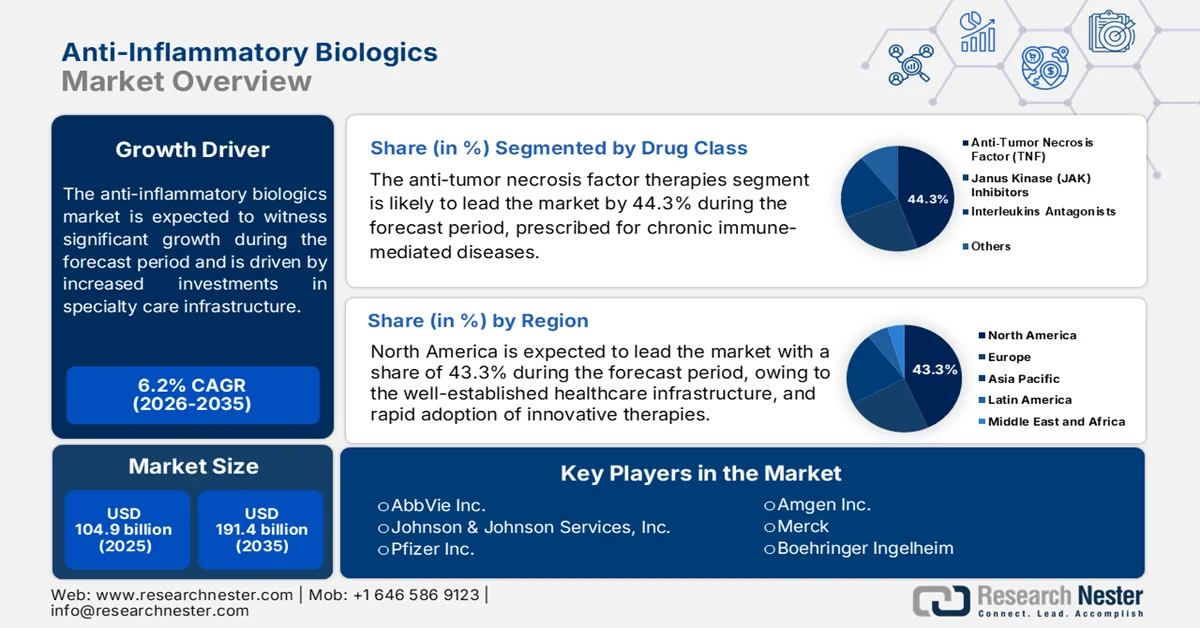
Anti-Inflammatory Biologics Market size was valued at USD 104.9 billion in 2025 and is projected to account for USD 191.4 billion by the end of 2035, rising at a CAGR of 6.2% during the forecast period, i.e., 2026-2035. In 2026, the industry size of anti-inflammatory biologics is evaluated at USD 111.4 billion.
The anti-inflammatory biologics market is expanding as healthcare systems prioritize the management of chronic immune-mediated diseases and increase investments in specialty care infrastructure. Demand is being supported by rising disease burden, broader access to advanced therapies, and continued growth in healthcare spending across major markets. According to the Health Affairs December 2024 data, U.S. national health expenditures reached USD 4.9 trillion in 2023, reflecting sustained spending capacity for high-value specialty therapeutics, including biologic treatments. In Europe, public health agencies continue to support earlier diagnosis and treatment of chronic inflammatory disorders to reduce long-term disability and healthcare utilization.
The market is further supported by a substantial patient population affected by inflammatory and autoimmune conditions globally. According to the World Health Organization (WHO) June 2023 data, approximately 18 million people worldwide were living with rheumatoid arthritis in 2023, making it one of the most significant chronic inflammatory diseases requiring long-term treatment and monitoring. Government-backed research funding and public health initiatives are strengthening the development environment for biologic therapies targeting inflammatory pathways. Healthcare providers are increasingly incorporating advanced biologic therapies into treatment pathways as evidence demonstrates improved disease control and reduced progression in eligible patient populations.
Key Anti-Inflammatory Biologics Market Insights Summary:
Regional Highlights:
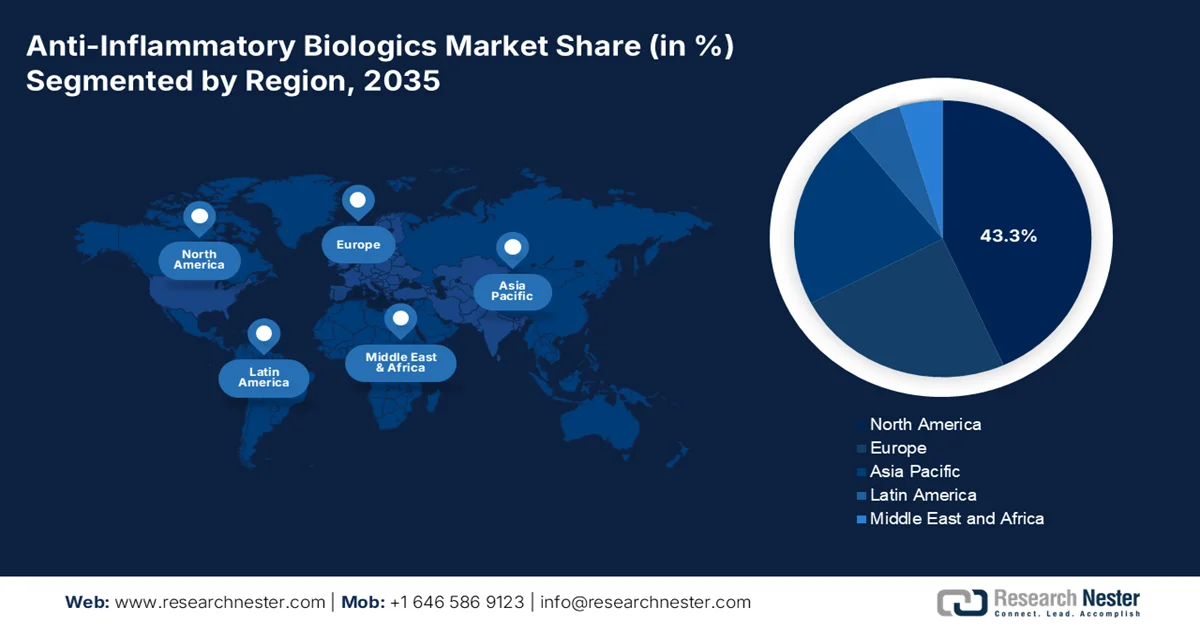
- The anti-inflammatory biologics market in North America is anticipated to capture 43.3% of the regional revenue share by 2035, reinforced by the high prevalence of chronic autoimmune diseases, advanced healthcare infrastructure, and rapid adoption of innovative biologic therapies
- Asia Pacific is projected to register the fastest growth during 2026-2035, fueled by improving healthcare infrastructure, rising patient awareness, and increasing affordability of biologic therapies across emerging economies
Segment Insights:
- The anti-inflammatory biologics market is expected to see the anti-tumor necrosis factor therapies segment account for 44.3% share by 2035, underpinned by their widespread use in chronic immune-mediated diseases including rheumatoid arthritis, psoriasis, and inflammatory bowel disease
- The Injection segment is projected to maintain its leading position throughout 2026-2035, propelled by the need for parenteral administration to preserve the efficacy and bioavailability of biologic therapies
Key Growth Trends:
- Growing burden of chronic inflammatory diseases
- Government support for clinical trial infrastructure
Major Challenges:
- High R&D costs and clinical complexity
- Stringent regulatory approval processes
Key Players: AbbVie Inc., Johnson & Johnson Services, Inc., Pfizer Inc., Amgen Inc., Merck, Boehringer Ingelheim.
Global Anti-Inflammatory Biologics Market Forecast and Regional Outlook:
Market Size & Growth Projections:
- 2025 Market Size: USD 104.9 billion
- 2026 Market Size: USD 111.4 billion
- Projected Market Size: USD 191.4 billion by 2035
- Growth Forecasts: 6.2% CAGR (2026-2035)
Key Regional Dynamics:
- Largest Region: North America (43.3% share by 2035)
- Fastest Growing Region: Asia Pacific
- Dominating Countries: United States, Germany, Japan, China, United Kingdom
- Emerging Countries: China, India, South Korea, Australia, Brazil
Last updated on : 17 July, 2026
Anti-Inflammatory Biologics Market - Growth Drivers and Challenges
Growth Drivers
- Growing burden of chronic inflammatory diseases: The increasing prevalence of chronic inflammatory diseases continues to drive biologics utilization globally. According to the World Health Organization (WHO) June 2023 data, low back pain affected approximately 619 million people globally, while inflammatory musculoskeletal conditions continue to create significant healthcare burdens requiring advanced treatment options. Governments are investing in earlier diagnosis and long-term disease management programs to reduce productivity losses and healthcare expenditures. As disease prevalence rises, healthcare providers are adopting biologic therapies to achieve sustained disease control and reduce complications.
- Government support for clinical trial infrastructure: Public-sector investment in clinical research infrastructure is accelerating the development and commercialization of anti-inflammatory biologics. The European Commission August 2022 data reported that Horizon Europe has a budget of €95.5 billion, supporting health research, biotechnology innovation, and collaborative clinical programs. These investments improve access to trial networks, patient recruitment capabilities, and research partnerships across multiple countries. Enhanced clinical infrastructure reduces development risk and supports the evaluation of novel biologics in diverse patient populations.
Challenges
- High R&D costs and clinical complexity: Developing biologics requires massive investment in research, preclinical testing, and multi-phase clinical trials. The complex biology of inflammatory pathways demands sophisticated discovery platforms, lengthy development timelines, and substantial financial resources, creating a prohibitive barrier for smaller manufacturers with limited capital.
- Stringent regulatory approval processes: Manufacturers face rigorous regulatory scrutiny from agencies like the FDA and EMA, requiring extensive safety and efficacy data. The evolving biosimilar approval pathways add complexity, demanding comparative analytical and clinical studies. Navigating these frameworks requires specialized regulatory expertise and significantly delays market entry timelines.
Anti-Inflammatory Biologics Market Size and Forecast:
| Report Attribute | Details |
|---|---|
|
Base Year |
2025 |
|
Forecast Period |
2026-2035 |
|
CAGR |
6.2% |
|
Base Year Market Size (2025) |
USD 104.9 billion |
|
Forecast Year Market Size (2035) |
USD 191.4 billion |
|
Regional Scope |
|
Anti-Inflammatory Biologics Market Segmentation:
Drug Class Segment Analysis
The anti-inflammatory biologics market is led by anti-tumor necrosis factor therapies and is poised to hold the share value of 44.3% by the end of 2035. The segment is driven as they are widely prescribed for chronic immune-mediated diseases including rheumatoid arthritis, psoriasis, and inflammatory bowel disease. Their established efficacy, long-term clinical evidence, and broad regulatory approvals continue to support strong adoption. At the same time, interleukin antagonists are gaining traction due to their targeted mechanisms and improved treatment outcomes in specific patient populations. According to the Caron Delet 2026 data, an estimated 53.2 million U.S. adults had doctor-diagnosed arthritis, highlighting the large patient pool driving demand for advanced anti-inflammatory therapies.
Route of Administration Segment Analysis
The injection segment dominates the market because most biologic therapies, including monoclonal antibodies and protein-based treatments, require parenteral administration to maintain efficacy and bioavailability. Subcutaneous and intravenous formulations remain standard across many autoimmune and inflammatory indications. However, oral therapies, particularly targeted inhibitors, are gaining interest due to improved patient convenience and adherence. According to the U.S. Food and Drug Administration (FDA), the Center for Drug Evaluation and Research (CDER) approved novel drugs, including several treatments addressing immune-mediated and inflammatory conditions, reflecting continued innovation across both injectable and oral therapeutic modalities.
Application Segment Analysis
Among applications, rheumatoid arthritis represents a major share of the market due to the chronic nature of the disease and the need for long-term disease management. Increasing diagnosis rates, earlier intervention strategies, and the availability of biologics targeting specific inflammatory pathways continue to support market growth. Psoriasis also remains an important therapeutic area, benefiting from the expansion of targeted biologic treatment options. According to the NHS October 2022 data, approximately 20 million people in England were living with a musculoskeletal condition, reflecting the substantial burden of inflammatory disorders and the ongoing demand for advanced therapies.
Our in-depth analysis of the anti-inflammatory biologics includes the following segments:
|
Segment |
Subsegments |
|
Drug Class |
|
|
Route of Administration |
|
|
Application |
|
|
Distribution Channel |
|

Vishnu Nair
Head - Global Business DevelopmentCustomize this report to your requirements — connect with our consultant for personalized insights and options.
Anti-Inflammatory Biologics Market - Regional Analysis
North America Market Insights
North America is dominating the anti-inflammatory biologics market and is expected to hold the regional revenue share of 43.3% by the end of 2035. The region is driven by the high prevalence of chronic autoimmune diseases, well-established healthcare infrastructure, and rapid adoption of innovative therapies. The region is characterized by intense competition among global pharmaceutical leaders who continuously invest in next-generation biologics and biosimilars to capture market share. Reimbursement dynamics are shaped by a complex interplay between private insurers, government programs, and pharmacy benefit managers, which exert significant pricing pressures on manufacturers. However, market access remains challenging for new entrants due to entrenched incumbents, stringent formulary management, and the growing influence of value-based contracting models that demand demonstrated cost-effectiveness.
The strong healthcare spending, advanced biologics research, and widespread adoption of targeted therapies for autoimmune and inflammatory diseases is shaping the anti-inflammatory biologics market in the U.S. Demand is driven by the growing burden of conditions such as rheumatoid arthritis, psoriasis, inflammatory bowel disease, and lupus, alongside continued investment in specialty care. According to the U.S. Food and Drug Administration (FDA) 2023 data, the Center for Drug Evaluation and Research (CDER) approved 55 novel drugs, reflecting sustained innovation in the biopharmaceutical sector and creating opportunities for new biologic therapies targeting inflammatory pathways and immune-mediated disorders.
The growing focus on managing chronic autoimmune and inflammatory diseases through advanced specialty therapies is shaping the anti-inflammatory biologics market in Canada. Demand is increasing as healthcare providers expand access to biologic treatments for conditions such as rheumatoid arthritis, psoriasis, inflammatory bowel disease, and other immune-mediated disorders. The country also benefits from a strong clinical research environment and regulatory support for innovative biologic medicines. According to the Arthritis Society of Canada October 2023 data, approximately 6 million Canadians aged 15 years and older were living with diagnosed arthritis in 2023, highlighting a substantial patient population that continues to drive demand for anti-inflammatory biologic therapies.
APAC Market Insights
The Asia Pacific is expected to grow rapidly during the preferred period, 2026 to 2035, in the market. The region is driven by the rapid expansion driven by improving healthcare infrastructure, rising patient awareness, and increasing affordability of biologic therapies across emerging economies. The region presents a diverse landscape, with mature markets like Japan and Australia leading in innovation adoption, while countries such as China, India, and South Korea are witnessing significant biosimilar penetration due to government initiatives promoting affordable alternatives. Regulatory harmonization efforts are gradually streamlining approval pathways, though significant heterogeneity remains across national frameworks.
The rising burden of autoimmune and chronic inflammatory diseases, improving access to specialty care, and expanding biologics manufacturing capabilities is shaping the market in India. Increased awareness, earlier diagnosis, and the availability of advanced therapies are encouraging greater adoption of biologic treatments for conditions such as rheumatoid arthritis, psoriasis, and inflammatory bowel disease. The market is also benefiting from government initiatives that strengthen the domestic biopharmaceutical ecosystem. According to the PIB December 2024 data, the Indian pharmaceutical industry was valued at approximately USD 50 billion, underscoring the country’s strong foundation for the development and commercialization of biologic therapies.
The increasing diagnosis of autoimmune diseases, growing adoption of innovative biologic therapies, and strong domestic biopharmaceutical manufacturing capabilities is driving the anti-inflammatory biologics market in China. The market benefits from ongoing regulatory reforms that accelerate drug approvals and encourage innovation in biologics development. Rising clinical research activity and investment in biotechnology are further strengthening the availability of advanced treatments for inflammatory conditions such as rheumatoid arthritis, psoriasis, and inflammatory bowel disease. According to the ITIF June 2026 data, the country’s biopharmaceutical manufacturing industry recorded operating revenue exceeding RMB 1.21 trillion, reflecting the robust industrial base supporting biologic drug development and commercialization.
Europe Market Insights
The European market for anti-inflammatory biologics is characterized by a highly regulated environment with centralized approval through the European Medicines Agency, ensuring consistent quality and safety standards across member states. The region has been at the forefront of biosimilar adoption, driven by government-led cost-containment policies and aggressive tender systems that prioritize affordability. Reimbursement decisions are heavily influenced by health technology assessments, requiring manufacturers to demonstrate superior cost-effectiveness. The competitive landscape features intense pricing pressure, with reference pricing and mandatory discounts compressing margins. Despite these constraints, the region remains a critical market for novel anti-inflammatory biologics.
The strong biopharmaceutical industry, advanced research infrastructure, and increasing adoption of targeted therapies for autoimmune and inflammatory diseases is driving the market in Germany. Demand is growing as healthcare providers expand the use of biologics for conditions such as rheumatoid arthritis, psoriasis, and inflammatory bowel disease, while domestic manufacturers continue to invest in innovation and production capacity. The country also benefits from a well-established clinical research ecosystem that facilitates the development of new biologic therapies. According to the European Commission April 2025 data, Germany exported pharmaceutical products worth approximately EUR 67.9 billion, highlighting the strength of its pharmaceutical and biologics sector.
The increasing use of advanced therapies for autoimmune and inflammatory diseases, supported by a strong life sciences sector and ongoing clinical research activity, is driving the anti-inflammatory biologics market in the UK. Growing diagnosis rates of conditions such as rheumatoid arthritis, psoriasis, and inflammatory bowel disease are encouraging wider adoption of biologic treatments across specialist care settings. The market also benefits from continued investment in biopharmaceutical innovation and manufacturing capabilities. According to the Government of UK May 2024 data, the UK life sciences sector generated £108.1 billion in turnover, demonstrating the scale of the industry that supports the development, production, and commercialization of biologic medicines.
Key Anti-Inflammatory Biologics Market Players:
- AbbVie Inc. (U.S.)
- Johnson & Johnson Services, Inc. (U.S.)
- Pfizer Inc. (U.S.)
- Amgen Inc. (U.S.)
- Merck (U.S.)
- Boehringer Ingelheim (Germany)
- Company Overview
- Business Strategy
- Key Product Offerings
- Financial Performance
- Key Performance Indicators
- Risk Analysis
- Recent Development
- Regional Presence
- SWOT Analysis
- AbbVie dominates the market with its flagship Humira, a leading TNF inhibitor. The company maintains market leadership through robust patent protection, extensive clinical indications, and a strong global supply chain, while actively developing next-generation assets to counter biosimilar erosion and sustain its competitive edge.
- Johnson & Johnson is a powerhouse in the market, anchored by its blockbuster Stelara (ustekinumab) and Simponi (golimumab). The company leverages its diversified pharmaceutical portfolio and global commercial infrastructure to maintain a strong position across multiple inflammatory indications, including psoriasis, Crohn's disease, and psoriatic arthritis.
- Pfizer competes prominently in the market through its Xeljanz (tofacitinib) portfolio and biosimilar offerings. The company differentiates itself through a broad immunology pipeline, extensive real-world evidence generation, and strategic pricing initiatives, positioning itself as a major player with significant commercial presence across North America and Europe.
- Amgen holds a major share of the market with its flagship Enbrel (etanercept), a pioneering TNF inhibitor. The company competes through biosimilar diversification, patient support programs, and manufacturing excellence, maintaining strong market penetration in rheumatology and dermatology segments despite increasing biosimilar competition and pricing pressures.
- Merck participates in the market primarily through its immunology small-molecule assets rather than biologics. While the company has a strong presence with Olumiant (baricitinib), its portfolio does not include monoclonal antibodies for systemic inflammatory conditions, representing a gap compared to pure-play biologic manufacturers in this space.
Here is a list of key players operating in the global market:
The global market for anti-inflammatory biologics manufacturers is highly consolidated, dominated by a small number of multinational pharmaceutical giants that command the vast majority of market share through blockbuster products like adalimumab, ustekinumab, and secukinumab. These leaders compete fiercely on the basis of robust patent portfolios, expansive clinical indications, and global supply chain infrastructure. The competitive dynamic is driven by biosimilar erosion, particularly for TNF inhibitors, prompting leaders to focus on next-generation assets and patient-centric delivery systems. Key differentiators include efficacy profiles, dosing convenience, and long-term safety data.
Corporate Landscape of the Market:
Recent Developments
- In October 2025, Merck Expands Tulisokibart Clinical Development Program With Initiation of Phase 2b Trials in Three Additional Immune-Mediated Inflammatory Diseases
- In April 2025, Boehringer Ingelheim and Cue Biopharma, Inc. (Nasdaq: CUE) today announced a strategic research collaboration and license agreement to develop and commercialize Cue Biopharma’s CUE-501 product candidate, a differentiated B cell depletion therapy for autoimmune diseases.
- Report ID: 7441
- Published Date: Jul 17, 2026
- Report Format: PDF, PPT
- Explore a preview of key market trends and insights
- Review sample data tables and segment breakdowns
- Experience the quality of our visual data representations
- Evaluate our report structure and research methodology
- Get a glimpse of competitive landscape analysis
- Understand how regional forecasts are presented
- Assess the depth of company profiling and benchmarking
- Preview how actionable insights can support your strategy
Explore real data and analysis
Frequently Asked Questions (FAQ)
About this Report
Connect with our Expert


Report, 2026-2035



Copyright @ 2026 Research Nester. All Rights Reserved.
