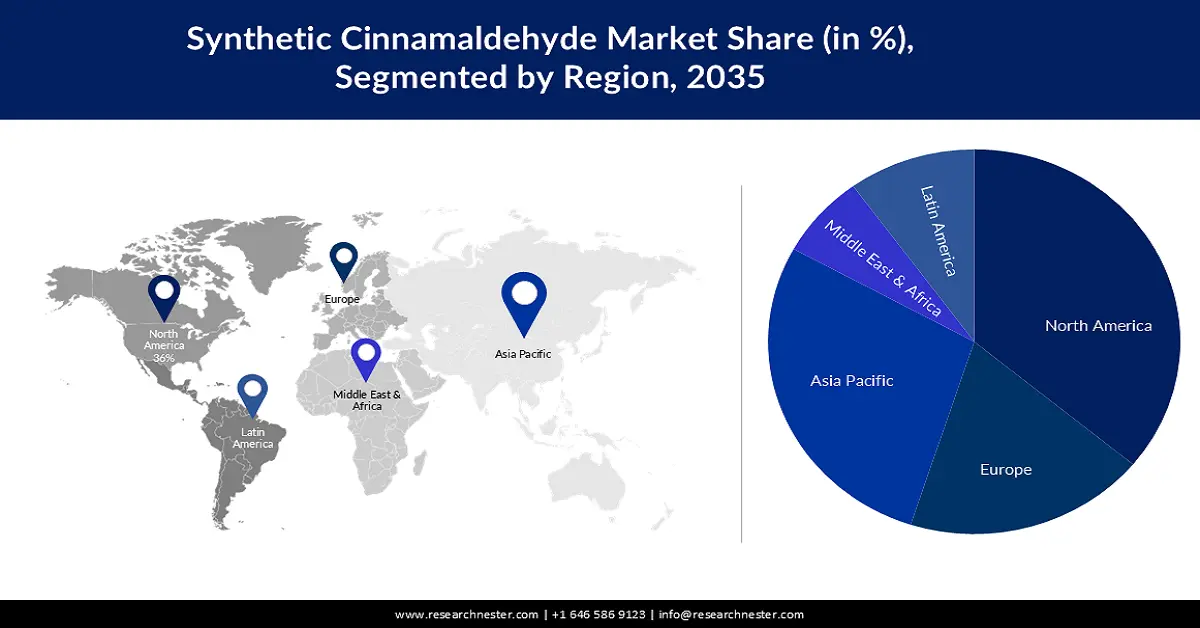
Synthetic Cinnamaldehyde Market - Regional Analysis
North American Market Forecast
North America industry is anticipated to account for largest revenue share of 36% by 2035. The market experiences consistent growth driven by its versatile applications across various industries. The compound serves as a key flavoring agent in the food and beverage sector, enhancing the taste of confectionery, baked goods, and beverages, meeting consumer preferences for diverse and appealing flavors. Moreover, its aromatic properties contribute significantly to the cosmetics and personal care industry, where it's incorporated into fragrances for perfumes, skincare, and toiletry products, catering to the market’s demand for natural-like scents.
APAC Market Analysis
Asia Pacific synthetic cinnamaldehyde market is estimated to garner significant revenue share during the forecast owing to diverse industrial applications. Widely utilized in the food and beverage industry, Synthetic Cinnamaldehyde serves as a pivotal flavoring agent, enriching the taste profiles of various culinary products, including confectionery, baked goods, and beverages, meeting the region’s demand for unique and flavorful offerings. Furthermore, its aromatic attributes contribute significantly to the cosmetics and personal care sector, where it's integrated into fragrances for skincare, perfumes, and toiletries, aligning with consumer preferences for natural-like scents. However, challenges arise from the evolving consumer preferences for natural ingredients despite its synthetic origin. To sustain its market presence, manufacturing emphasizes safety, quality, and functionality while addressing consumer concerns. Compliance with stringent regulatory standards remains crucial in the region’s regulatory landscape, influencing its usage across diverse industries. Overall, Synthetic Cinnamaldehyde thrives in the Asia Pacific market due to its versatile applications in food, cosmetics, and personal care, while navigating challenges associated with changing consumer preferences and regulatory compliance.