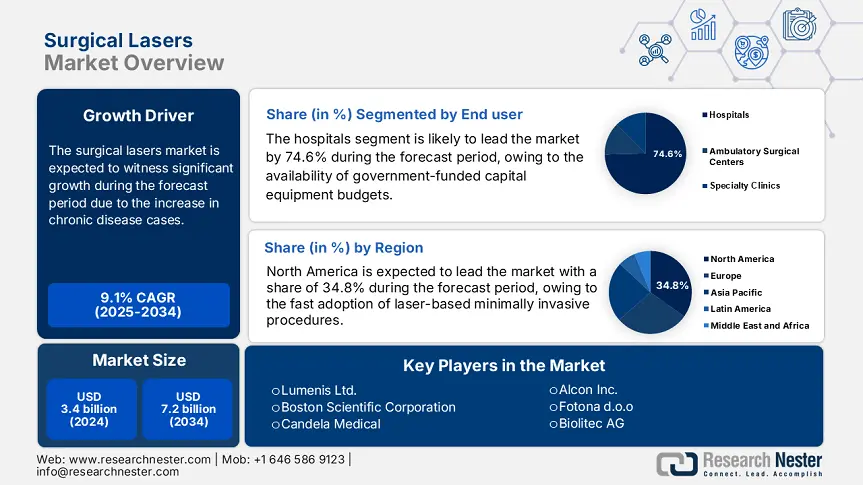
Surgical Lasers Market Outlook:
Surgical Lasers Market size was valued at USD 3.4 billion in 2024 and is projected to reach USD 7.2 billion by the end of 2034, rising at a CAGR of 9.1% during the forecast period, i.e., 2025-2034. In 2025, the industry size of surgical lasers is assessed at USD 3.8 billion.
The global surgical lasers market is fueled by the steady rise in the patient pool, an increase in chronic disease cases, and age-related surgical interventions. As per the WHO report, nearly 310.5 million surgeries are performed annually worldwide, with an estimated 21% to 31% of the surgeries involving minimally invasive procedures. Further, many of these surgeries utilize laser-based methods for precision and recovery benefits. The CDC has reported that 15.5 million laser-assisted procedures are primarily in ophthalmology, oncology, and dermatology segments, highlighting the stable demand from ambulatory settings and hospitals. This enlarging patient pool is demanding both for ancillary components and surgical laser systems, including fiber optic catheters, safety eyewear, and laser handpieces.
On the supply chain side, the surgical laser equipment manufacturing incorporates high precision optics, Class IV laser diodes, and semiconductor components that many of them are often imported. As per the U.S. International Trade Commission report, a rise of 12.9% in surgical device imports is recorded in 2023 while compared with 2021, especially in Japan, Germany, and South Korea. The producer price index rose to 4.5% for surgical and medical instrument manufacturing in 2024. Whereas the consumer price index increased to 3.9% for therapeutic equipment. These values highlight the cost absorption and downstream inflation. Further, the impact of the downstream is observable in enhanced device cycle times and throughput, improving competitiveness in Europe and the U.S. markets.