Global SoftPOS Market
1. An Outline of the Global SoftPOS Market
1.1. Market Definition and Segmentation
1.2. Study Assumptions and Abbreviations
2. Research Methodology & Approach
2.1. Primary Research
2.2. Secondary Research
2.3. Data Triangulation
2.4. SPSS Methodology
3. Executive Summary
4. Growth Drivers
5. Major Roadblocks
6. Opportunities
7. Prevalent Trends
8. Government Regulation
9. Growth Outlook
10. Competitive White Space Analysis – Identifying Untapped Market Gaps
11. Risk Overview
12. SWOT
13. Technological Advancement
14. Technology Maturity Matrix for the SoftPOS Market: Recent News
15. Regional Demand
16. Global SoftPOS by Geography – Strategic Comparative Analysis
17. Strategic Segment Analysis: SoftPOS Demand Landscape
18. SoftPOS Demand Trends Driven by rapid growth of contactless payments, lower POS deployment costs, and increasing smartphone and NFC penetration. (2027-2036)
19. Root Cause Analysis (RCA) for discovering problems of the SoftPOS Market
20. Porter Five Forces
21. PESTLE
22. Comparative Positioning
23. Global SoftPOS – Key Player Analysis (2036)
24. Competitive Landscape: Key Suppliers/Players
25. Competitive Model: A Detailed Inside View for Investors
26. Company Market Share, 2036 (%)
26.1. Adyen
26.2. Alcinéo
26.3. Payten
26.4. Bindo Labs Limited
26.5. CM.com
26.6. Fairbit
26.7. Felix Payment Systems Ltd.
26.8. Girmiti Software Private Limited
26.9. Hitachi Payment Services Pvt. Ltd.
26.10. IBA Group a.s.
26.11. ina Payments
26.12. Ingenico
26.13. MineSec Pte. Ltd.
26.14. Paynt
26.15. Rubean AG
26.16. Shenzhen Xinguodu Technology Co., Ltd.
26.17. Stripe, LLC
26.18. Tidypay
26.19. Wizzit (Pty) Ltd
26.20. Worldline S.A.
26.21. Yazara
27. Global SoftPOS Market Outlook
27.1. Market Overview
27.1.1. Market Revenue by Value (USD Million) and Compound Annual Growth Rate (CAGR)
27.2. SoftPOS Market Segmentation Analysis (2027-2036)
27.2.1. By Deployment
27.2.1.1. Cloud-native / SaaS, Market Value (USD Million), and CAGR, 2027-2036F
27.2.1.2. On-prem / Enterprise managed, Market Value (USD Million), and CAGR, 2027-2036F
27.2.1.3. Hybrid, Market Value (USD Million), and CAGR, 2027-2036F
27.2.2. By Operating System
27.2.2.1. Android, Market Value (USD Million), and CAGR, 2027-2036F
27.2.2.2. iOS, Market Value (USD Million), and CAGR, 2027-2036F
27.2.3. By Enterprise Size
27.2.3.1. Micro Merchants, Market Value (USD Million), and CAGR, 2027-2036F
27.2.3.2. Small Businesses (SMB), Market Value (USD Million), and CAGR, 2027-2036F
27.2.3.3. Medium Businesses, Market Value (USD Million), and CAGR, 2027-2036F
27.2.3.4. Large Enterprises, Market Value (USD Million), and CAGR, 2027-2036F
27.2.4. By Device Type
27.2.4.1. Android Smartphones, Market Value (USD Million), and CAGR, 2027-2036F
27.2.4.2. Android Tablets, Market Value (USD Million), and CAGR, 2027-2036F
27.2.4.3. Others, Market Value (USD Million), and CAGR, 2027-2036F
27.2.5. By End use Industry
27.2.5.1. Retail, Market Value (USD Million), and CAGR, 2027-2036F
27.2.5.2. Restaurants & Hospitality, Market Value (USD Million), and CAGR, 2027-2036F
27.2.5.3. Transport & Mobility, Market Value (USD Million), and CAGR, 2027-2036F
27.2.5.4. Events & Field Services, Market Value (USD Million), and CAGR, 2027-2036F
27.2.5.5. Banking & Financial Services, Market Value (USD Million), and CAGR, 2027-2036F
27.2.5.6. Others, Market Value (USD Million), and CAGR, 2027-2036F
27.2.6. By Payment Mode
27.2.6.1. Card-present contactless (NFC tap), Market Value (USD Million), and CAGR, 2027-2036F
27.2.6.2. Mobile wallets, Market Value (USD Million), and CAGR, 2027-2036F
27.2.6.3. Others, Market Value (USD Million), and CAGR, 2027-2036F
27.2.7. Regional Synopsis, Value (USD Million), 2027-2036
27.2.7.1. North America Market Value (USD Million) and CAGR & Y-o-Y Growth Trend, 2027-2036F
27.2.7.2. Europe Market Value (USD Million) and CAGR & Y-o-Y Growth Trend, 2027-2036F
27.2.7.3. Asia Pacific Market Value (USD Million) and CAGR & Y-o-Y Growth Trend, 2027-2036F
27.2.7.4. Latin America Market Value (USD Million) and CAGR & Y-o-Y Growth Trend, 2027-2036F
27.2.7.5. Middle East and Africa Market Value (USD Million) and CAGR & Y-o-Y Growth Trend, 2027-2036F
28. North America Market
28.1. Overview
28.1.1. Market Value (USD Million), Current and Future Projections, 2027-2036
28.1.2. Increment $ Opportunity Assessment, 2027-2036
28.2. Segmentation (USD Million), 2027-2036, By
28.2.1. By Deployment
28.2.1.1. Cloud-native / SaaS, Market Value (USD Million), and CAGR, 2027-2036F
28.2.1.2. On-prem / Enterprise managed, Market Value (USD Million), and CAGR, 2027-2036F
28.2.1.3. Hybrid, Market Value (USD Million), and CAGR, 2027-2036F
28.2.2. By Operating System
28.2.2.1. Android, Market Value (USD Million), and CAGR, 2027-2036F
28.2.2.2. iOS, Market Value (USD Million), and CAGR, 2027-2036F
28.2.3. By Enterprise Size
28.2.3.1. Micro Merchants, Market Value (USD Million), and CAGR, 2027-2036F
28.2.3.2. Small Businesses (SMB), Market Value (USD Million), and CAGR, 2027-2036F
28.2.3.3. Medium Businesses, Market Value (USD Million), and CAGR, 2027-2036F
28.2.3.4. Large Enterprises, Market Value (USD Million), and CAGR, 2027-2036F
28.2.4. By Device Type
28.2.4.1. Android Smartphones, Market Value (USD Million), and CAGR, 2027-2036F
28.2.4.2. Android Tablets, Market Value (USD Million), and CAGR, 2027-2036F
28.2.4.3. Others, Market Value (USD Million), and CAGR, 2027-2036F
28.2.5. By End use Industry
28.2.5.1. Retail, Market Value (USD Million), and CAGR, 2027-2036F
28.2.5.2. Restaurants & Hospitality, Market Value (USD Million), and CAGR, 2027-2036F
28.2.5.3. Transport & Mobility, Market Value (USD Million), and CAGR, 2027-2036F
28.2.5.4. Events & Field Services, Market Value (USD Million), and CAGR, 2027-2036F
28.2.5.5. Banking & Financial Services, Market Value (USD Million), and CAGR, 2027-2036F
28.2.5.6. Others, Market Value (USD Million), and CAGR, 2027-2036F
28.2.6. By Payment Mode
28.2.6.1. Card-present contactless (NFC tap), Market Value (USD Million), and CAGR, 2027-2036F
28.2.6.2. Mobile wallets, Market Value (USD Million), and CAGR, 2027-2036F
28.2.6.3. Others, Market Value (USD Million), and CAGR, 2027-2036F
28.2.7. Country Level Analysis, Value (USD Million)
28.2.7.1. U.S. Market Value (USD Million) and CAGR & Y-o-Y Growth Trend, 2027-2036F
28.2.7.2. Canada Market Value (USD Million) and CAGR & Y-o-Y Growth Trend, 2027-2036F
29. Europe Market
29.1. Overview
29.1.1. Market Value (USD Million), Current and Future Projections, 2027-2036
29.1.2. Increment $ Opportunity Assessment, 2027-2036
29.2. Segmentation (USD Million), 2027-2036, By
29.2.1. By Deployment
29.2.1.1. Cloud-native / SaaS, Market Value (USD Million), and CAGR, 2027-2036F
29.2.1.2. On-prem / Enterprise managed, Market Value (USD Million), and CAGR, 2027-2036F
29.2.1.3. Hybrid, Market Value (USD Million), and CAGR, 2027-2036F
29.2.2. By Operating System
29.2.2.1. Android, Market Value (USD Million), and CAGR, 2027-2036F
29.2.2.2. iOS, Market Value (USD Million), and CAGR, 2027-2036F
29.2.3. By Enterprise Size
29.2.3.1. Micro Merchants, Market Value (USD Million), and CAGR, 2027-2036F
29.2.3.2. Small Businesses (SMB), Market Value (USD Million), and CAGR, 2027-2036F
29.2.3.3. Medium Businesses, Market Value (USD Million), and CAGR, 2027-2036F
29.2.3.4. Large Enterprises, Market Value (USD Million), and CAGR, 2027-2036F
29.2.4. By Device Type
29.2.4.1. Android Smartphones, Market Value (USD Million), and CAGR, 2027-2036F
29.2.4.2. Android Tablets, Market Value (USD Million), and CAGR, 2027-2036F
29.2.4.3. Others, Market Value (USD Million), and CAGR, 2027-2036F
29.2.5. By End use Industry
29.2.5.1. Retail, Market Value (USD Million), and CAGR, 2027-2036F
29.2.5.2. Restaurants & Hospitality, Market Value (USD Million), and CAGR, 2027-2036F
29.2.5.3. Transport & Mobility, Market Value (USD Million), and CAGR, 2027-2036F
29.2.5.4. Events & Field Services, Market Value (USD Million), and CAGR, 2027-2036F
29.2.5.5. Banking & Financial Services, Market Value (USD Million), and CAGR, 2027-2036F
29.2.5.6. Others, Market Value (USD Million), and CAGR, 2027-2036F
29.2.6. By Payment Mode
29.2.6.1. Card-present contactless (NFC tap), Market Value (USD Million), and CAGR, 2027-2036F
29.2.6.2. Mobile wallets, Market Value (USD Million), and CAGR, 2027-2036F
29.2.6.3. Others, Market Value (USD Million), and CAGR, 2027-2036F
29.2.7. Country Level Analysis, Value (USD Million)
29.2.7.1. UK Market Value (USD Million) and CAGR & Y-o-Y Growth Trend, 2027-2036F
29.2.7.2. Germany Market Value (USD Million) and CAGR & Y-o-Y Growth Trend, 2027-2036F
29.2.7.3. France Market Value (USD Million) and CAGR & Y-o-Y Growth Trend, 2027-2036F
29.2.7.4. Italy Market Value (USD Million) and CAGR & Y-o-Y Growth Trend, 2027-2036F
29.2.7.5. Spain Market Value (USD Million) and CAGR & Y-o-Y Growth Trend, 2027-2036F
29.2.7.6. Netherlands Market Value (USD Million) and CAGR & Y-o-Y Growth Trend, 2027-2036F
29.2.7.7. Russia Market Value (USD Million) and CAGR & Y-o-Y Growth Trend, 2027-2036F
29.2.7.8. Switzerland Market Value (USD Million) and CAGR & Y-o-Y Growth Trend, 2027-2036F
29.2.7.9. Poland Market Value (USD Million) and CAGR & Y-o-Y Growth Trend, 2027-2036F
29.2.7.10. Belgium Market Value (USD Million) and CAGR & Y-o-Y Growth Trend, 2027-2036F
29.2.7.11. Rest of Europe Market Value (USD Million) and CAGR & Y-o-Y Growth Trend, 2027-2036F
30. Asia Pacific Market
30.1. Overview
30.1.1. Market Value (USD Million), Current and Future Projections, 2027-2036
30.1.2. Increment $ Opportunity Assessment, 2027-2036
30.2. Segmentation (USD Million), 2027-2036, By
30.2.1. By Deployment
30.2.1.1. Cloud-native / SaaS, Market Value (USD Million), and CAGR, 2027-2036F
30.2.1.2. On-prem / Enterprise managed, Market Value (USD Million), and CAGR, 2027-2036F
30.2.1.3. Hybrid, Market Value (USD Million), and CAGR, 2027-2036F
30.2.2. By Operating System
30.2.2.1. Android, Market Value (USD Million), and CAGR, 2027-2036F
30.2.2.2. iOS, Market Value (USD Million), and CAGR, 2027-2036F
30.2.3. By Enterprise Size
30.2.3.1. Micro Merchants, Market Value (USD Million), and CAGR, 2027-2036F
30.2.3.2. Small Businesses (SMB), Market Value (USD Million), and CAGR, 2027-2036F
30.2.3.3. Medium Businesses, Market Value (USD Million), and CAGR, 2027-2036F
30.2.3.4. Large Enterprises, Market Value (USD Million), and CAGR, 2027-2036F
30.2.4. By Device Type
30.2.4.1. Android Smartphones, Market Value (USD Million), and CAGR, 2027-2036F
30.2.4.2. Android Tablets, Market Value (USD Million), and CAGR, 2027-2036F
30.2.4.3. Others, Market Value (USD Million), and CAGR, 2027-2036F
30.2.5. By End use Industry
30.2.5.1. Retail, Market Value (USD Million), and CAGR, 2027-2036F
30.2.5.2. Restaurants & Hospitality, Market Value (USD Million), and CAGR, 2027-2036F
30.2.5.3. Transport & Mobility, Market Value (USD Million), and CAGR, 2027-2036F
30.2.5.4. Events & Field Services, Market Value (USD Million), and CAGR, 2027-2036F
30.2.5.5. Banking & Financial Services, Market Value (USD Million), and CAGR, 2027-2036F
30.2.5.6. Others, Market Value (USD Million), and CAGR, 2027-2036F
30.2.6. By Payment Mode
30.2.6.1. Card-present contactless (NFC tap), Market Value (USD Million), and CAGR, 2027-2036F
30.2.6.2. Mobile wallets, Market Value (USD Million), and CAGR, 2027-2036F
30.2.6.3. Others, Market Value (USD Million), and CAGR, 2027-2036F
30.2.7. Country Level Analysis, Value (USD Million)
30.2.7.1. China Market Value (USD Million) and CAGR & Y-o-Y Growth Trend, 2027-2036F
30.2.7.2. Japan Market Value (USD Million) and CAGR & Y-o-Y Growth Trend, 2027-2036F
30.2.7.3. India Market Value (USD Million) and CAGR & Y-o-Y Growth Trend, 2027-2036F
30.2.7.4. South Korea Market Value (USD Million) and CAGR & Y-o-Y Growth Trend, 2027-2036F
30.2.7.5. Australia Market Value (USD Million) and CAGR & Y-o-Y Growth Trend, 2027-2036F
30.2.7.6. Indonesia Market Value (USD Million) and CAGR & Y-o-Y Growth Trend, 2027-2036F
30.2.7.7. Malaysia Market Value (USD Million) and CAGR & Y-o-Y Growth Trend, 2027-2036F
30.2.7.8. Vietnam Market Value (USD Million) and CAGR & Y-o-Y Growth Trend, 2027-2036F
30.2.7.9. Thailand Market Value (USD Million) and CAGR & Y-o-Y Growth Trend, 2027-2036F
30.2.7.10. Singapore Market Value (USD Million) and CAGR & Y-o-Y Growth Trend, 2027-2036F
30.2.7.11. New Zealand Market Value (USD Million) and CAGR & Y-o-Y Growth Trend, 2027-2036F
30.2.7.12. Rest of Asia Pacific Excluding Japan Market Value (USD Million) and CAGR & Y-o-Y Growth Trend, 2027-2036F
31. Latin America Market
31.1. Overview
31.1.1. Market Value (USD Million), Current and Future Projections, 2027-2036
31.1.2. Increment $ Opportunity Assessment, 2027-2036
31.1.3. Year-on-Year Growth Forecast (%)
31.2. Segmentation (USD Million), 2027-2036, By
31.2.1. By Deployment
31.2.1.1. Cloud-native / SaaS, Market Value (USD Million), and CAGR, 2027-2036F
31.2.1.2. On-prem / Enterprise managed, Market Value (USD Million), and CAGR, 2027-2036F
31.2.1.3. Hybrid, Market Value (USD Million), and CAGR, 2027-2036F
31.2.2. By Operating System
31.2.2.1. Android, Market Value (USD Million), and CAGR, 2027-2036F
31.2.2.2. iOS, Market Value (USD Million), and CAGR, 2027-2036F
31.2.3. By Enterprise Size
31.2.3.1. Micro Merchants, Market Value (USD Million), and CAGR, 2027-2036F
31.2.3.2. Small Businesses (SMB), Market Value (USD Million), and CAGR, 2027-2036F
31.2.3.3. Medium Businesses, Market Value (USD Million), and CAGR, 2027-2036F
31.2.3.4. Large Enterprises, Market Value (USD Million), and CAGR, 2027-2036F
31.2.4. By Device Type
31.2.4.1. Android Smartphones, Market Value (USD Million), and CAGR, 2027-2036F
31.2.4.2. Android Tablets, Market Value (USD Million), and CAGR, 2027-2036F
31.2.4.3. Others, Market Value (USD Million), and CAGR, 2027-2036F
31.2.5. By End use Industry
31.2.5.1. Retail, Market Value (USD Million), and CAGR, 2027-2036F
31.2.5.2. Restaurants & Hospitality, Market Value (USD Million), and CAGR, 2027-2036F
31.2.5.3. Transport & Mobility, Market Value (USD Million), and CAGR, 2027-2036F
31.2.5.4. Events & Field Services, Market Value (USD Million), and CAGR, 2027-2036F
31.2.5.5. Banking & Financial Services, Market Value (USD Million), and CAGR, 2027-2036F
31.2.5.6. Others, Market Value (USD Million), and CAGR, 2027-2036F
31.2.6. By Payment Mode
31.2.6.1. Card-present contactless (NFC tap), Market Value (USD Million), and CAGR, 2027-2036F
31.2.6.2. Mobile wallets, Market Value (USD Million), and CAGR, 2027-2036F
31.2.6.3. Others, Market Value (USD Million), and CAGR, 2027-2036F
31.2.7. Country Level Analysis, Value (USD Million)
31.2.7.1. Brazil Market Value (USD Million) and CAGR & Y-o-Y Growth Trend, 2027-2036F
31.2.7.2. Argentina Market Value (USD Million) and CAGR & Y-o-Y Growth Trend, 2027-2036F
31.2.7.3. Mexico Market Value (USD Million) and CAGR & Y-o-Y Growth Trend, 2027-2036F
31.2.7.4. Rest of Latin America Market Value (USD Million) and CAGR & Y-o-Y Growth Trend, 2027-2036F
32. Middle East & Africa Market
32.1. Overview
32.1.1. Market Value (USD Million), Current and Future Projections, 2027-2036
32.1.2. Increment $ Opportunity Assessment, 2027-2036
32.1.3. Year-on-Year Growth Forecast (%)
32.2. Segmentation (USD Million), 2027-2036, By
32.2.1. By Deployment
32.2.1.1. Cloud-native / SaaS, Market Value (USD Million), and CAGR, 2027-2036F
32.2.1.2. On-prem / Enterprise managed, Market Value (USD Million), and CAGR, 2027-2036F
32.2.1.3. Hybrid, Market Value (USD Million), and CAGR, 2027-2036F
32.2.2. By Operating System
32.2.2.1. Android, Market Value (USD Million), and CAGR, 2027-2036F
32.2.2.2. iOS, Market Value (USD Million), and CAGR, 2027-2036F
32.2.3. By Enterprise Size
32.2.3.1. Micro Merchants, Market Value (USD Million), and CAGR, 2027-2036F
32.2.3.2. Small Businesses (SMB), Market Value (USD Million), and CAGR, 2027-2036F
32.2.3.3. Medium Businesses, Market Value (USD Million), and CAGR, 2027-2036F
32.2.3.4. Large Enterprises, Market Value (USD Million), and CAGR, 2027-2036F
32.2.4. By Device Type
32.2.4.1. Android Smartphones, Market Value (USD Million), and CAGR, 2027-2036F
32.2.4.2. Android Tablets, Market Value (USD Million), and CAGR, 2027-2036F
32.2.4.3. Others, Market Value (USD Million), and CAGR, 2027-2036F
32.2.5. By End use Industry
32.2.5.1. Retail, Market Value (USD Million), and CAGR, 2027-2036F
32.2.5.2. Restaurants & Hospitality, Market Value (USD Million), and CAGR, 2027-2036F
32.2.5.3. Transport & Mobility, Market Value (USD Million), and CAGR, 2027-2036F
32.2.5.4. Events & Field Services, Market Value (USD Million), and CAGR, 2027-2036F
32.2.5.5. Banking & Financial Services, Market Value (USD Million), and CAGR, 2027-2036F
32.2.5.6. Others, Market Value (USD Million), and CAGR, 2027-2036F
32.2.6. By Payment Mode
32.2.6.1. Card-present contactless (NFC tap), Market Value (USD Million), and CAGR, 2027-2036F
32.2.6.2. Mobile wallets, Market Value (USD Million), and CAGR, 2027-2036F
32.2.6.3. Others, Market Value (USD Million), and CAGR, 2027-2036F
32.2.7. Country Level Analysis, Value (USD Million)
32.2.7.1. Saudi Arabia Market Value (USD Million) and CAGR & Y-o-Y Growth Trend, 2027-2036F
32.2.7.2. UAE Market Value (USD Million) and CAGR & Y-o-Y Growth Trend, 2027-2036F
32.2.7.3. Israel Market Value (USD Million) and CAGR & Y-o-Y Growth Trend, 2027-2036F
32.2.7.4. Qatar Market Value (USD Million) and CAGR & Y-o-Y Growth Trend, 2027-2036F
32.2.7.5. Kuwait Market Value (USD Million) and CAGR & Y-o-Y Growth Trend, 2027-2036F
32.2.7.6. Oman Market Value (USD Million) and CAGR & Y-o-Y Growth Trend, 2027-2036F
32.2.7.7. South Africa Market Value (USD Million) and CAGR & Y-o-Y Growth Trend, 2027-2036F
32.2.7.8. Rest of Middle East & Africa Market Value (USD Million) and CAGR & Y-o-Y Growth Trend, 2027-2036F
33. Global Economic Scenario
33.1. World Economic Outlook
34. About Research Nester
34.1. Our Global Clientele
34.2. We Serve Clients Across World
Soft POS Market Outlook:
Soft POS Market size is valued at USD 440.39 million in 2026 and is projected to reach USD 1.90 billion by 2036, growing at a CAGR of 15.74% from 2027 to 2036. In 2027, the industry size of soft POS is estimated at USD 512.48 million.
The growth of e-commerce and small businesses has accelerated the demand for the market, as manufacturers receive a large number of payments, which makes tracking difficult. soft POS helps in tracking payments effectively by reducing the operational cost significantly. According to the International Trade Administration, the global B2B e-commerce market was valued at USD 36 trillion, with demand from healthcare, energy, and professional business services. The heavy demand from e-commerce businesses significantly increases the adoption of soft POS systems, as it provides cost-effective solutions and enhanced safety for payments. Soft POS solutions are highly functional for cross-border payments, as the software can easily generate payment links and QRs to effectively receive payments safely. The rising disposable income has pushed consumers to purchase products from different manufacturers across the globe, pushing POS based sales. Traditional POS required cards and complex operations, often leading to failed transactions. The adoption of soft POS can significantly support enhancing the payment success rate and increasing transparency in operations.
B2B eCommerce GMV
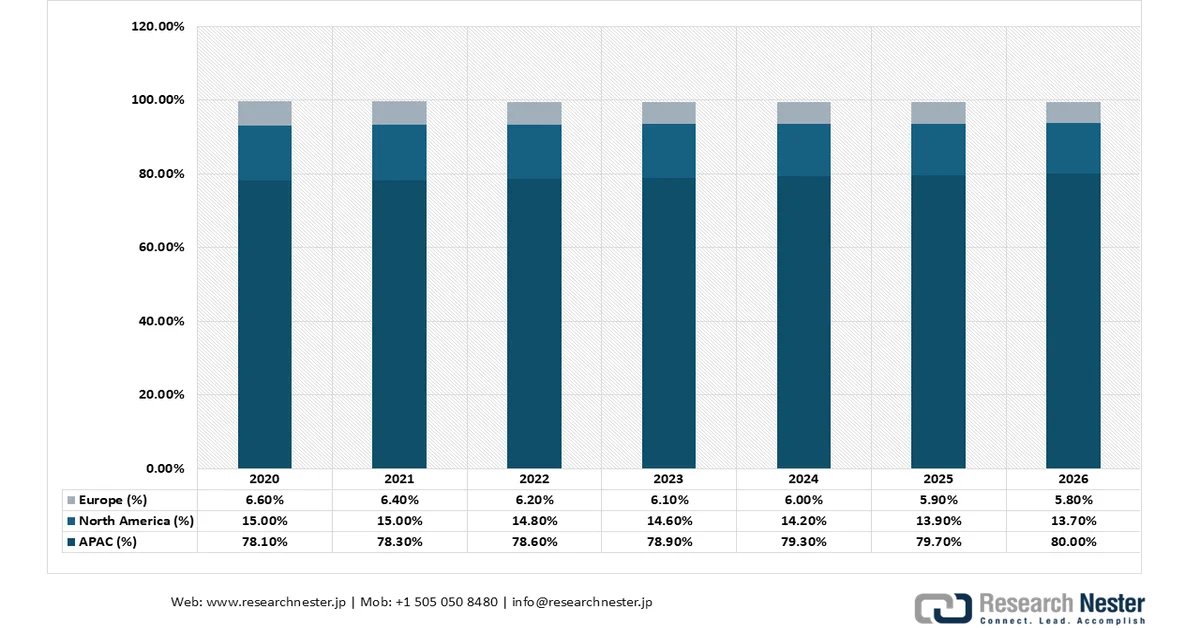
Source: trade.go
Key Soft POS Market Insights Summary:
Regional Highlights:
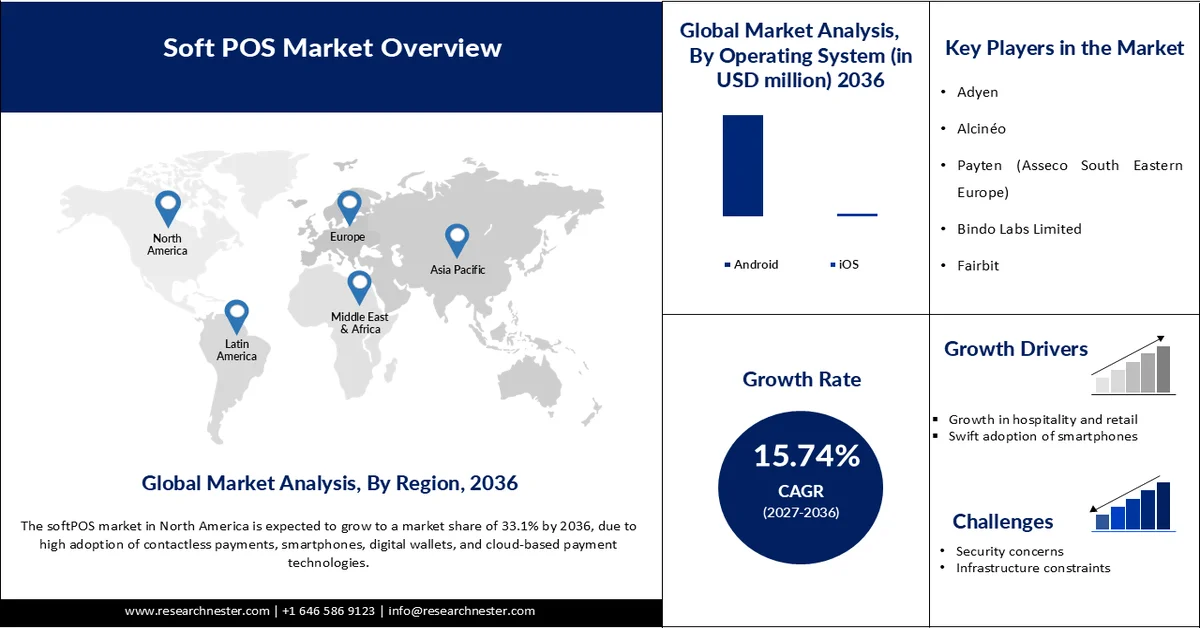
- By 2036, North America is projected to account for a 33.1% share of the soft POS market, fueled by high smartphone penetration and expanding digital and contactless payment adoption
- Asia Pacific is anticipated to reach a 29.6% share by 2036, supported by rapid smartphone adoption, rising digital literacy, and growing demand for cashless payment solutions
Segment Insights:
- By 2036, the Android segment in the soft POS market is projected to command a 96.5% share, underpinned by widespread global adoption of the Android OS and cost-effective, flexible payment solutions
- The Small Businesses (SMB) segment is anticipated to account for a 39.4% share by 2036, supported by rising trade activity and the affordability of device-based payment acceptance
Key Growth Trends:
- Growth in hospitality and retail
- Adoption of smartphones
Major Challenges:
- Security concerns
- Infrastructure Constraints
Key Players: Alcinéo, Payten, Bindo Labs Limited, CM.com, Fairbit, Felix Payment Systems Ltd., Girmiti Software Private Limited, Hitachi Payment Services Pvt. Ltd., IBA Group a.s., ina Payments, Ingenico, MineSec Pte. Ltd., Paynt, Rubean AG, Shenzhen Xinguodu Technology Co., Ltd., Stripe, LLC, Tidypay, Wizzit (Pty) Ltd, Worldline S.A., Yazara.
Global Soft POS Market Forecast and Regional Outlook:
Market Size & Growth Projections:
- 2026 Market Size: USD 440.39 million
- 2027 Market Size: USD 512.48 million
- Projected Market Size: USD 1.90 billion by 2036
- Growth Forecasts: 15.74% CAGR (2027-2036)
Key Regional Dynamics:
- Largest Region: North America (33.1% Share by 2036)
- Fastest Growing Region: Asia Pacific
- Dominating Countries: United States, China, Germany, United Kingdom, Japan
- Emerging Countries: India, South Korea, Australia, Singapore, Canada
Last updated on : 24 September, 2026
Soft POS Market - Growth Drivers and Challenges
Growth Drivers
- Growth in hospitality and retail: The rapid growth of the hospitality and retail sectors is a key driver of the global market as these industries handle high volumes of in-person transactions, where consumers increasingly prefer digital and contactless payments. According to the Federal Reserve Payments Study, contactless card payments in the U.S. more than doubled between 2018 and 2020, rising from 0.77% to 4.63% of all in-person card payments, reflecting a clear shift toward touch-free transactions at points of sale. The Federal Reserve Bank of Atlanta reported that 72% of U.S. consumers had adopted online or mobile payment accounts, such as digital wallets, by 2023. Further, U.S. e-commerce sales accounted for 16.4% of total retail sales in 2025, showing strong digital transaction adoption in retail channels. These trends indicate that as consumers expect fast, contactless checkout in stores, restaurants, and hotels, merchants are adopting soft POS solutions on smartphones and tablets to accept payments efficiently without dedicated hardware, directly driving market growth.
- Adoption of smartphones: The widespread adoption of smartphones is a major catalyst for the global soft POS market because soft POS solutions leverage mobile devices as secure payment terminals, eliminating the need for expensive dedicated POS hardware. According to the Pew Research Center, about 91% of U.S. adults owned a smartphone in 2025, up from 35% in 2011, demonstrating near-universal access to mobile technology. This high smartphone penetration enables merchants, especially in retail, restaurants, and hospitality, to deploy soft POS apps on devices they already own, making it easier and more cost-effective to accept contactless and mobile wallet payments. The convenience, portability, and ubiquity of smartphones allow even small and micro-businesses to offer modern digital payment methods, expanding the reach of soft POS across both urban and rural markets. Moreover, as mobile operating systems increasingly support secure NFC transactions and biometric authentication, smartphones serve as reliable, multifunctional payment platforms, directly driving the adoption and growth of the market globally.
- Rapid growth in contactless payments: Increasing consumer preference for contactless payments is driving the global market, as merchants can accept NFC-based card and mobile wallet payments directly on smartphones without dedicated POS hardware. In retail, hospitality, and other service sectors, businesses are adopting soft POS to provide faster, more convenient, and touch-free checkout experiences. The portability, affordability, and ease of deployment make soft POS an attractive solution for merchants of all sizes, helping them modernize payment processes, enhance customer satisfaction, and expand digital payment acceptance.
Challenges
- Security concerns: Challenges such as fraud and unauthorized transactions are slowing the adoption of soft POS solutions. Weak application security and compromised device integrity increase the risk of fraudulent activity, which can constrain market growth and limit the uptake of soft POS globally.
- Infrastructure constraints: In some emerging markets, soft POS adoption remains limited due to inconsistent network availability and restrictions on certain operating systems, which hinder digital payment acceptance. However, as these countries invest in expanding network infrastructure and improving connectivity, the growing smartphone penetration is expected to support the broader adoption of soft POS and drive market growth.
SoftPOS Market Size and Forecast:
| Report Attribute | Details |
|---|---|
|
Base Year |
2026 |
|
Forecast Period |
2027-2036 |
|
CAGR |
15.74% |
|
Base Year Market Size (2026) |
USD 440.39 million |
|
Forecast Year Market Size (2036) |
USD 1.90 billion |
|
Regional Scope |
|
Soft POS Market Segmentation:
Operating System Segment Analysis
The Android segment is projected to capture a 96.5% share by 2036, driven by widespread global adoption of the Android OS. Its dominance in soft POS adoption is supported by digitalized payment solutions that reduce reliance on traditional hardware-based POS systems. Android’s open operating system and rapid innovation encourage developers to deploy white-label POS applications, while the cost-effectiveness of Android devices further boosts adoption. Meanwhile, iOS and Windows platforms are also experiencing strong growth in developed markets due to enhanced security features, supporting the overall expansion of the market.
Enterprise Size Segment Analysis
The small businesses (SMB) segment is projected to hold a 39.4% share by 2036, driven by increased trade activity in this sector. These businesses often operate on tight budgets, making software-based POS solutions ideal, as owners can use personal devices to accept payments and reduce reliance on costly hardware-based POS systems. Traditional POS systems also require regulatory compliance, adding to operational expenses. At the same time, the medium and large business segment contributes to market growth by leveraging the ecosystem across multiple locations, further supporting the expansion of global soft POS adoption.
End use Industry Segment Analysis
The retail segment is projected to hold a 41.9% share, driven by consumers’ preference for fast and convenient payment methods. Retailers handle multiple customers daily, creating a need for responsive and efficient payment systems. Soft POS solutions help reduce waiting times by enabling contactless payments on smartphones, eliminating the need for complex hardware-based POS systems. Similarly, the hospitality segment is also expected to capture a significant share by the end of the forecast period, as cafes and hotels increasingly adopt contactless payments to meet growing demand and minimize customer queues. Small hotels and cafés, operating on limited budgets, benefit from soft POS adoption since integrating traditional hardware-based POS can be cost-prohibitive.
Our in-depth analysis of the market includes the following segments:
|
Segments |
Subsegments |
|
Deployment |
|
|
Operating System
|
|
|
Enterprise Size |
|
|
Device Type |
|
|
End use Industry |
|
|
Payment Mode |
|

Vishnu Nair
Head - Global Business DevelopmentCustomize this report to your requirements — connect with our consultant for personalized insights and options.
Soft POS Market - Regional Analysis
North America Market Insights
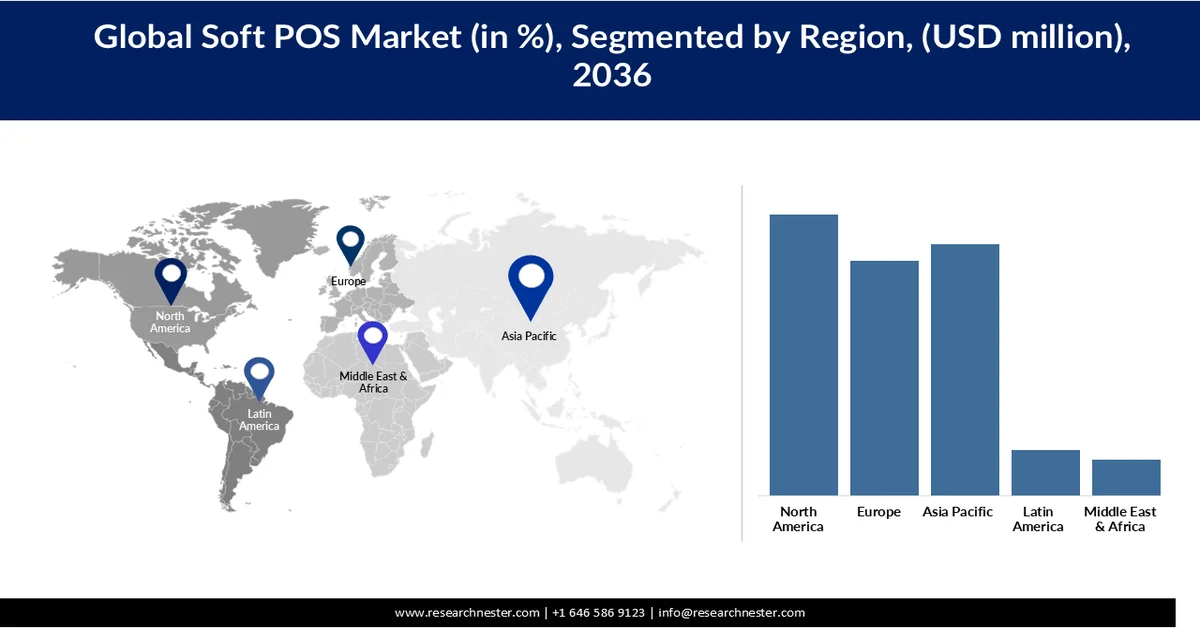
The North America soft POS market is projected to hold a 33.1% share, driven by high smartphone penetration and the increasing adoption of digital and contactless payments. The rise of mobile-based payments has particularly accelerated adoption among small business owners, supporting overall market expansion. Favorable regulatory frameworks in the region further encourage the use of contactless and software-based payment solutions. Additionally, the presence of large fintech companies collaborating with banks has helped organize systematic and secure payment ecosystems.
The U.S. market is estimated to increase from USD 136.71 million in 2026 to USD 565.45 million by 2036. In the U.S., merchants are increasingly transitioning from traditional POS systems to contactless, software-based solutions, enabling safer cross-border transactions, greater transparency, and reduced risk of fraud. Smartphones serve as the primary platform for these payments, reducing dependence on hardware-based POS terminals. For instance, in December 2025, Talus adopted soft POS technology developed by Ingenico, allowing business owners to accept contactless payments directly on smartphones without a card reader, enhancing convenience and lowering operational costs.
Canada also demonstrates strong soft POS adoption due to its advanced technological ecosystem and thriving fintech sector. The soft POS market is expected to be valued at USD 67.11 million by 2036. Fintech firms are leveraging widespread Android smartphone usage to develop efficient, secure, and transparent digital payment solutions, further driving the growth of the soft POS market in the country.
Asia Pacific Market Insights
Asia Pacific is anticipated to hold a share of 29.6% of the global market by the end of 2036 due to the rapid adoption of smartphones, increasing digital literacy, and growing demand for cashless payment solutions. Businesses across APAC, particularly SMEs, are increasingly seeking cost-efficient, software-based POS systems that allow contactless payments on mobile devices. The rise of e-commerce, mobile wallets, and digital payment platforms is creating favorable conditions for soft POS adoption across the region.
China soft POS market is projected to reach USD 200.72 million by 2036. The market is supported by its strong cloud infrastructure and software development ecosystem, which enables merchants to deploy low-cost, easy-to-use payment solutions. The country’s thriving e-commerce industry and high cross-border transaction volumes increase demand for secure, contactless payment methods. Technology companies in China are skilled in cloud-based application development, providing reliable software maintenance and user-friendly platforms that encourage merchants to adopt soft POS systems. These factors collectively drive growth in the region and contribute to the expansion of the global market.
The Japan soft POS market is estimated to be valued at USD 15.33 million in 2027. The market is expected to expand as the country’s cashless payment ecosystem continues to deepen. Japan’s Ministry of Economy, Trade and Industry (METI) reported that the cashless payment ratio reached 42.8% in 2024. In 2025, the share of cashless payments rose to 58.0% of total consumer spending. Of this cashless share, credit cards made up 82.7%, debit cards 3.4%, electronic money 3.7%, and QR/barcode-based payments 10.2%. Thus, the strong consumer and merchant acceptance of digital payments fuels the adoption of advanced soft POS solutions.
Japan Soft POS Market Size and Forecast
|
Report Attribute |
Details |
|
Base Year Market Size (2026) |
USD 13.19 million |
|
Forecast Year Market Size (2036) |
USD 55.38 million |
|
CAGR (2026-2036) |
15.34% |
Europe Market Insights
Europe is expected to hold a share of 27.6% of the global market share by the end of 2036, driven by the demand for contactless payments that limits the waiting time of customers in shopping malls and restaurants. Moreover, safety is prioritized in soft POS transactions, enabling the merchant and the payee to have all transaction details. Manufacturers are integrating soft POS for cross-border payments that can further improve transparency and ensure effective growth of the market. The growing smartphone penetration is enabling consumers to make digitised payments without the need for a physical card reader, cutting network challenges. Key players in the market are deploying scalable and secure mobile transaction solutions, fostering merchant adoption.
The UK soft POS market is anticipated to reach a valuation of USD 122.60 million by 2036. The country is home to micro and small enterprises that require safe and secure payment gateways to receive and send money to different accounts. These enterprises transact large amounts daily, where soft POS plays a vital role, and transactions can be processed using contactless methods without the need for hardware. This feature is a game-changer for small merchants as they operate on low operational expenses. The integration of software-based POS can significantly reduce the cost of maintaining multiple payment servers and enhance transparency in transactions.
In Germany, the regulatory frameworks of the country have significantly improved the adoption of safe payment options, which is propelling the expansion of soft POS systems. The market is poised to increase from USD 19.53 million in 2026 to USD 82.63 million by the end of 2036. The software is dedicated to the use of single merchants and can be customised according to the merchant. Software-based POS shares transaction details with government directories, maintaining transparent operations. Furthermore, the e-commerce industry within the country has also exponentially increased, which is further propelling the expansion of software-based POS systems.
Key Soft POS Market Players:
- Adyen (Netherlands)
- Alcinéo (France)
- Payten (Asseco South Eastern Europe) (Serbia)
- Bindo Labs Limited (Hong Kong)
- CM.com (Netherlands)
- Fairbit (UK)
- Felix Payment Systems Ltd. (UK)
- Girmiti Software Private Limited (India)
- Hitachi Payment Services Pvt. Ltd. (India)
- IBA Group a.s. (Czech Republic)
- ina Payments (UK)
- Ingenico (France)
- MineSec Pte. Ltd. (Singapore)
- Paynt (Paydoo Payments US Inc.) (U.S.)
- Rubean AG (Germany)
- Shenzhen Xinguodu Technology Co., Ltd. (China)
- Stripe, LLC (U.S.)
- Tidypay (Norway)
- Wizzit (Pty) Ltd (South Africa)
- Worldline S.A. (France)
- Yazara (United Kingdom)
- Company Overview
- Business Strategy
- Key Product Offerings
- Financial Performance
- Key Performance Indicators
- Risk Analysis
- Recent Development
- Regional Presence
- SWOT Analysis
- Adyen is a global financial technology company providing a unified payments platform for online, mobile, and in-person transactions. Its soft POS capabilities enable merchants to accept contactless payments directly through compatible smartphones and devices. The company focuses on enterprise merchants and integrated payment infrastructure, combining payment acceptance, data, risk management, and financial services. Its global customer base and technology infrastructure strengthen its position in the market.
- Alcinéo is a French payment technology company specializing in secure payment solutions and payment acceptance technologies. The company develops software and solutions supporting contactless and digital payment transactions, including soft POS-related capabilities. Its expertise in payment security, EMV standards, and transaction processing positions it as a technology provider within the evolving smartphone-based payment acceptance ecosystem. Alcinéo primarily serves financial institutions, payment service providers, and technology partners.
- Payten, part of Asseco South Eastern Europe, provides payment and banking technology solutions across multiple international markets. Its portfolio includes payment processing, merchant acquiring, transaction management, and POS technologies. The company has expanded its capabilities toward modern payment acceptance solutions, including soft POS, enabling merchants to process contactless transactions using compatible mobile devices. Payten benefits from Asseco SEE's established regional presence and relationships with banks and financial institutions.
- Bindo Labs Limited is a Hong Kong-based technology company focused on cloud-based point-of-sale and retail management solutions. Its platform combines payment acceptance with inventory management, customer management, analytics, and other retail functions. The company's software-oriented approach aligns with the broader transition toward mobile and cloud-based POS infrastructure. Bindo's focus on SMEs and retailers provides opportunities to expand smartphone-based payment acceptance as merchants seek flexible alternatives to traditional POS terminals.
- Fairbit is a UK-based payment technology company focused on digital payment and merchant acceptance solutions. Its activities are aligned with the growing adoption of mobile and contactless payment technologies, supporting businesses seeking flexible payment infrastructure. Fairbit's positioning in the soft POS ecosystem reflects the broader industry shift toward software-based payment acceptance, where smartphones can replace dedicated payment terminals. Its potential market opportunities include SMEs and mobile merchants requiring convenient contactless payment capabilities.
Here is a list of key players operating in the global market:
The players operating in the global market are expected to face intense competition during the forecast period. The market is associated with both established key players and new entrants. However, the market is moderately fragmented. New entrants impose immense competition for the existing players, preventing them from acquiring the majority of the revenue share. Specialised manufacturers maintain a competitive landscape in the market. Key players in the market are significantly supported by the government for research and innovation.
Corporate Landscape of the Global Market:
Recent Developments
- In July 2026, SUNMI extended its Soft POS platform to more smart business devices. This allows merchants to accept secure tap-to-pay transactions without separate payment hardware.
- In November 2025, Cash Free launched its first-ever biometrically authenticated in-app payment system, which can pay in less than 2 seconds. The initiative focused on minimising the complexities of choosing accounts and receiving OTP for authentication.
- In September 2023, Tidypay announced its collaboration with Vectron to develop a cutting-edge payment service and solution. Both companies are experienced in POS systems, leading them to develop all-in-one POS systems to enhance payment speed.
- Report ID: 5916
- Published Date: Sep 24, 2026
- Report Format: PDF, PPT
- Explore a preview of key market trends and insights
- Review sample data tables and segment breakdowns
- Experience the quality of our visual data representations
- Evaluate our report structure and research methodology
- Get a glimpse of competitive landscape analysis
- Understand how regional forecasts are presented
- Assess the depth of company profiling and benchmarking
- Preview how actionable insights can support your strategy
Explore real data and analysis
Frequently Asked Questions (FAQ)
About this Report
Connect with our Expert


Report, 2027-2036


Copyright @ 2026 Research Nester. All Rights Reserved.
