Sleeping Bruxism Treatment Market Outlook:
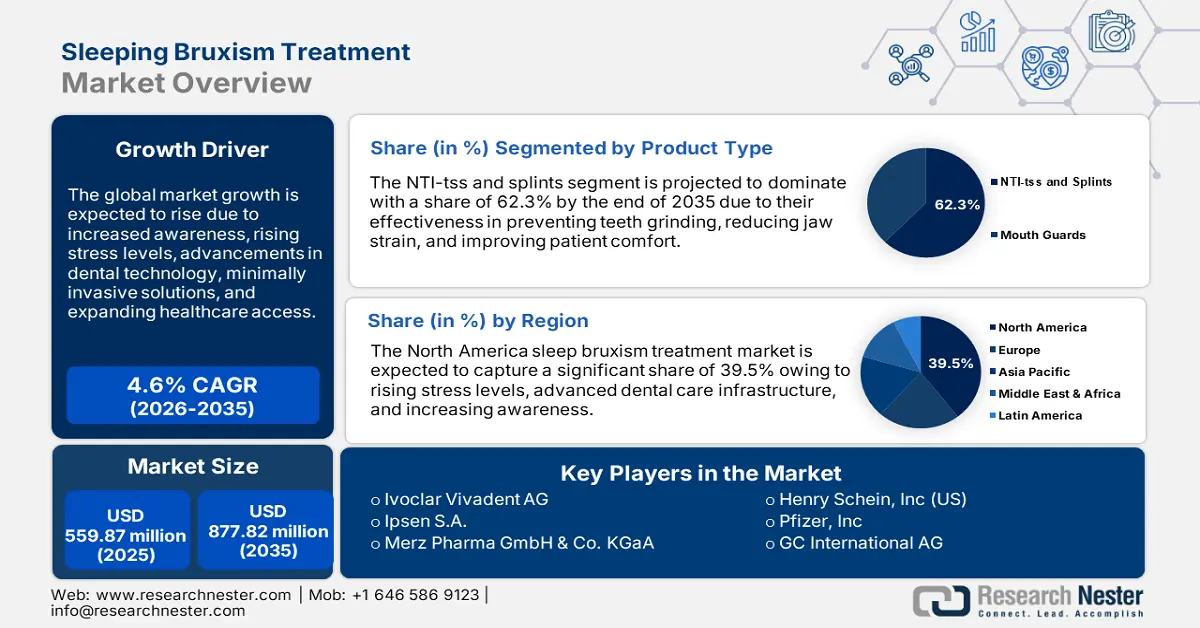
Sleeping Bruxism Treatment Market size was over USD 559.87 million in 2025 and is poised to exceed USD 877.82 million by 2035, growing at over 4.6% CAGR during the forecast period i.e., between 2026-2035. In the year 2026, the industry size of sleeping bruxism treatment is estimated at USD 583.05 million.
Modern lifestyles, characterized by demanding work schedules, digital connectivity, and societal pressures, have significantly contributed to rising stress and anxiety levels worldwide. These factors are recognized as primary causes of sleeping bruxism, leading to a higher prevalence of the condition. In July 2024, the National Library of Medicine reported that 21% of people worldwide suffer from sleep bruxism, whereas 23% of people suffer from it while awake. Polysomnography was used to estimate the prevalence of sleep bruxism at 43%. Consequently, there is a growing demand for effective treatment options such as behavioral interventions, stress management techniques, and medications. These therapies aim to alleviate bruxism symptoms by addressing its underlying psychological triggers.
Additionally, the increasing prevalence of sleep disorders, such as obstructive sleep apnea, which is frequently fueled the demand for sleeping bruxism treatment market. In February 2024, the National Library of Medicine reported that the prevalence of sleep disorders doubled over ten years, rising from 3 867 975 (7.62%) in 2011 to 7 446 846 (14.41%) in 2020. These conditions often co-exist, creating a need for comprehensive approaches that address both simultaneously. Healthcare providers are prioritizing holistic treatment plans, combining therapies such as dental appliances, continuous positive airway pressure (CPAP) devices, and behavioral interventions, ensuring effective management of both sleep apnea and bruxism for improved patient outcomes.