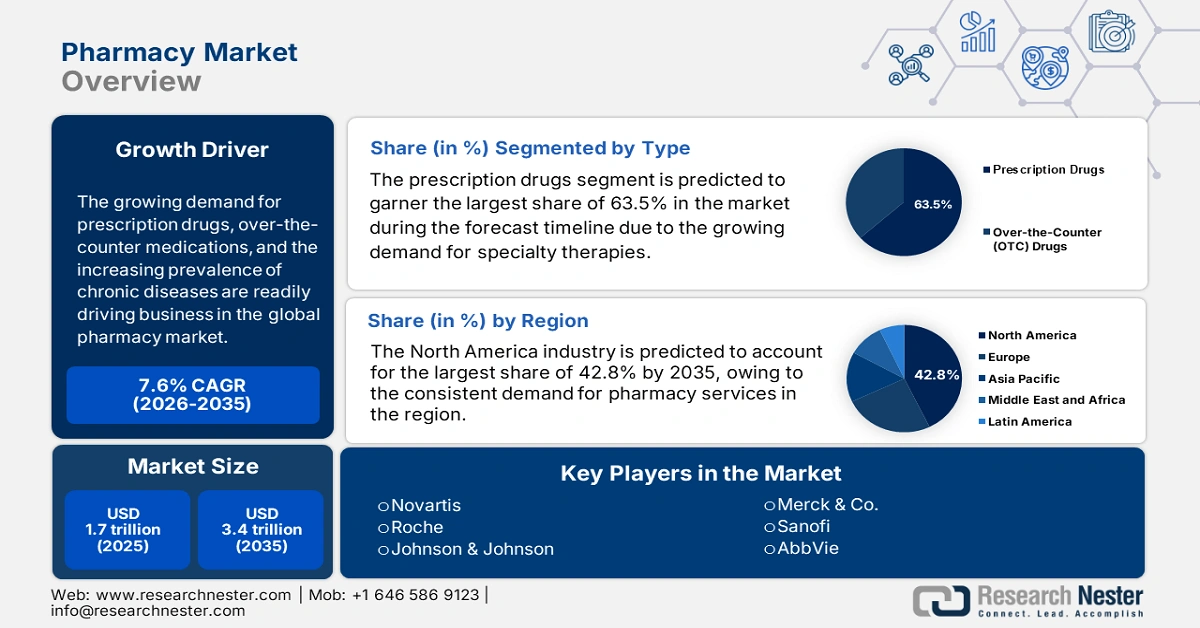
Pharmacy Market Outlook:
Pharmacy Market was valued at USD 1.7 trillion in 2025 and is projected to reach USD 3.4 trillion by the end of 2035, rising at a CAGR of 7.6% during the forecast period, i.e., 2026-2035. In 2026, the industry size of pharmacy is assessed at USD 1.8 trillion.
The growing demand for prescription drugs, over-the-counter medications, and the increasing prevalence of chronic diseases are readily driving business in the global market. This can be testified by the report from the World Health Organization, which was published in December 2024, that states that noncommunicable diseases (NCDs) caused 43 million deaths in 2021, which represents 75% of global non-pandemic deaths. It also highlighted that premature NCD deaths before the age of 70 reached 18 million, out of which 82% occur in low and middle-income countries. Further cardiovascular diseases, cancers, and respiratory conditions are also on the rise, creating a sustained market demand for long-term medications.
Furthermore, there has been a rising pharmaceutical access, which is highly essential for the availability of timely medication and healthcare support across all nations. Therefore, a study was conducted by the Journal of American Pharmacists Association in December 2022 that found that in the U.S., there are 61,715 pharmacies, out of which 61.5% i.e., 37,954, are chains and 38.1% (23,521) are regional franchises or independently owned. It further observed that a small fraction, i.e., 0.4% i.e., 240, is government operated. Also, 48.1% of individuals dwell within 1 mile of a pharmacy, reflecting greater opportunities for market expansion through enhanced pharmacy networks.