In-Vivo Imaging Market Outlook:
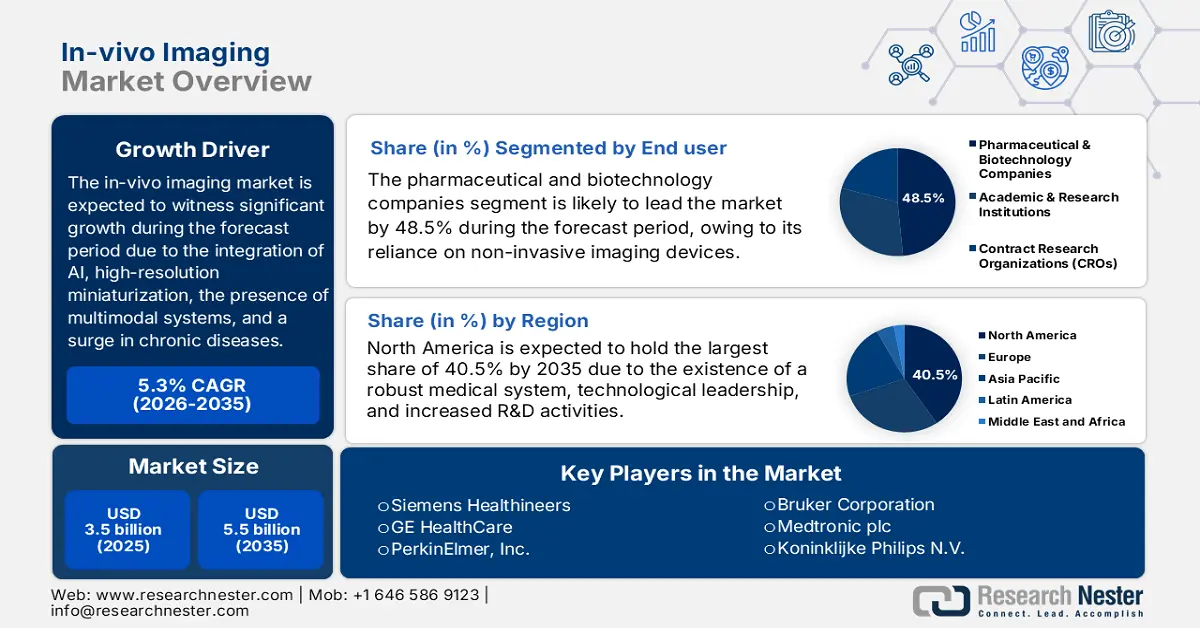
In-Vivo Imaging Market size was USD 3.5 billion in 2025 and is anticipated to reach USD 5.5 billion by the end of 2035, increasing at a CAGR of 5.3% during the forecast period, i.e., 2026-2035. In 2026, the industry size of in-vivo imaging is evaluated at USD 3.6 billion.
The sustained expansion of the in-vivo imaging market is highly attributed to economic, clinical, and technological factors. These include the existence of multimodal systems, artificial intelligence (AI), along with machine learning, and high-resolution miniaturization. According to a report published by NLM in December 2023 stated that imaging-based clinical studies readily utilized a deep learning-specific AI system and successfully achieved 97.0% sensitivity, followed by 93.4% specificity, and 99.1% area under the curve (AUC). This has been useful in evaluating diabetic retinopathy, thereby suitable for uplifting the overall market internationally.
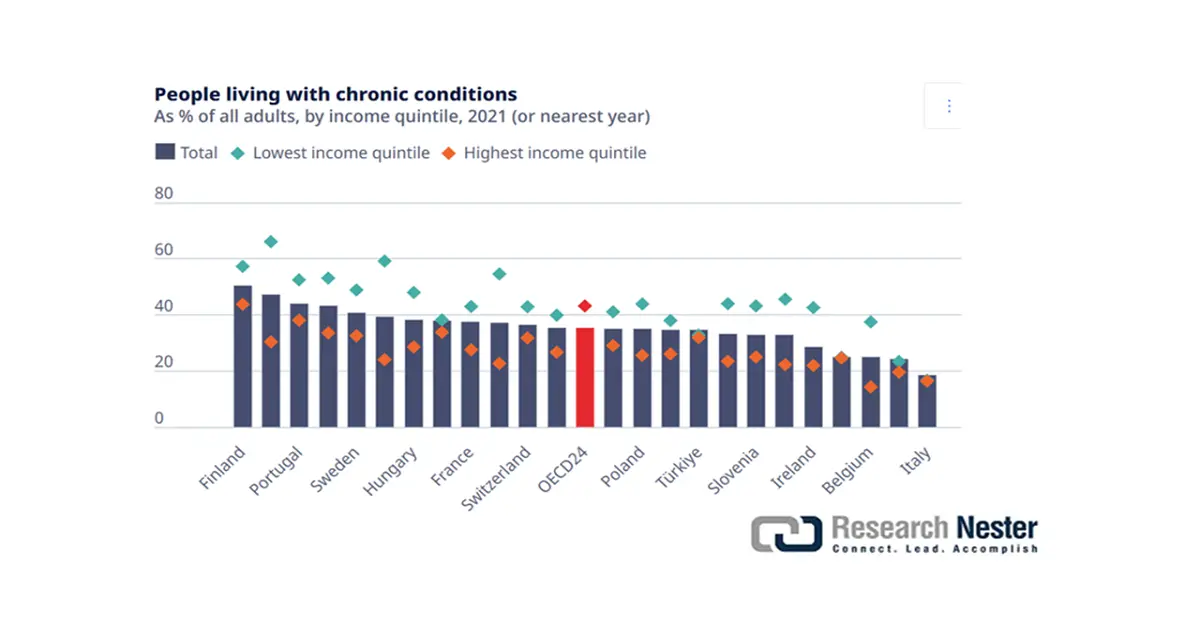
Source: OECD 2023
Moreover, a surge in aging demographics and chronic diseases, along with an escalation in drug development and delivery, are also uplifting the in-vivo imaging market across different nations. As per an article published by the CDC in October 2024, 6 in 10 individuals, particularly in America, have one chronic disease, and 4 in 10 are affected with more than two chronic conditions. Besides, the January 2024 NLM report denoted that the approximate chronic disease expense is projected to increase to USD 47 trillion globally by the end of 2030. Meanwhile, the 2023 OECD report denoted that across 24 countries, over 1/3rd of adults resides with long-term health illness, with more than 2 in Finland, followed by 1 in 4 in Italy, thus driving the market’s demand.